Recognizing Patterns Addition & Subtraction Worksheets for 8-Year-Olds
22 filtered results
-
From - To
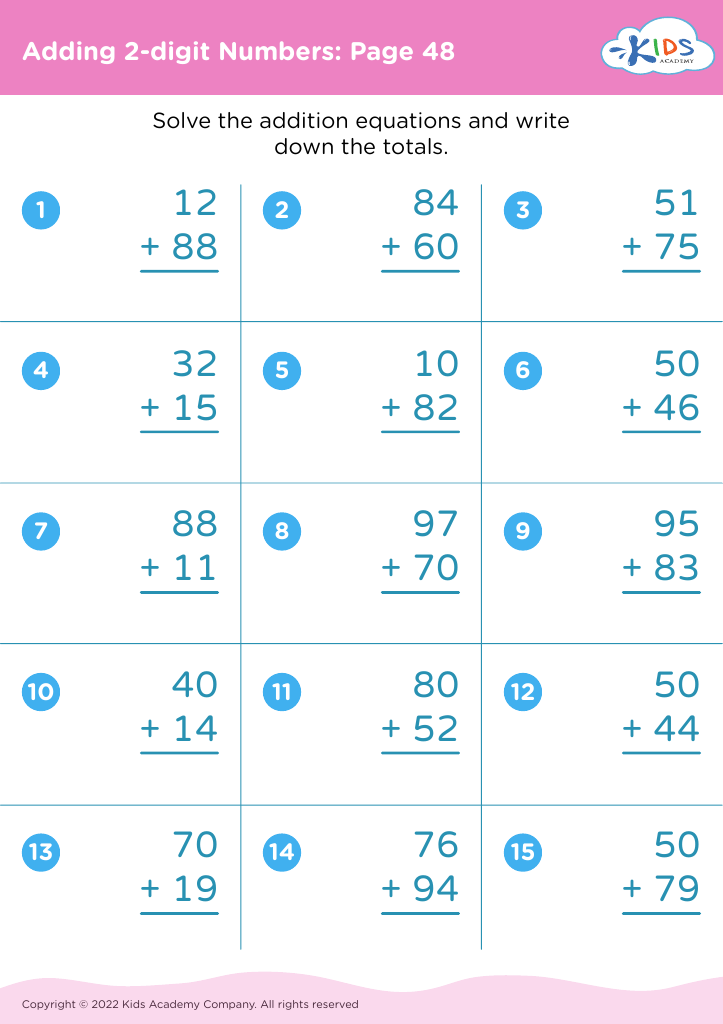
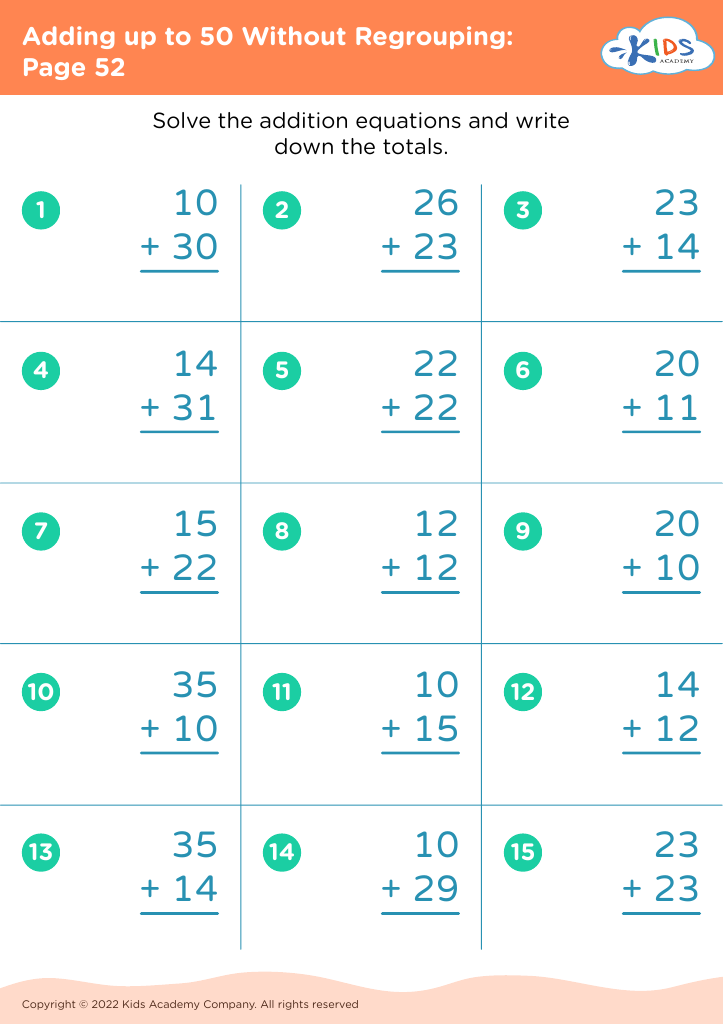
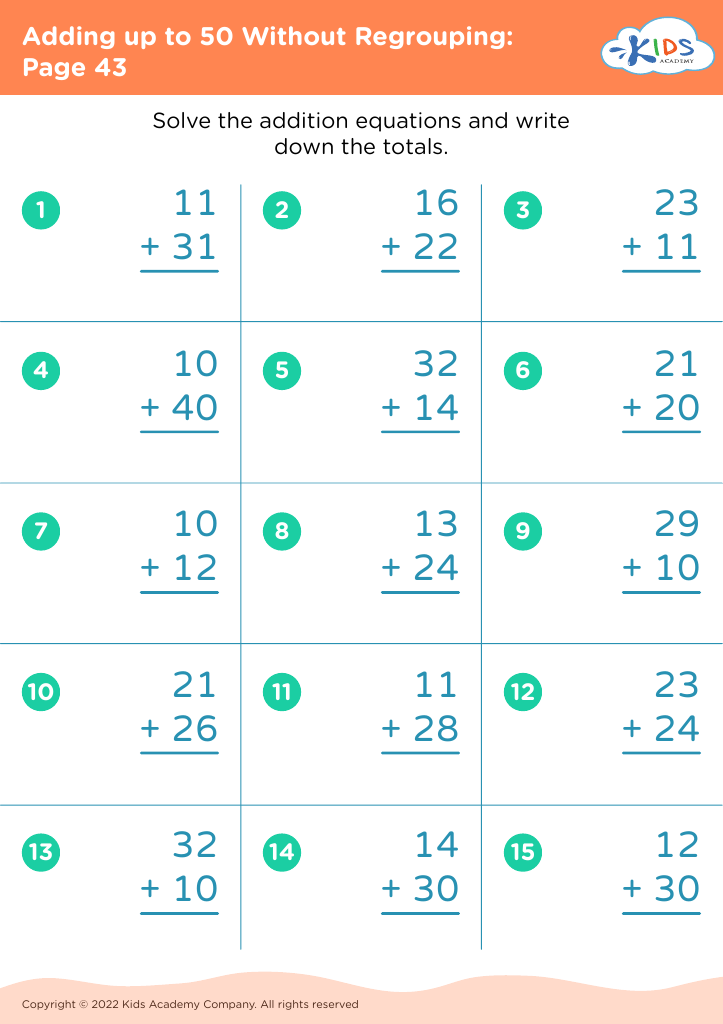
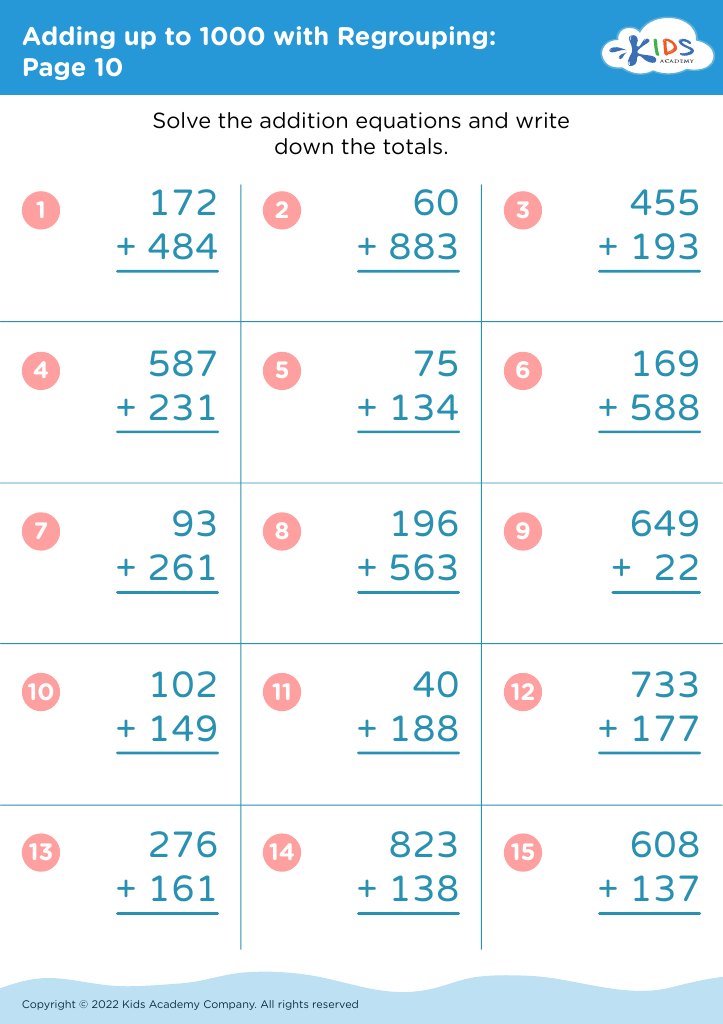
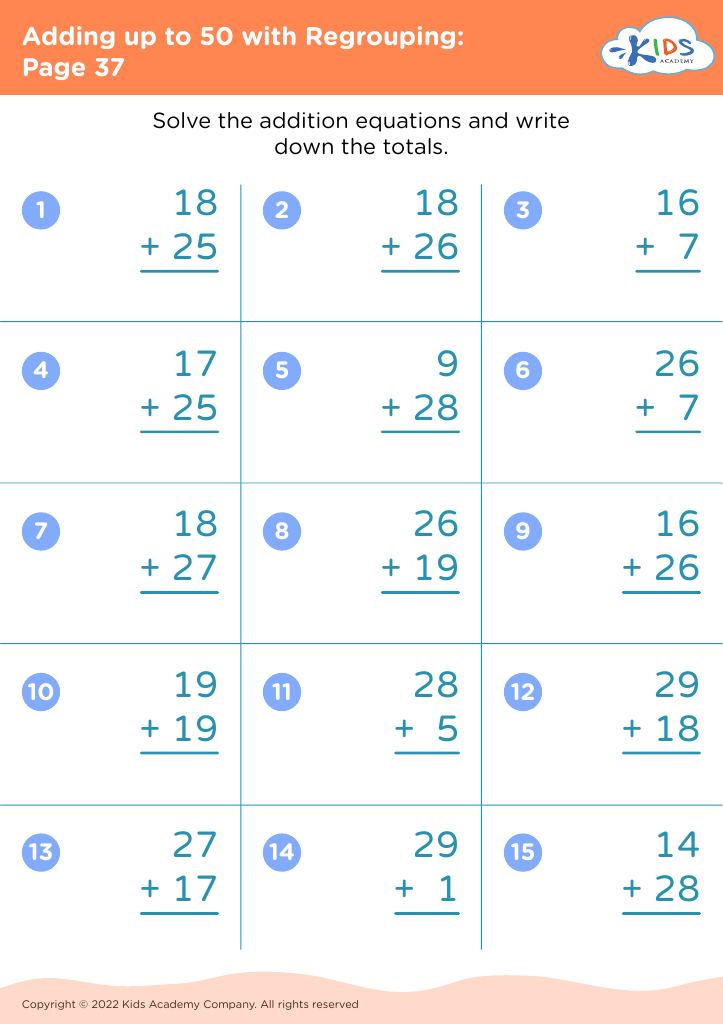
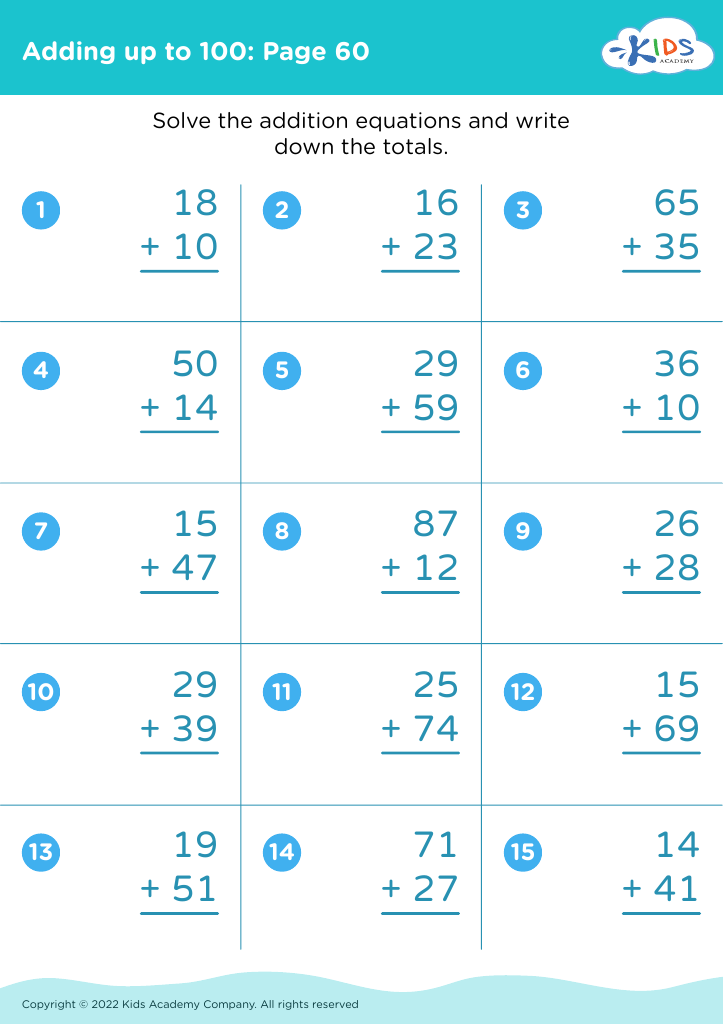
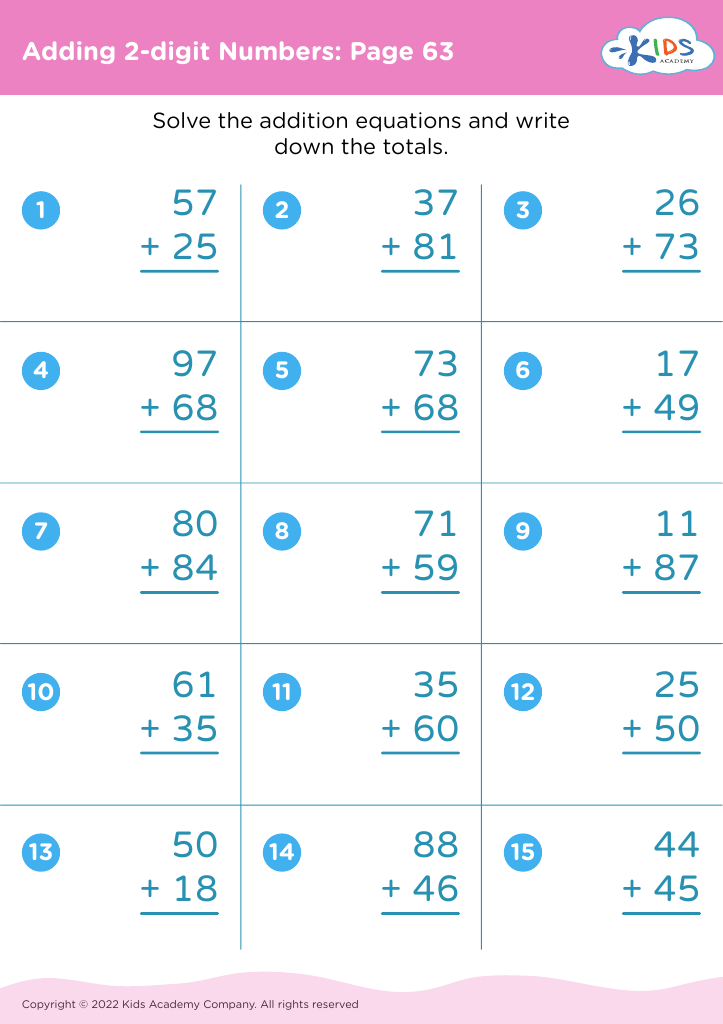
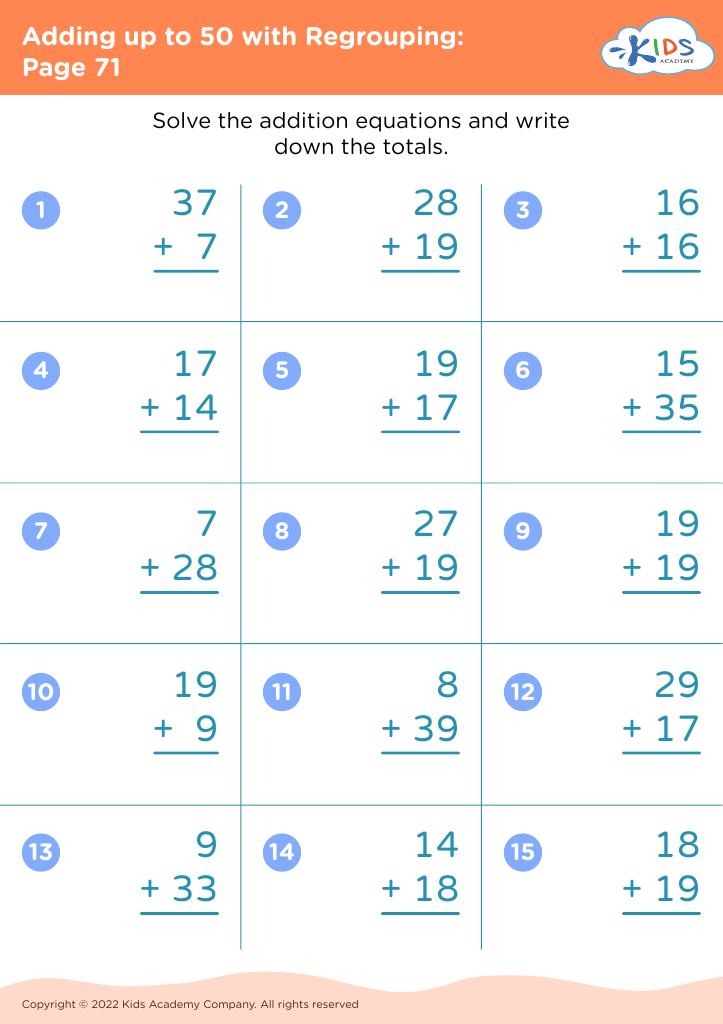
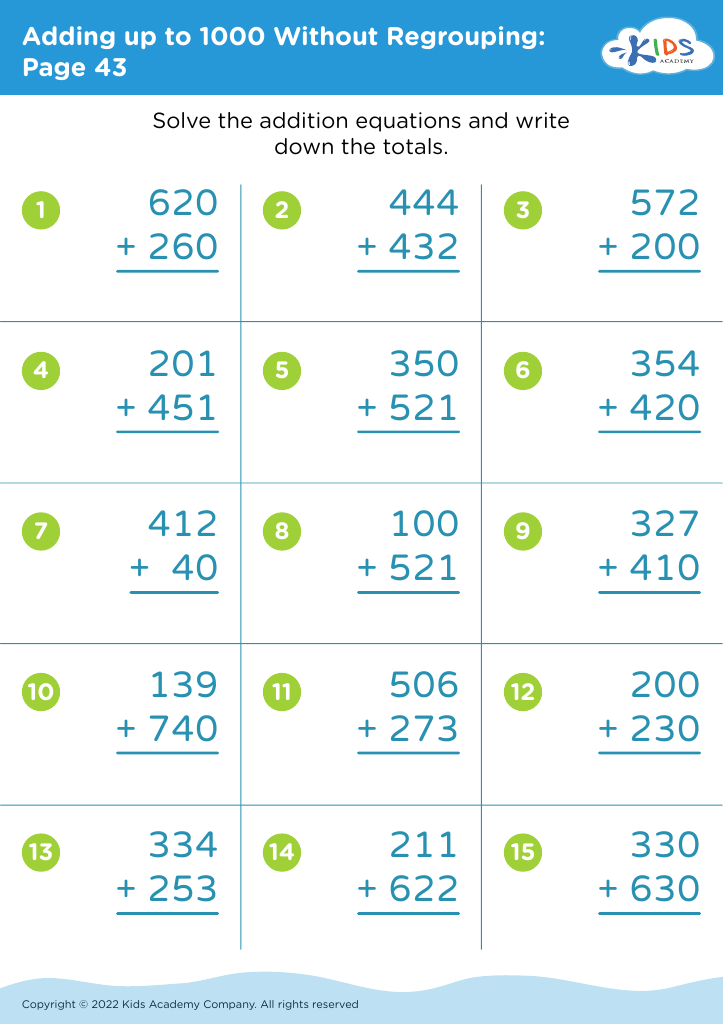
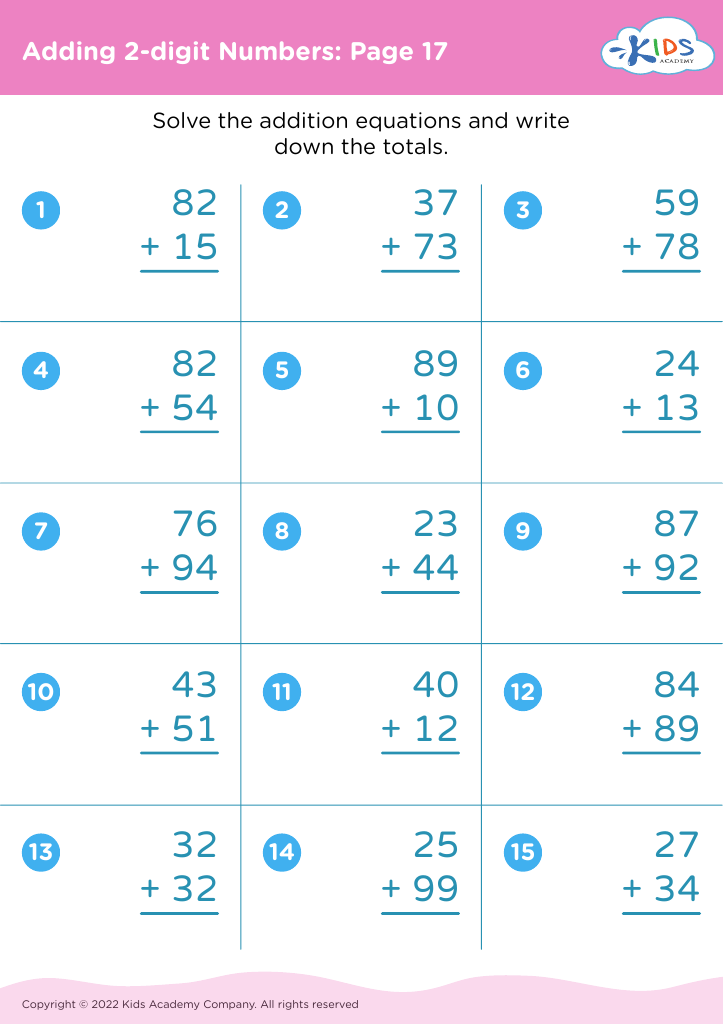
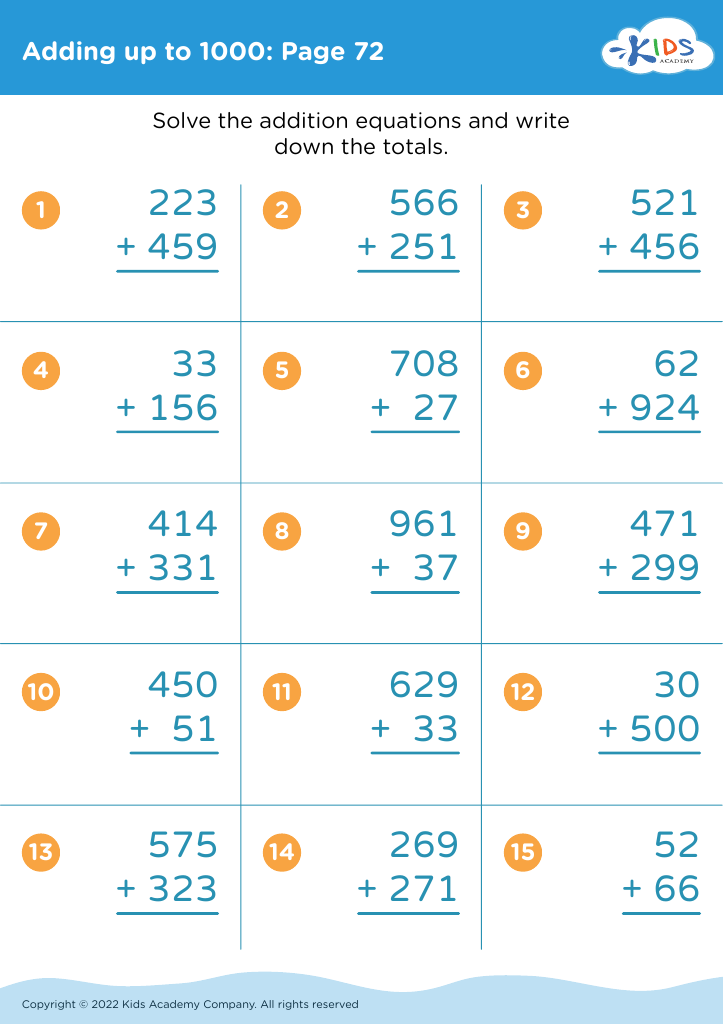
Unlock your child's math potential with our "Recognizing Patterns Addition & Subtraction Worksheets for 8-Year-Olds." These engaging worksheets from Kids Academy are designed to help young learners grasp essential math concepts through fun and interactive pattern recognition activities. By practicing with these worksheets, children will improve their addition and subtraction skills while enhancing their ability to identify and create patterns. Whether at home or in the classroom, these worksheets will build your child’s confidence and foundational math skills, making learning exciting and enjoyable. Set your 8-year-old up for math success today with our expertly crafted worksheets!
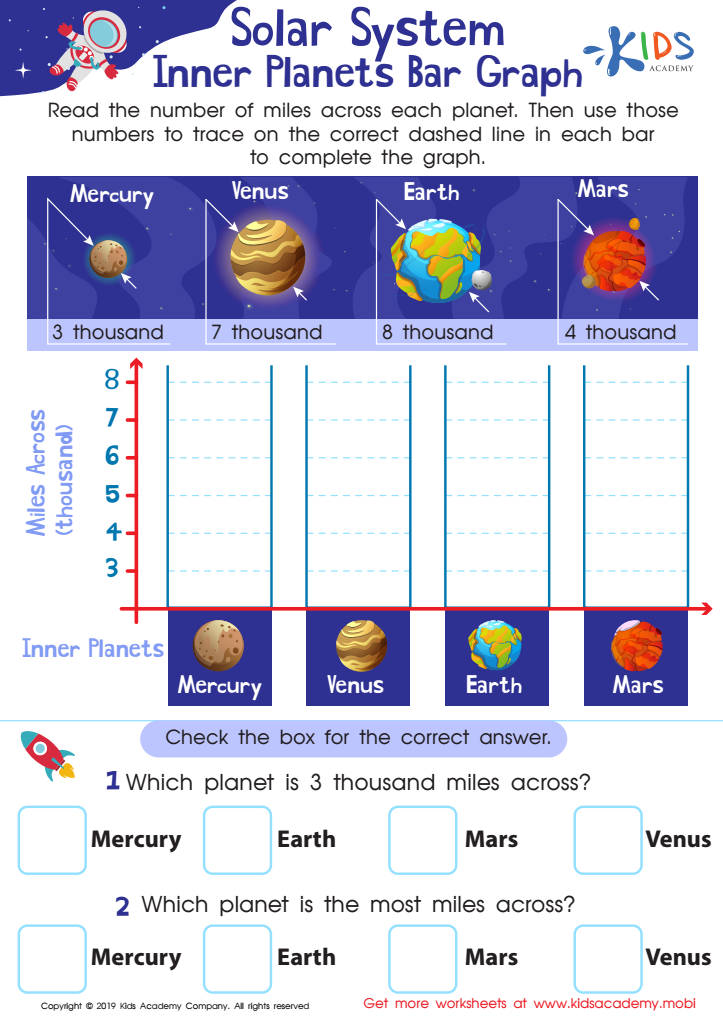
Planets Bar Graph Worksheet
 Assign to My Students
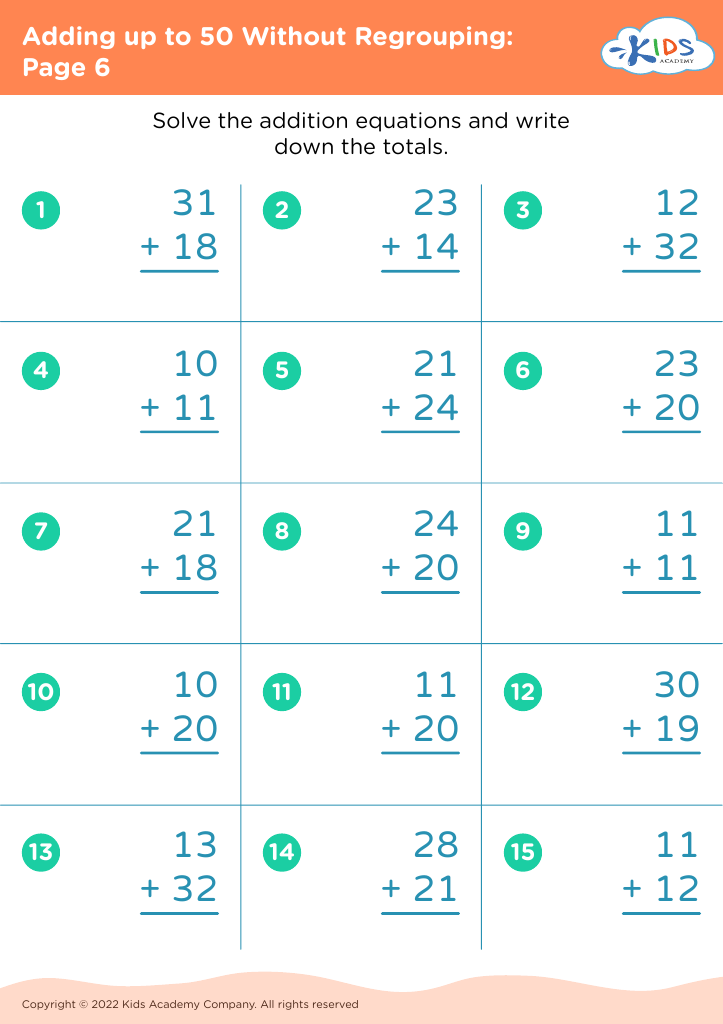
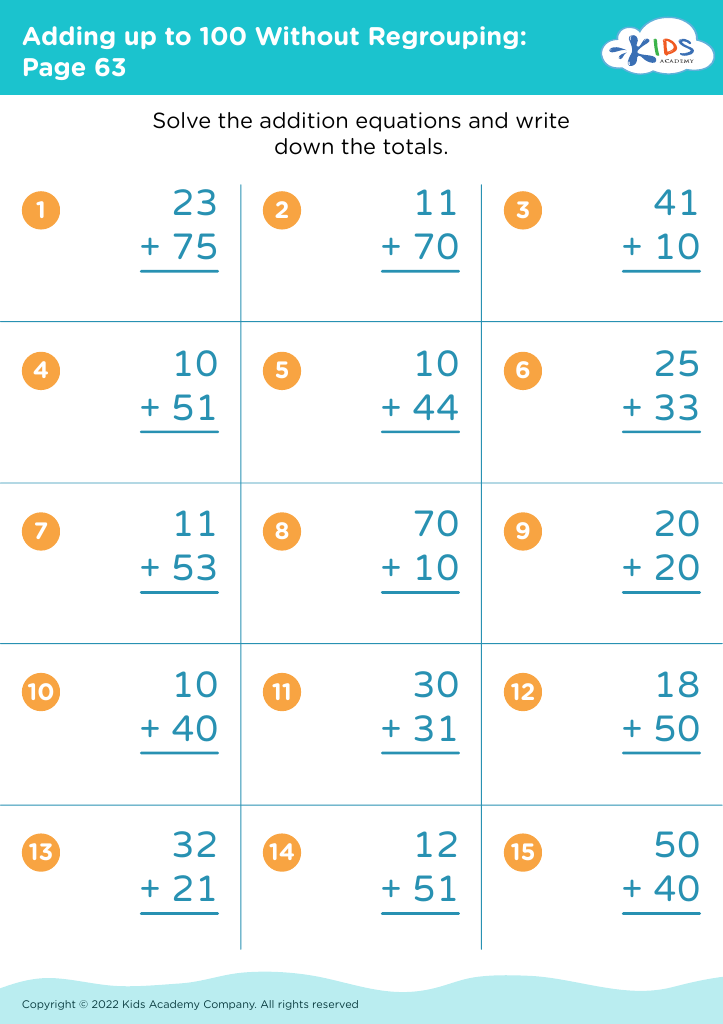
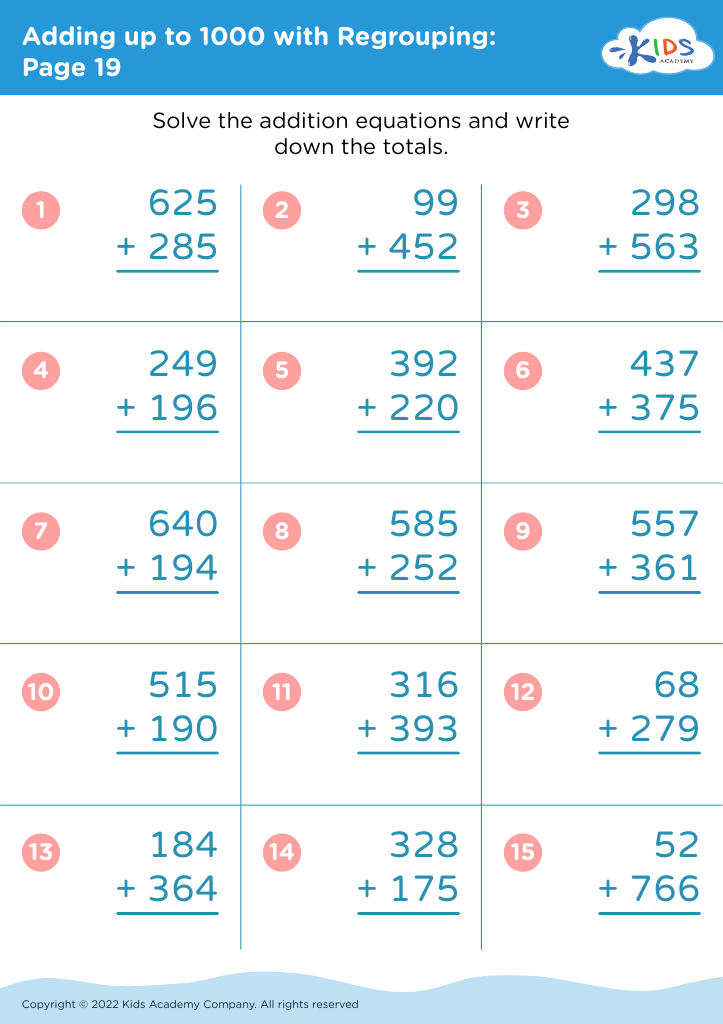
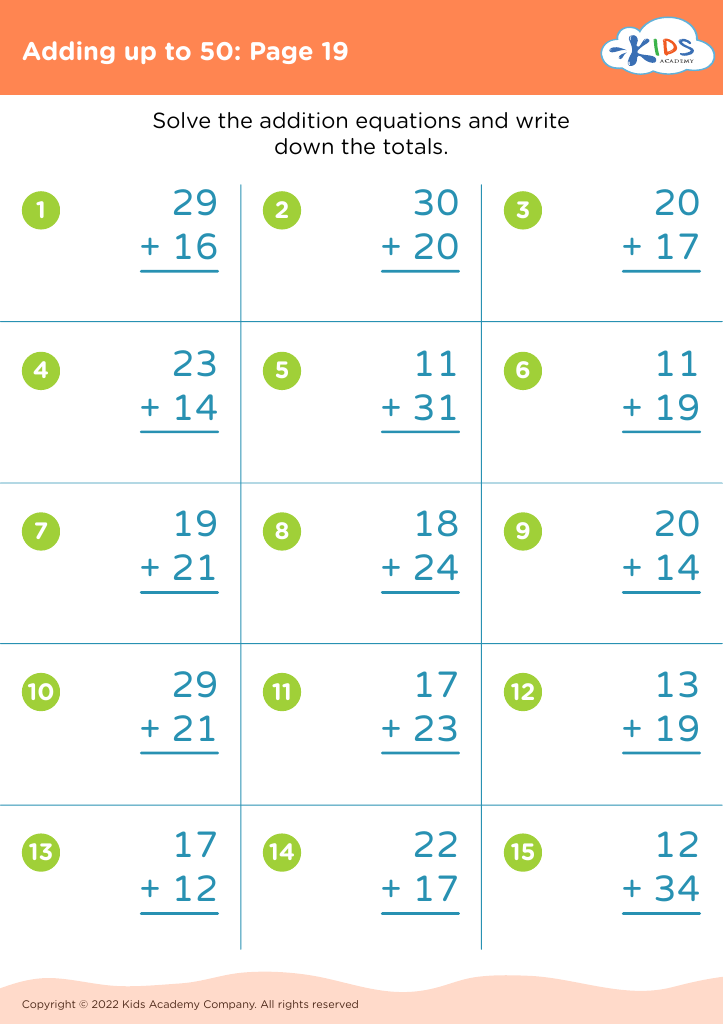
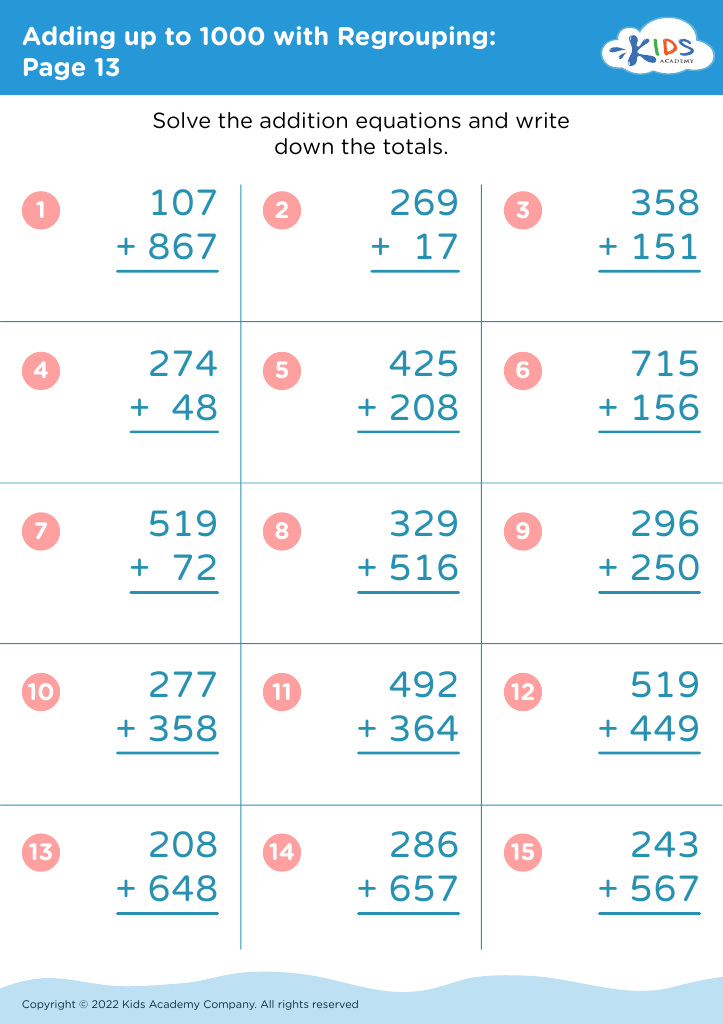
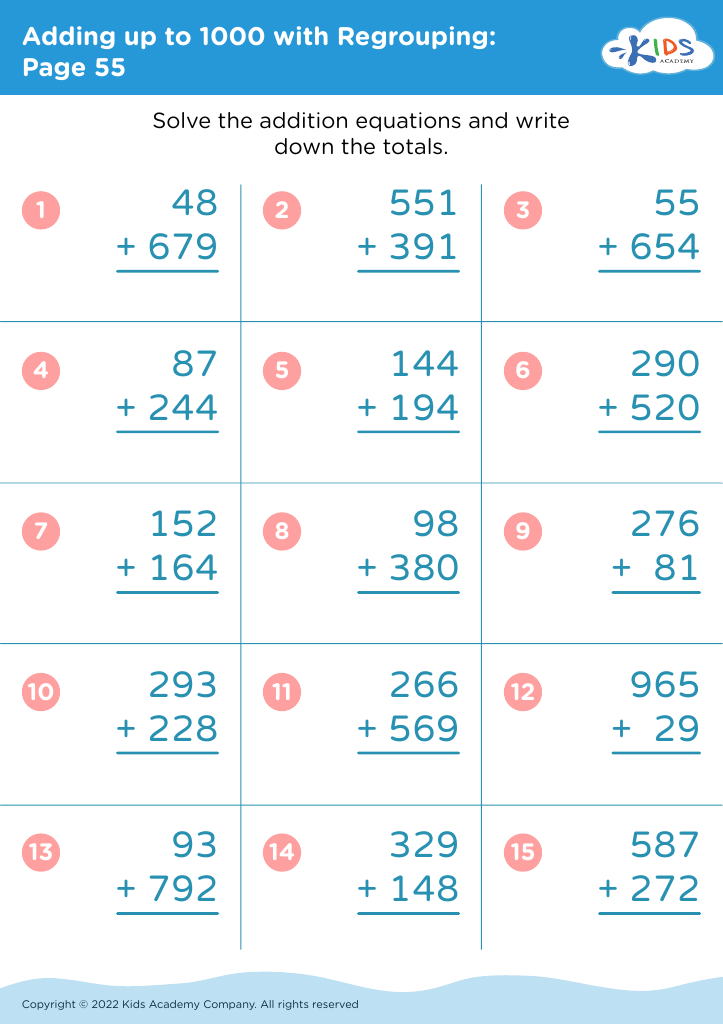
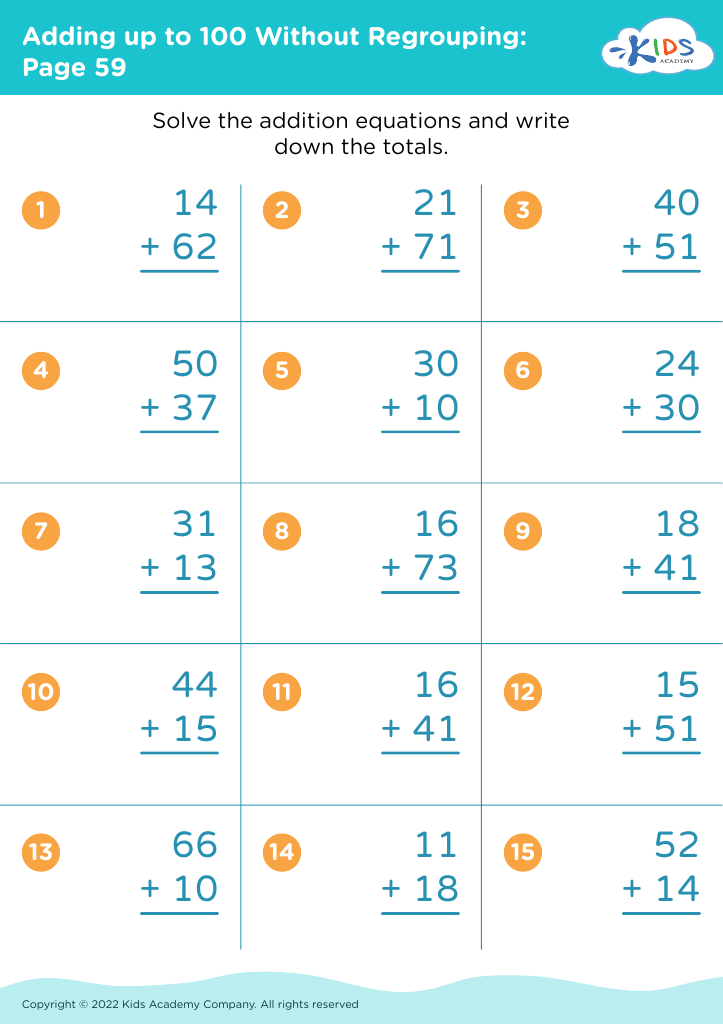
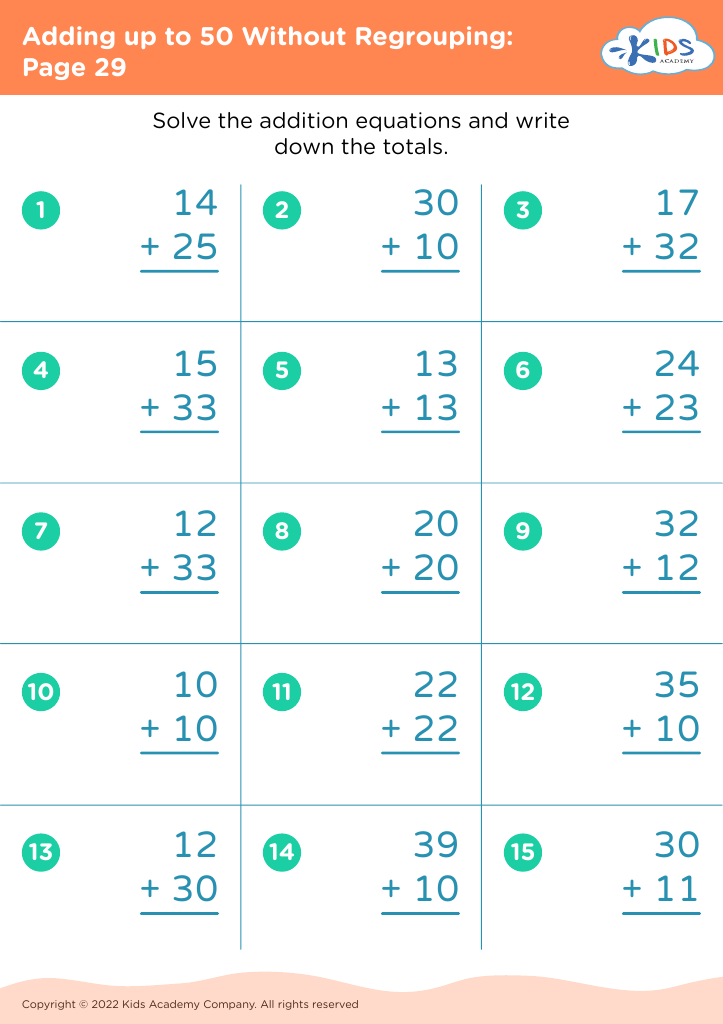
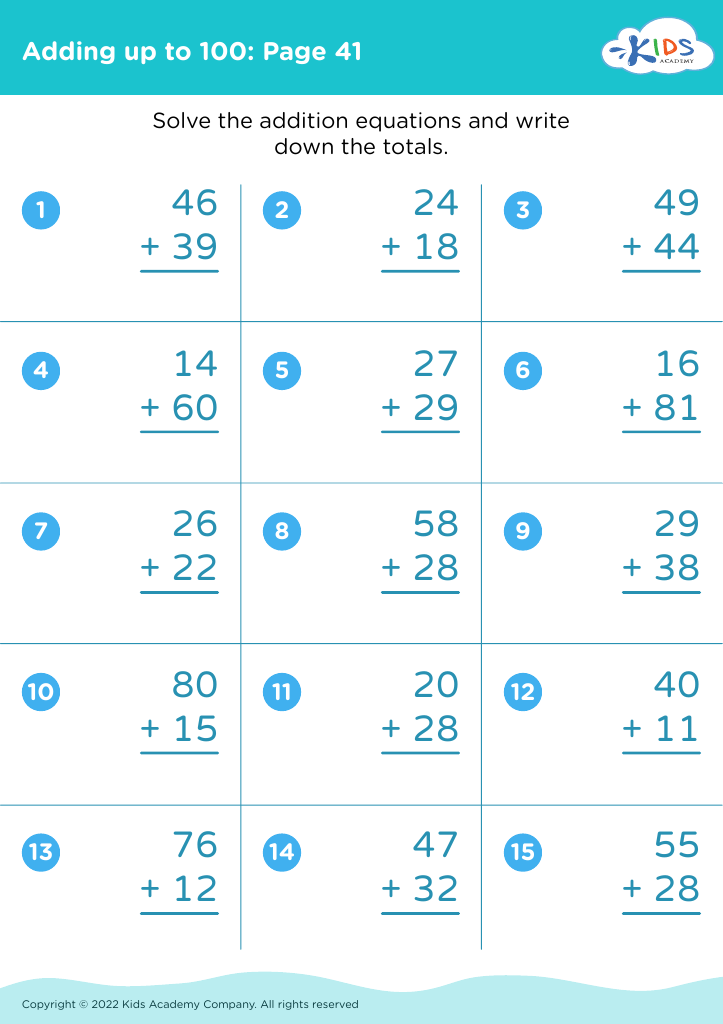
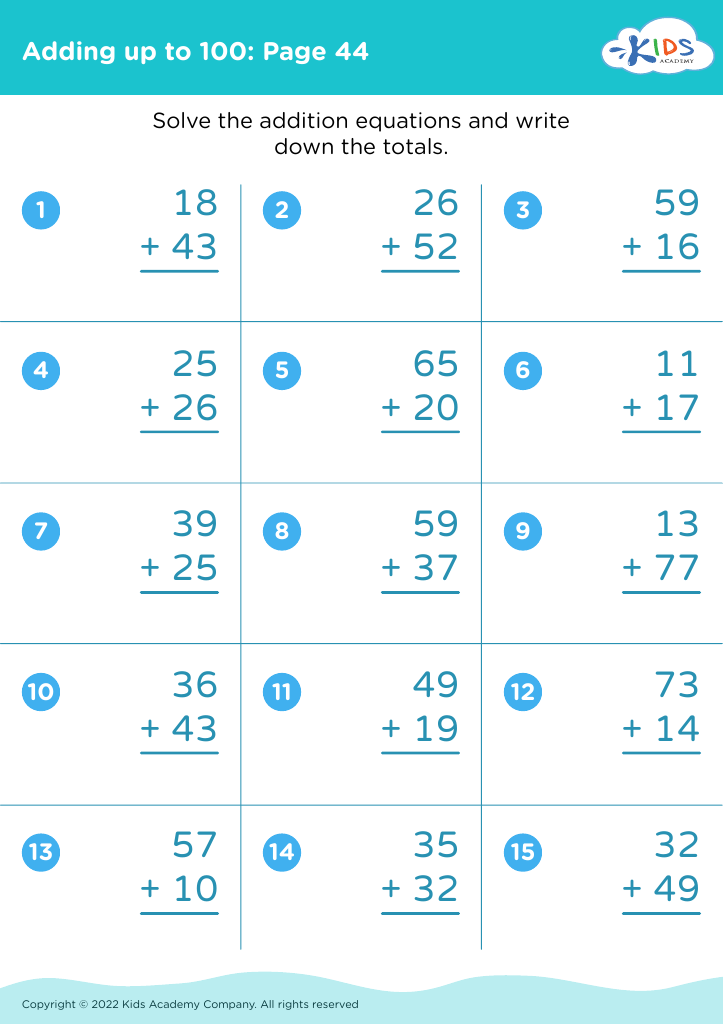








Recognizing patterns in addition and subtraction is crucial for 8-year-olds as it forms the foundation for mathematical fluency and problem-solving skills. At this age, children are transitioning from simple arithmetic to more complex mathematical concepts. Understanding patterns helps them see relationships between numbers, thus simplifying computations and enhancing mental math abilities.
When parents and teachers emphasize pattern recognition, children can identify sequences and apply learned strategies to new problems. For instance, knowing that adding 10 to a number always affects the tens place or recognizing that subtracting within a decade (like 53 - 21) reduces both the tens and units in predictable ways, helps kids solve problems more efficiently.
Moreover, pattern recognition fosters critical thinking and analytical skills. Children learn to predict outcomes, test hypotheses, and make connections between different mathematical ideas. This kind of thinking is not only essential for higher-level math but also for everyday decision-making and logical reasoning.
In essence, caring about pattern recognition in addition and subtraction equips children with essential tools to approach mathematics with confidence and prepares them for more advanced concepts, both academically and in real-life applications. By instilling these skills early, parents and teachers lay a robust groundwork for future success in math.








