Enhance your child's mathematical understanding with our engaging Logical Thinking Math Worksheets tailored for 8-year-olds. These worksheets are designed to foster critical thinking skills, helping young learners solve problems through reasoning and deduction. Incorporating puzzles, pattern recognition, and sequences, our resources encourage students to think outside the box while enjoying their math practice. As your child navigates through the challenges, they'll not only improve their math skills but also develop essential cognitive abilities for future learning. Perfect for at-home learning or classroom activities, our worksheets provide a fun and educational way to master logical thinking in math.
Check out this FREE Trial Lesson on Math for age 8!

Understanding Place Value - Hundreds Only

Favorites
With answer key
Interactive
  • 8
  • Logical thinking
  • Math
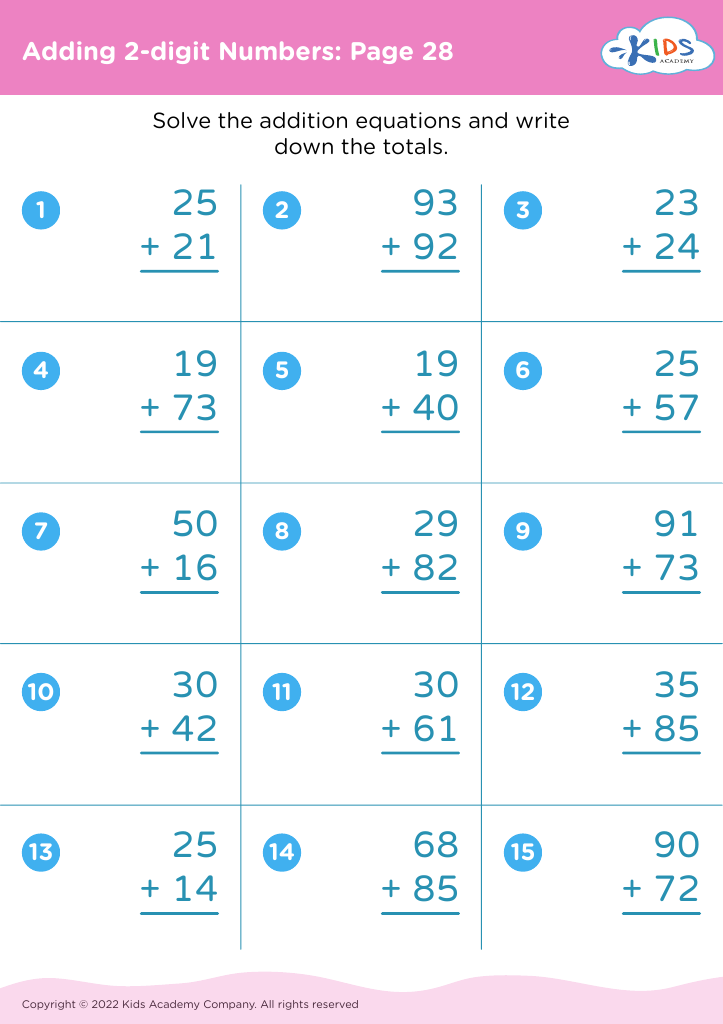
Adding 2-digit Numbers: Page 28

Adding 2-digit Numbers: Page 28

Adding 2-digit Numbers: Page 28
Worksheet
Halloween Problem Solving Worksheet

Halloween Problem Solving Worksheet

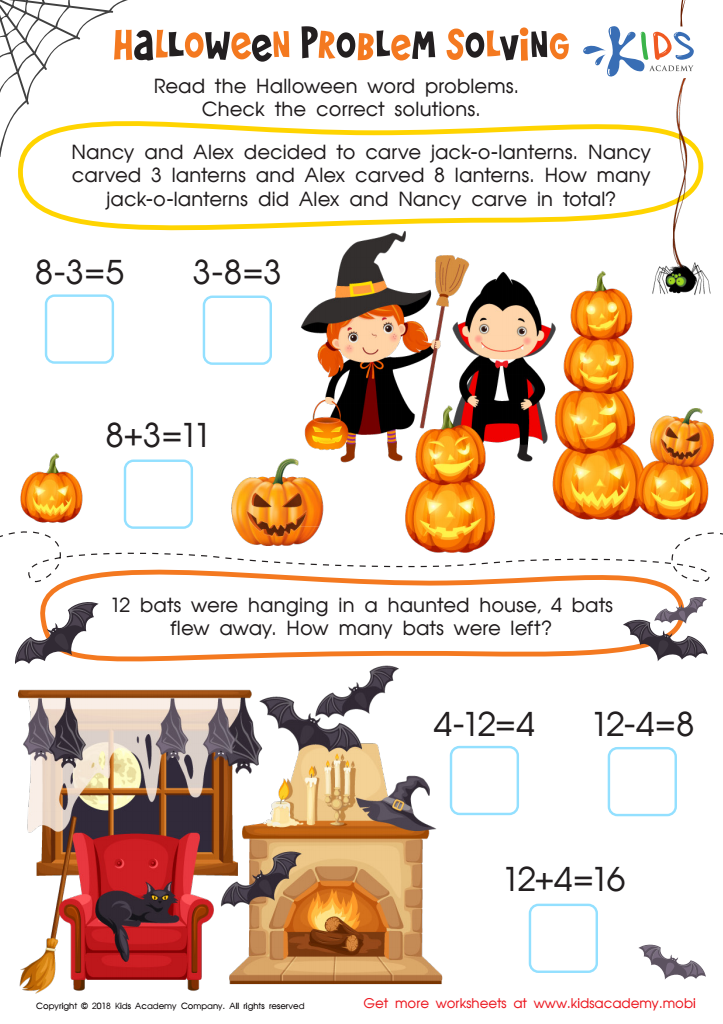
Halloween math is here! Get your spooky word problems and frightfully cute images with this free PDF worksheet. Read the problems with your little one and focus on the numbers and key phrases. Then match the equation to its solution to complete the page. Calling all ghosts and goblins - have some math fun this Halloween!
Halloween Problem Solving Worksheet
Worksheet
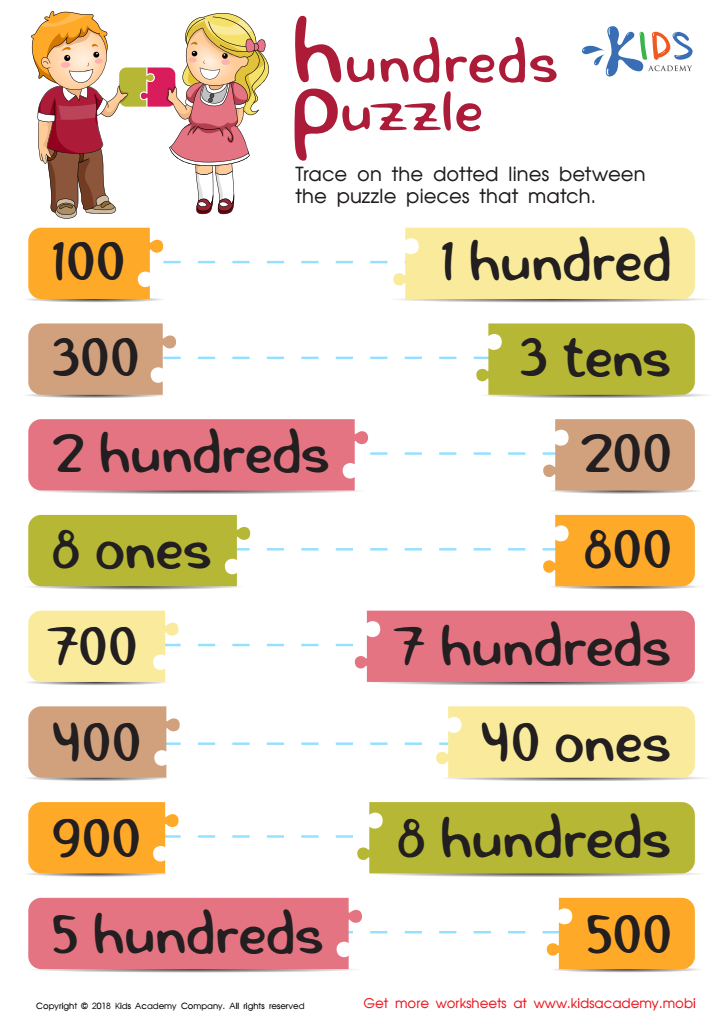
Hundreds Puzzle Worksheet

Hundreds Puzzle Worksheet

This tracing sheet can help your child improve their number knowledge, from hundreds to tens. On the left are different numbers, with the same on the right. Ask your child to connect the matching numbers with the dotted lines. Make learning numbers fun with this traceable printout.
Hundreds Puzzle Worksheet
Worksheet
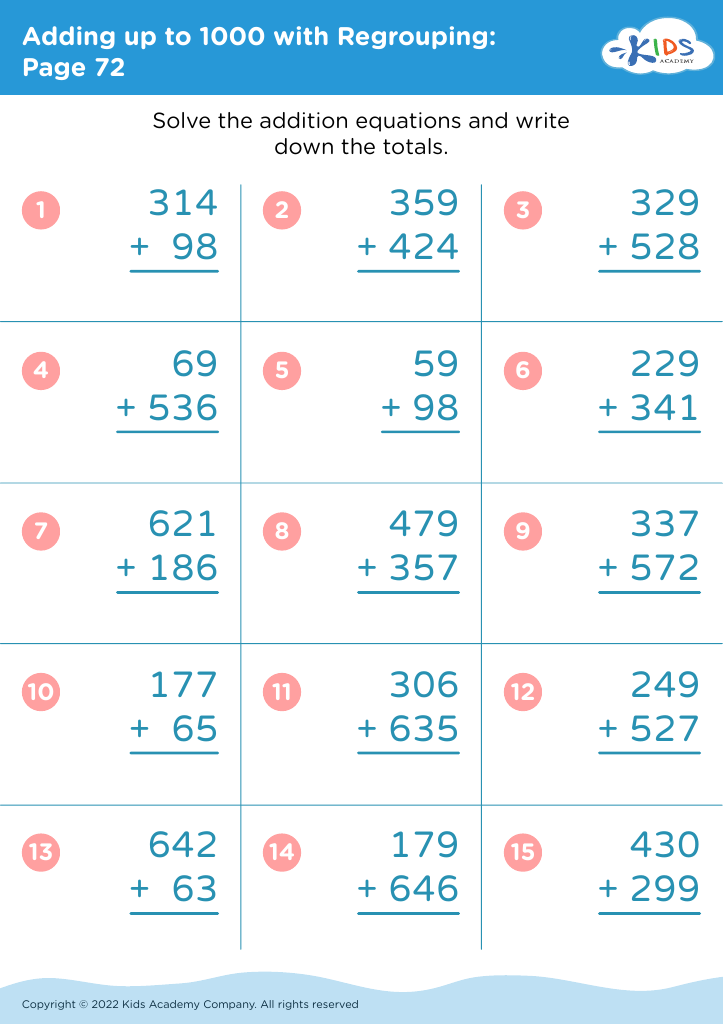
Adding up to 1000 with Regrouping: Page 72
Worksheet
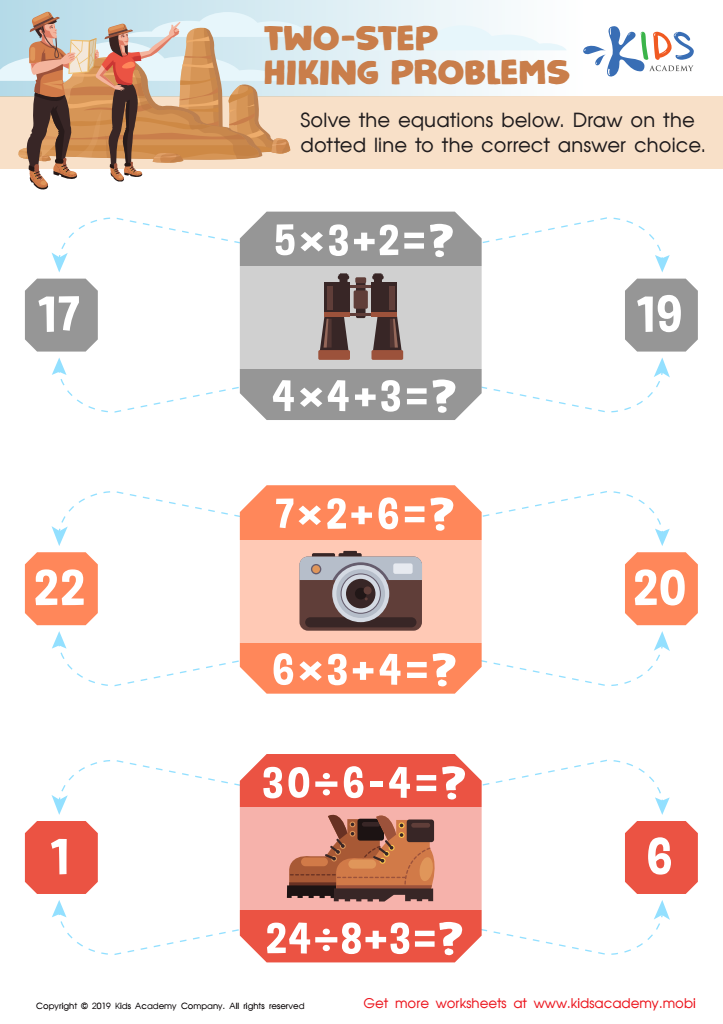
Two-Step Hiking Problems Worksheet

Two-Step Hiking Problems Worksheet

Help your kids ease into math with this worksheet. Solve the three basic equations, then draw on the dotted line to the correct answer. You can help your kids make their journey smoother by guiding them through it.
Two-Step Hiking Problems Worksheet
Worksheet
What's the Missing Side Worksheet
What's the Missing Side Worksheet
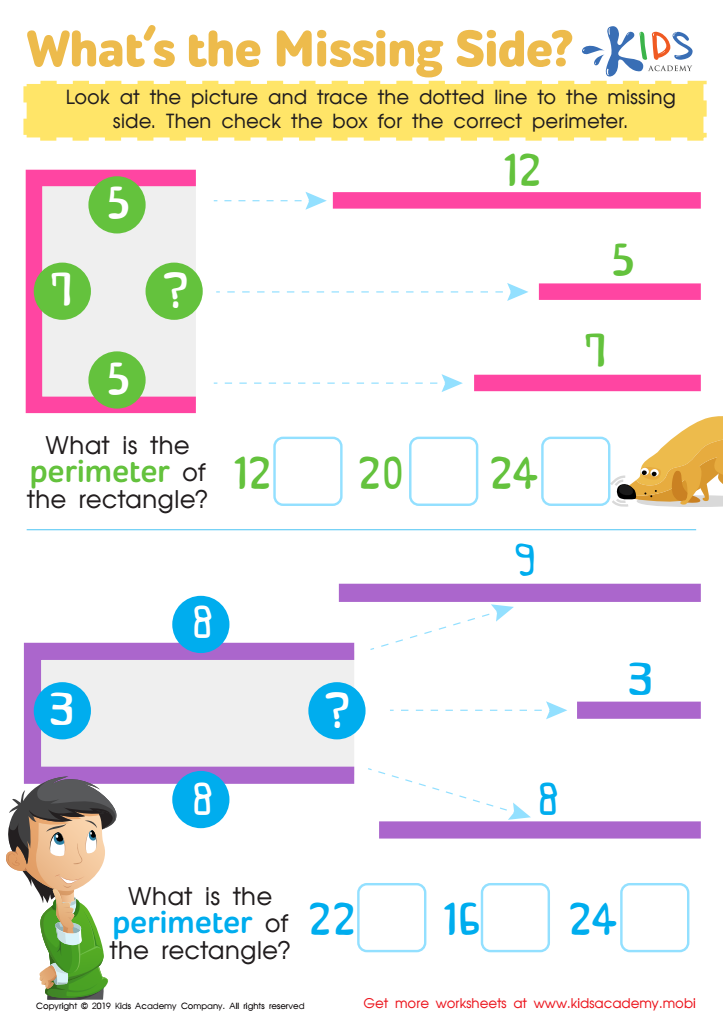
Assist your pupils in improving math skills with fun exercises like the tracing sheet. Show them the picture and guide them to trace the missing side. Ask them to check the box of the right perimeter afterwards. Doing this regularly can help them to enjoy and appreciate the subject more.
What's the Missing Side Worksheet
Worksheet
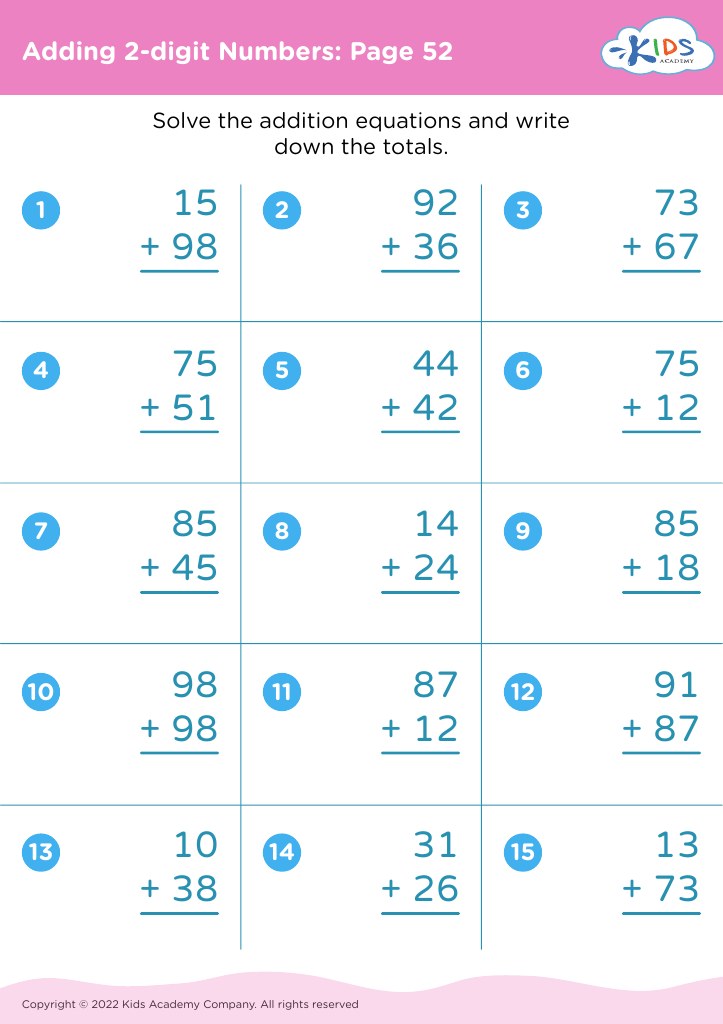
Adding 2-digit Numbers: Page 52

Adding 2-digit Numbers: Page 52

Adding 2-digit Numbers: Page 52
Worksheet
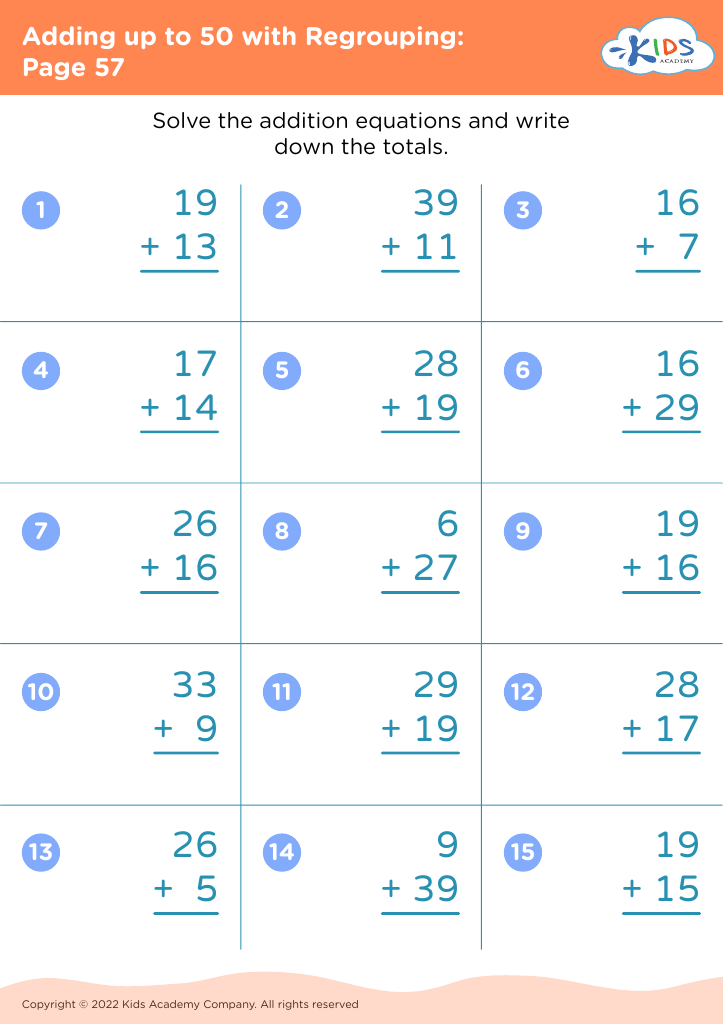
Adding up to 50 with Regrouping: Page 57
Worksheet
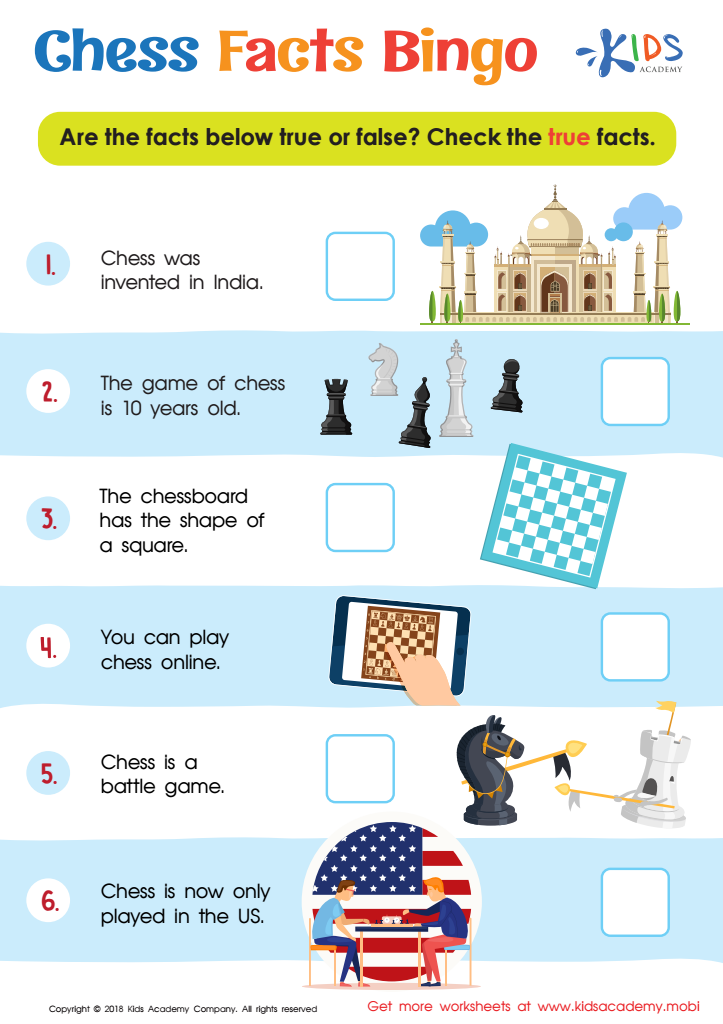
Chess Facts Bingo Worksheet
Chess Facts Bingo Worksheet
Help your child assess their knowledge of chess with our simple worksheet. It contains six questions; read them to your child and ask them if the statements are true or false. Once they check the boxes for the true statements, you'll have a better understanding of their understanding of the game.
Chess Facts Bingo Worksheet
Worksheet
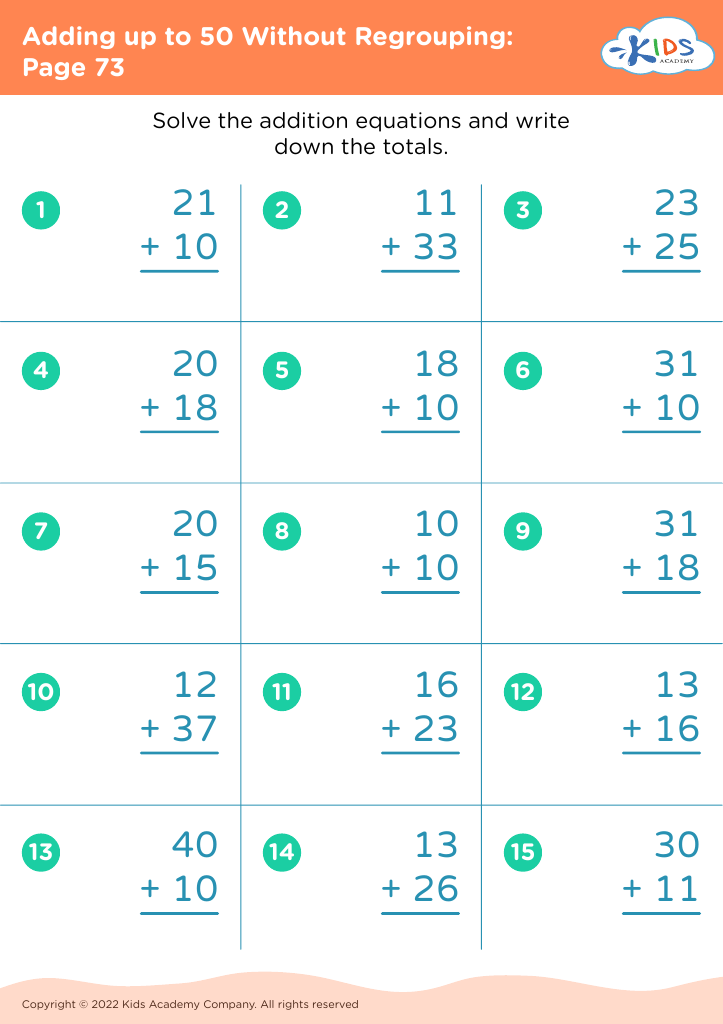
Adding up to 50 Without Regrouping: Page 73
Worksheet
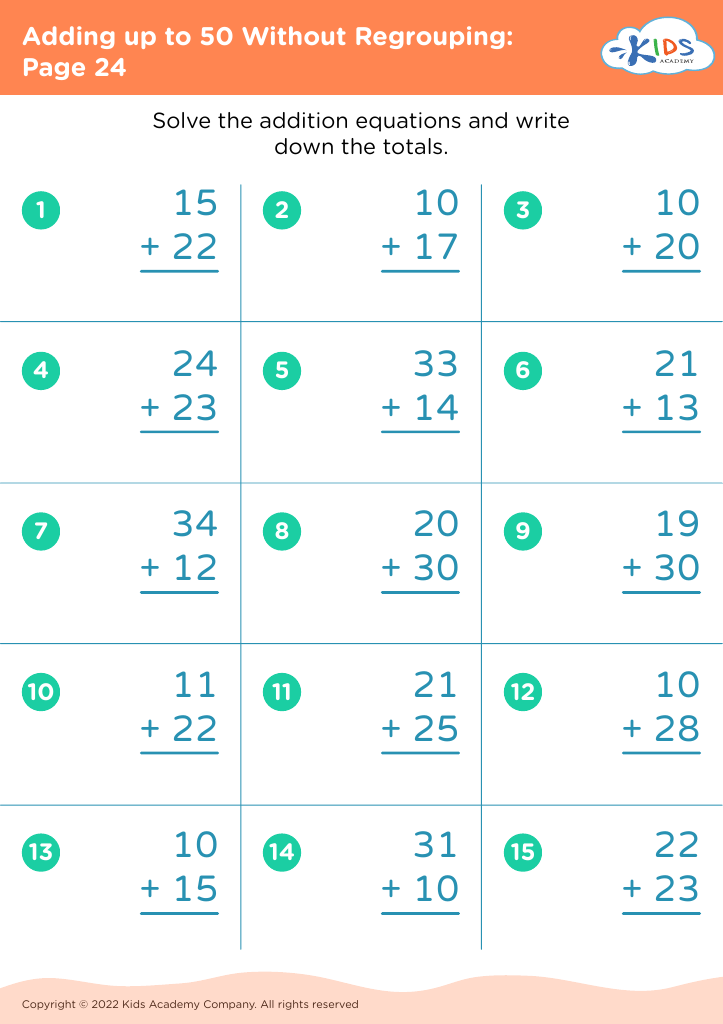
Adding up to 50 Without Regrouping: Page 24
Worksheet
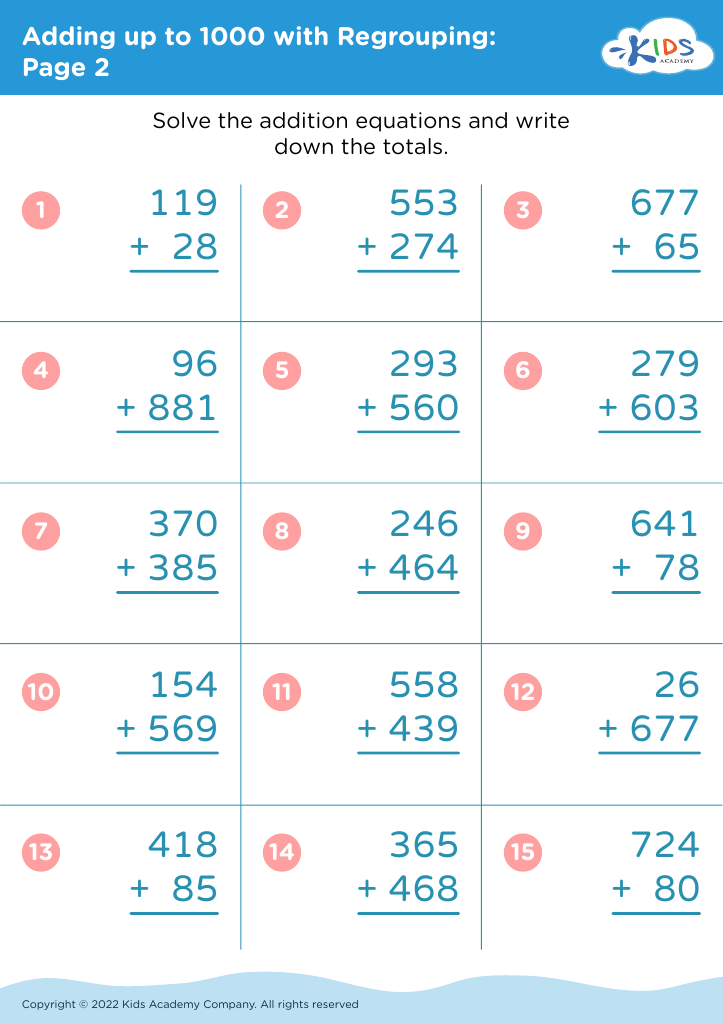
Adding up to 1000 with Regrouping: Page 2
Worksheet


Logical thinking math for 8-year-olds is essential for fostering critical thinking skills and enhancing problem-solving abilities. At this age, children are developing cognitive skills that will serve as the foundation for their future academic success. Engaging in logical reasoning helps them understand concepts such as pattern recognition, sequencing, and cause-and-effect relationships, which are vital in math and beyond.

Furthermore, logical thinking encourages students to approach problems systematically, breaking them down into manageable parts rather than feeling overwhelmed. This skill is not only critical in mathematics but is applicable across various subjects and real-life situations. When parents and teachers prioritize logical thinking in math, they help nurture a love for learning and curiosity, which can lead to increased engagement and motivation in school.

Additionally, as children develop logical thinking, they gain confidence in their skills, which is crucial during their formative years. This confidence can enhance self-efficacy, encouraging them to tackle challenges courageously. Ultimately, fostering logical thinking challenges students to think deeply, reason accurately, and apply their knowledge in diverse ways—skills that will benefit them well into adulthood. By investing time and resources in developing these skills, parents and teachers pave the way for lifelong learners.