Welcome to our “Understand Fractions” math worksheets designed specifically for 8-year-olds! These engaging and interactive worksheets help young learners grasp the fundamental concepts of fractions in a fun and relatable way. With a variety of exercises, children will explore equivalent fractions, compare and contrast different fractions, and practice adding and subtracting simple fractions. Each worksheet is crafted to reinforce understanding and boost confidence in math skills. Parents and teachers can use these resources to support classroom learning or enhance home study. Start your journey towards mastering fractions with our comprehensive and user-friendly worksheets today!
Check out this FREE Trial Lesson on Math for age 8!

T

Favorites
With answer key
Interactive
  • 8
  • Understand fractions
  • Math
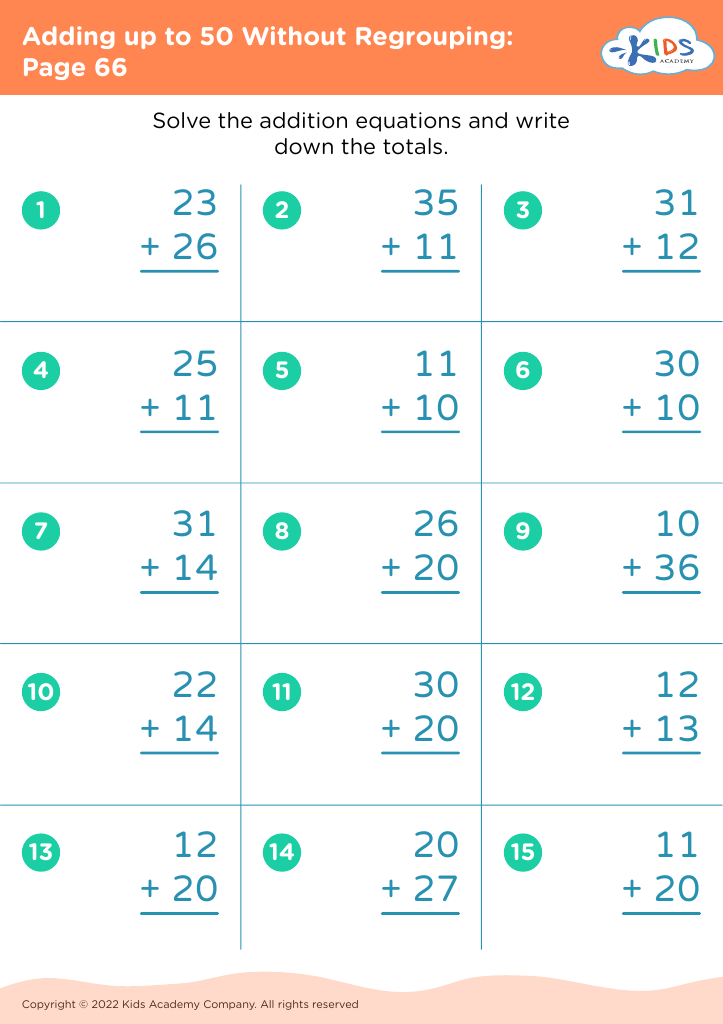
Adding up to 50 Without Regrouping: Page 66
Worksheet
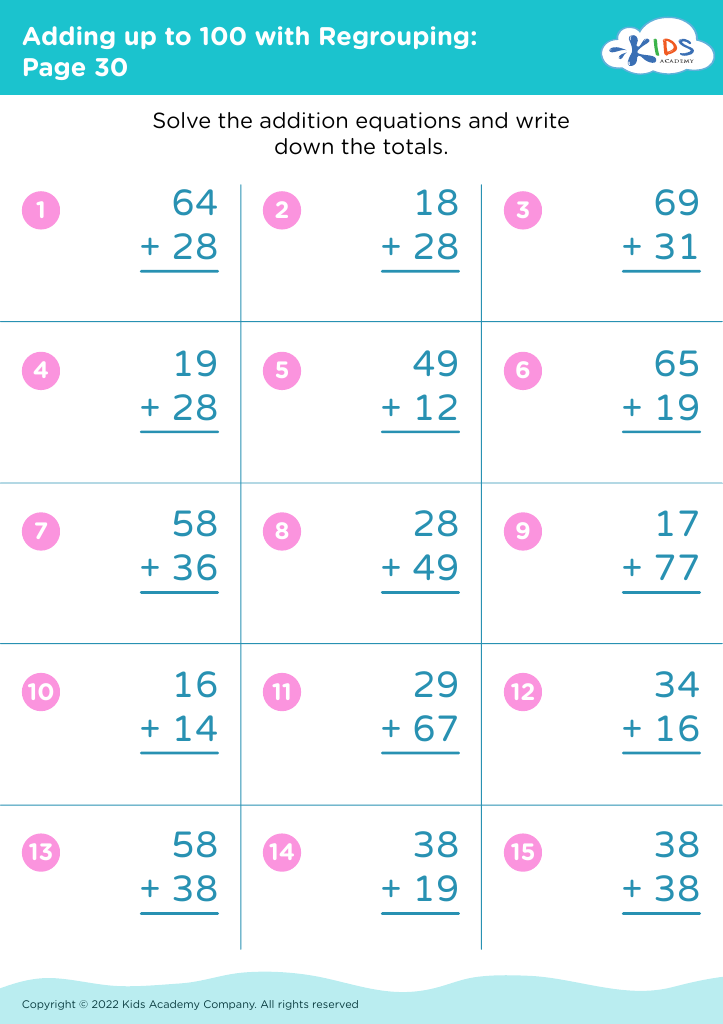
Adding up to 100 with Regrouping: Page 30
Worksheet
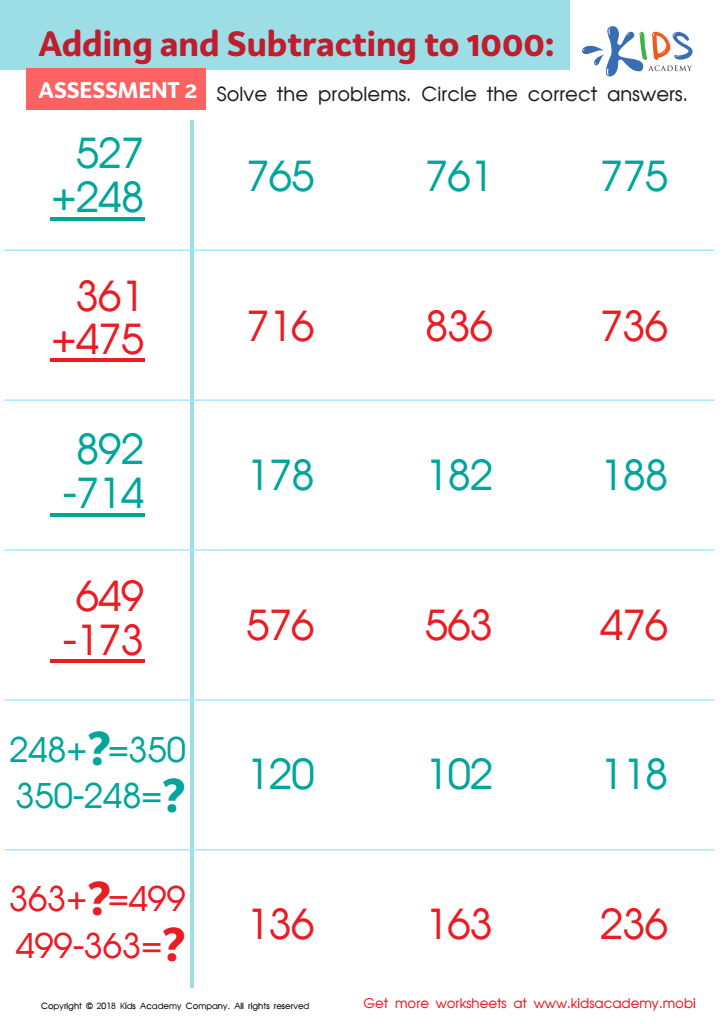
Adding and Subtracting to 1 Worksheet: Assessment 2

Adding and Subtracting to 1 Worksheet: Assessment 2

Test your child's addition and subtraction of 3-digit numbers with this assessment worksheet! They'll practice regrouping and pre-algebra skills to show their expertise. Have them work through the page and circle their answers, then see how many they got right to check their understanding and progress.
Adding and Subtracting to 1 Worksheet: Assessment 2
Worksheet
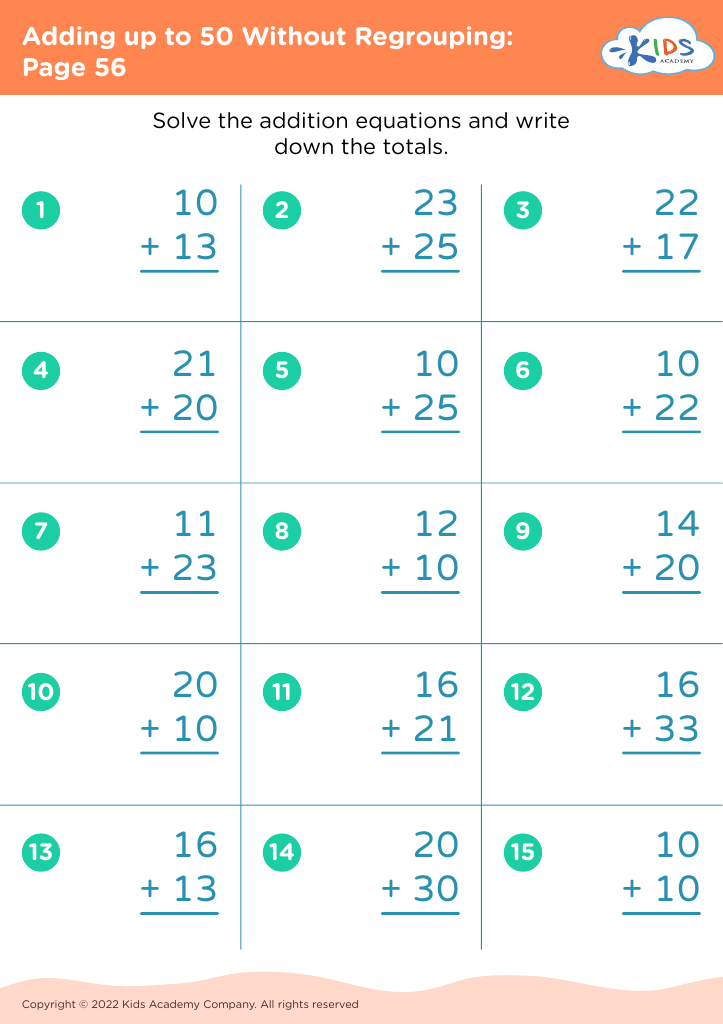
Adding up to 50 Without Regrouping: Page 56
Worksheet
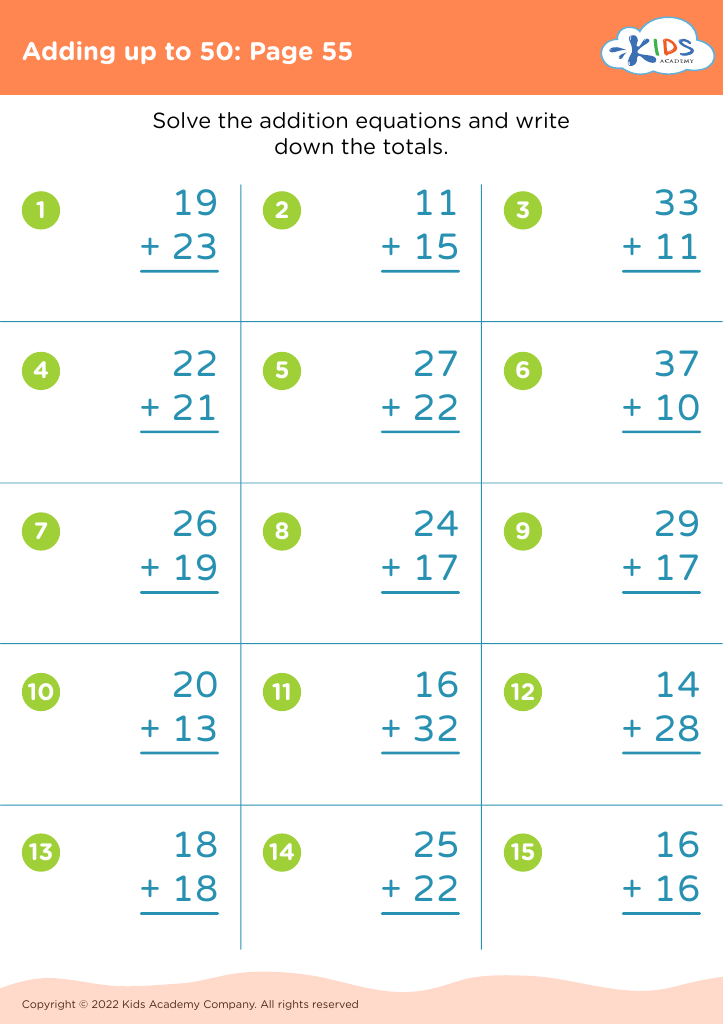
Adding up to 50: Page 55

Adding up to 50: Page 55

Adding up to 50: Page 55
Worksheet
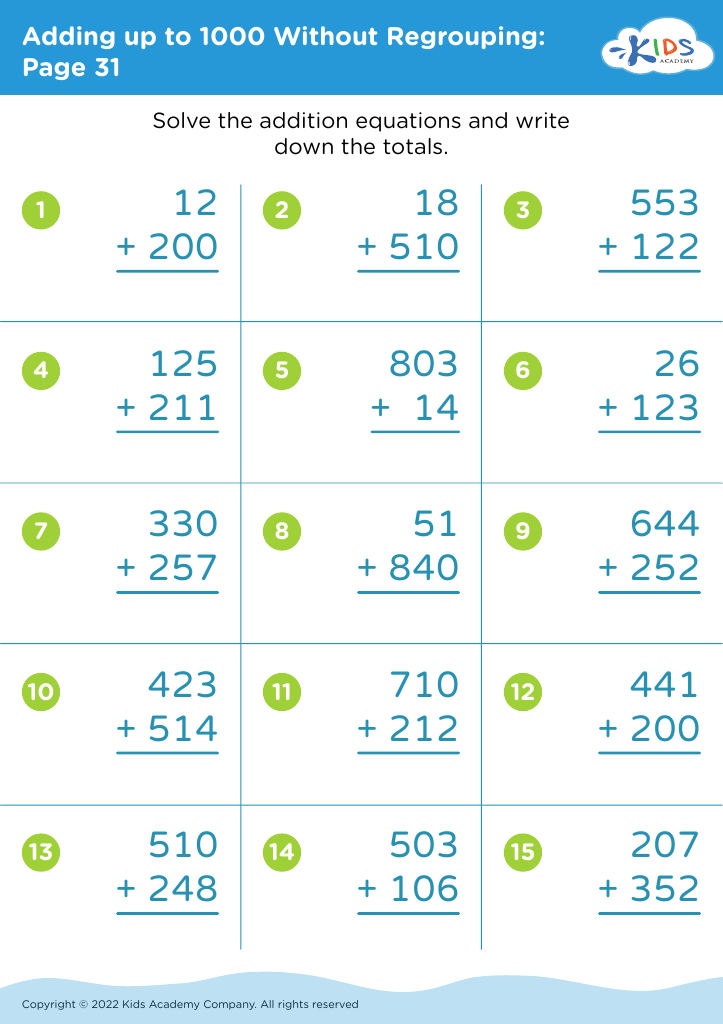
Adding up to 1000 Without Regrouping: Page 31
Worksheet
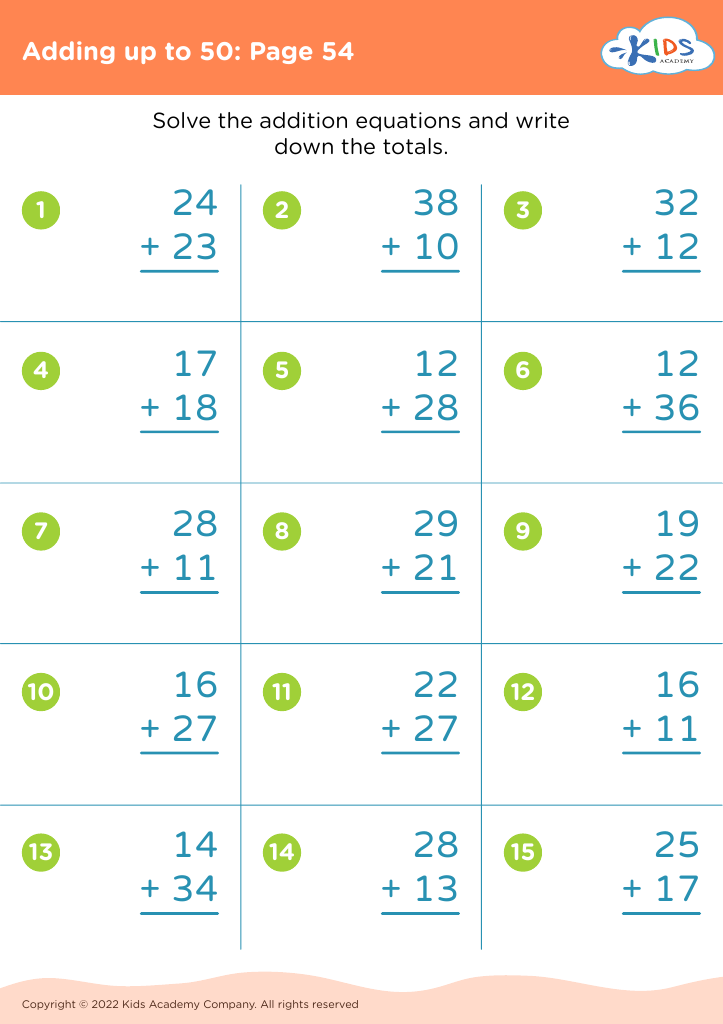
Adding up to 50: Page 54

Adding up to 50: Page 54

Adding up to 50: Page 54
Worksheet
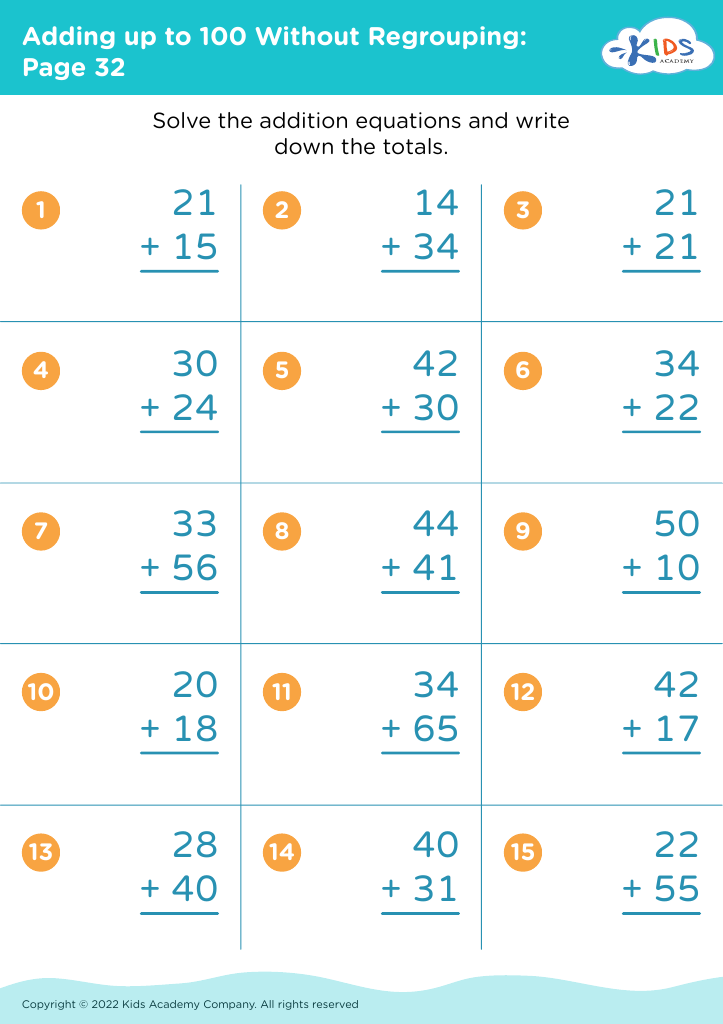
Adding up to 100 Without Regrouping: Page 32
Worksheet
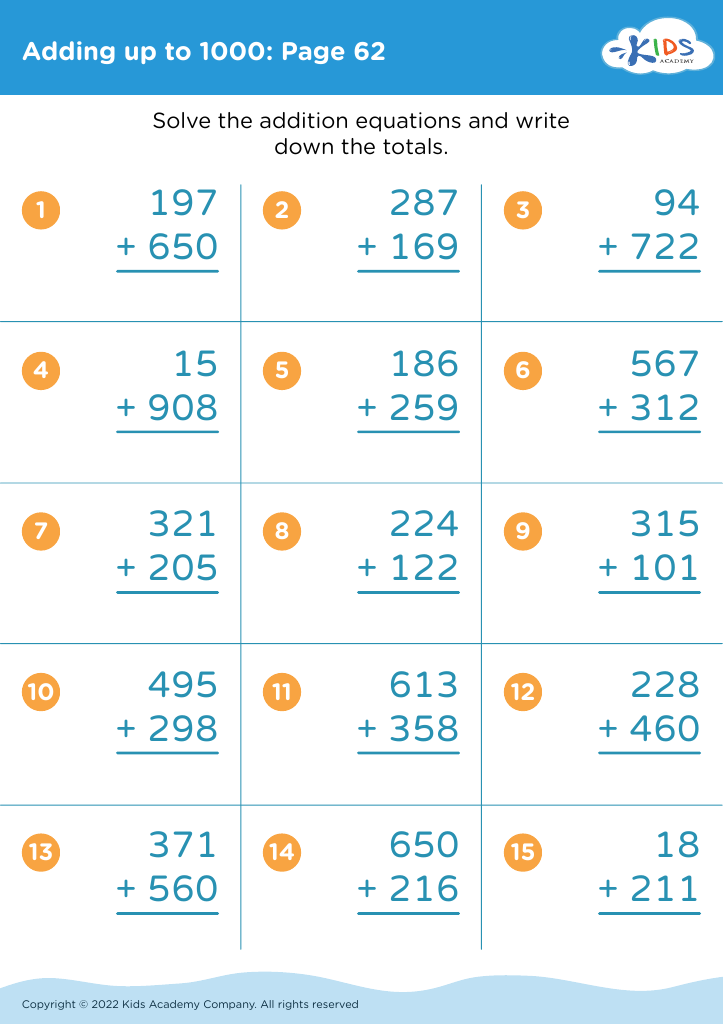
Adding up to 1000: Page 62

Adding up to 1000: Page 62

Adding up to 1000: Page 62
Worksheet
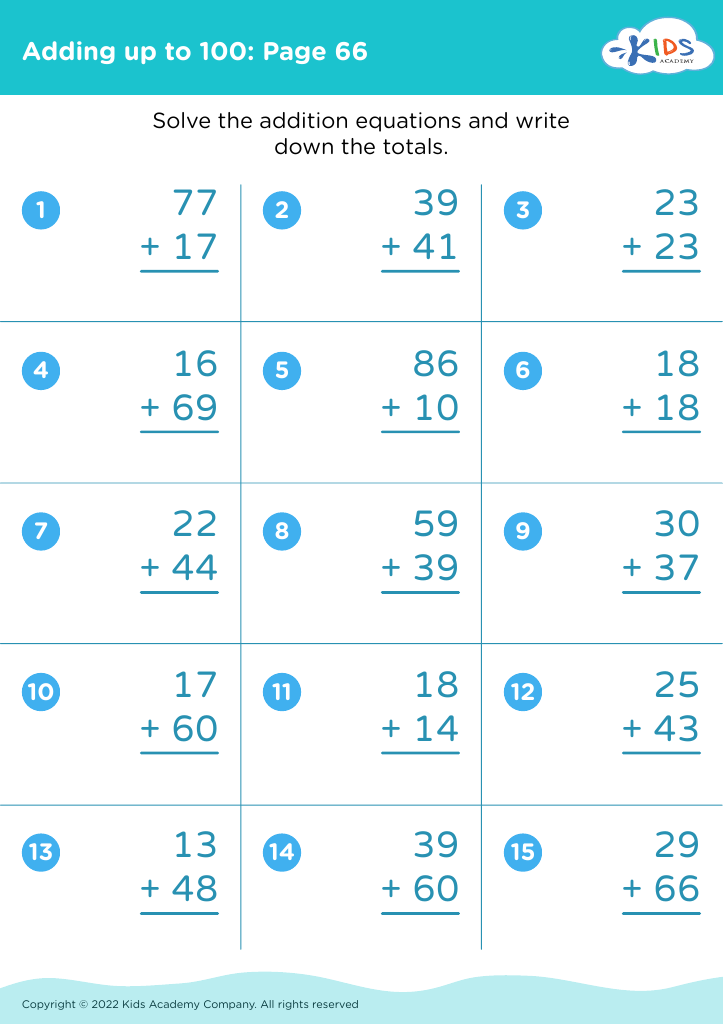
Adding up to 100: Page 66

Adding up to 100: Page 66

Adding up to 100: Page 66
Worksheet
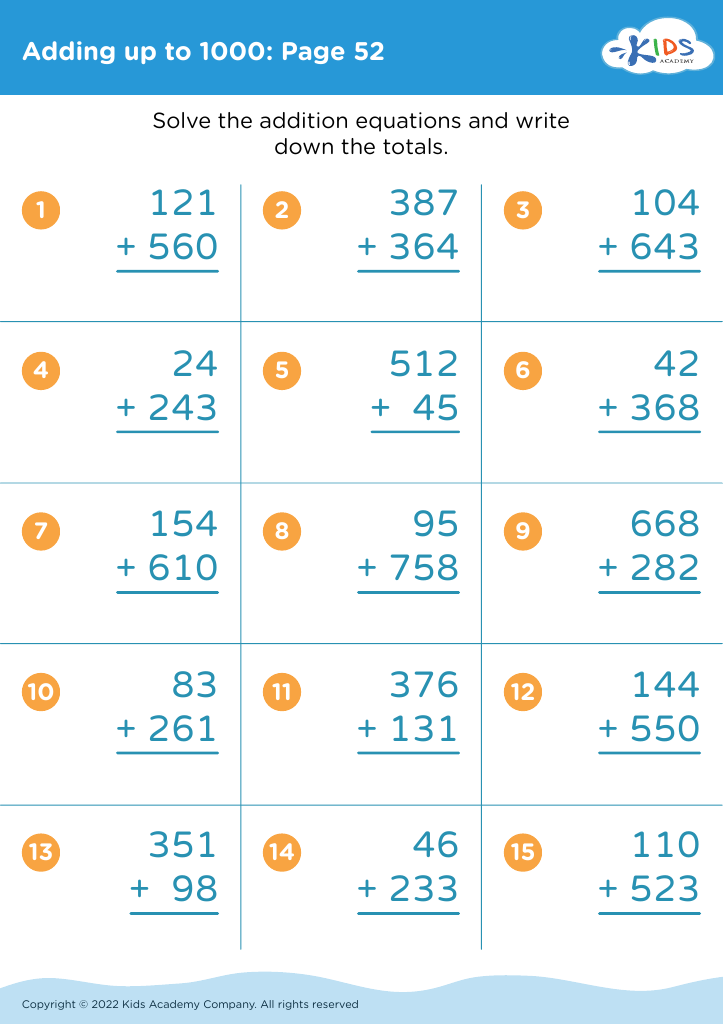
Adding up to 1000: Page 52

Adding up to 1000: Page 52

Adding up to 1000: Page 52
Worksheet
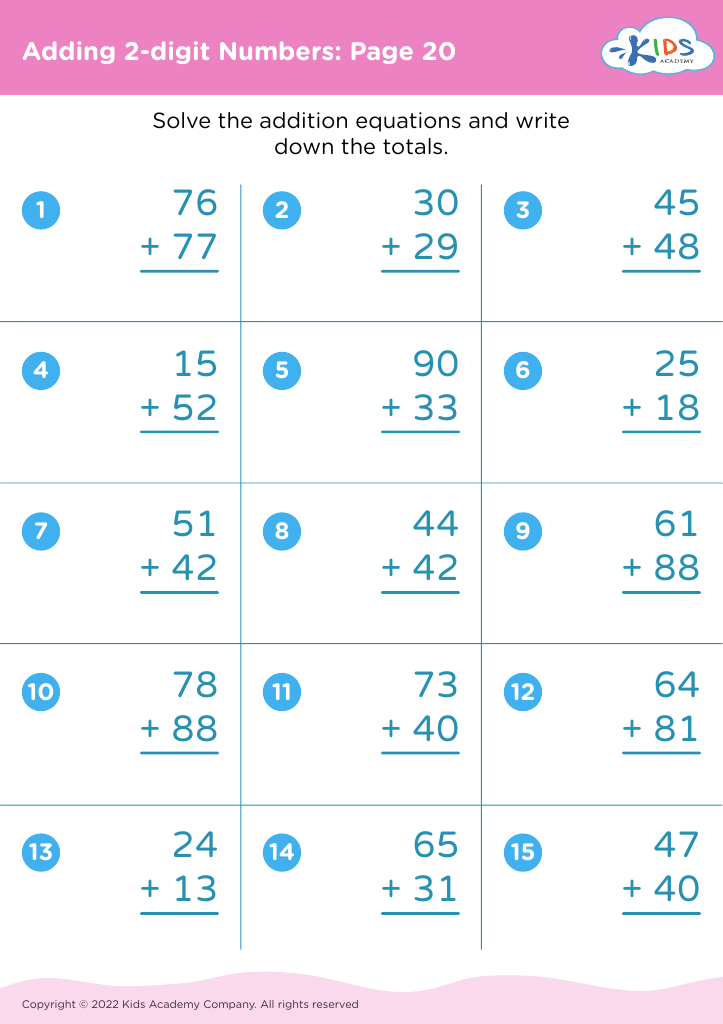
Adding 2-digit Numbers: Page 20

Adding 2-digit Numbers: Page 20

Adding 2-digit Numbers: Page 20
Worksheet
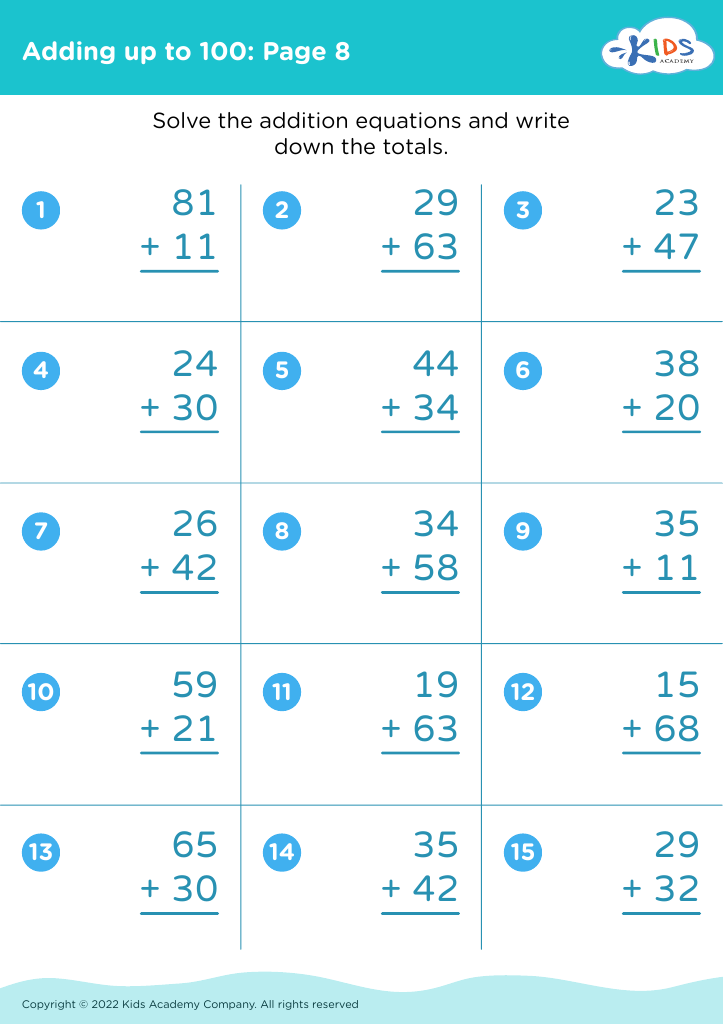
Adding up to 100: Page 8

Adding up to 100: Page 8

Adding up to 100: Page 8
Worksheet
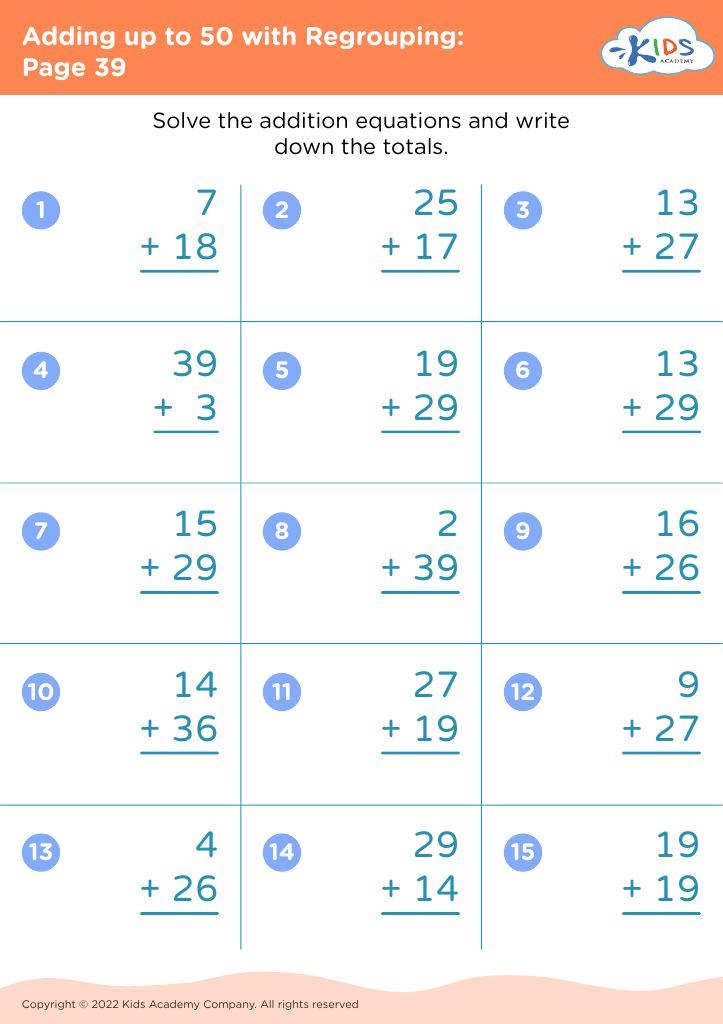
Adding up to 50 with Regrouping: Page 39
Worksheet
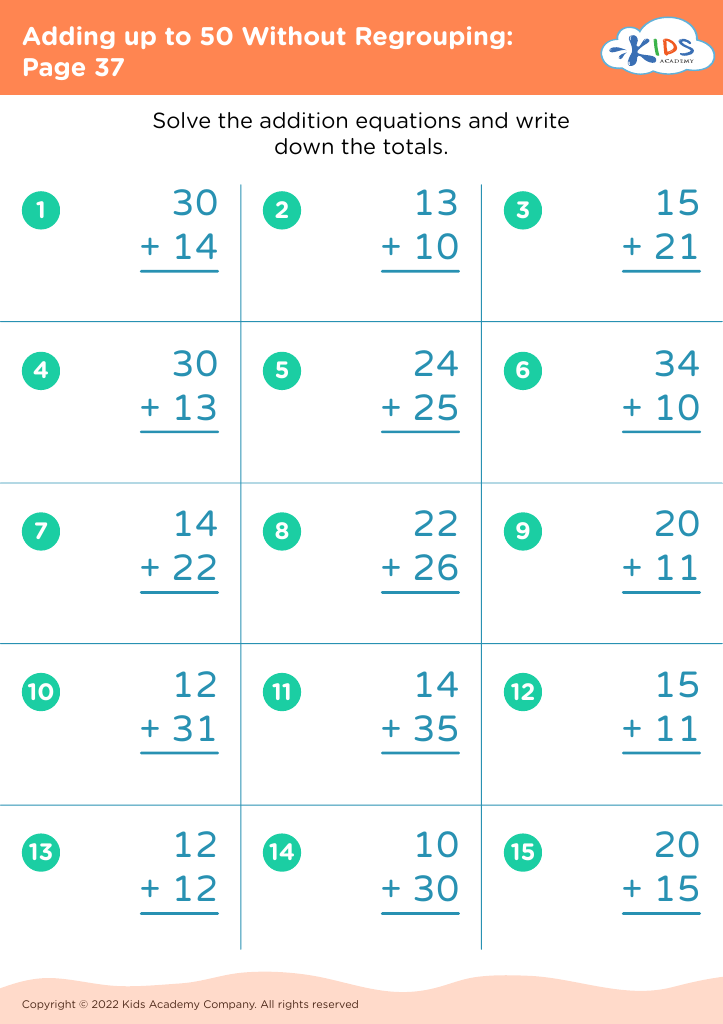
Adding up to 50 Without Regrouping: Page 37
Worksheet
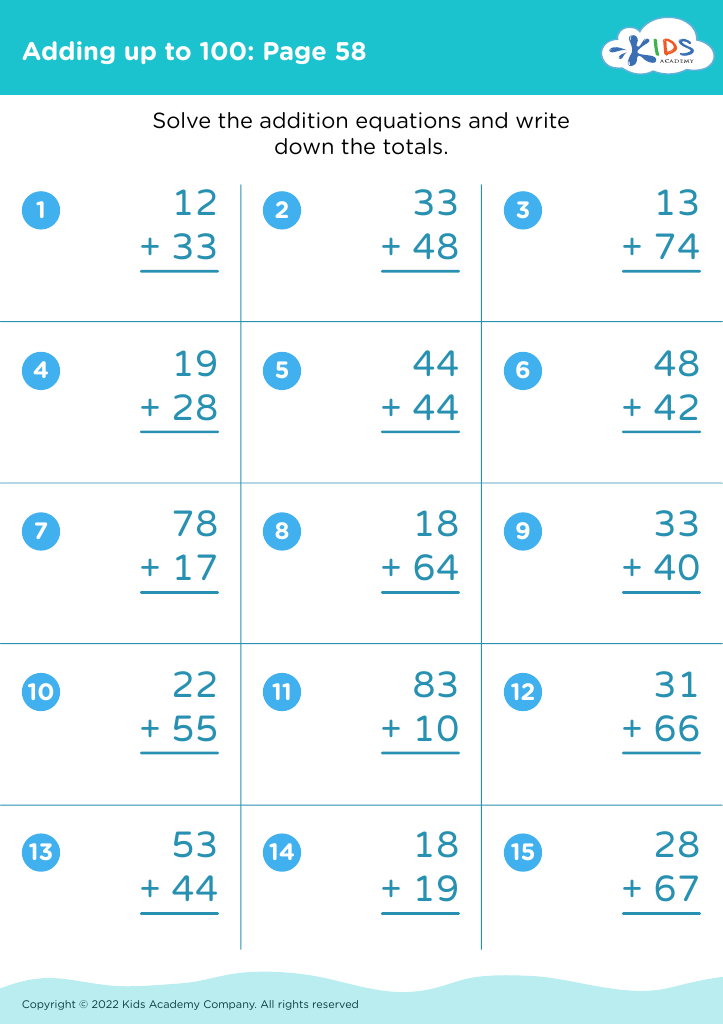
Adding up to 100: Page 58

Adding up to 100: Page 58

Adding up to 100: Page 58
Worksheet
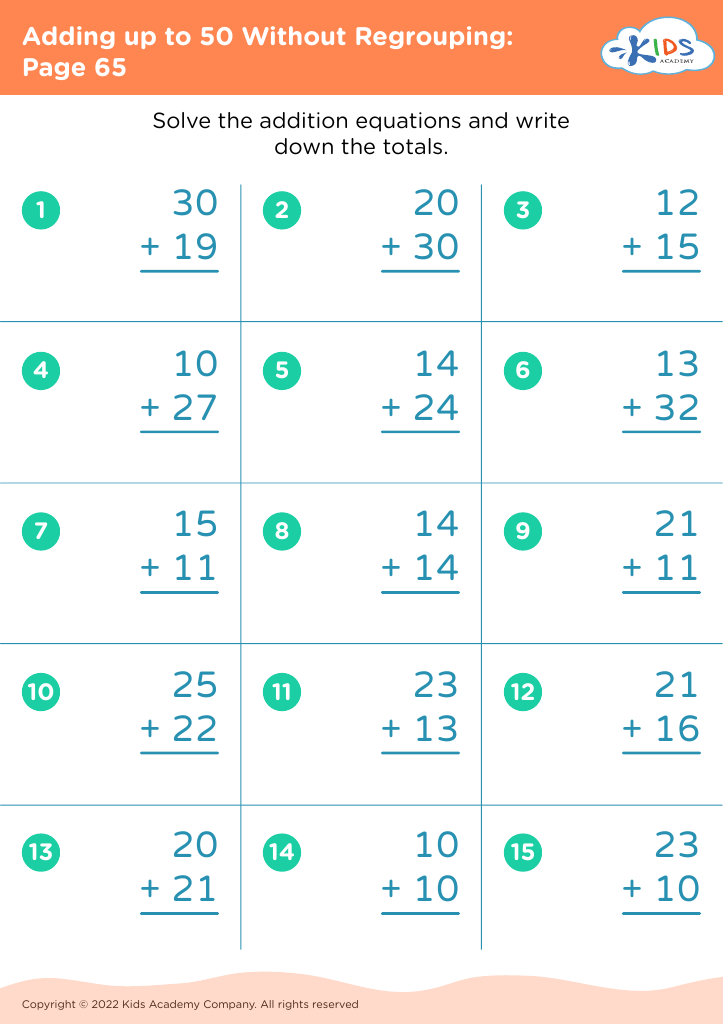
Adding up to 50 Without Regrouping: Page 65
Worksheet
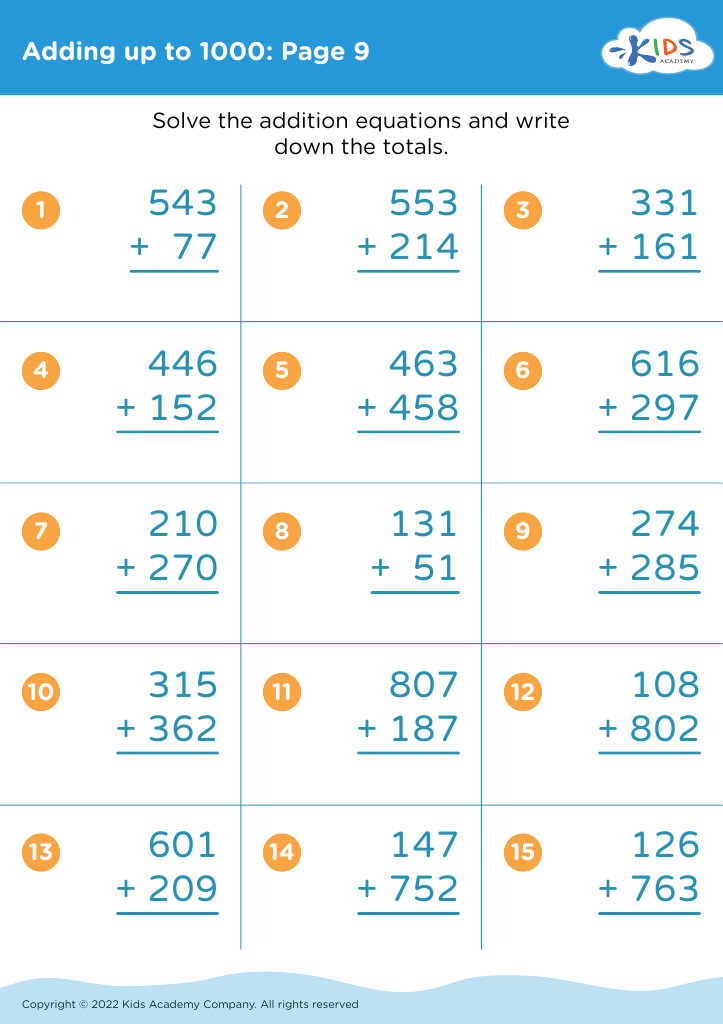
Adding up to 1000: Page 9

Adding up to 1000: Page 9

Adding up to 1000: Page 9
Worksheet
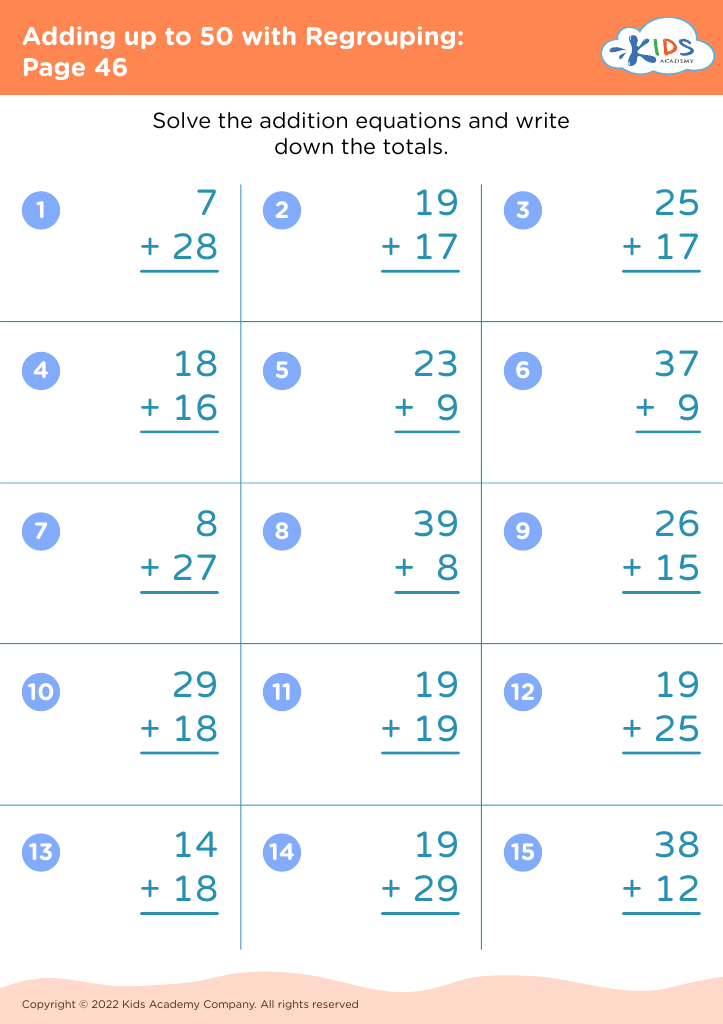
Adding up to 50 with Regrouping: Page 46
Worksheet
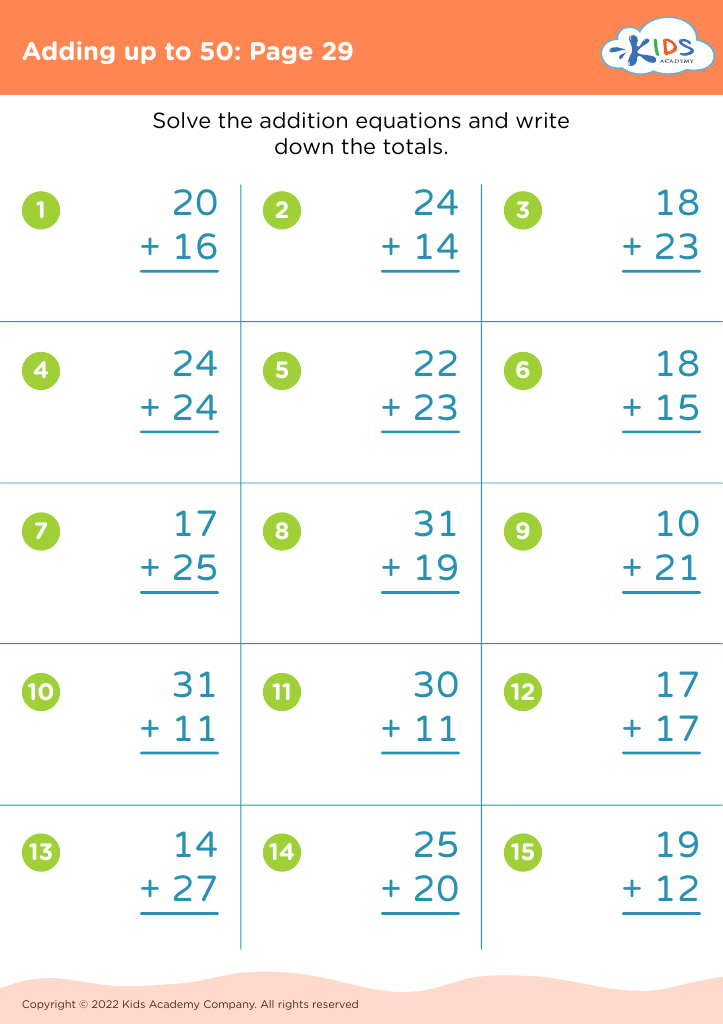
Adding up to 50: Page 29

Adding up to 50: Page 29

Adding up to 50: Page 29
Worksheet


Understanding fractions is crucial for 8-year-olds as it lays the foundation for their future math skills and everyday decision-making. At this age, children are beginning to explore more complex mathematical concepts, and grasping fractions is essential for promoting their numerical fluency.

Fractions not only teach children how to divide wholes into parts but also enhance their problem-solving and critical thinking skills. They learn to recognize parts of a whole, compare different quantities, and understand concepts like equivalence, which is vital for more advanced mathematics. Such foundational understanding prepares them for topics in decimals, percentages, and algebra as they progress in school.

Moreover, fractions are a part of daily life—cooking, shopping, and sharing all involve fractional thinking. By mastering fractions, children will be better equipped to handle practical situations, fostering independence and confidence in their everyday choices.

Lastly, encouraging a positive attitude towards math during this formative stage can aid in combating math anxiety in later years. When parents and teachers emphasize the importance of fractions, they not only help children comprehend mathematical concepts but also inspire a lifelong appreciation for learning. This supportive environment cultivates both academic success and personal growth.