
Vocabulary Building Math Worksheets for 8-Year-Olds
8 filtered results
Difficulty Level
Grade
Age
-
From - To
Subject
Activity
Standards
Unlock your child’s potential with our engaging Vocabulary Building Math Worksheets designed for 8-year-olds! These fun, interactive worksheets seamlessly blend vocabulary enrichment with essential math concepts. By helping children learn key math terms and their meanings, we empower them to communicate their understanding effectively. Our activities are tailored to boost literacy and numeracy, making learning enjoyable and effective. Perfect for classroom use or home practice, these worksheets support critical thinking skills and encourage a love for learning. Dive into a world of numbers and words, and watch your child's confidence soar in math and language! Explore our collection today!
Favorites
With answer key
Interactive
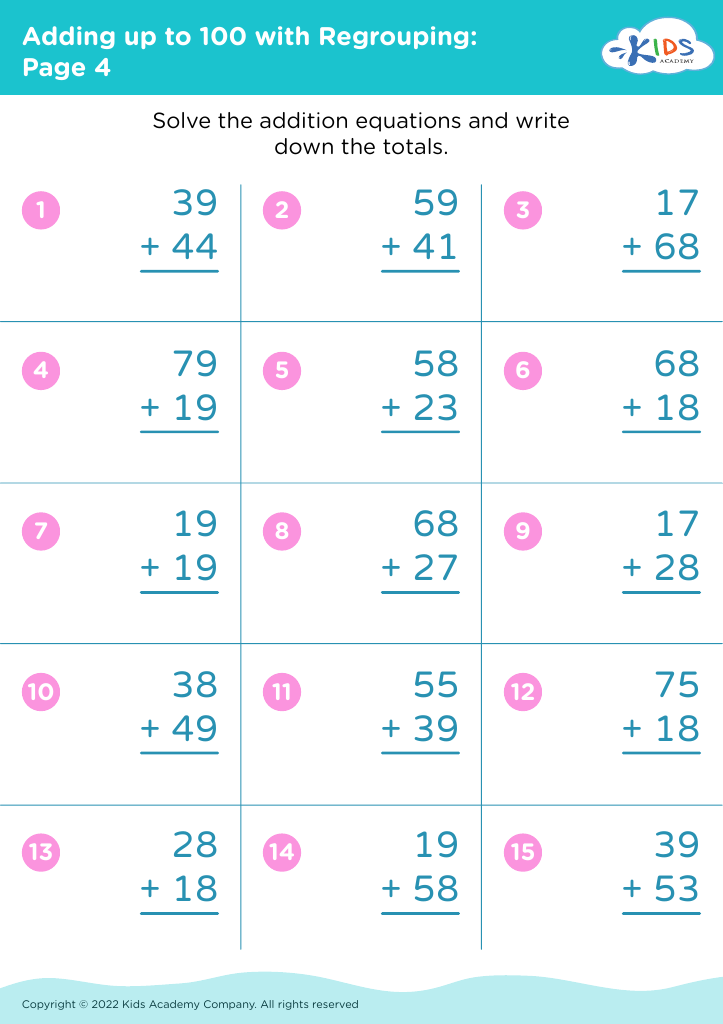
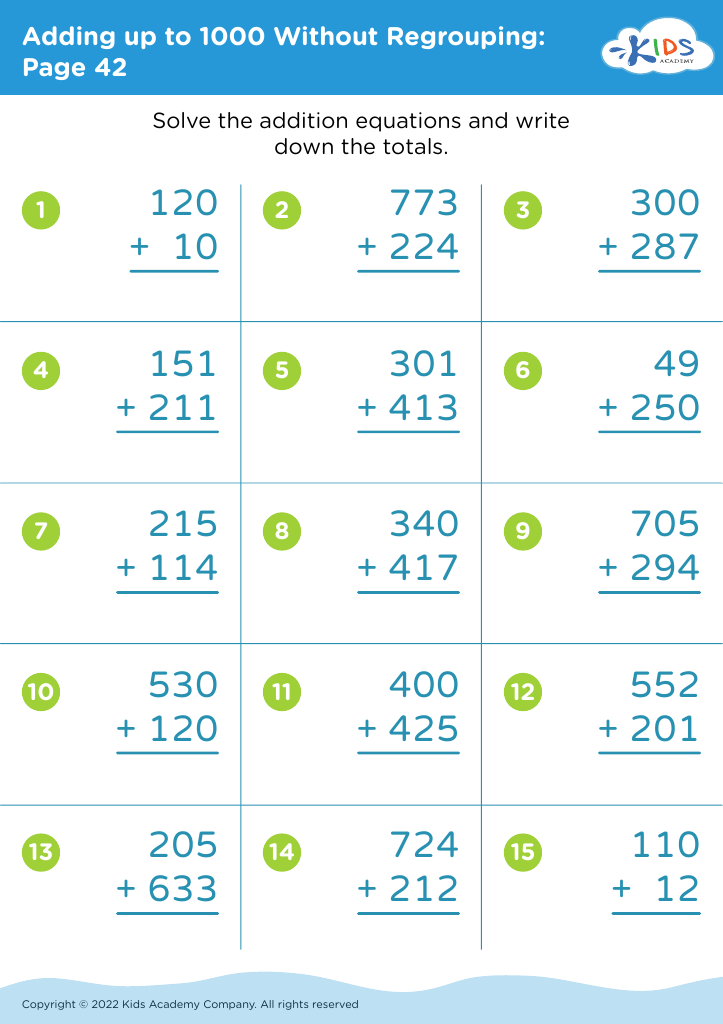
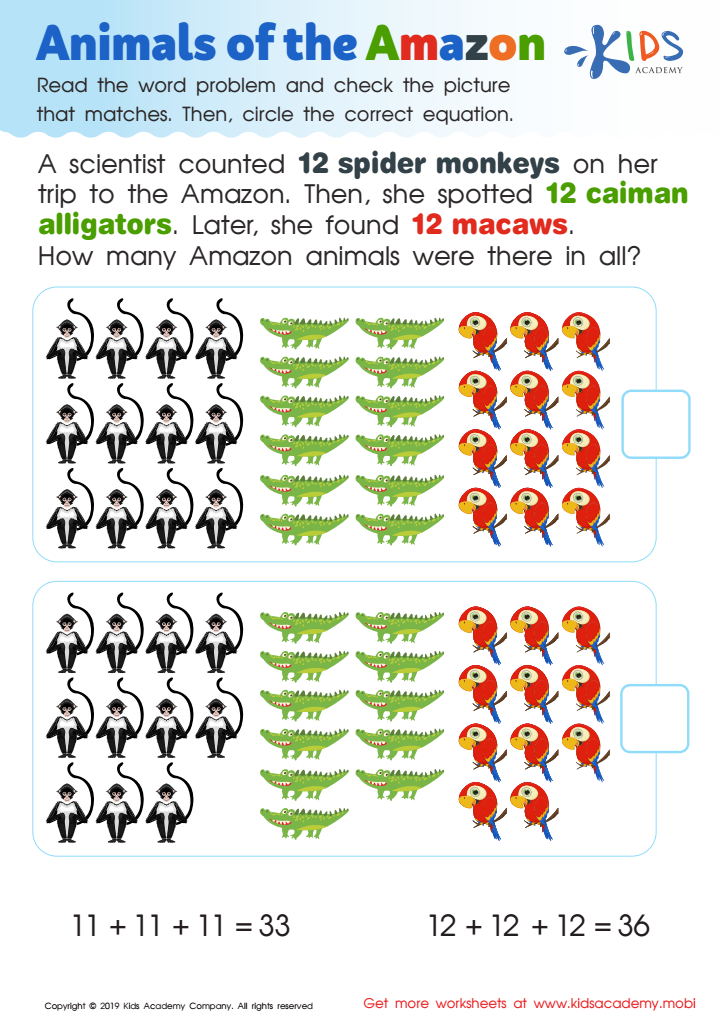
Animals of Amazon Worksheet
Kids will love exploring the Amazon while solving addition problems on this colorful PDF worksheet. They need to pay attention to the bolded info in each word problem to figure out the equation picture that matches. It's an exciting way to learn about the Amazon and practice adding multiple numbers!
 Assign to My Students
Animals of Amazon Worksheet
Worksheet
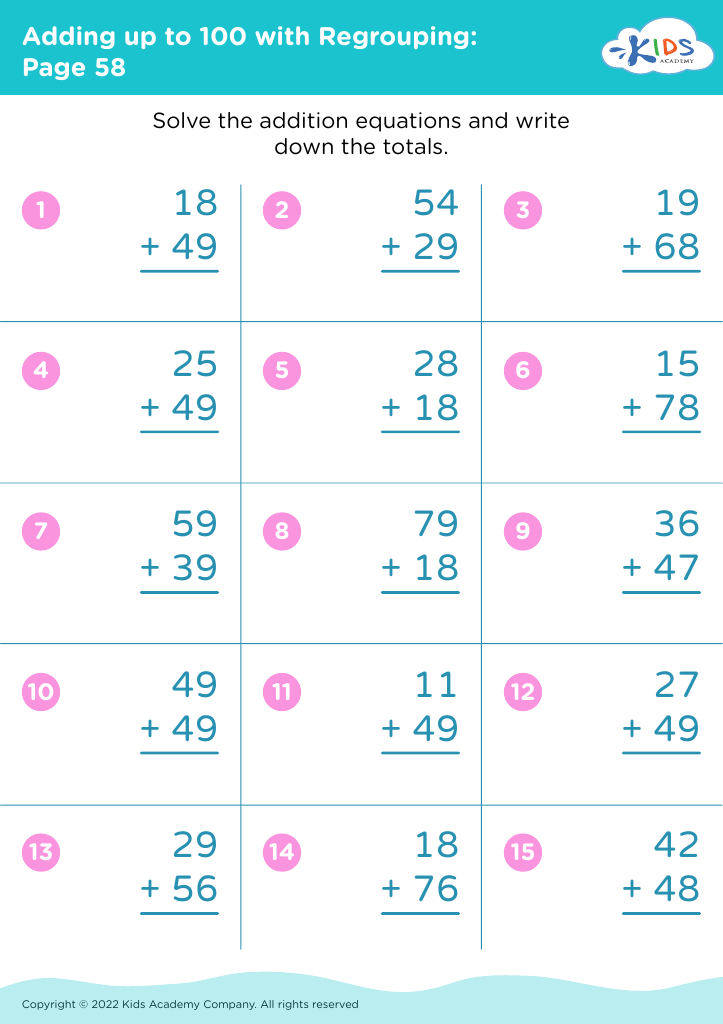
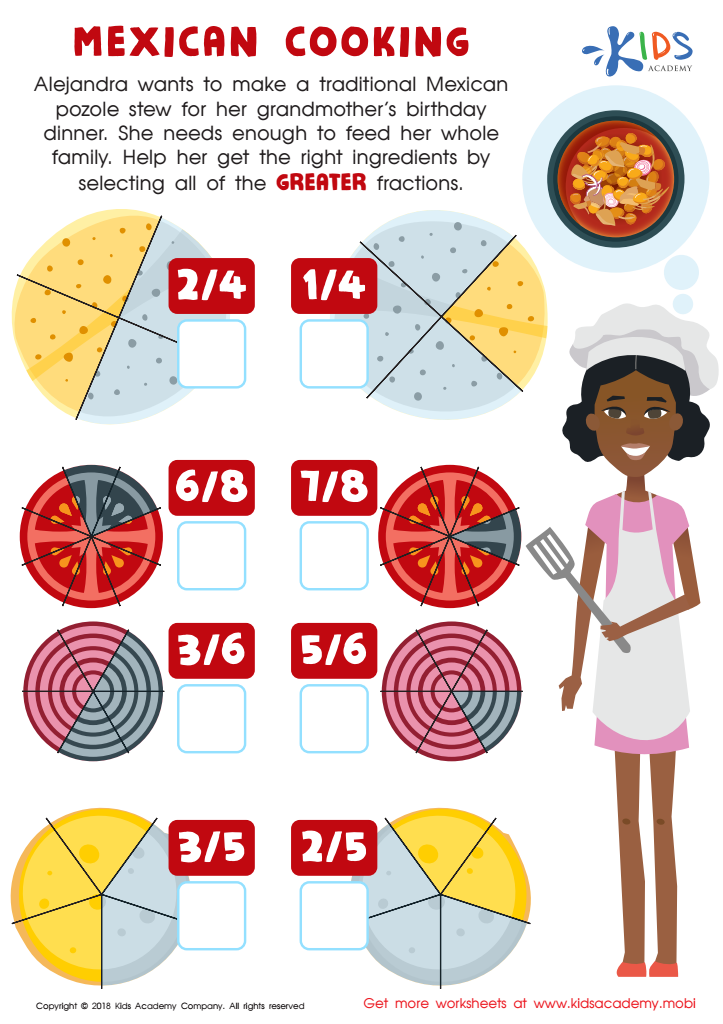
Mexican Cooking Worksheet
Alejandra needs to make a traditional Mexican pazole stew that will feed her whole family. Help her select the right ingredients by choosing the greater fractions in this worksheet. Mexicans have an amazing culture with many unique holidays, customs and dishes - explore it with your kids in your local neighbourhood!
Mexican Cooking Worksheet
Worksheet
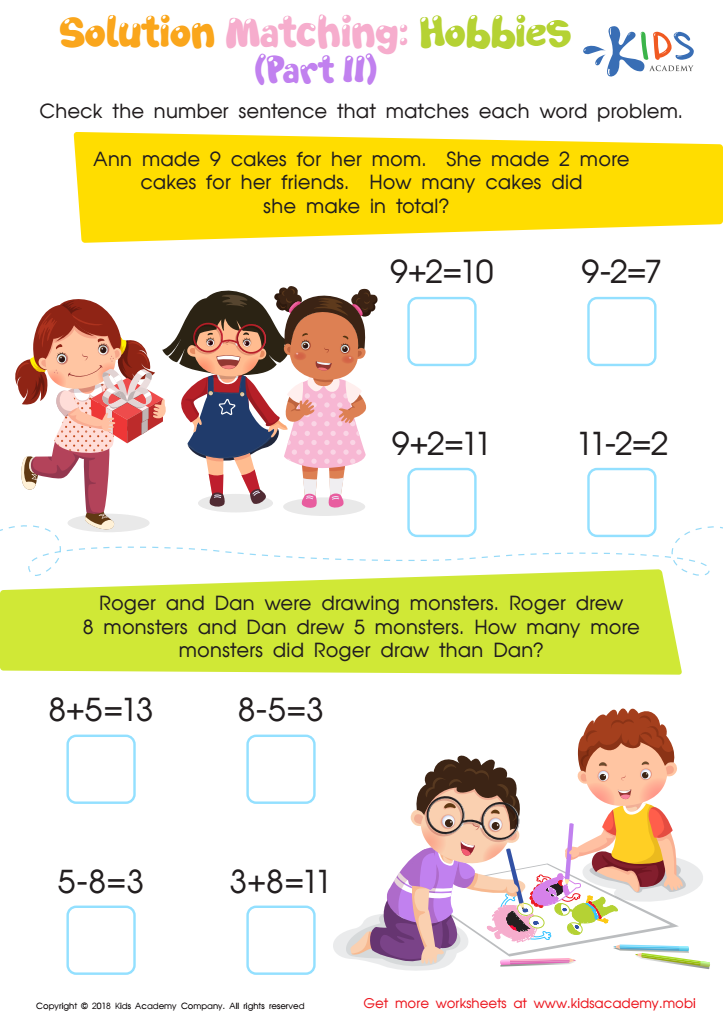
Solution Matching: Hobbies. Part 2 Worksheet
This fun printable worksheet has word problems featuring hobbies your children enjoy! With your child, read through each problem, understanding the numbers and key phrases indicating addition or subtraction. Then, match the correct equation with the solution by checking the box. Math problems are more enjoyable to solve when they’re realistic and engaging!
Solution Matching: Hobbies. Part 2 Worksheet
Worksheet
Join Kids Academy for Free
Who is primarily going to use this learning content?







Vocabulary Building in math is critical for 8-year-olds as it sets the foundation for their overall understanding and competence in the subject. At this age, children are transitioning into more complex mathematical concepts, and having a strong mathematical vocabulary enhances their ability to understand and articulate their thoughts. By using specific terms such as “sum,” “difference,” “multiplier,” and “fraction,” children can clearly communicate their reasoning and problem-solving strategies, which is essential for both classroom discussions and assessments.
Moreover, a strong mathematical vocabulary aids in comprehension. Many math problems and word problems rely heavily on language, making it vital for students to grasp the meaning of various terms. This understanding links closely to reading skills, enriching their knowledge base and boosting confidence in tackling word-based mathematical questions.
Additionally, supporting vocabulary building fosters a positive attitude towards math. When students articulate their thinking and engage in discussions, they become more invested and less anxious about challenges. For parents and teachers, prioritizing vocabulary expansion in math reinforces critical thinking and lays down a solid groundwork for future learning in mathematics, making it an essential aspect of a child's educational journey. It prepares them not only for academic success but also for real-world problem-solving situations.








