Word identification Building Vocabulary Worksheets for 8-Year-Olds
4 filtered results
-
From - To
Boost your 8-year-old's reading skills with our Word Identification Building Vocabulary Worksheets. Designed specifically for young learners, these engaging activities help kids expand their vocabulary and improve word recognition. Through fun exercises, children match words to pictures, identify common patterns, and practice reading comprehension. These worksheets are perfect for both classroom use and home practice, providing a comprehensive approach to enhancing literary skills. Empower your child to become a confident reader and foster a lifelong love of learning with Kids Academy resources. Explore today and support your child's path to literacy success!
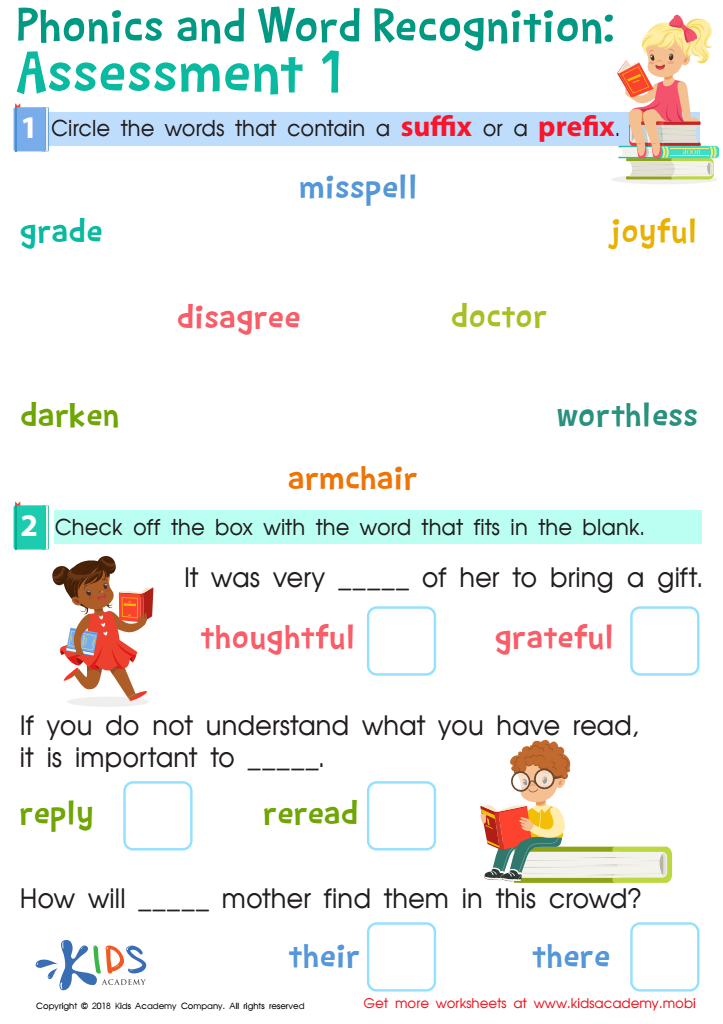
Phonics and Word Recognition: Assessment 1 Worksheet
 Assign to My Students











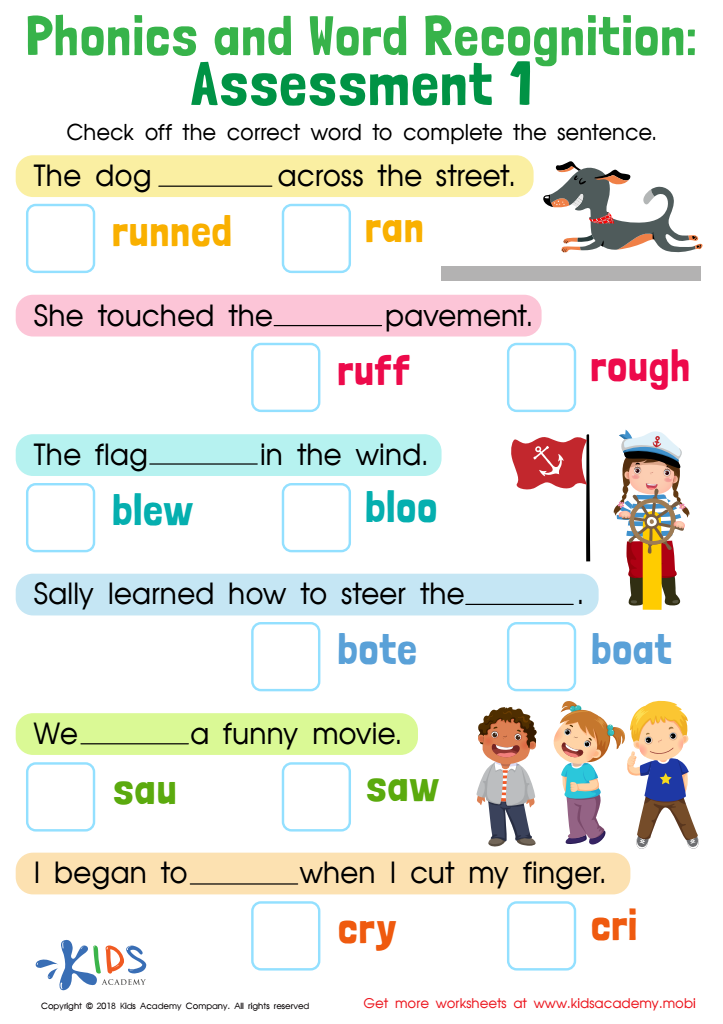
Phonics and Word Recognition: Assessment 1 Worksheet
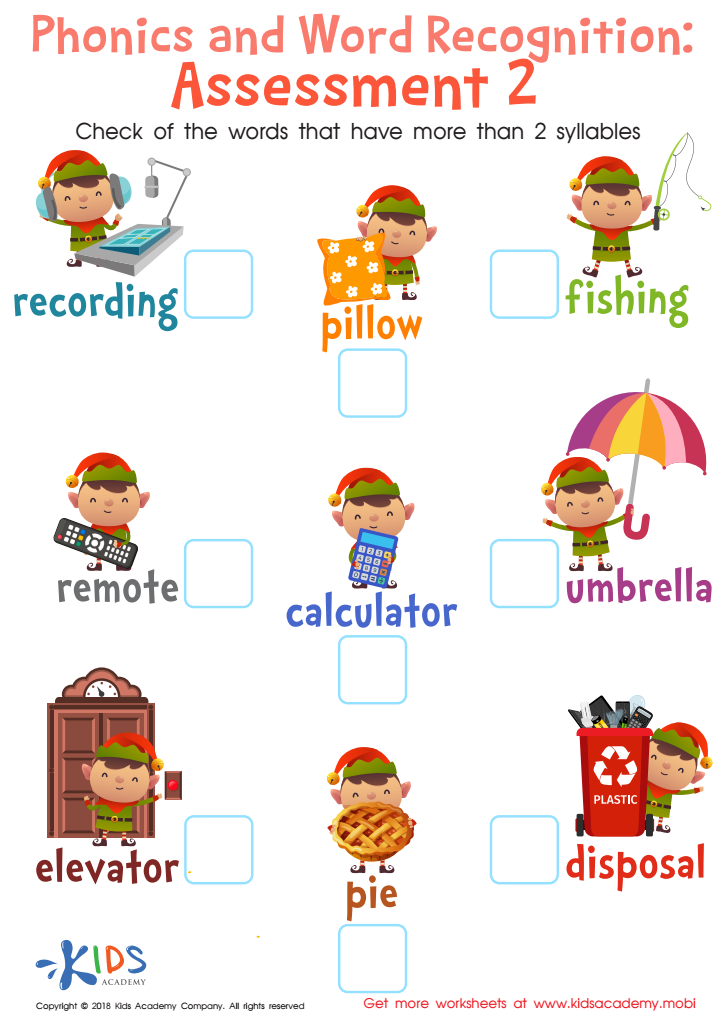
Phonics and Word Recognition: Assessment 2 Worksheet
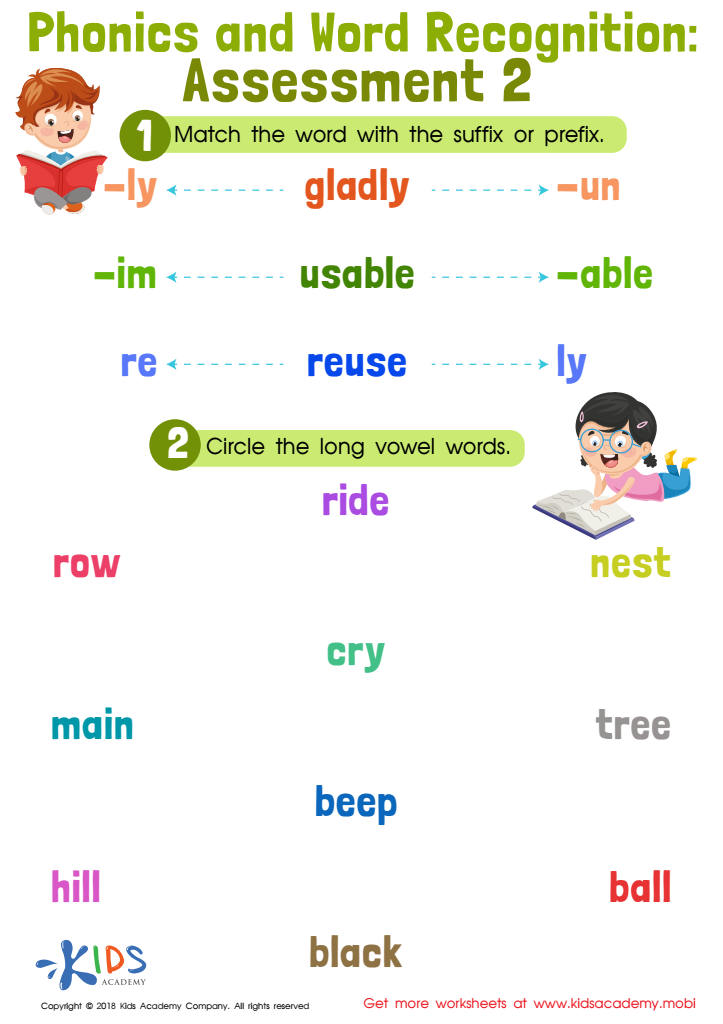
Phonics and Word Recognition: Assessment 2



.jpg)

.jpg)


Parents and teachers should prioritize word identification and vocabulary building for 8-year-olds because it forms the foundation for literacy development, critical thinking, and academic success. At this age, children transition from learning to read to reading to learn. A robust vocabulary enhances their ability to understand and engage with increasingly complex texts. This skill is crucial as it directly impacts comprehension, allowing children to grasp the meaning of what they read and to express themselves more effectively.
Moreover, vocabulary acquisition supports critical thinking by enabling children to categorize concepts, make connections between ideas, and infer meanings. It fosters improved communication skills, both written and spoken, which are essential for nearly all areas of learning and social interaction.
Deficient vocabulary skills can lead to academic struggles, reduced confidence, and decreased participation. Conversely, a strong vocabulary and proficient word identification skills enable children to excel across subjects, from mathematics, where specific terminology is needed, to science and social studies, which require comprehension of complex texts and concepts.
Additionally, early vocabulary growth is linked to future educational attainment and even career success. Therefore, engaging activities like reading together, playing word games, and encouraging curiosity about new words provide a solid foundation for lifelong learning and intellectual development.








