Comparing Fractions Reading Worksheets for 8-Year-Olds
15 filtered results
-
From - To
Explore our engaging "Comparing Fractions Reading Worksheets" designed specifically for 8-year-olds! These worksheets help young learners grasp the concepts of comparing fractions through fun activities and relatable contexts. Children will enhance their reading and comprehension skills while practicing fraction comparison, making math seamless and enjoyable. Each worksheet is tailored to match their learning level, ensuring that kids gain confidence in their mathematical abilities. With colorful illustrations and interactive exercises, these resources foster a love for learning. Perfect for classrooms or home study, our worksheets provide a comprehensive approach to mastering this essential math skill. Dive into the world of fractions today!
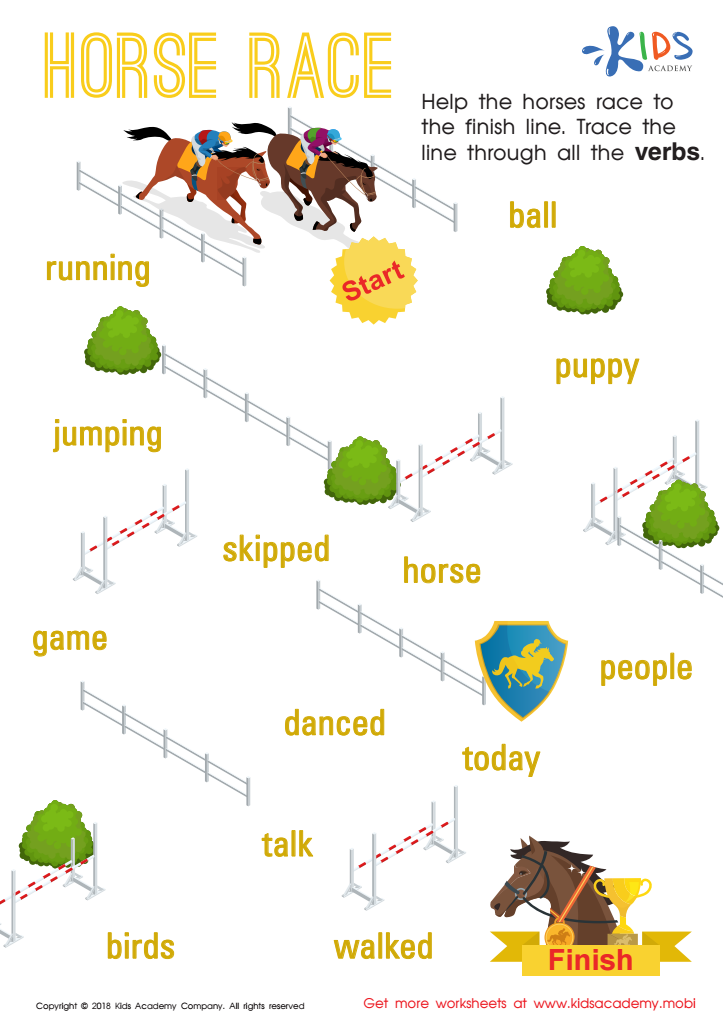
Horse Race Worksheet
 Assign to My Students






.jpg)

Understanding how to compare fractions is a crucial math skill for 8-year-olds, and it encompasses much more than just dealing with numbers. By mastering this concept, children learn to recognize relationships between parts and wholes, which fosters critical thinking and problem-solving abilities. Parents and teachers should care about this skill because it forms the foundation for future mathematical concepts—such as algebra and ratios—necessary for success in higher education.
Additionally, comparing fractions enhances students' ability to communicate mathematical ideas clearly and effectively. It lays the groundwork for real-world applications, whether in cooking, shopping, or even measuring. By engaging in fraction comparison activities, children develop logical reasoning, which is vital for decision-making.
Moreover, pursuing a solid understanding of fractions contributes to building confidence in math. Children who struggle with this topic may develop anxiety toward mathematics, impacting their overall attitude towards the subject. Parental and teacher involvement can provide the needed support and encouragement to help kids triumph over challenges.
Thus, fostering skills in comparing fractions equips children with tools not only for academic success but also for everyday activities, promoting holistic development in a rapidly evolving world.








