
Critical thinking skills Reading Worksheets for 8-Year-Olds
8 filtered results
Difficulty Level
Grade
Age
-
From - To
Subject
Activity
Standards
Unlock your child's potential with our Critical Thinking Skills Reading Worksheets, tailored specifically for 8-year-olds. At Kids Academy, we believe cultivating critical thinking at an early age sets the foundation for lifelong success. Our worksheets challenge young minds by encouraging them to analyze scenarios, make inferences, and solve problems through engaging reading activities. Designed to enhance comprehension and reasoning, each worksheet seamlessly integrates fun with education. Perfect for home or classroom use, these resources empower children to think critically about texts and their real-world implications. Help your 8-year-old build a strong cognitive foundation today with Kids Academy's expertly crafted worksheets.
Favorites
With answer key
Interactive
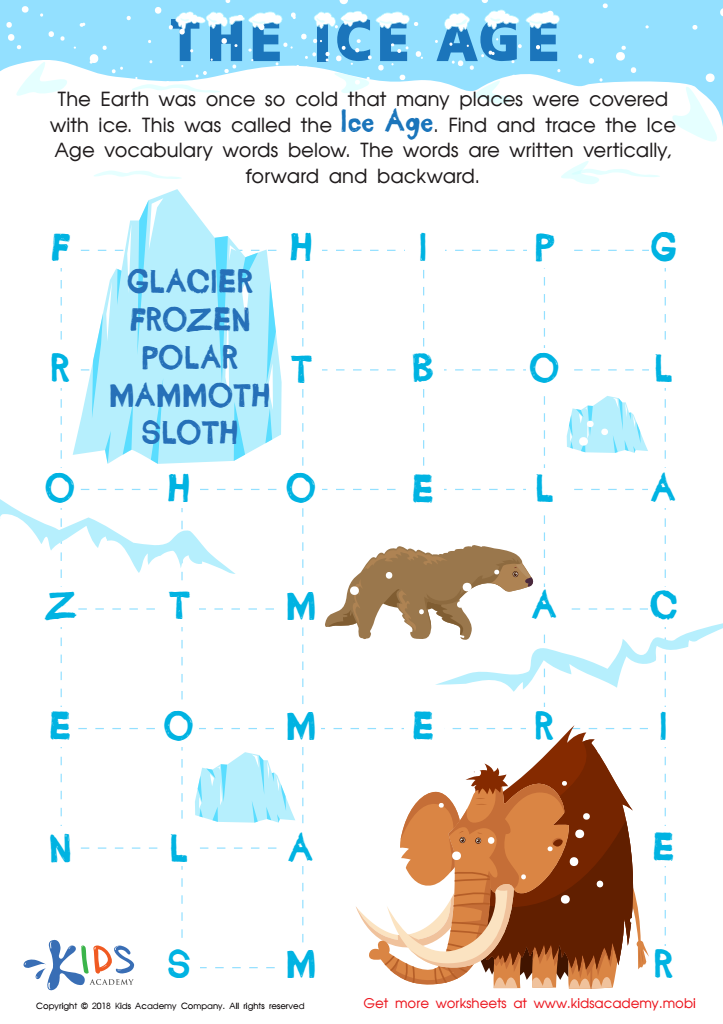
The Ice Age Worksheet
Let your child explore the Ice Age with this fun word search from Kids Academy! They can find words like glacier, frozen, polar, mammoth, and sloth. After finding each, discuss the meaning to help them build a better vocabulary and understanding of ancient history.
 Assign to My Students
The Ice Age Worksheet
Worksheet
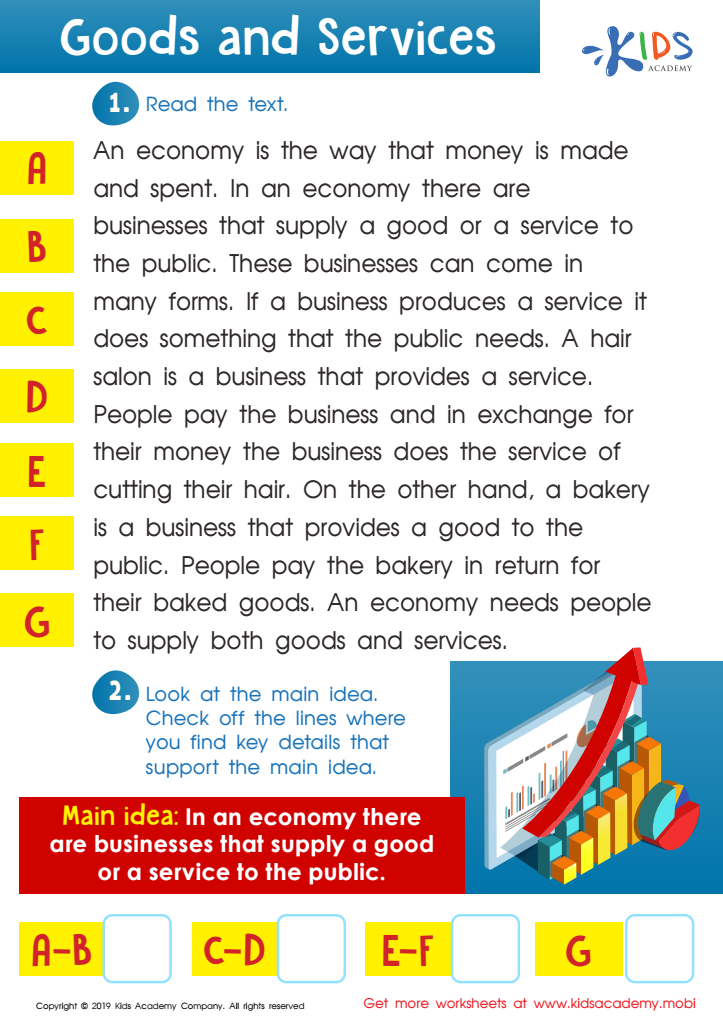
Goods and Services Worksheet
Teach your kids about the economy and businesses with this worksheet. Ask them if they know what goods and services are. After they complete the worksheet, they'll have a better understanding. Read the text to them and guide them step-by-step through the instructions. Help them learn!
Goods and Services Worksheet
Worksheet
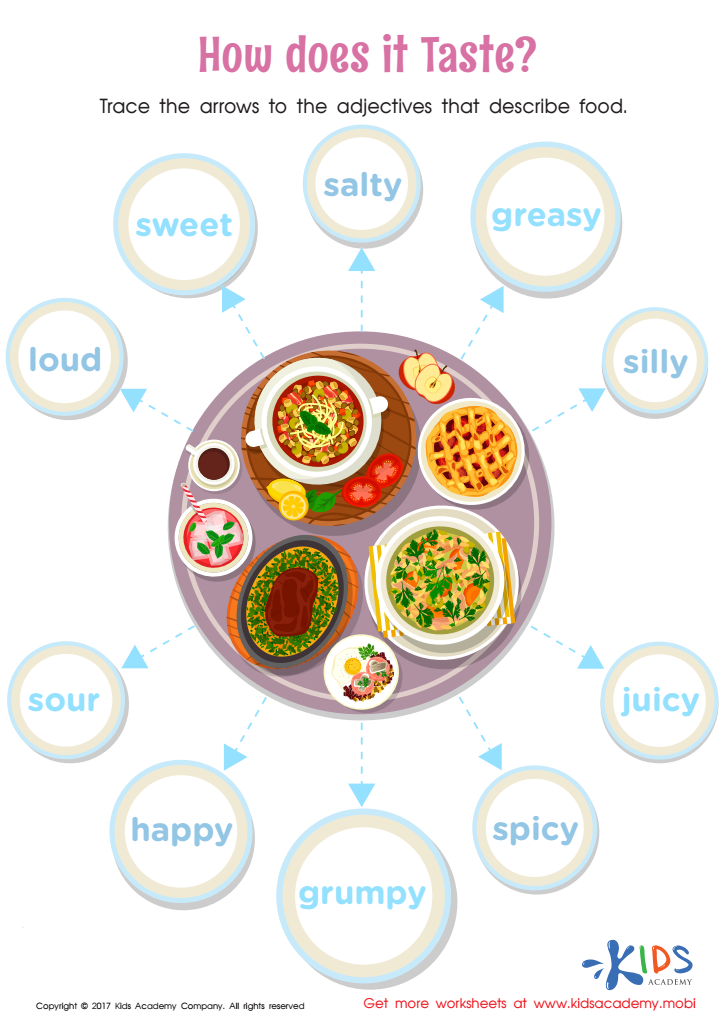
Food Adjectives Worksheet
Here’s a fun PDF worksheet to get your child’s taste buds tingling and help build descriptive language skills!
Food Adjectives Worksheet
Worksheet
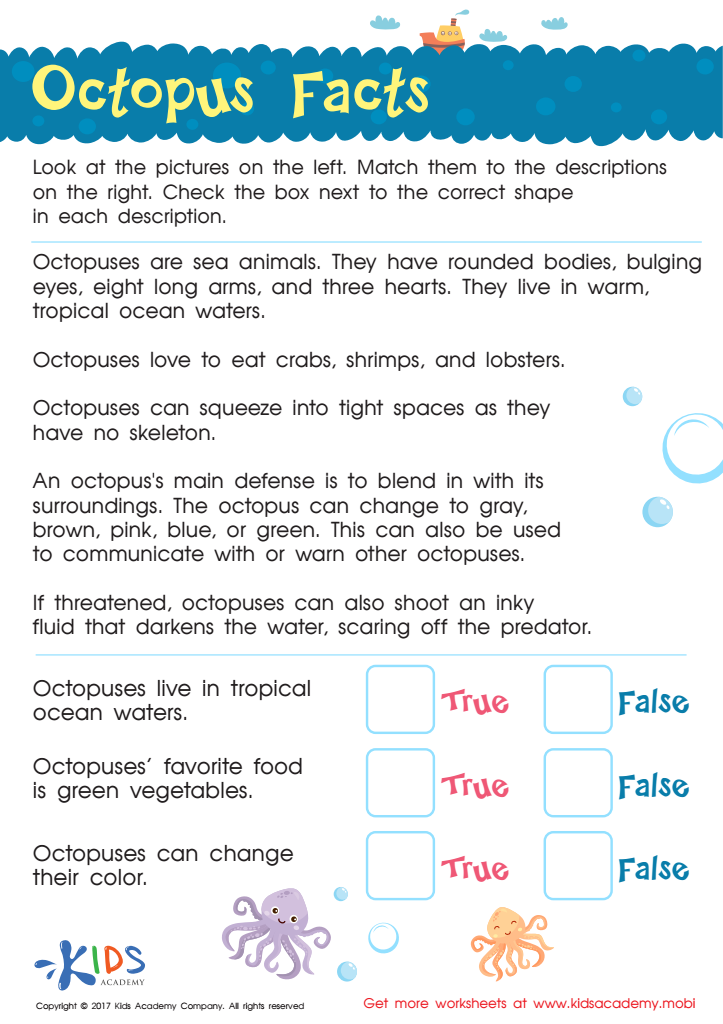
Octopus Facts Worksheet For Kids
Let your child dive into the world of octopuses with this fun worksheet. It offers invaluable practice in reading non-fiction texts, while they learn interesting facts about these strange sea creatures. It's a great way to help them hone their skills in reading comprehension.
Octopus Facts Worksheet For Kids
Worksheet
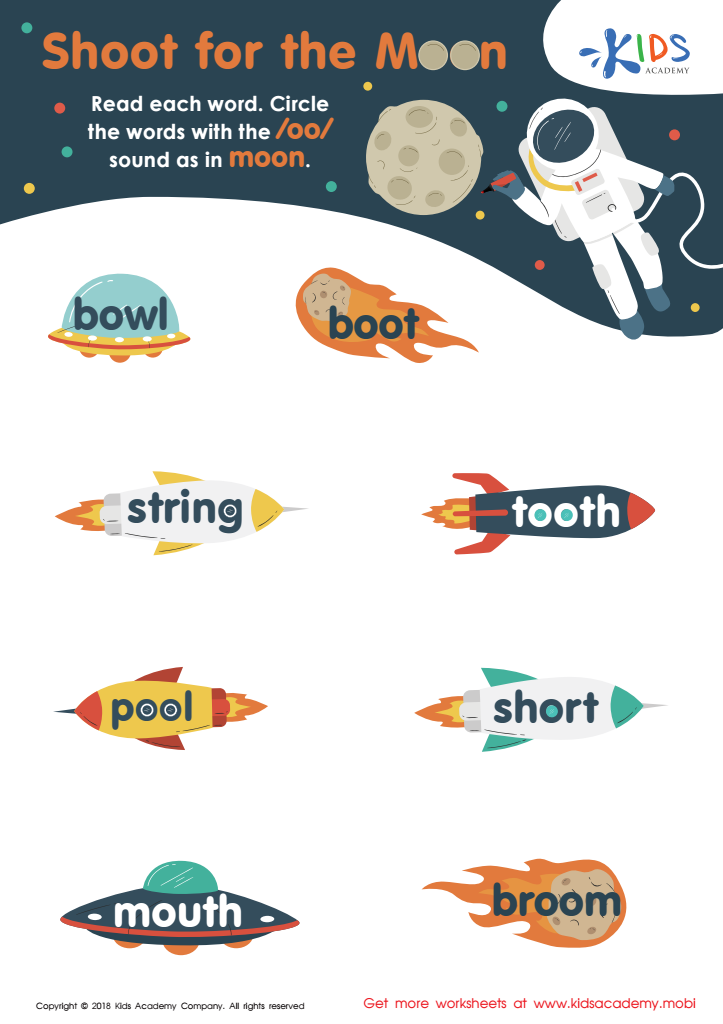
Reading: Shoot for the Moon Worksheet
Ask your kids if they can name any common words with the /oo/ sound. Read each word with them and help them pronounce it. Then, have them circle the words that have the /oo/ sound as in moon.
Reading: Shoot for the Moon Worksheet
Worksheet
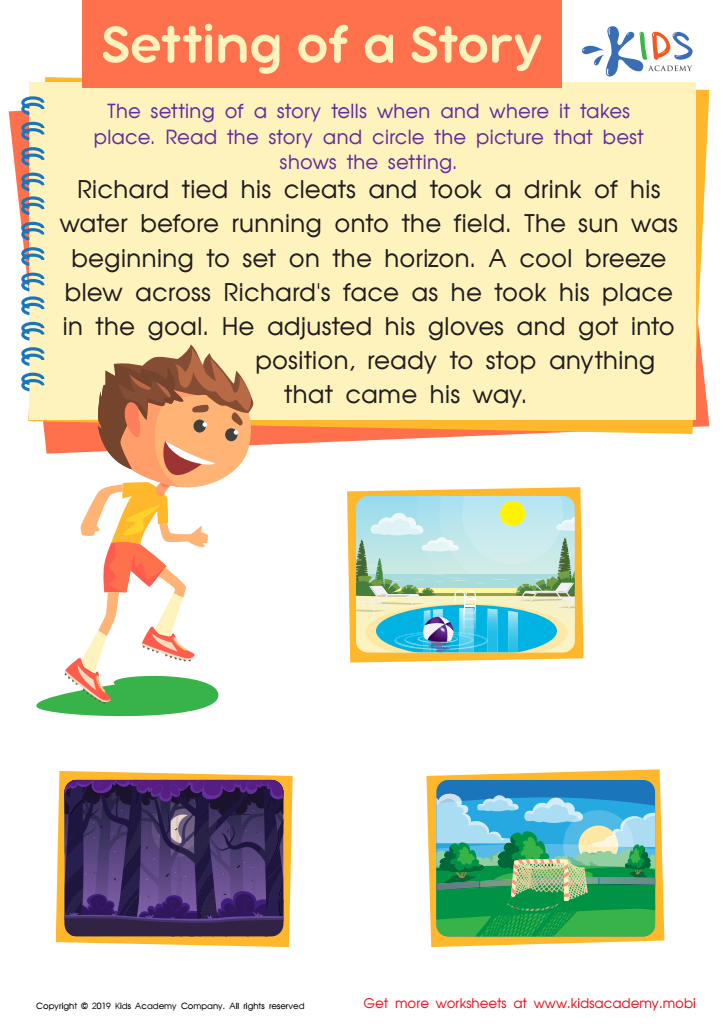
Setting of a Story Worksheet
You need characters, theme, POV, plot and setting to tell a good story. Ask your kids to explain them and use this worksheet with a story to teach them about setting. Read the story with your kids, then have them circle the picture that best shows the setting.
Setting of a Story Worksheet
Worksheet
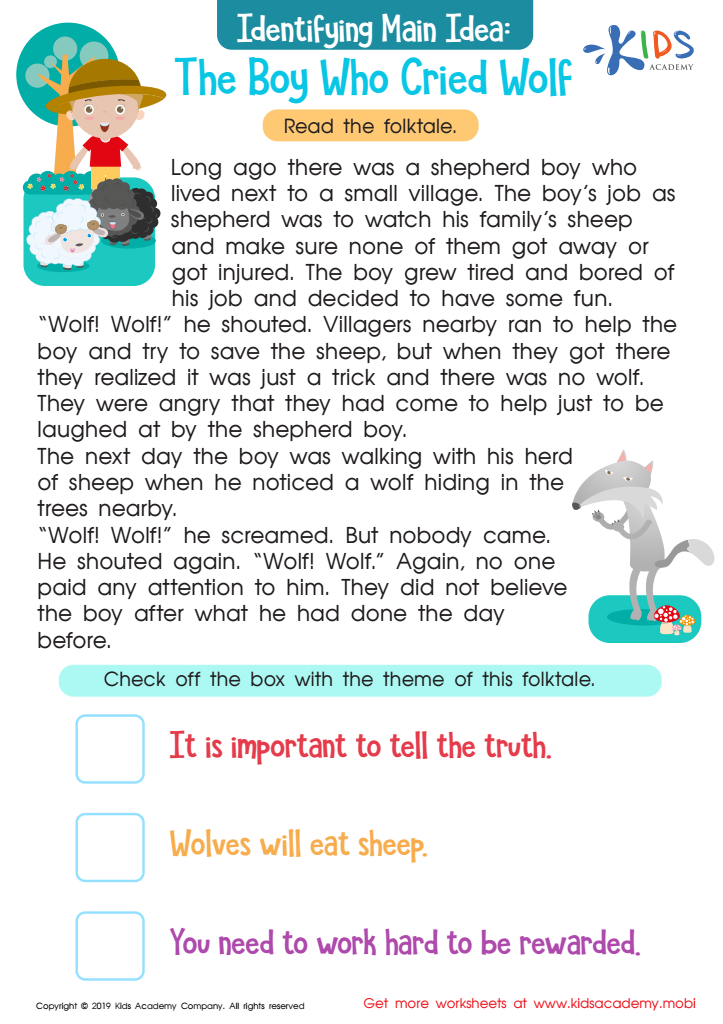
The Boy Who Cried Wolf Part 2 Worksheet
Kids love story time - no doubt they know their favorites! This worksheet tells a story with a theme or main idea. Read it carefully with your kids and ensure they understand every word. Then, help them answer the simple questions at the bottom of the page.
The Boy Who Cried Wolf Part 2 Worksheet
Worksheet
Join Kids Academy for Free
Who is primarily going to use this learning content?








Critical thinking skills are essential for 8-year-olds as they foster a deeper understanding and intellectual development beyond rote learning. At this impressionable age, children are becoming more inquisitive and capable of processing information in diverse ways. Parents and teachers should prioritize critical thinking in reading because it cultivates an ability to analyze, evaluate, and reason. This foundation aids children in discerning fact from opinion, understanding cause and effect, and drawing connections between different texts and real-life experiences.
Early critical thinking lays the groundwork for lifelong learning and problem-solving skills. It empowers children to question the material they read and form their own opinions, leading to greater engagement and a more profound love for reading. Additionally, these skills support academic success across subjects, as children become better equipped to tackle complex problems and articulate their thoughts through writing.
Introducing critical thinking through reading at a young age also prepares children for future challenges in an ever-evolving world, enhancing adaptability and innovation. Thus, fostering critical thinking is not only about improving academic performance but also about equipping children with essential life skills that will serve them in various aspects of their lives. The investment in nurturing these skills yields benefits that extend far beyond the classroom.








