
Geography knowledge Reading Worksheets for 8-Year-Olds
4 filtered results
Difficulty Level
Grade
Age
-
From - To
Subject
Activity
Standards
Discover fun and educational Geography Knowledge Reading Worksheets tailored for 8-year-olds at Kids Academy! Our engaging printable worksheets are designed to enhance geography skills while fostering a love for reading. Each activity combines captivating stories with geographical facts to help children learn about different places, cultures, and environments. Perfect for classroom use or at-home learning, these worksheets support critical thinking and comprehension abilities in young learners. With age-appropriate content and vibrant illustrations, Kids Academy makes exploring geography an exciting adventure for your child. Start your journey today and watch your 8-year-old become a budding geographer!
Favorites
With answer key
Interactive
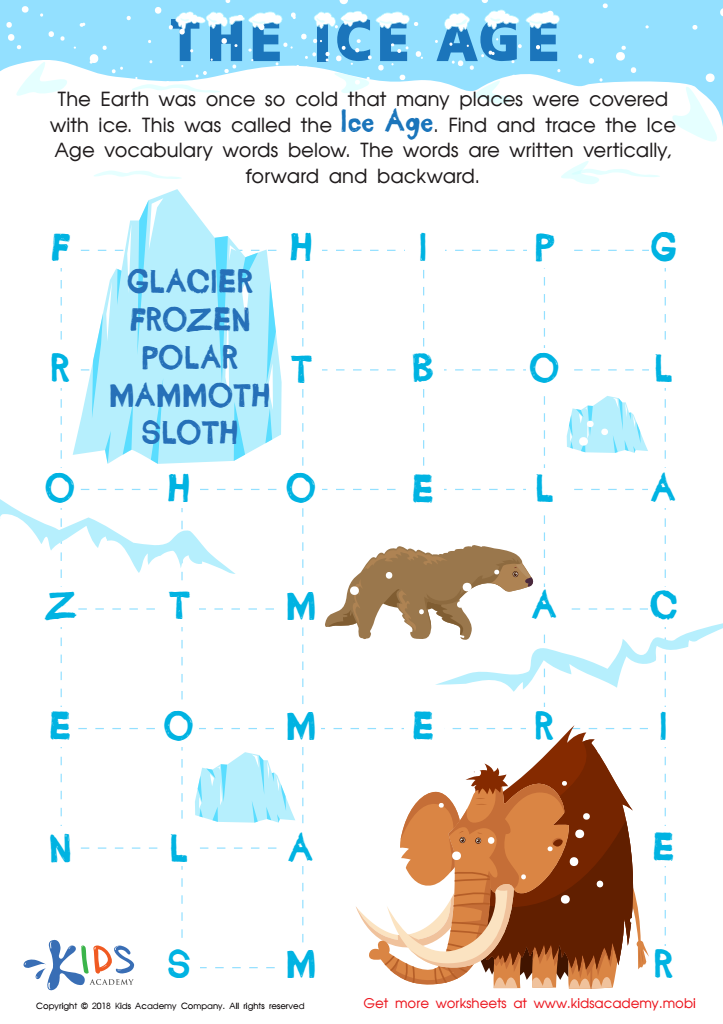
The Ice Age Worksheet
Let your child explore the Ice Age with this fun word search from Kids Academy! They can find words like glacier, frozen, polar, mammoth, and sloth. After finding each, discuss the meaning to help them build a better vocabulary and understanding of ancient history.
 Assign to My Students
The Ice Age Worksheet
Worksheet
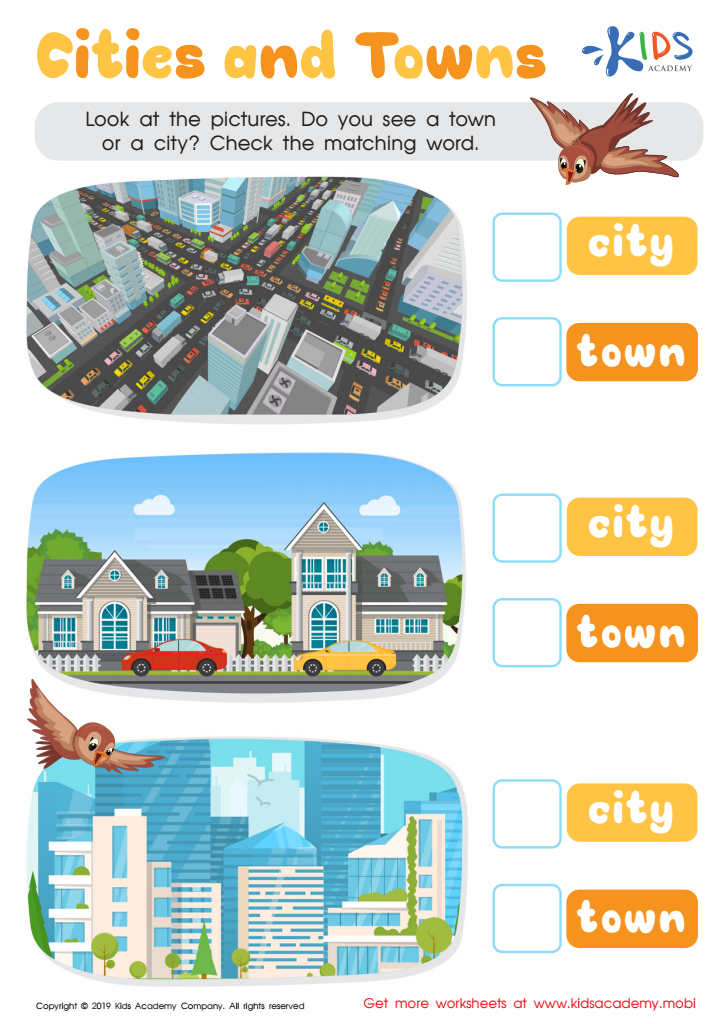
Cities and Towns Worksheet
Cities are buzzy and busy while towns tend to be peaceful. Ask your child if they can tell which one is which from a picture. This could be a great way to test their understanding of the differences between towns and cities. There are many businesses in cities, tall buildings and lots to do. Meanwhile towns are usually quieter.
Cities and Towns Worksheet
Worksheet
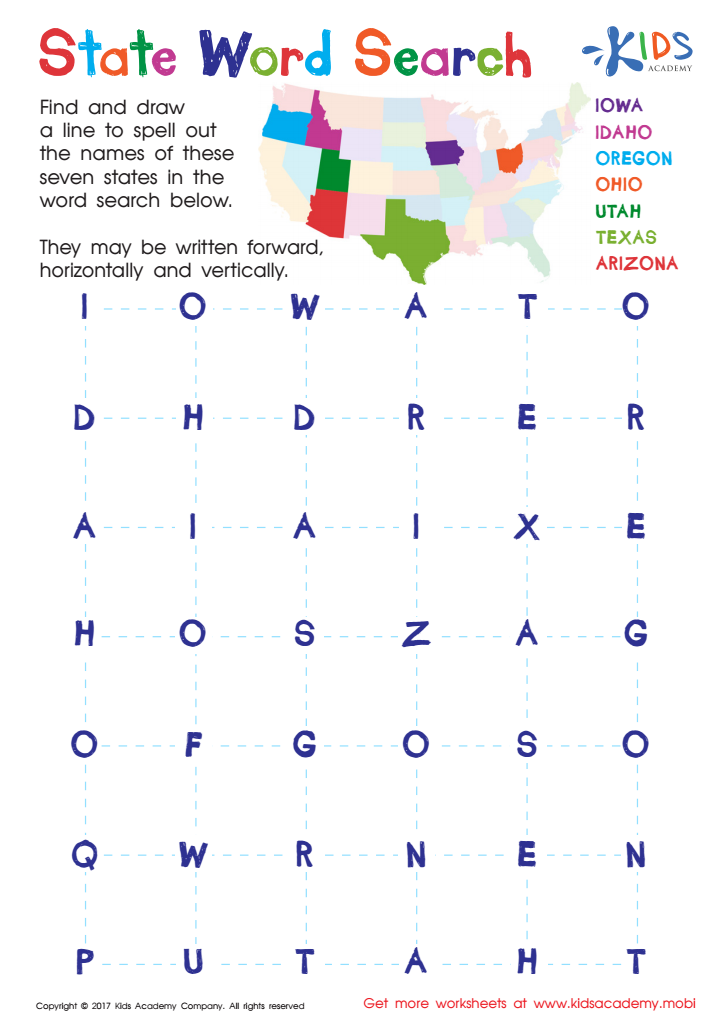
State Word Search Worksheet
Take a road trip across the US with this word search to help your child learn how to identify states. This engaging puzzle makes it easy to remember the 50 states. Get your kids to have fun and learn at the same time!
State Word Search Worksheet
Worksheet
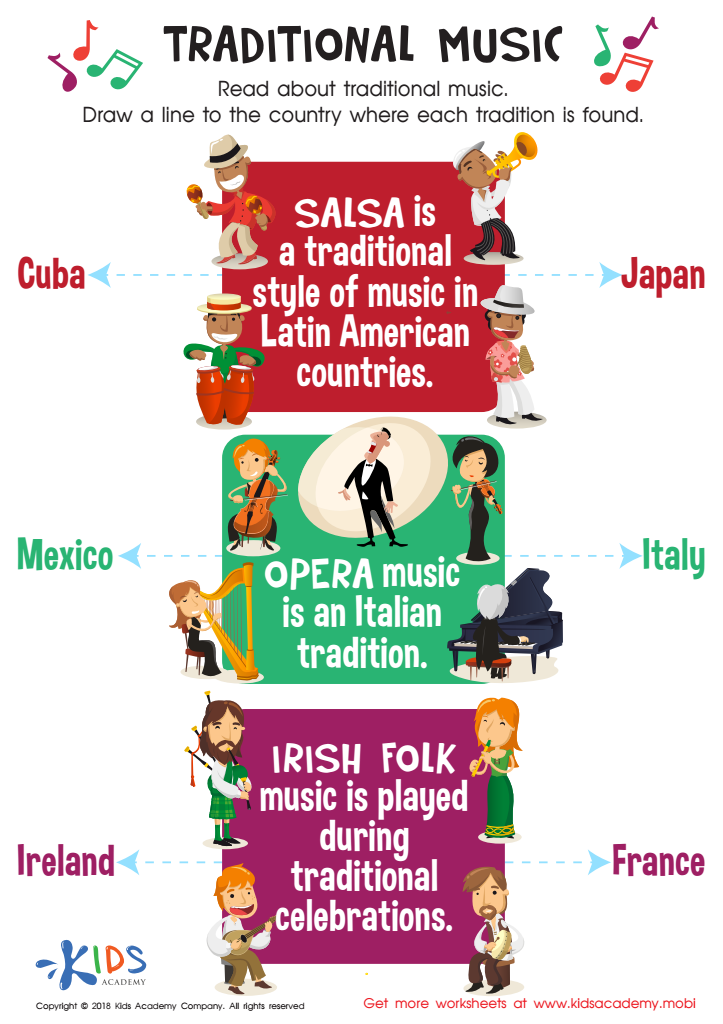
Traditional Music Worksheet
Exploring different countries' music is a great way for global learners to appreciate their place in the world. This worksheet helps them match music - like Salsa and Irish Folk - to various geographic regions with colorful visuals. It boosts reading comprehension while supporting their cultural understanding.
Traditional Music Worksheet
Worksheet
Join Kids Academy for Free
Who is primarily going to use this learning content?






Geography knowledge is vital for 8-year-olds as it lays the foundation for lifelong learning and curiosity about the world. Understanding geography helps children make sense of their surroundings, fostering a sense of place and identity. It enriches their knowledge of different cultures, climates, and landscapes, promoting respect and empathy for diverse communities. This cultural awareness is crucial in an increasingly globalized world.
Furthermore, geography education strengthens critical thinking and problem-solving skills. Children learn to interpret maps, graphs, and data, translating these skills to other subjects like math and science. Geography also enhances their spatial understanding, improving their sense of direction and spatial relationships, which are fundamental cognitive abilities.
For parents and teachers, encouraging geography studies means nurturing informed, open-minded, and critical thinkers. It prepares children to participate coherently in discussions about global issues, such as climate change, resource management, and geopolitics. Geography provides a context for current events, making young citizens more engaged and informed about the world around them.
In summary, cultivating geography knowledge in 8-year-olds not only builds academic skills but also develops essential life skills. It enables children to connect with the world meaningfully, prepares them for future challenges, and fosters a sense of responsible citizenship, making it a critical component of early education.








