Analytical thinking Reading Comprehension Worksheets for 8-Year-Olds
6 filtered results
-
From - To
Unlock the power of analytical thinking with our engaging Reading Comprehension Worksheets designed specifically for 8-year-olds! These worksheets offer a fun and interactive way for young learners to enhance their reading skills while developing critical thinking abilities. Each worksheet features age-appropriate texts that challenge students to analyze information, make inferences, and draw conclusions. Our thoughtfully crafted activities encourage children to engage deeply with stories, enhancing their comprehension and reasoning skills. Perfect for home or classroom use, these worksheets are tailored to foster a love for reading while nurturing cognitive skills that will benefit them across all subjects. Explore our collection today!
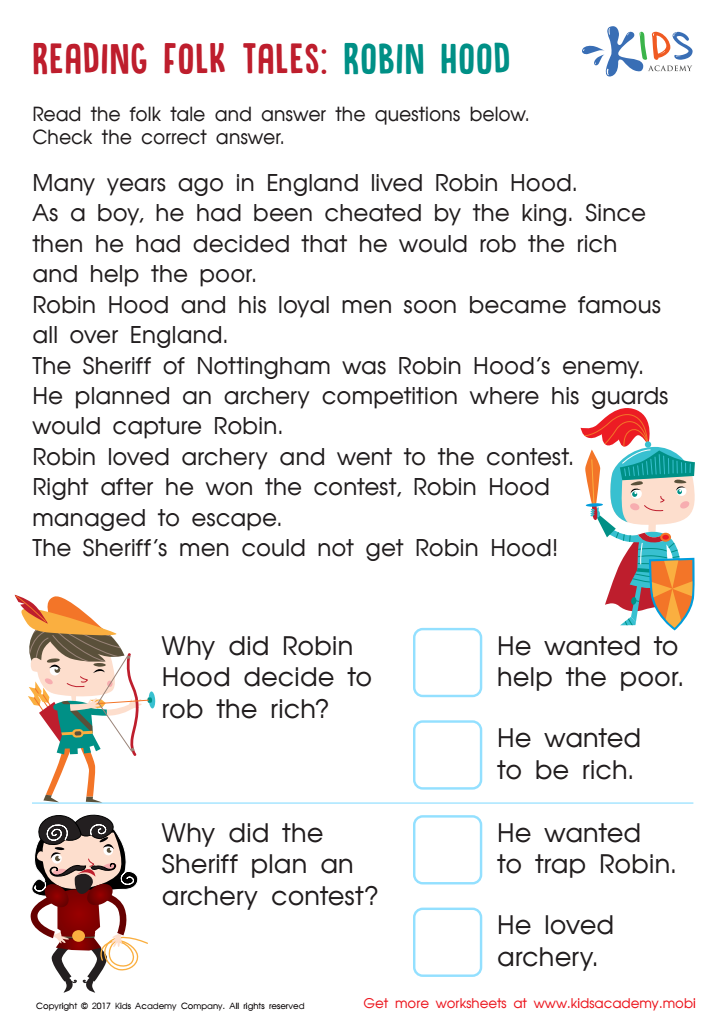
Robin Hood Folktale Worksheet
 Assign to My Students
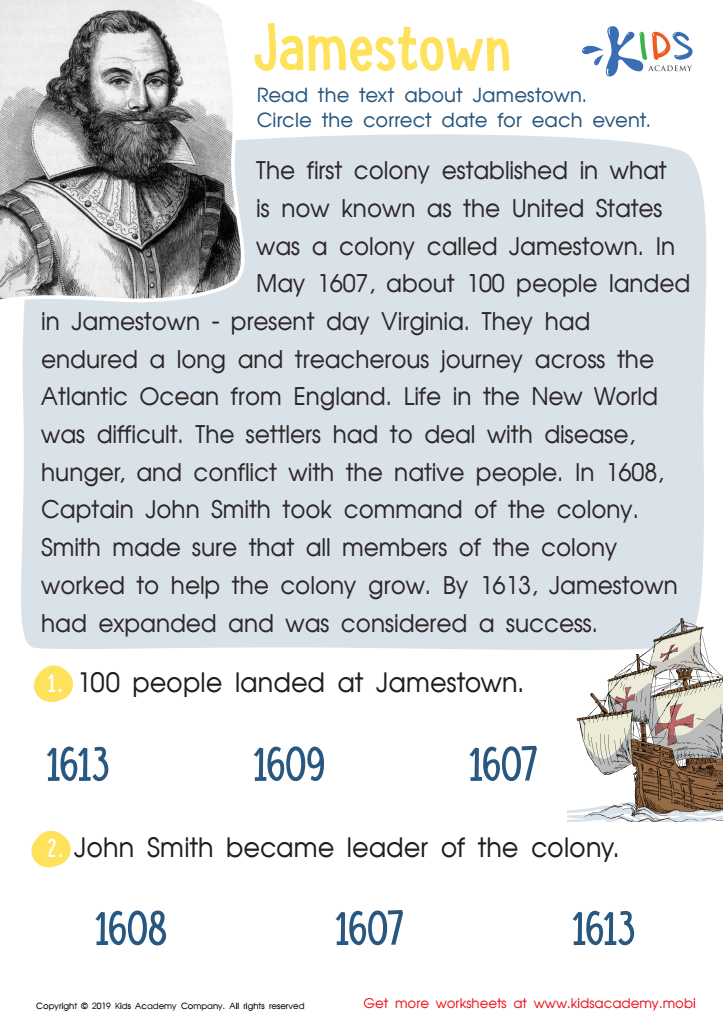
Jamestown Worksheet
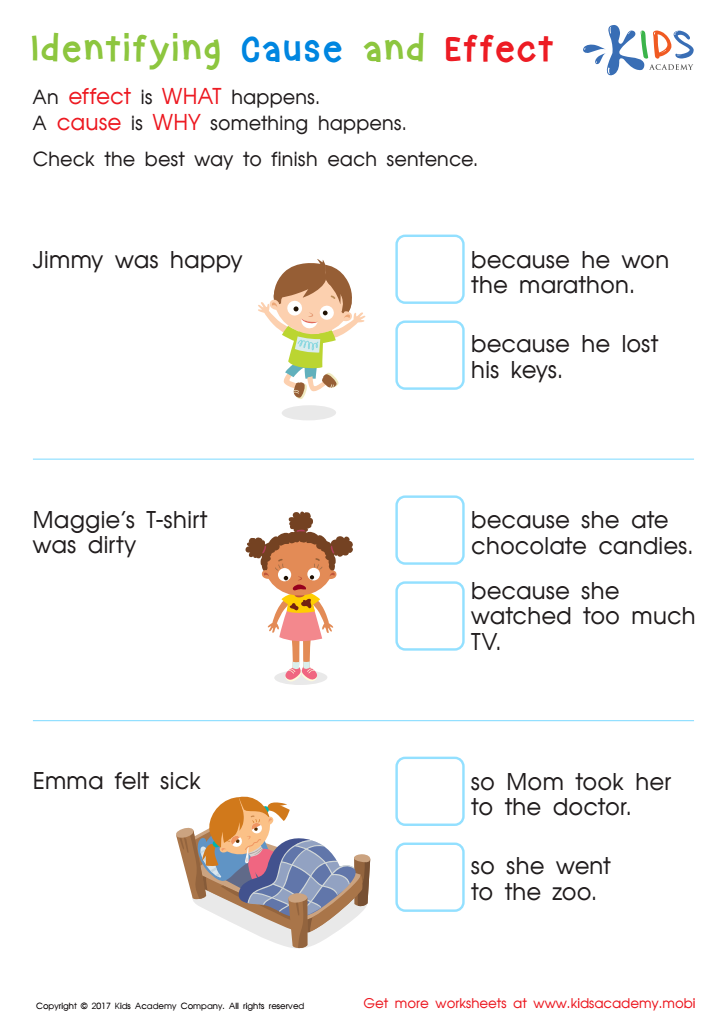
Indentifying Cause and Effect Worksheet
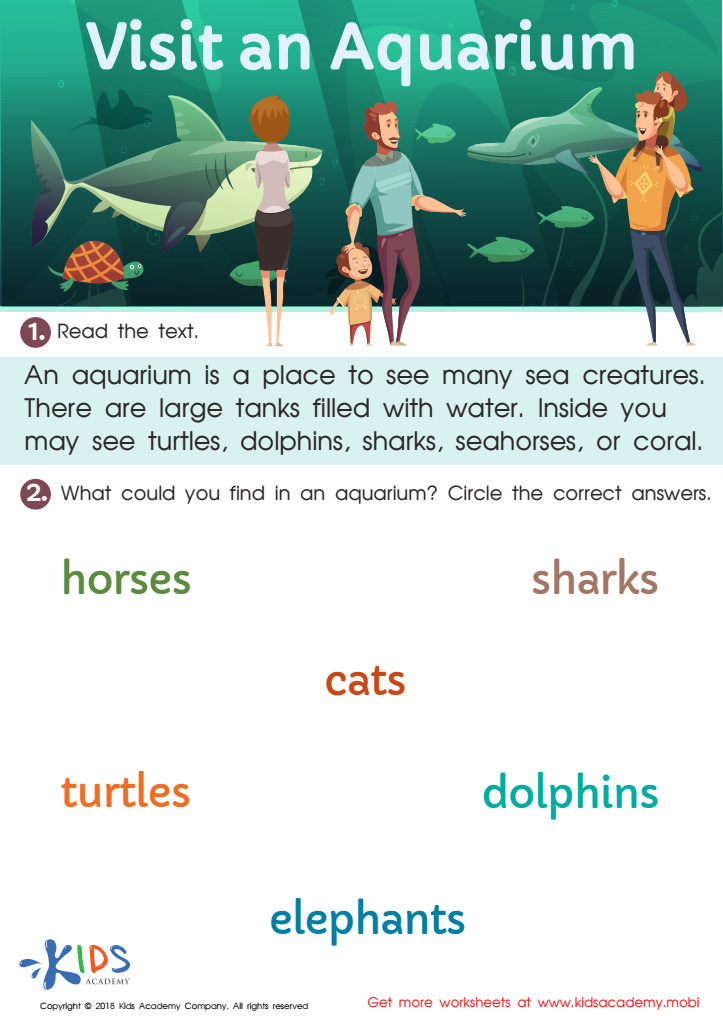
Visit an Aquarium Worksheet
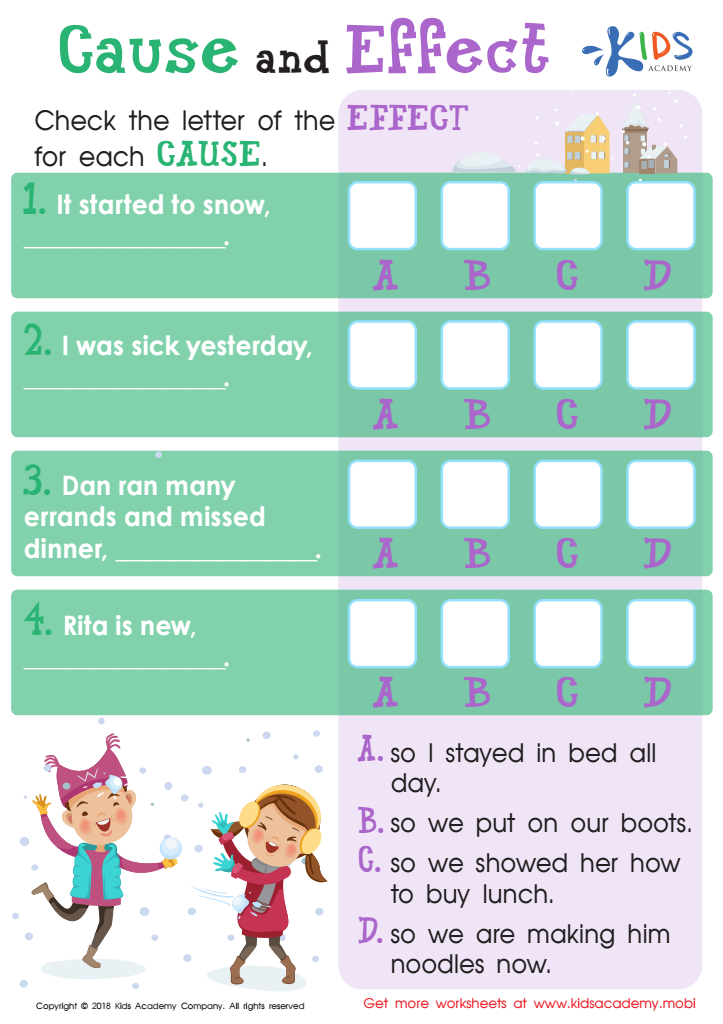
Cause and Effect Worksheet
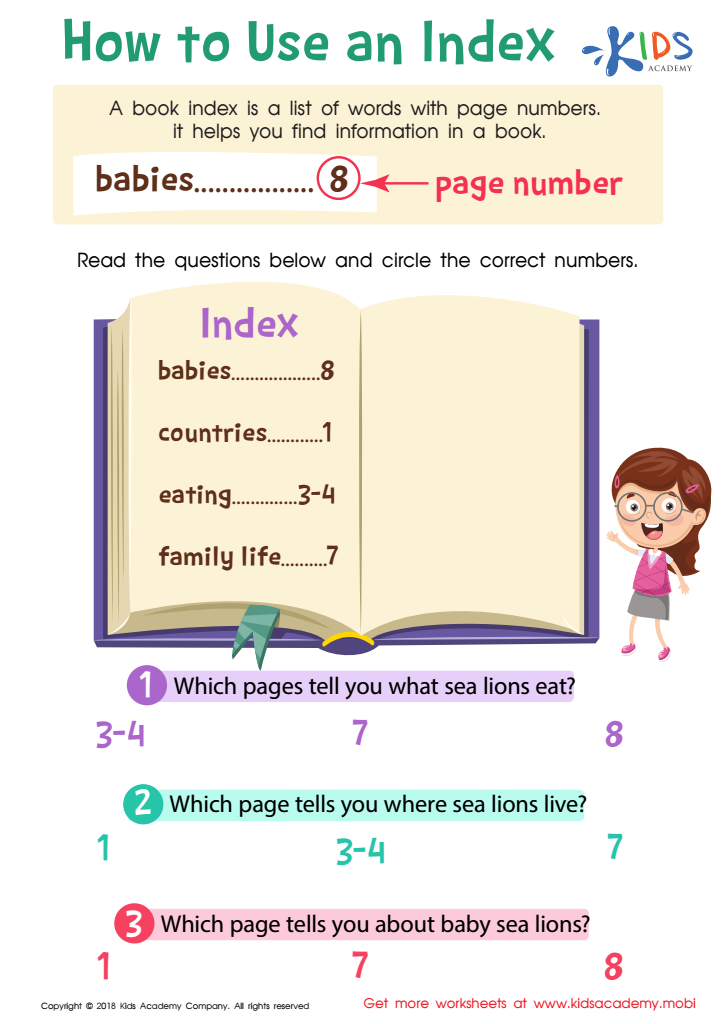
How Use Index Worksheet








Parents and teachers should prioritize analytical thinking and reading comprehension for 8-year-olds because these skills are foundational for academic success and lifelong learning. At this age, children are developing critical thinking abilities that enable them to analyze information, make connections, and draw conclusions. Good reading comprehension goes beyond simply understanding texts; it requires the ability to evaluate arguments, identify main ideas, and infer meaning from context—a skill that is vital in all subjects.
Moreover, strong analytical thinking helps children navigate an increasingly complex world inundated with information. It empowers them to question sources, distinguish between fact and opinion, and engage in thoughtful discussions, fostering informed and responsible decision-making. Additionally, these skills enhance problem-solving abilities, encouraging kids to tackle challenges authors present in narratives or real-life scenarios.
Fostering these competencies early in life not only boosts confidence but also instills a love for learning. When children engage deeply with texts, they develop empathy and cultural awareness by exploring diverse perspectives. Consequently, ensuring that children can think analytically about what they read is an investment in their future, preparing them for challenges in higher education and beyond. Supporting these skills through reading can enrich their personal development and social interactions.








