
Understanding ecosystems Science Worksheets for 8-Year-Olds
3 filtered results
Difficulty Level
Grade
Age
-
From - To
Subject
Activity
Standards
Welcome to our "Understanding Ecosystems Science Worksheets" for 8-year-olds! These engaging and interactive worksheets are designed to help young learners explore the fascinating world of ecosystems. Through fun activities, kids will discover the relationships between living organisms and their environments, the food chain, and the importance of biodiversity. Each worksheet is tailored to enhance critical thinking and promote inquiry-based learning, making science accessible and enjoyable. Perfect for classrooms or at-home learning, these resources encourage children to observe, ask questions, and connect concepts, fostering a deeper appreciation for nature. Dive into the adventure of ecosystems today!
Favorites
With answer key
Interactive
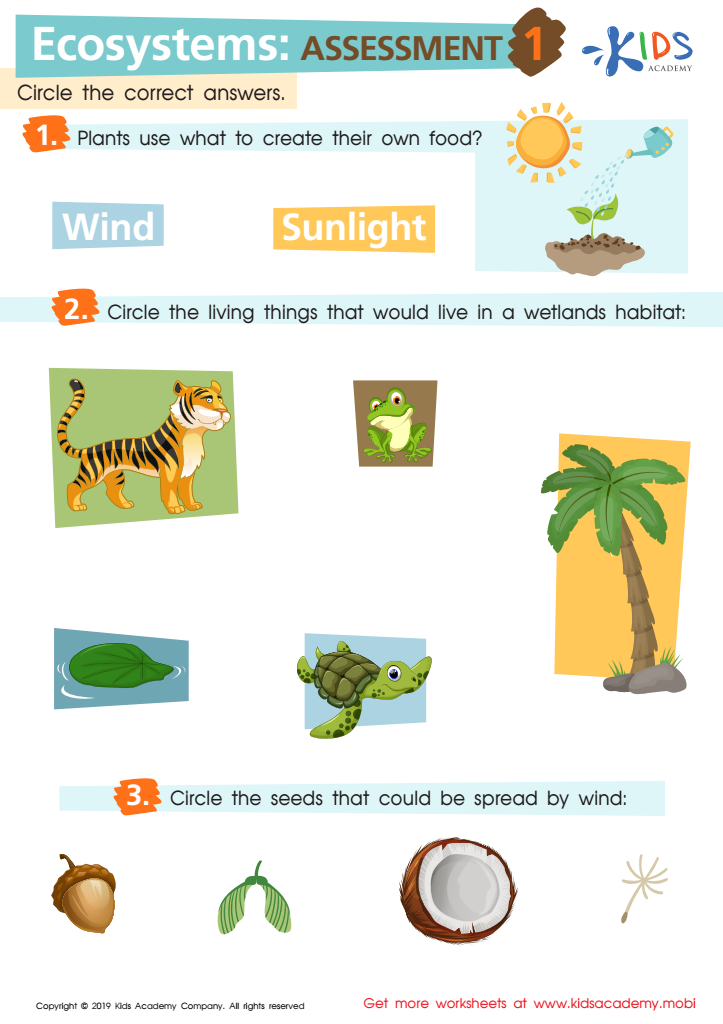
Ecosystems: Assessment 1 Worksheet
Before starting the worksheet, remind your child of the basics of the ecosystem, e.g. plants need light and winds carry small seeds. Encourage them to identify the images in the colorful printout. Ask them the questions and help them circle the correct answers.
 Assign to My Students
Ecosystems: Assessment 1 Worksheet
Worksheet
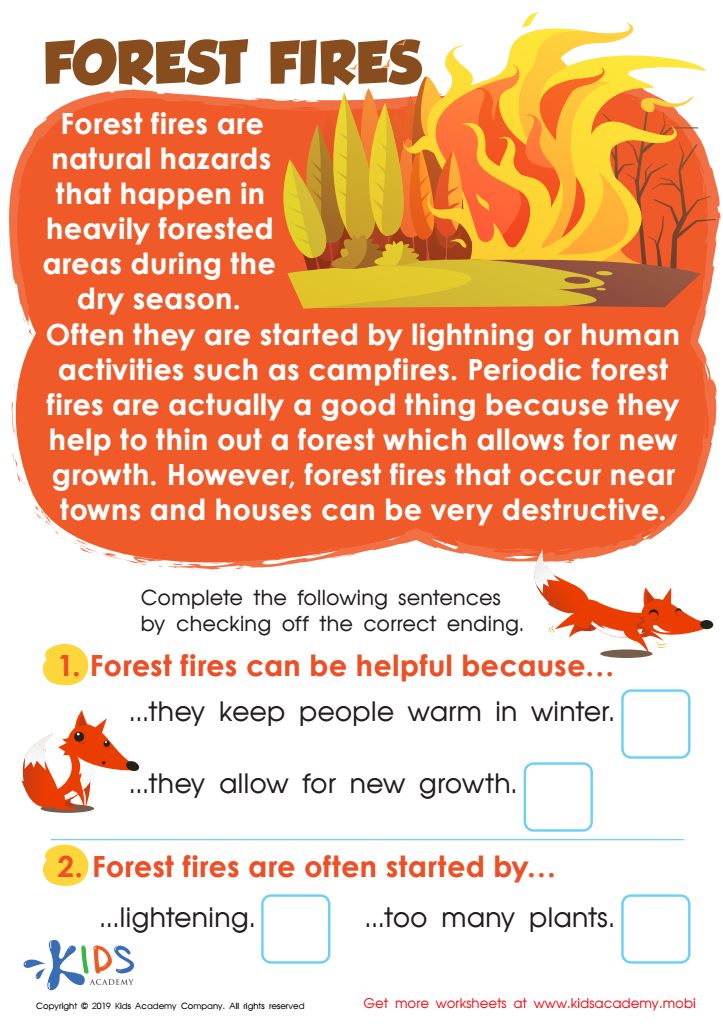
Forest Fires Worksheet
This free worksheet helps kids learn about forest fires. It encourages critical thinking by allowing them to answer multiple-choice questions. It is an important opportunity for children to develop reading skills, as understanding text is essential for further academic success. Download the PDF to give them the chance to practice comprehension and strengthen their knowledge.
Forest Fires Worksheet
Worksheet
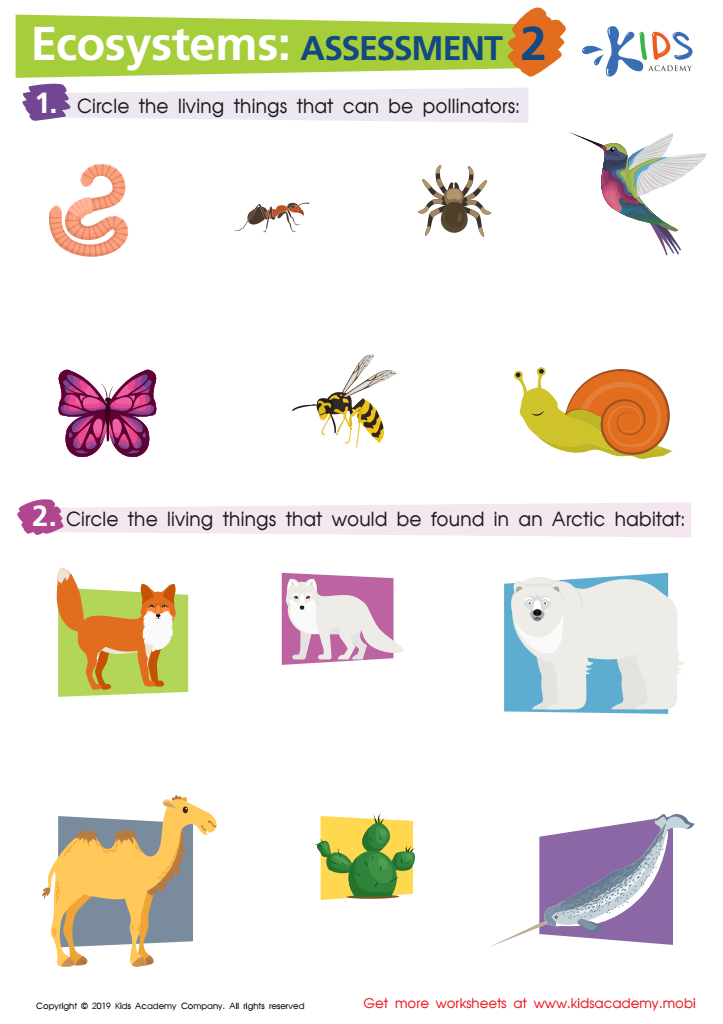
Ecosystems: Assessment 2 Worksheet
Pollinators are living or non-living things that help pollen spread. Test your child's knowledge of the ecosystem with this worksheet. Point out animals in the picture, then ask the simple questions. Help your child circle the right answers.
Ecosystems: Assessment 2 Worksheet
Worksheet
Join Kids Academy for Free
Who is primarily going to use this learning content?








Understanding ecosystems is crucial for 8-year-olds as it lays the foundation for their scientific knowledge and environmental awareness. At this age, children are naturally curious and eager to explore the world around them. Learning about ecosystems allows them to comprehend how living things interact with one another and with their surroundings, fostering a sense of interconnectedness.
Parents and teachers should care about this topic because it encourages critical thinking and problem-solving skills. Through hands-on activities like nature walks or planting gardens, children can observe firsthand the balance of nature, understanding concepts such as food chains and habitats. This experiential learning nurtures empathy towards other living beings, helping children develop a sense of responsibility for their environment.
Moreover, with ongoing global challenges like climate change and biodiversity loss, early education about ecosystems cultivates environmentally conscious future citizens. When children grasp the importance of conserving natural resources and organizations, they are more likely to become advocates for positive change. Overall, teaching young children about ecosystems equips them with knowledge essential for both their educational journey and as stewards of our planet. Ensuring they grasp these concepts now is investing in a sustainable future.







