
Word Recognition Science Worksheets for 8-Year-Olds
3 filtered results
Difficulty Level
Grade
Age
-
From - To
Subject
Activity
Standards
Discover the engaging "Word Recognition Science Worksheets for 8-Year-Olds," designed to enhance reading and comprehension skills through interactive science-themed activities. These worksheets not only teach essential vocabulary but also encourage critical thinking by integrating scientific concepts with language learning. Perfect for classroom use or at-home practice, the worksheets help children recognize and understand key scientific terms while developing their literacy skills. With colorful illustrations and fun exercises, kids will enjoy exploring the world of science while improving their word recognition abilities. Foster a love for learning and science in your child with these captivating, curriculum-aligned worksheets!
Favorites
With answer key
Interactive
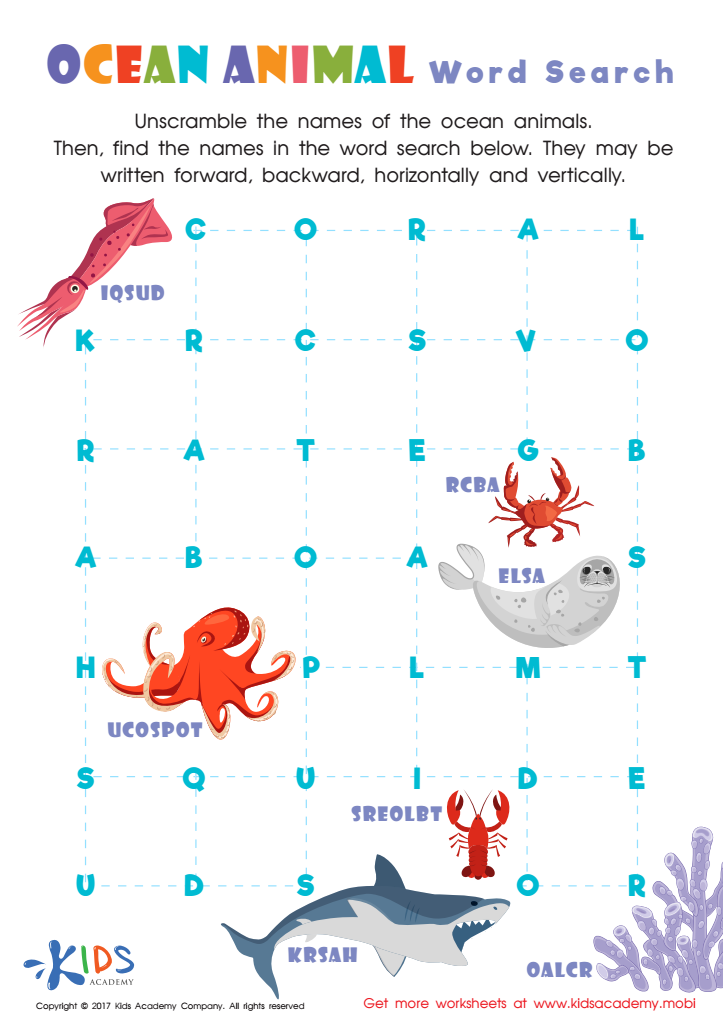
Ocean Animals Word Search Printable
Challenge your child to unscramble the names of ocean animals and find them in the word search. This ocean animals printable is a fun way to teach kids more about these fascinating creatures!
 Assign to My Students
Ocean Animals Word Search Printable
Worksheet
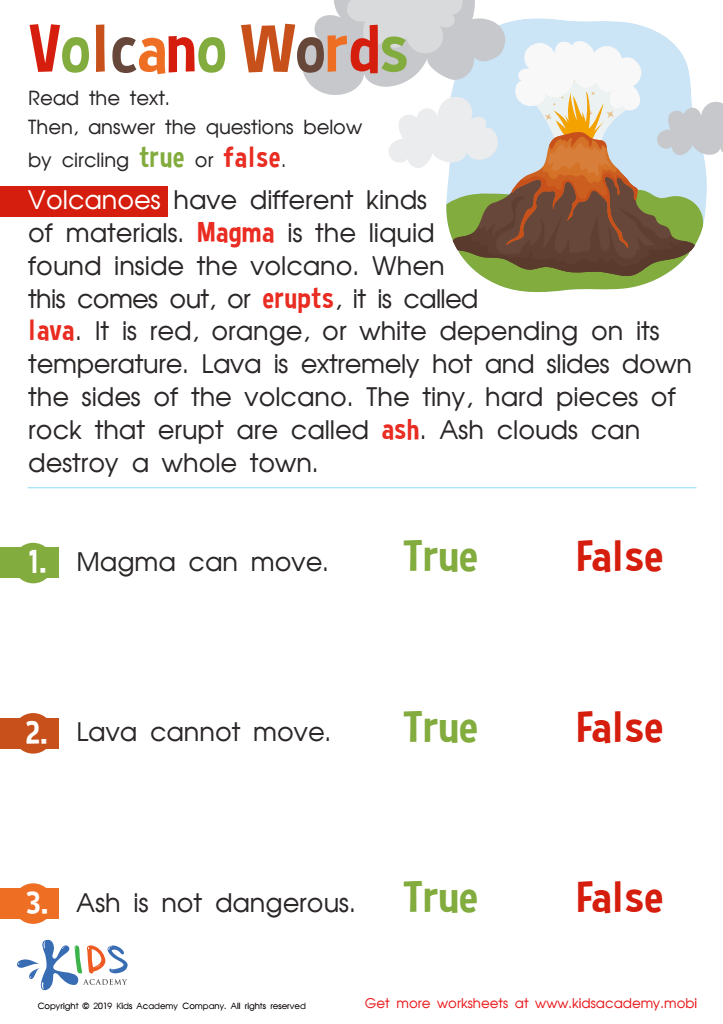
Volcano Words Worksheet
This worksheet helps kids focus and improve their reading comprehension skills. Start by reading a passage about volcanos and noting the bolded red words. Then answer true/false statements below, double-checking in the text if needed.
Volcano Words Worksheet
Worksheet
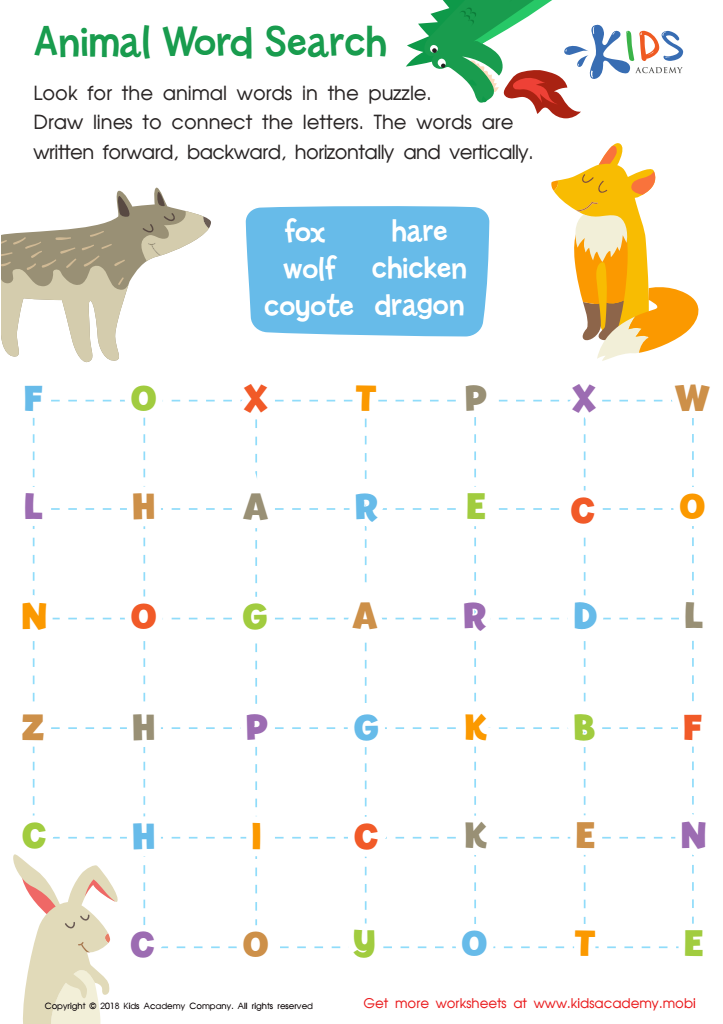
Animal Word Search Worksheet
Students can have fun and strengthen spelling and vocabulary skills with this word search worksheet. Search for animal words and circle the letters in the puzzle. Words can be found forwards, backwards, horizontally or vertically, providing a great challenge to foster critical thinking skills. An enriching activity for all ages!
Animal Word Search Worksheet
Worksheet
Join Kids Academy for Free
Who is primarily going to use this learning content?







Word recognition science is crucial for the literacy development of 8-year-olds, as it forms the foundation for reading proficiency and overall academic success. At this age, children are transitioning from learning to read to reading to learn, making effective word recognition essential. Understanding how children recognize and process words can help parents and teachers create supportive learning environments tailored to individual needs.
Research indicates that strong word recognition skills lead to improved comprehension, fluency, and vocabulary growth. When educators and parents are aware of the principles of word recognition, they can implement strategies that promote phonemic awareness, decoding skills, and sight word recognition. This knowledge allows them to identify potential reading difficulties early on and provide timely interventions, ultimately boosting a child's confidence and enthusiasm for reading.
Additionally, word recognition is closely linked to broader cognitive development and critical thinking skills. By prioritizing word recognition science, parents and teachers can help children develop a love for reading, empowering them to engage with diverse content and become lifelong learners. Investing time and resources into understanding word recognition prepares children not only for academic challenges but also for success in an increasingly literate society. Thus, it is essential for both parents and teachers to care about this aspect of literacy development.







