
Map reading skills Social Studies Worksheets for 8-Year-Olds
4 filtered results
Difficulty Level
Grade
Age
-
From - To
Subject
Activity
Standards
Enhance your 8-year-old's learning experience with our engaging Map Reading Skills Social Studies Worksheets! Designed specifically for young learners, these printable resources help children develop essential navigation skills while exploring geography. Each worksheet encourages interactive learning through fun exercises that involve reading maps, identifying landmarks, and understanding directions. Our captivating activities promote critical thinking and spatial awareness, making map reading both enjoyable and educational. Perfect for classroom use or at-home practice, these worksheets support curriculum objectives and boost confidence in young geographers. Dive into the world of maps and empower your child with valuable skills for the future!
Favorites
With answer key
Interactive
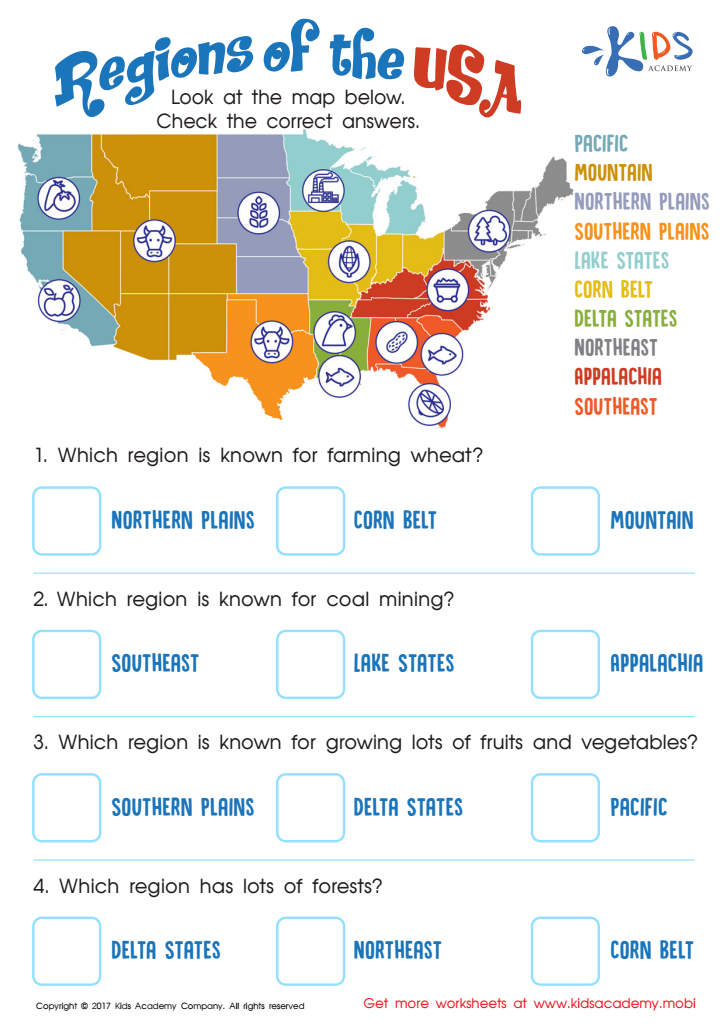
Regions of the USA Worksheet
Help your child explore the US with this regions of the United States worksheet! They'll learn about the diverse cultures, climates and purposes of each region. Make geography and US history fun with this educational exercise!
 Assign to My Students
Regions of the USA Worksheet
Worksheet
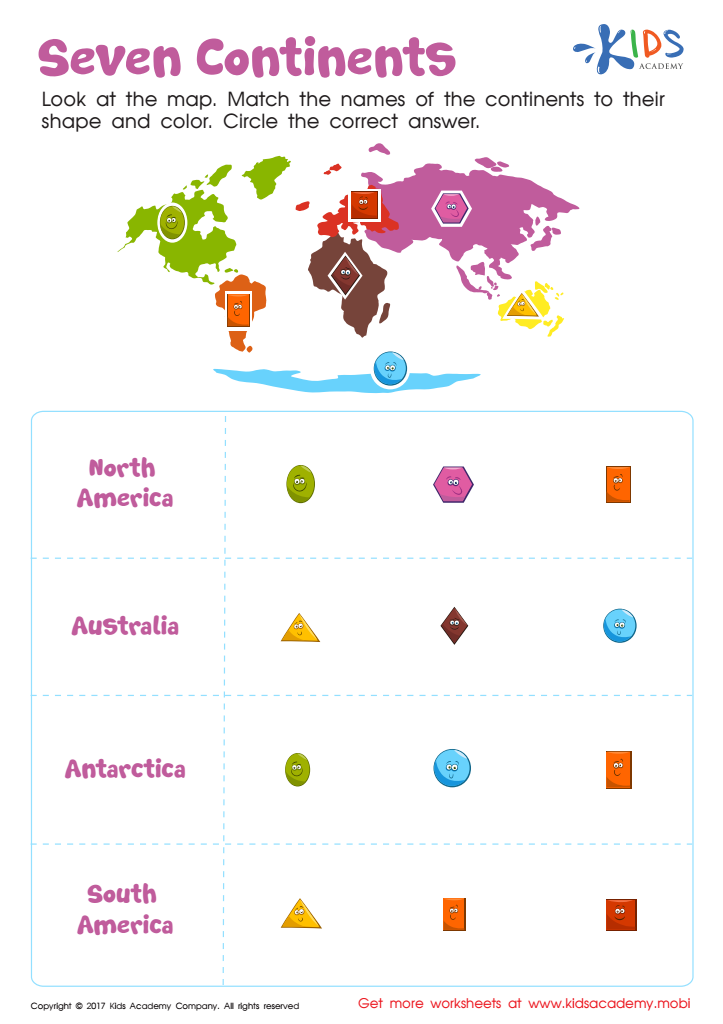
Seven Continents Worksheet
Geography teaches kids about the world! Encourage exploration with a seven continents worksheet - it'll help your child identify each continent using fun shapes.
Seven Continents Worksheet
Worksheet
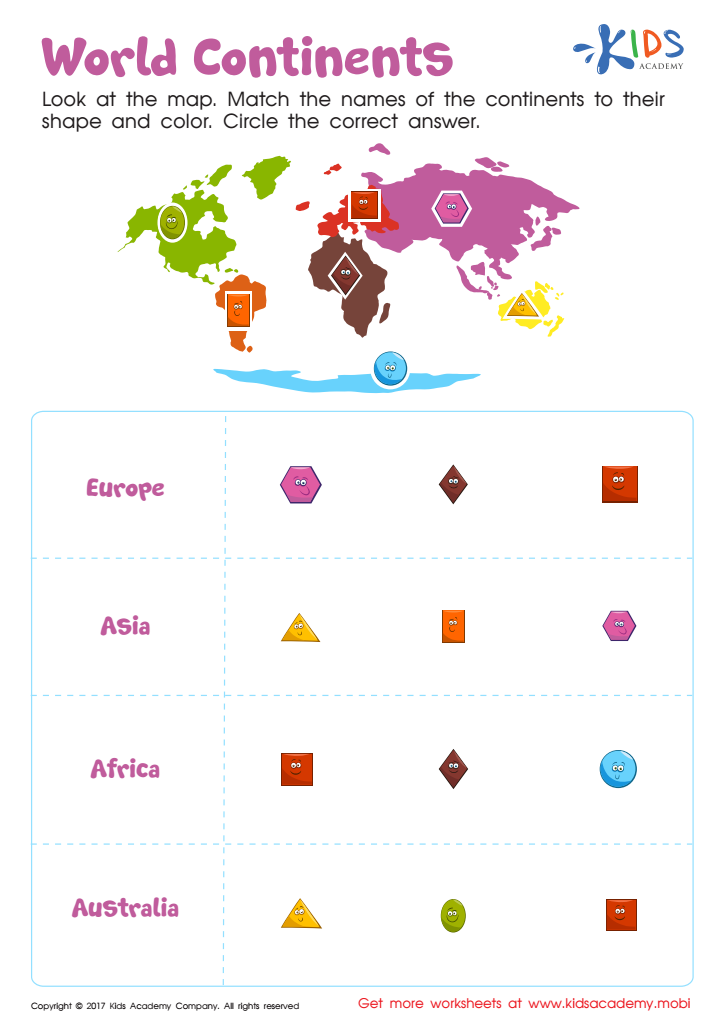
World Continents Worksheet
Help expand your child's knowledge of the world with this fun worksheet! It features goofy shapes to identify each continent, making learning the seven continents fun and memorable.
World Continents Worksheet
Worksheet
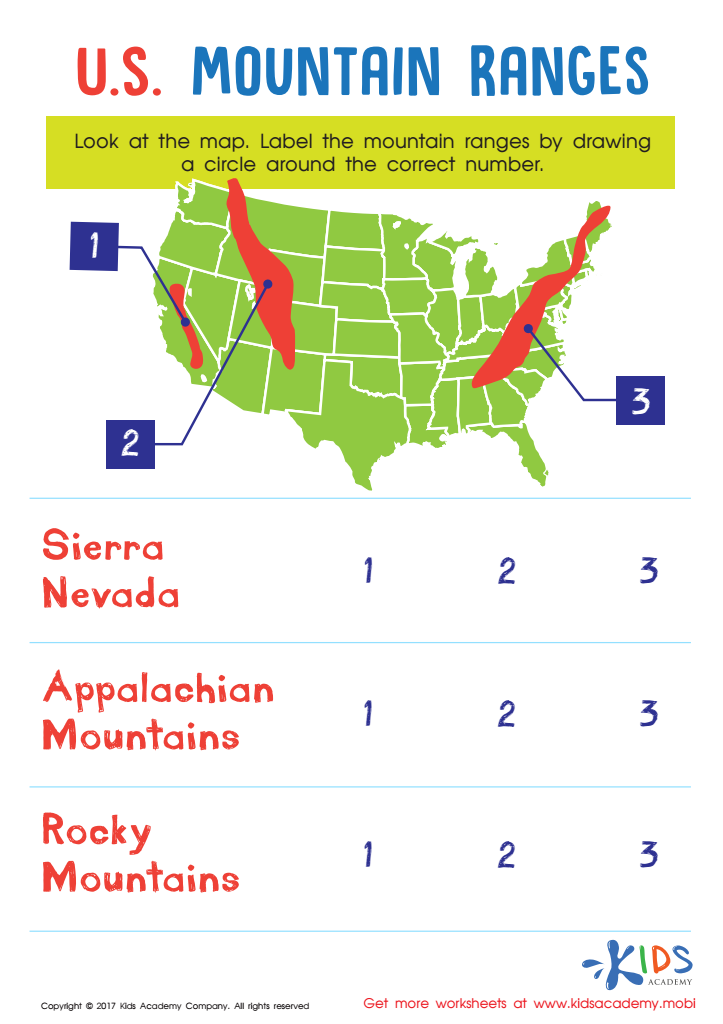
US Mountain Ranges Worksheet
Introduce your little one to the U.S. with this Mountain Ranges worksheet! It'll help them recognize the major ranges and locate them on a map, sharpening their map skills.
US Mountain Ranges Worksheet
Worksheet
Join Kids Academy for Free
Who is primarily going to use this learning content?



.jpg)
.jpg)

Map reading skills are essential for 8-year-olds, and both parents and teachers should prioritize their development in social studies for several reasons. First, map reading fosters critical thinking and spatial awareness, allowing children to understand their environment better. By interpreting various map elements, such as symbols, scales, and directions, children enhance their ability to analyze information, leading to improved problem-solving skills.
Additionally, these skills lay the groundwork for geographic literacy. In an interconnected world, understanding maps equips students to navigate not only physical spaces but also abstract concepts like borders, climates, and cultures. This awareness fosters empathy and global citizenship, as children begin to see connections between their communities and the broader world.
Moreover, map reading often incorporates engaging activities, promoting collaboration and communication among peers. This makes learning interactive and fun, promoting a positive attitude towards social studies. Parents can support this by engaging in outings where children can practice reading maps, whether in parks, towns, or on family trips.
In summary, teaching map reading skills is vital as they enrich a child's education, enhance cognitive abilities, and prepare them to be informed, capable global citizens. Thus, fostering these skills should be a shared responsibility among parents and teachers.








