Cognitive Development Grammar Worksheets for 8-Year-Olds
6 filtered results
Difficulty Level
Grade
Age
-
From - To
Subject
Activity
Standards
Enhance your 8-year-old’s cognitive development with our engaging grammar worksheets! Designed to improve language skills and critical thinking, these resources equip young learners with essential grammar concepts. Our comprehensive collection fosters understanding of parts of speech, sentence structure, and punctuation, promoting not just grammatical expertise but also creativity and analytical skills. Each worksheet combines fun exercises with challenging tasks, making learning both enjoyable and effective. Perfect for classroom or home use, our worksheets encourage independent thinking while nurturing a love for writing. Start your child’s journey to mastery with these invaluable tools today and watch their skills grow!
Favorites
With answer key
Interactive
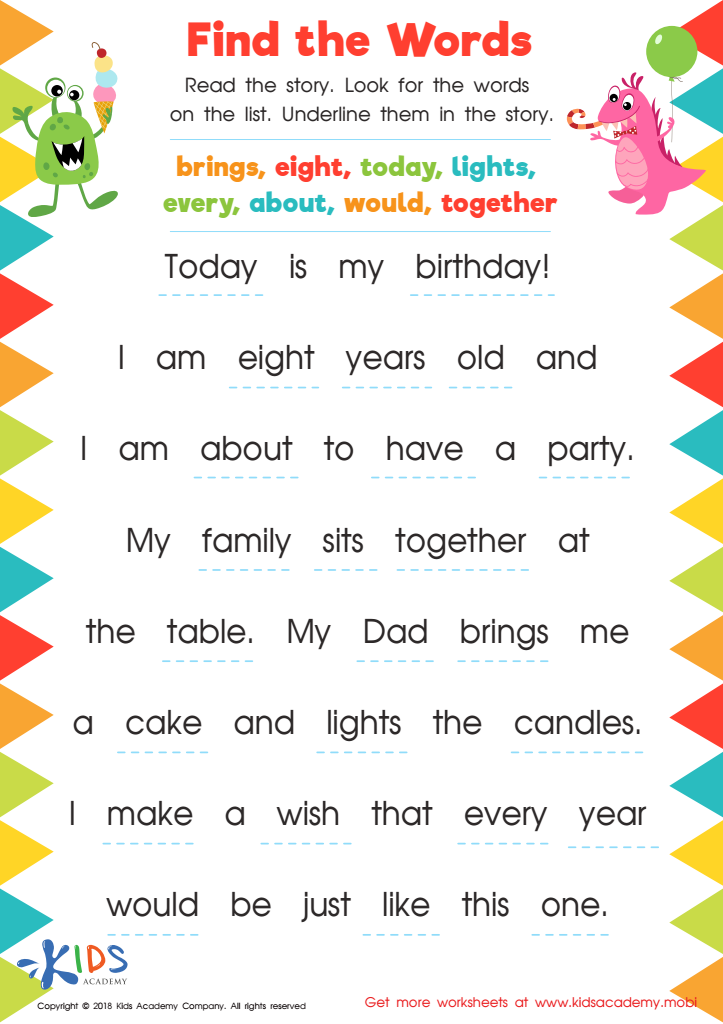
Find The Words Printable Worksheet
Hunt for words while reading this birthday story! This printable worksheet will help your child practice early reading skills as they search for words in the text. Enjoy the story and find the words!
 Assign to My Students
Find The Words Printable Worksheet
Worksheet
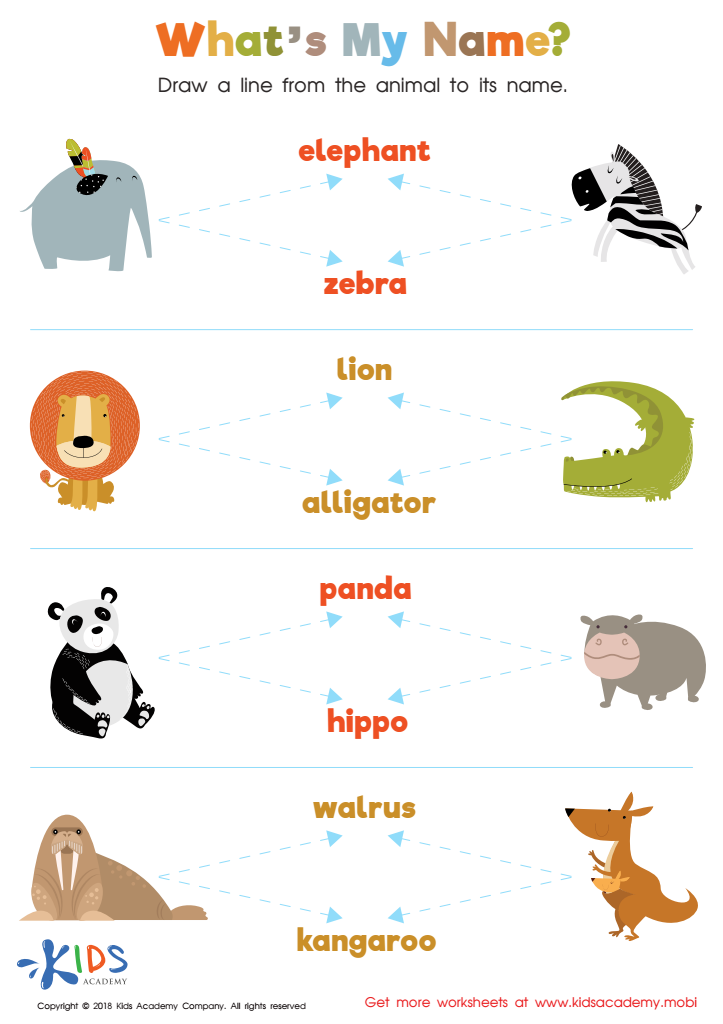
Animals and Their Names Worksheet
Match animals with their names with this worksheet! Draw a line from the word to its picture. Say the name of each animal. Later, search for these animals at the zoo - great for reinforcing learning!
Animals and Their Names Worksheet
Worksheet
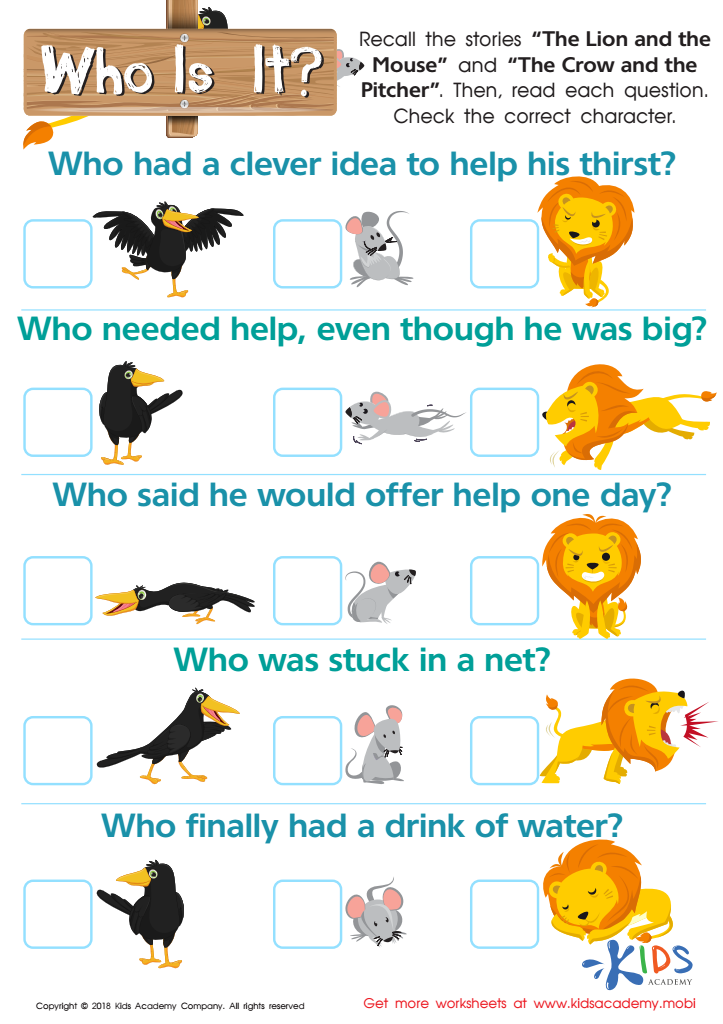
Who Is It? Worksheet
This worksheet helps students recall details from The Crow and the Pitcher and The Lion and the Mouse stories. Students will answer questions about the characters' actions. Use it to assess their understanding of both stories, as this is a key comprehension skill.
Who Is It? Worksheet
Worksheet
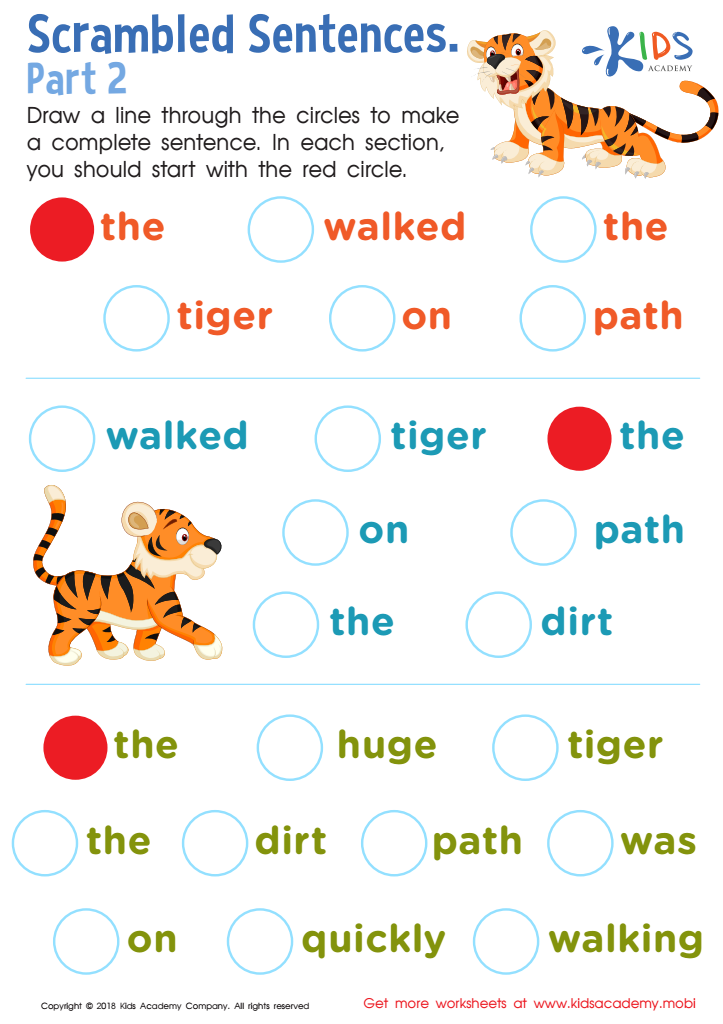
Scrambled Sentences Part 2 Worksheet
This printable worksheet helps kids construct simple, correct sentences. Introduce them to making sentences if they're new to it. Have them draw a line through the circles to form a sentence, starting with the red circle. After completing this exercise, they'll be able to craft short sentences with confidence.
Scrambled Sentences Part 2 Worksheet
Worksheet
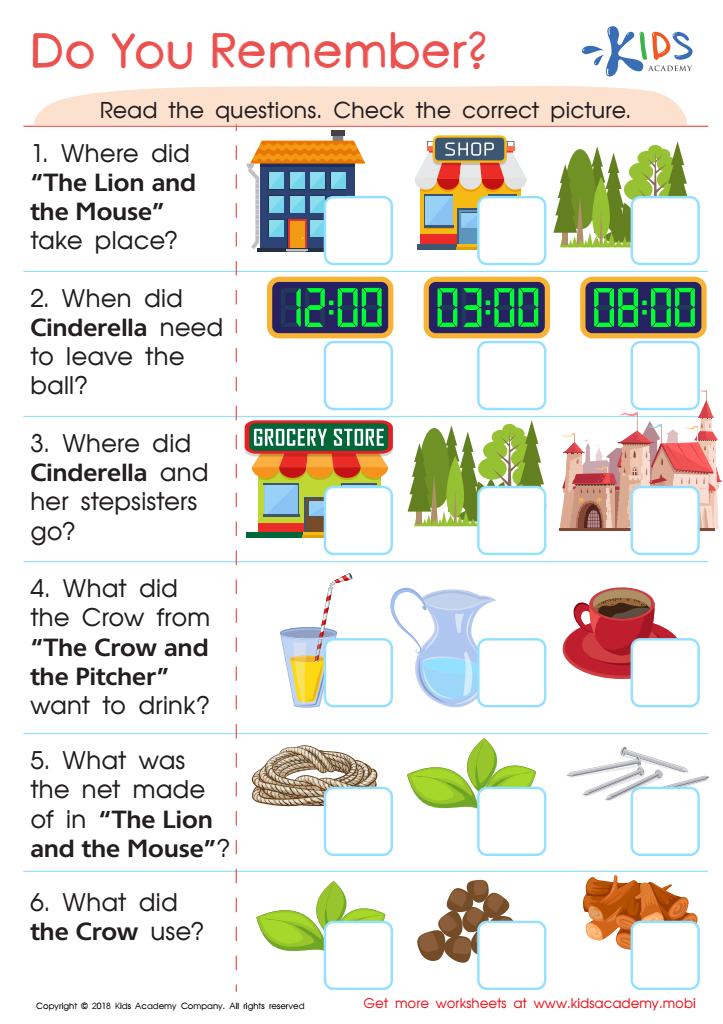
Do You Remember? Worksheet
Read "Cinderella", "The Crow and the Pitcher" and "The Lion and the Mouse" to your child. Discuss the plot and characters, and how their choices shape the story. Use this worksheet to check their comprehension and memory. Read the questions and have them select the correct picture answer.
Do You Remember? Worksheet
Worksheet
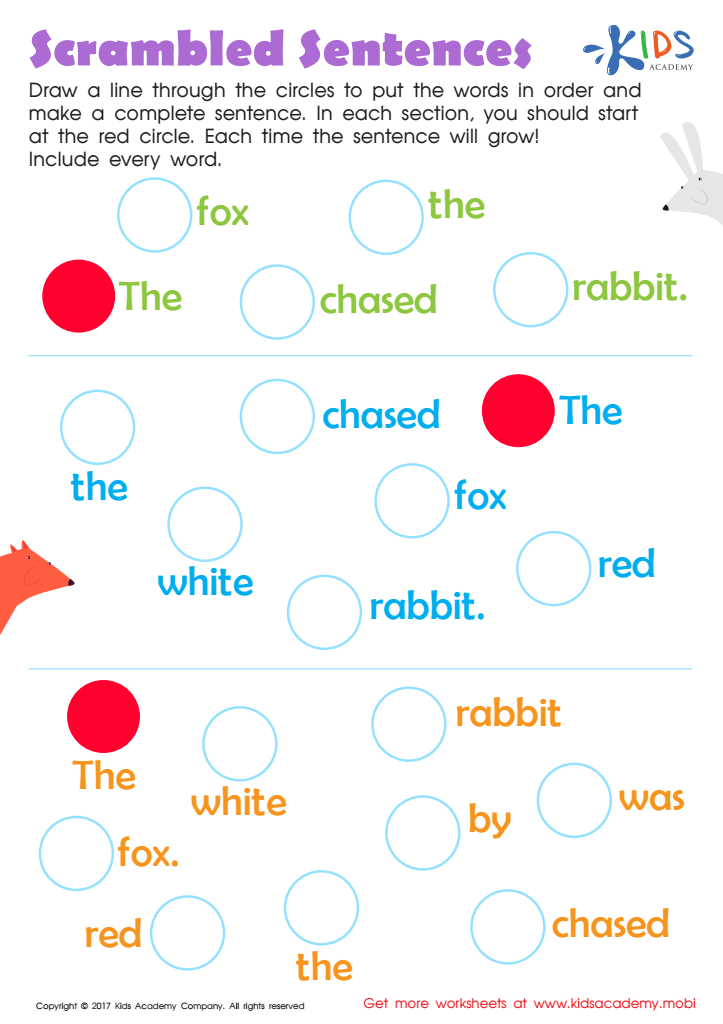
Scrambled Sentences Worksheet
Kids will have fun with the scrambled sentences worksheet: draw lines to make complete sentences. As the sentence grows, they'll learn sentence structure and word order. Easy instructions included!
Scrambled Sentences Worksheet
Worksheet
Join Kids Academy for Free
Who is primarily going to use this learning content?





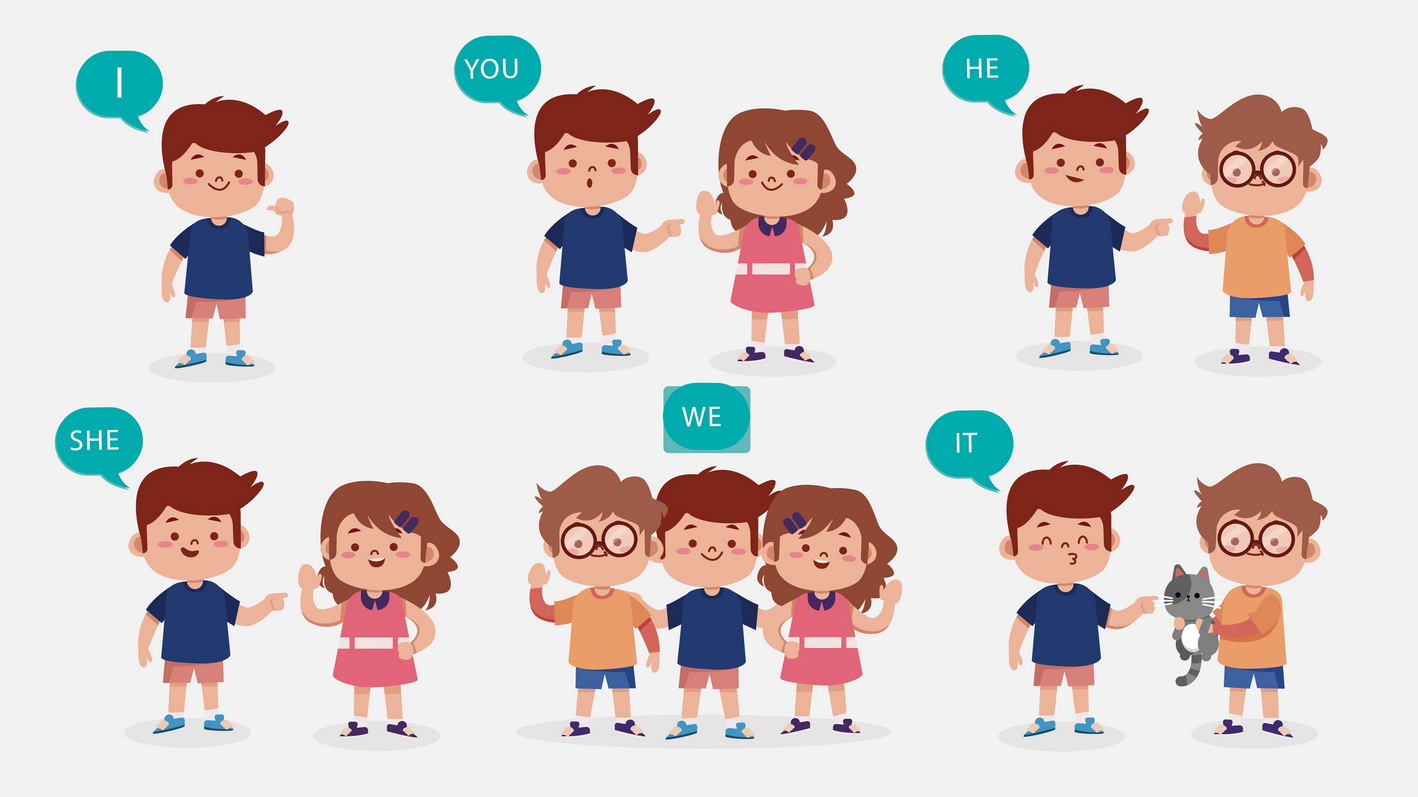


Cognitive development in grammar at the age of eight is crucial for a child's overall learning progression and future academic success. During this developmental stage, children refine their understanding of language structures, enhancing their ability to express thoughts clearly and engage in complex conversations. Parents and teachers should prioritize this aspect of learning because grammar serves as the foundation for effective communication, reading comprehension, and writing skills.
When children grasp the rules of grammar, they become more confident in their ability to convey ideas, which is key to both social interactions and academic assessments. Additionally, a strong command of grammar supports critical thinking by enabling children to articulate arguments, analyze texts, and understand nuanced meanings in diverse literature. As they learn to navigate language complexities, they also improve their cognitive flexibility, preparing them for more challenging subjects in the future.
Encouraging a supportive environment for grammar development through engaging activities and positive reinforcement not only bolsters self-esteem but also fosters a love for language and learning. Thus, investing time and resources into grammar education at this pivotal age can set the stage for lifelong communication skills and broader intellectual capabilities.