Dive into the fascinating world of suffixes with our engaging grammar worksheets designed for 8-year-olds. These thoughtfully crafted worksheets from Kids Academy help young learners grasp the concept of suffixes, enhancing their vocabulary and comprehension skills. Each activity focuses on understanding and applying common suffixes, making grammar learning fun and interactive. Perfect for both classroom and home use, these worksheets offer a structured approach to learning that keeps children motivated. With colorful illustrations and practical exercises, they ensure your child’s learning experience is both enjoyable and educational. Start your child's suffix journey today!

Check out this FREE Trial Lesson on Grammar for age 8!

Identify Common Suffixes

Favorites
With answer key
Interactive
  • 8
  • Understanding suffixes
  • Grammar
Reading: Follow the Suffixes Worksheet

Reading: Follow the Suffixes Worksheet

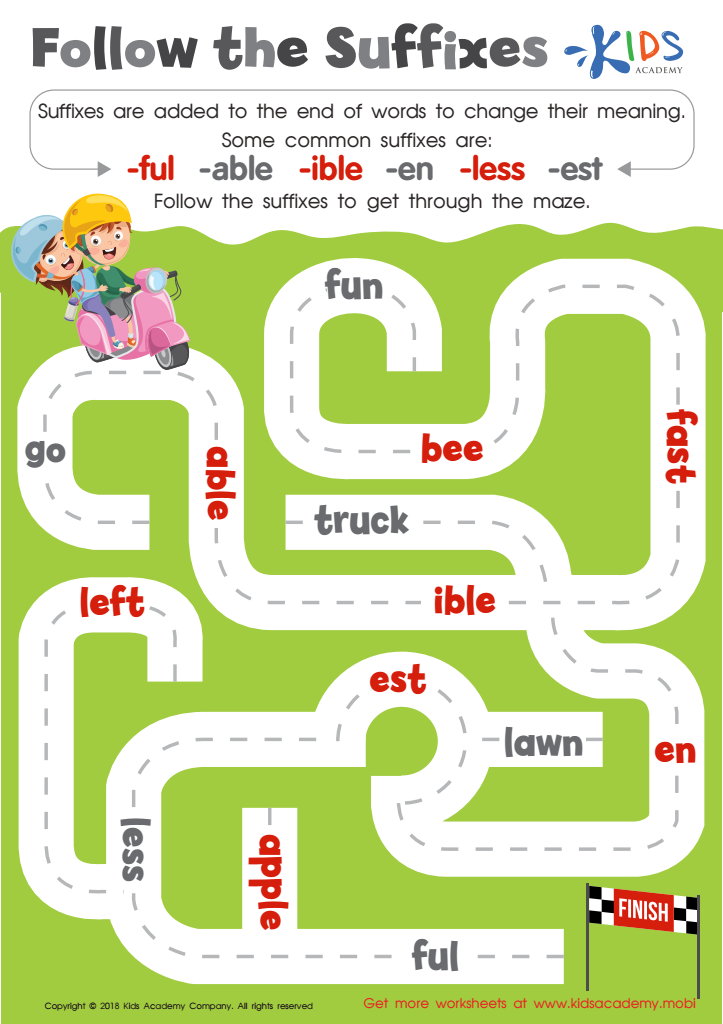
Students use suffixes to find the right way through a maze in this enjoyable activity! Understanding suffixes helps kids decode and comprehend more words, leading to better reading fluency. A great addition to your reading classes, keep this printable close!
Reading: Follow the Suffixes Worksheet
Worksheet
Reading: Words With Suffixes Worksheet

Reading: Words With Suffixes Worksheet

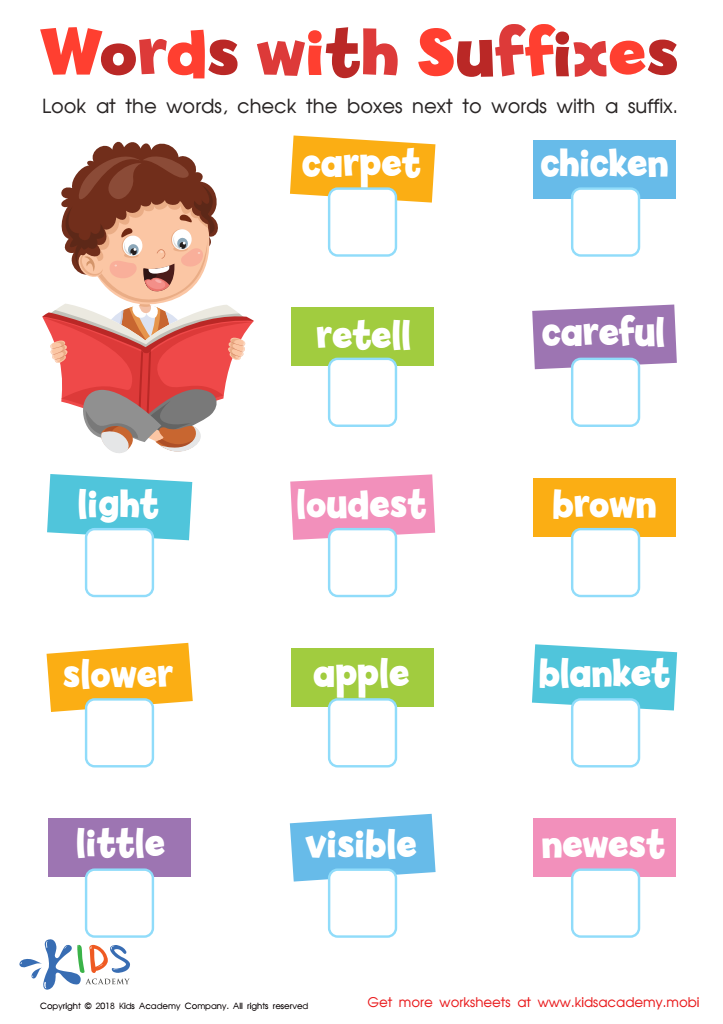
Help your students understand suffixes and build reading fluency with this worksheet. Have them read each word, then choose the ones with a suffix. Practicing this will lead to better comprehension and more confident reading. Save it for future use in language and reading classes.
Reading: Words With Suffixes Worksheet
Worksheet
Prefix pre and suffix ful worksheet

Prefix pre– and Suffix ful– Worksheet
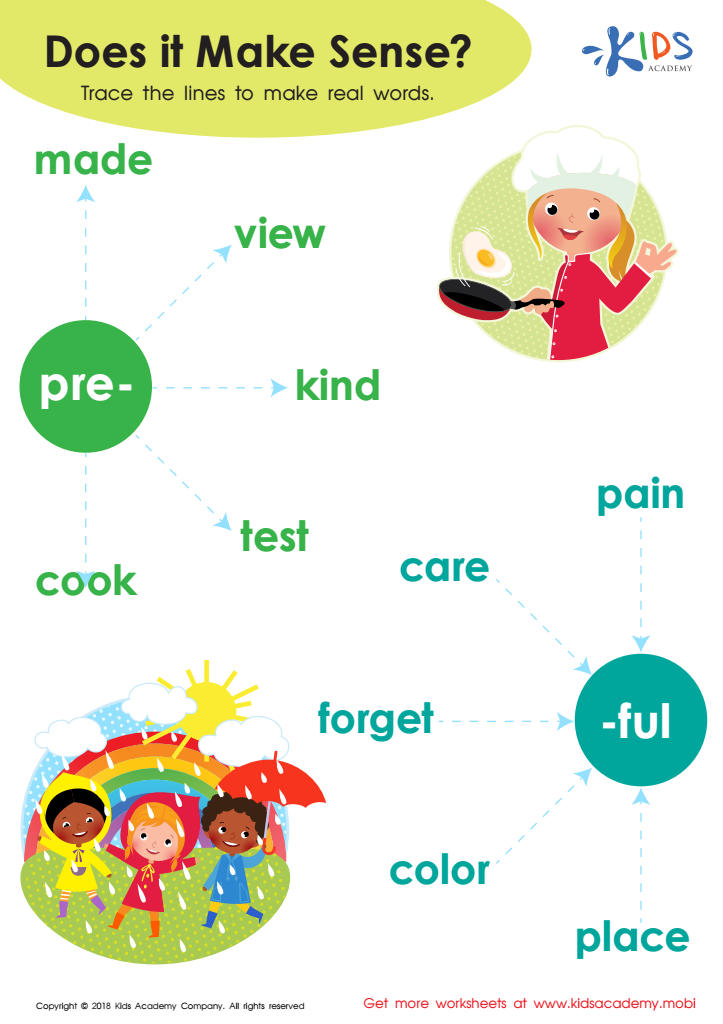
Can't preforget something! This worksheet helps kids learn how to attach prefixes and suffixes to root words, forming new words that make sense. With this activity, they'll evaluate how the root words change when adding the prefix or suffix.
Prefix pre– and Suffix ful– Worksheet
Worksheet
Suffix -Able Worksheet

Suffix -Able Worksheet

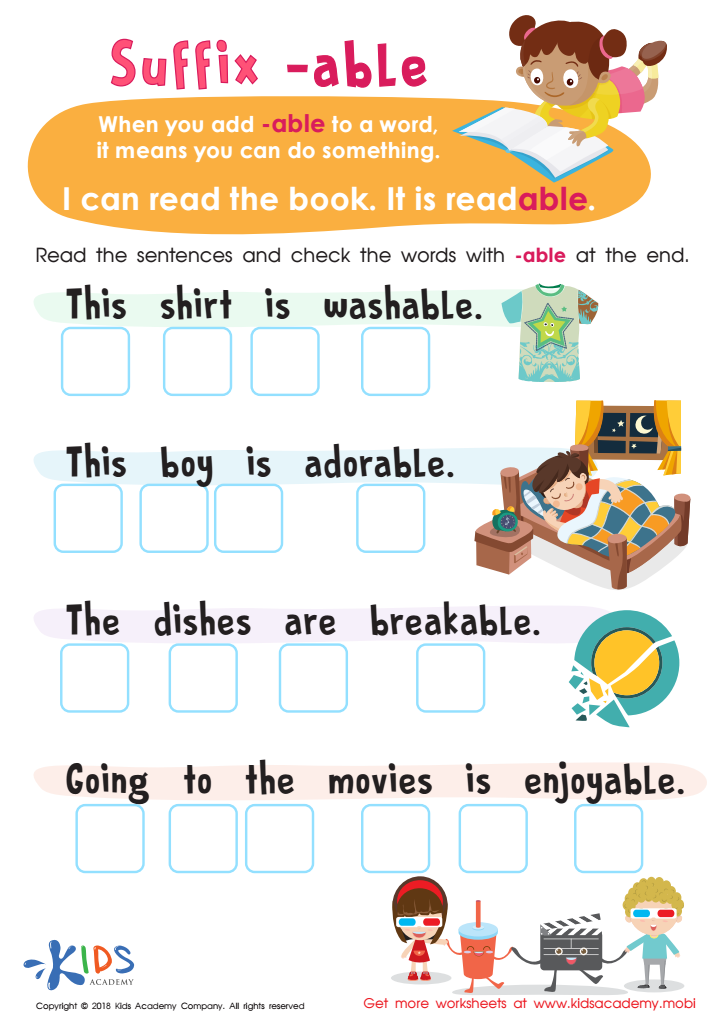
Suffix -able means you can do something. Example: readable - means you can read it. Give kids examples then check this worksheet. Read sentences with kids, looking for words with -able at the end.
Suffix -Able Worksheet
Worksheet
Prefix and suffix worksheet for grade 3

Prefix and Suffix Worksheet For Grade 3
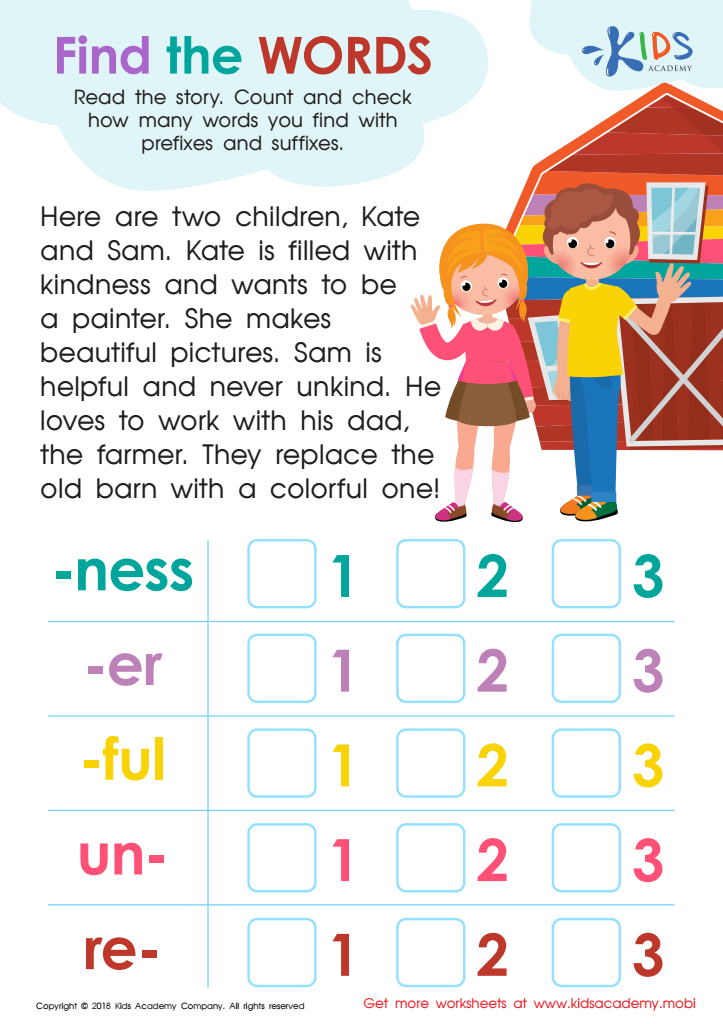
Read the story about Sam and Kate and help your grade 3 child tally all the words with prefixes and suffixes. Check their work by counting the words and ticking the appropriate boxes. This entertaining worksheet will help develop their reading and counting skills! (80 words)
Prefix and Suffix Worksheet For Grade 3
Worksheet
The Suffix -Ly Worksheet

The Suffix -Ly Worksheet

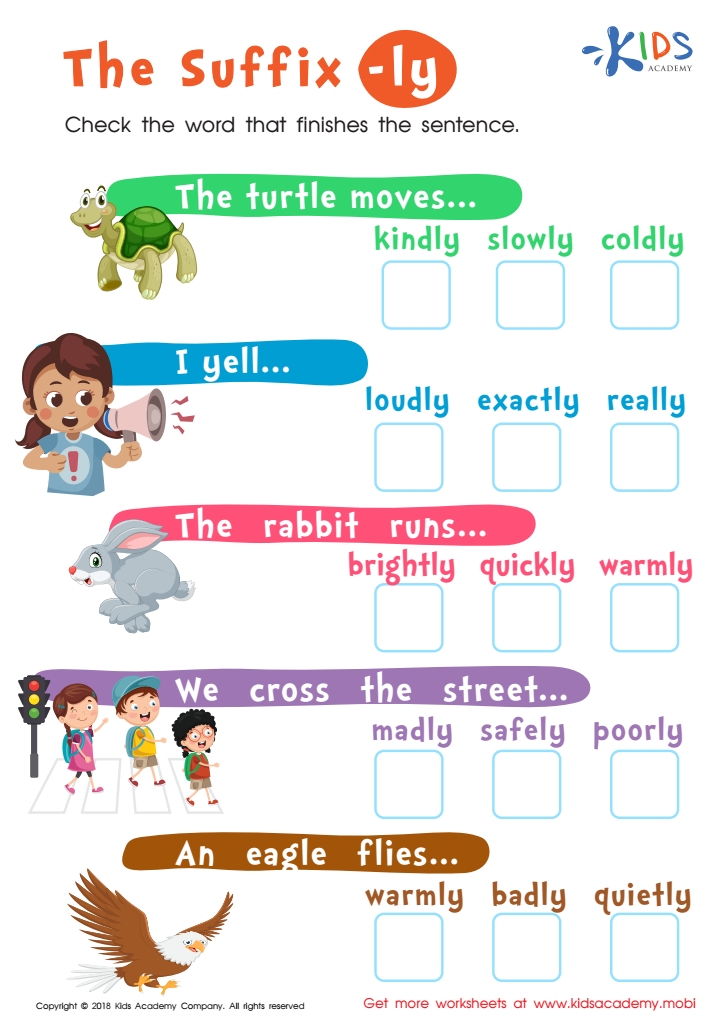
Suffixes change the meaning of words: the -ly suffix usually describes how an action is done (e.g. slowly, quickly, loudly). Help your child understand this and then check out the fun worksheet. Ask them to identify the animals and people in the pictures, then read the sentences out loud and have them check the ones that finish the sentence.
The Suffix -Ly Worksheet
Worksheet
Suffix er printable worksheet

Suffix –er Printable Worksheet

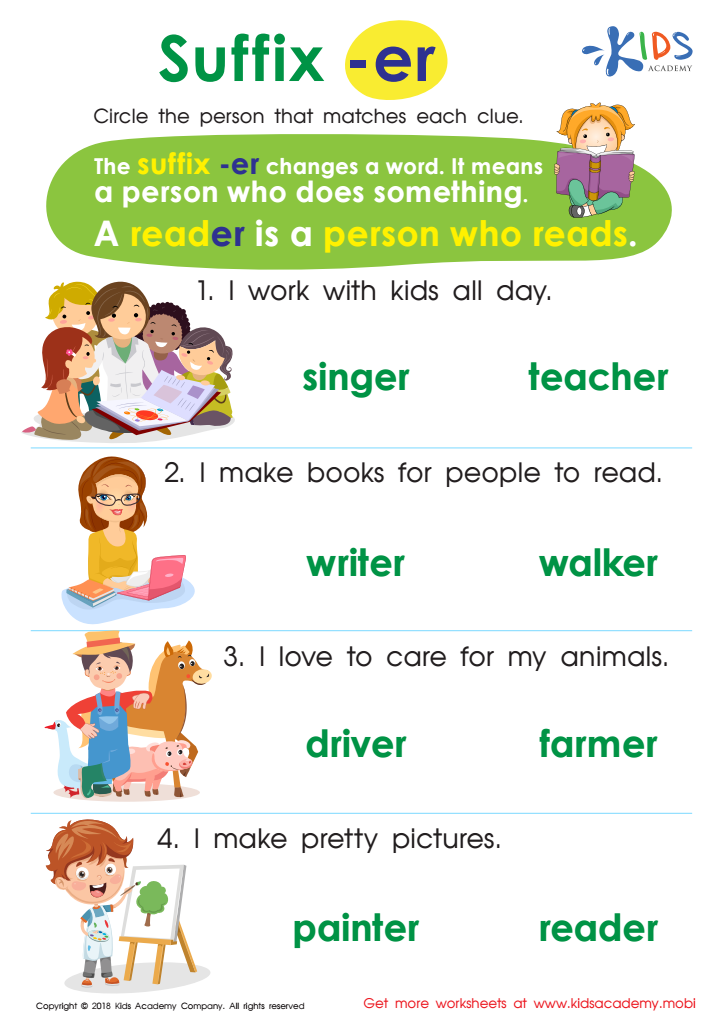
Kids learn how powerful suffixes are with this printable worksheet. Read the sentence clues and select the word it describes. Discuss how the suffix alters the original word. Amazing how two letters can transform meanings!
Suffix –er Printable Worksheet

Worksheet


Understanding suffixes is crucial for 8-year-olds because it significantly enhances their language skills, which can improve both reading and writing abilities. Suffixes, which are added to the end of base words, can change the meaning and part of speech of the original word. For instance, adding "-ful" to "help" turns it into "helpful," changing a verb into an adjective. This knowledge enables children to expand their vocabulary more effectively and use words in the correct context, promoting better communication.

From a reading perspective, recognizing suffixes helps children to decode unfamiliar words. If they know that "-ness" often makes nouns from adjectives, they can understand "happiness" as the state of being happy, even if they encounter the word for the first time. This boosts their confidence and comprehension skills, making reading more enjoyable and less intimidating.

In writing, understanding suffixes empowers children to be more precise and creative. They can form new words to express their thoughts more accurately and diversify their writing style. This linguistic flexibility is essential not just for academic success but also for everyday communication.

Teachers and parents should thus care about teaching suffixes because it develops foundational language skills, enhances cognitive abilities, and provides tools for effective and confident communication.