Syllable identification Writing Worksheets for 8-Year-Olds
4 filtered results
-
From - To
Enhance your 8-year-old's writing skills with our engaging syllable identification worksheets! Designed to make learning fun and interactive, these resources help young learners recognize and count syllables, a fundamental building block of literacy. Each worksheet features colorful illustrations and engaging exercises that encourage students to break down words, improving their word comprehension and pronunciation. Perfect for classroom or home use, our worksheets align with educational standards to support your child’s reading development while reinforcing their writing abilities. Discover the joy of learning syllables today and watch your child’s confidence soar as they master this essential skill!
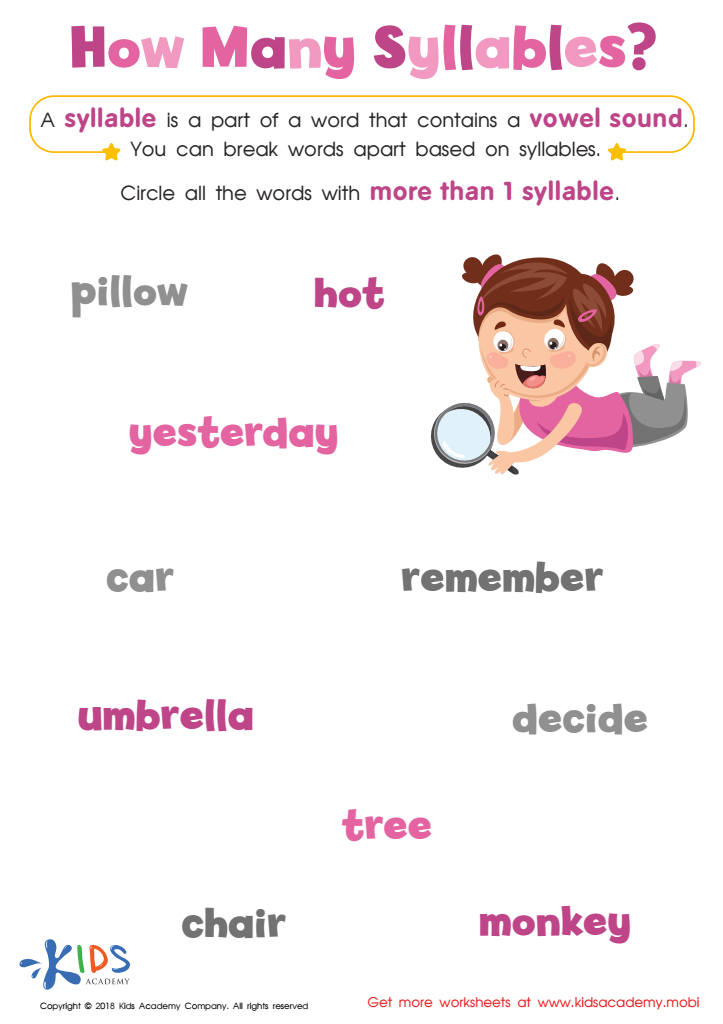
Reading: How Many Syllables Worksheet
 Assign to My Students
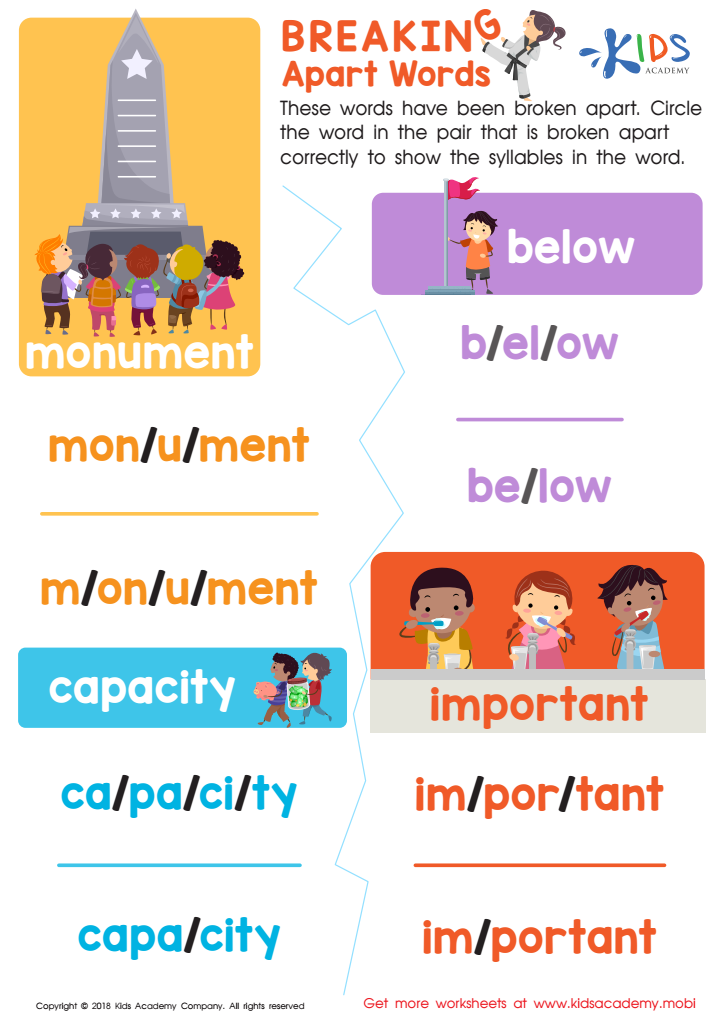
Breaking Apart Words Worksheet
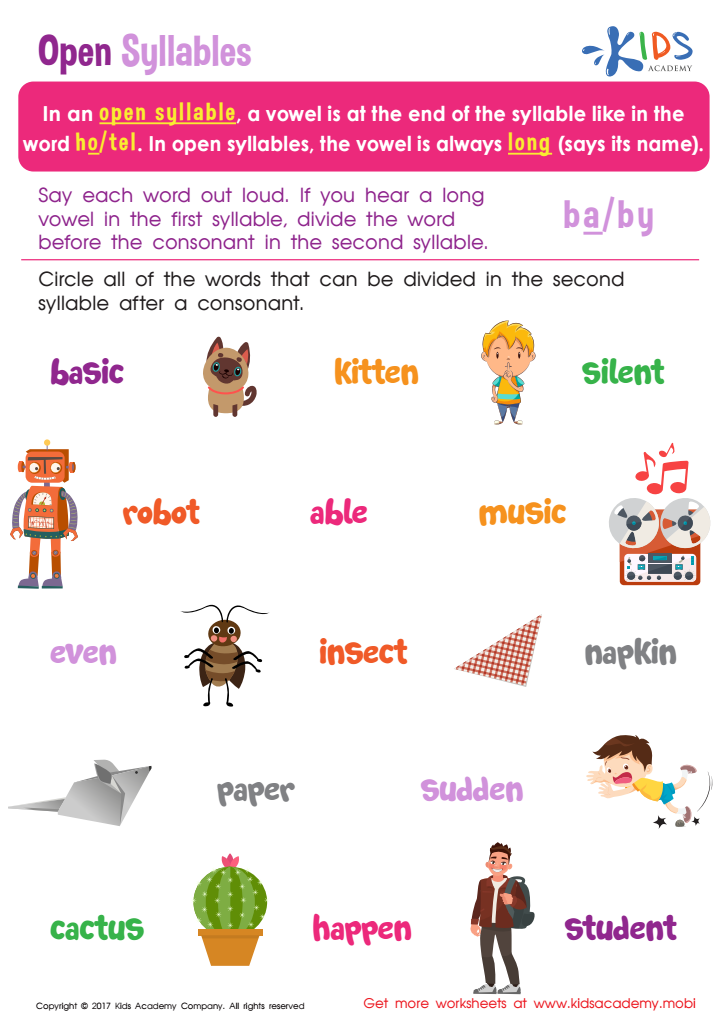
Open Syllable Printable Worksheet
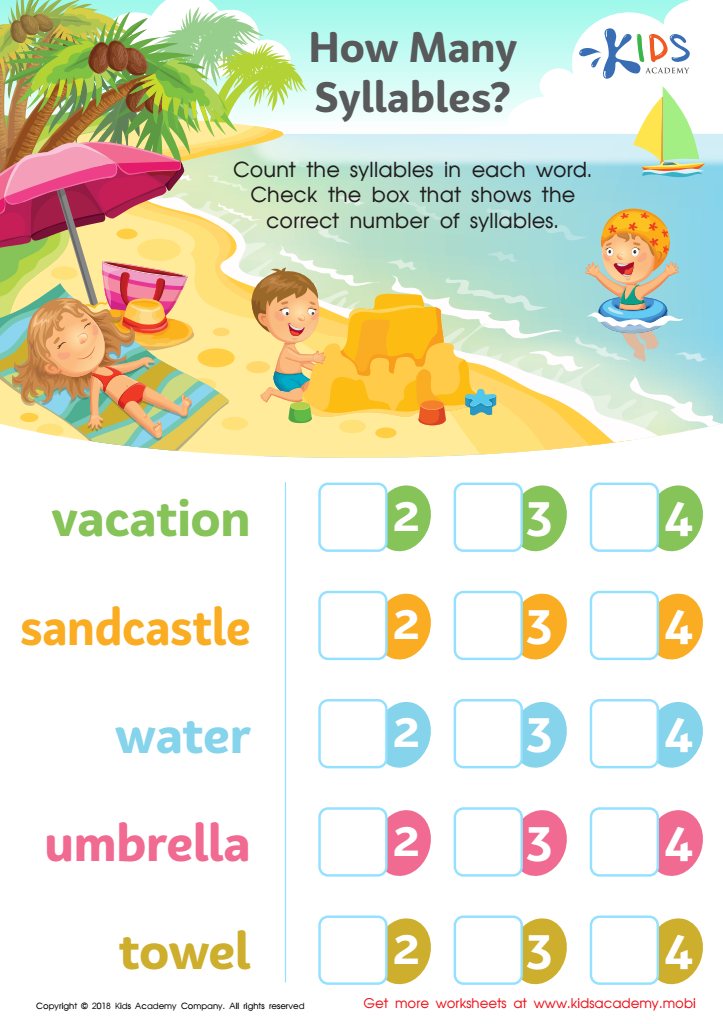
How Many Syllables Worksheet







Syllable identification is a crucial skill for 8-year-olds, as it forms the foundation of effective reading and writing. At this age, kids are developing their phonemic awareness and beginning to decode words independently. By recognizing syllables, young learners can break down complex words into manageable parts, making it easier to spell, pronounce, and comprehend them.
Parents and teachers should prioritize syllable identification because it enhances literacy development. It plays a significant role in enhancing vocabulary, fluency, and overall literacy skills. Children with a solid grasp of syllables are better equipped to approach unfamiliar words with confidence, reducing anxiety around reading and fostering a love for books.
Moreover, teaching syllable identification contributes positively to writing skills. As children learn to segment words into syllables, they can compose sentences more fluently, articulate their thoughts clearly, and develop better spelling abilities. This skill also supports reading comprehension, as recognizing syllable structure can improve word recognition and overall understanding of texts.
Ultimately, focusing on syllable identification not only empowers children academically but also instills a sense of accomplishment, helping them become more confident and enthusiastic learners. For parents and teachers, nurturing this skill is vital for nurturing well-rounded literacy development in young children.








