Word identification Writing Worksheets for 8-Year-Olds
6 filtered results
-
From - To
Give your 8-year-old a head start with our Word Identification Writing Worksheets! Designed specifically for developing reading and writing skills, these worksheets help young learners recognize, understand, and spell new words effectively. Featuring engaging activities and vibrant visuals, each worksheet offers a fun approach to build vocabulary and improve comprehension. Perfect for both classroom and at-home learning, these resources align with educational standards, making it easier for parents and teachers to support their child's literacy journey. Strengthen your child's confidence in reading and writing with Kids Academy's expertly crafted worksheets!
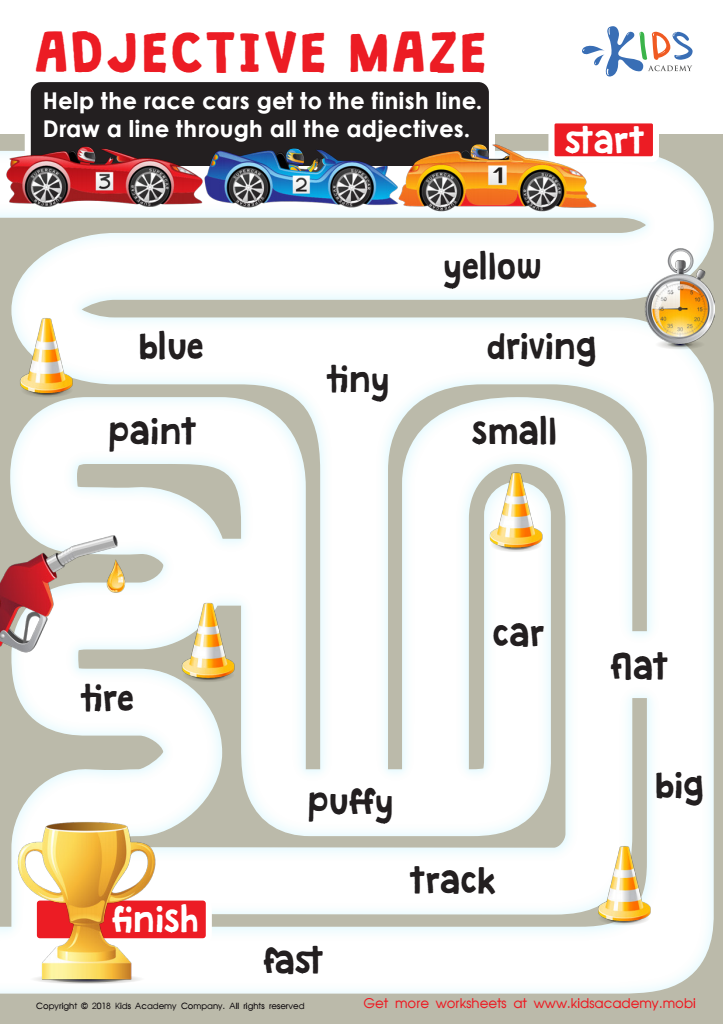
Adjective Maze Worksheet
 Assign to My Students
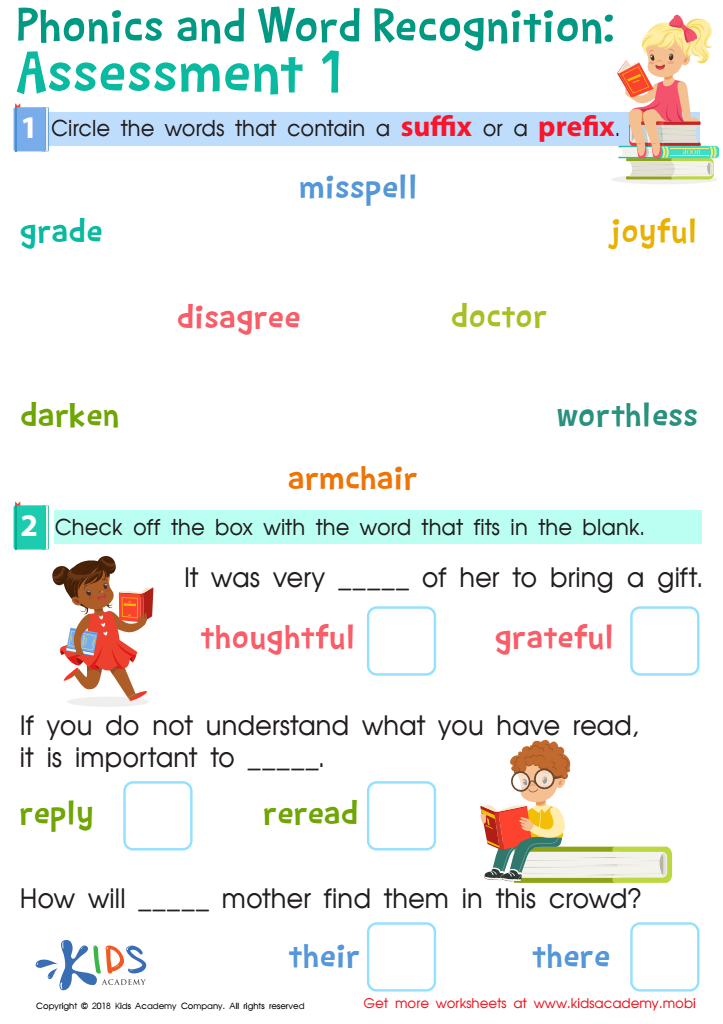
Phonics and Word Recognition: Assessment 1 Worksheet
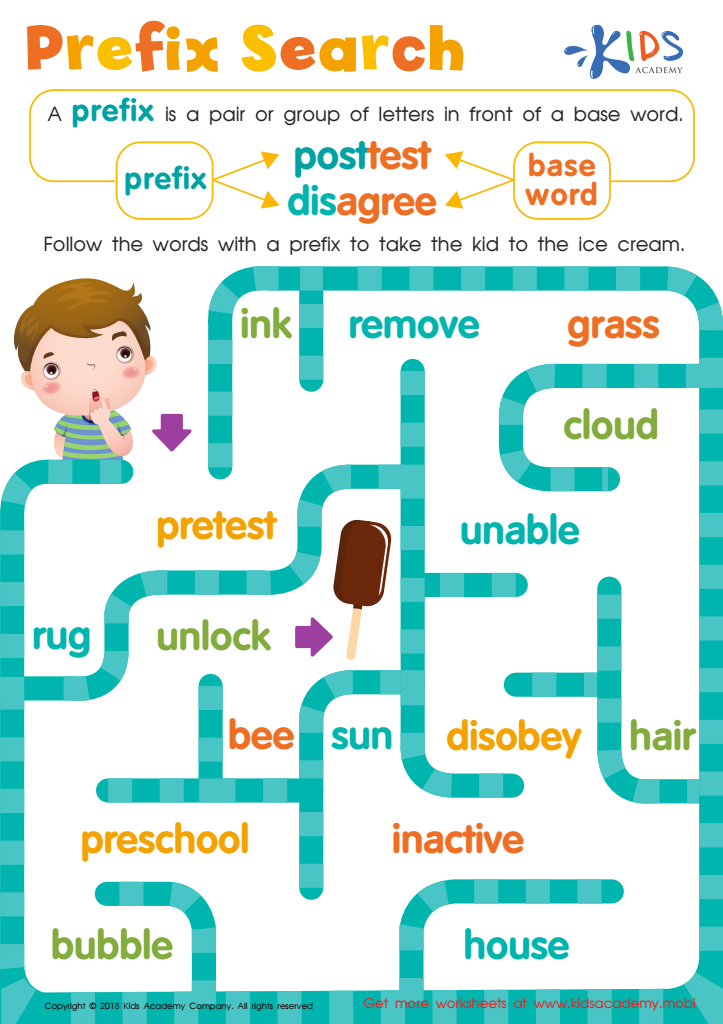
Reading: Prefix Search Worksheet
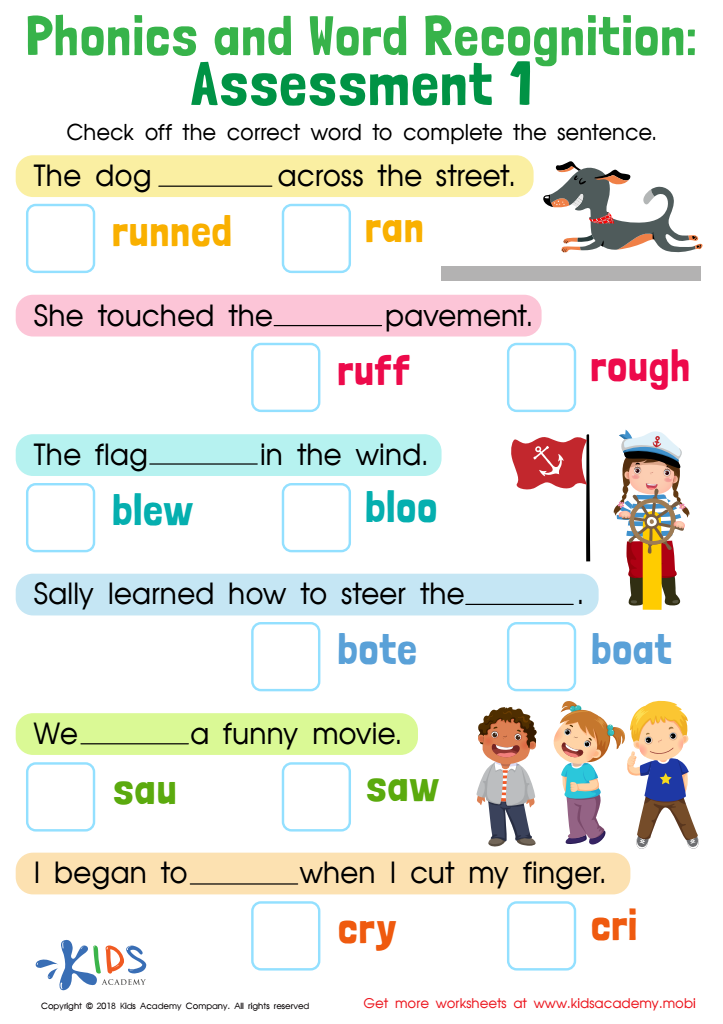
Phonics and Word Recognition: Assessment 1 Worksheet
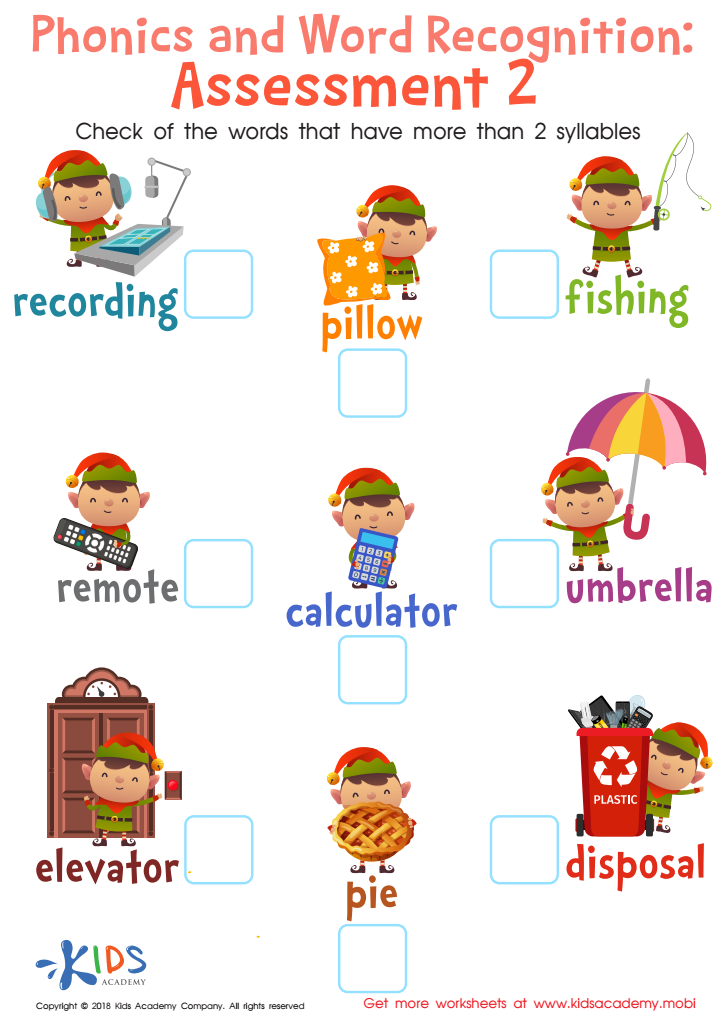
Phonics and Word Recognition: Assessment 2 Worksheet
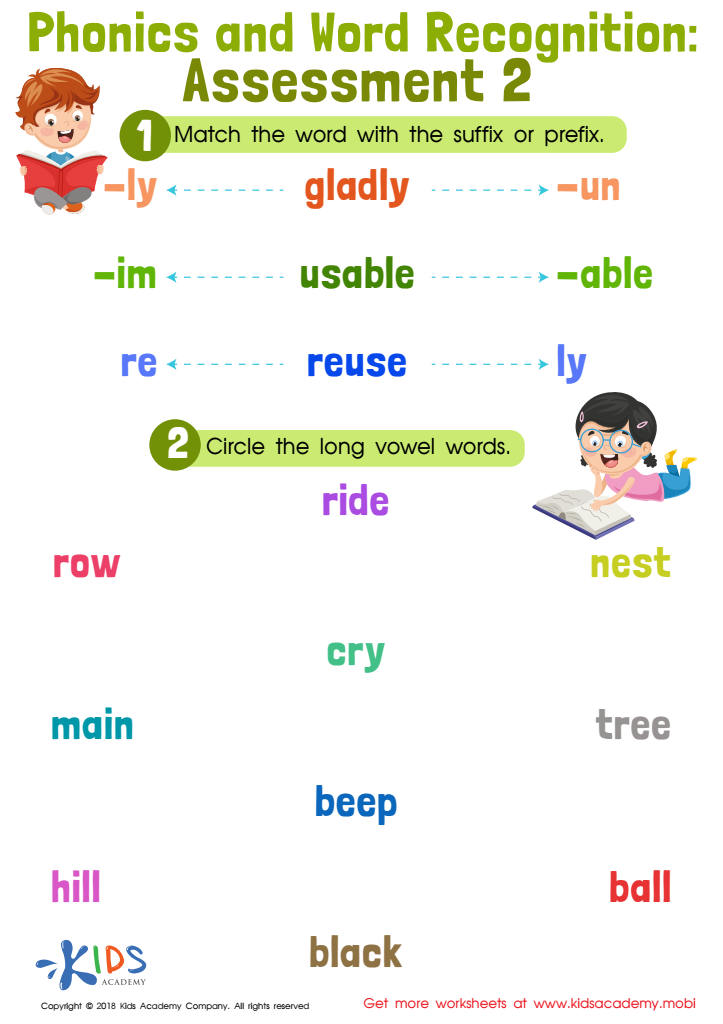
Phonics and Word Recognition: Assessment 2


.jpg)





Word identification and writing skills at the age of eight are crucial building blocks for a child's overall academic success and cognitive development. Firstly, being able to accurately identify words enhances a child's reading proficiency. Strong reading skills are essential for understanding and absorbing subject matter across all areas of learning, including mathematics, science, and social studies. This foundational ability also directly impacts their vocabulary development and comprehension skills, both critical for advanced learning and critical thinking.
Secondly, writing skills foster not just the mechanical aspect of communication but also creativity and expression. Through writing, children learn to organize their thoughts, present arguments logically, and convey emotions and ideas effectively. Mastery of these skills is essential for academic tasks, from simple book reports to complex research projects as they progress in school.
Educators and parents should care deeply about these skills because gaps in word identification and writing can lead to frustration, diminished self-esteem, and a lack of interest in academics. Early intervention and support can turn potential struggles into strengths, laying the groundwork for a lifetime of effective communication. Therefore, cherishing and nurturing these skills in eight-year-olds is investing in their future ability to succeed in school and beyond.








