Problem-Solving Skills Area and Perimeter Worksheets for 9-Year-Olds
8 filtered results
-
From - To
Enhance your 9-year-old's critical thinking with our engaging Problem-Solving Skills Area and Perimeter Worksheets! Tailored to foster a deep understanding of mathematical concepts, these worksheets challenge children to apply their knowledge of area and perimeter in creative scenarios. With a variety of exercises, including real-world problems and visual aids, kids will develop essential problem-solving techniques while honing their math skills. Perfect for classroom use or at-home practice, our worksheets engage young learners and make math fun. Explore this interactive learning resource and help your child gain confidence in their problem-solving abilities today!
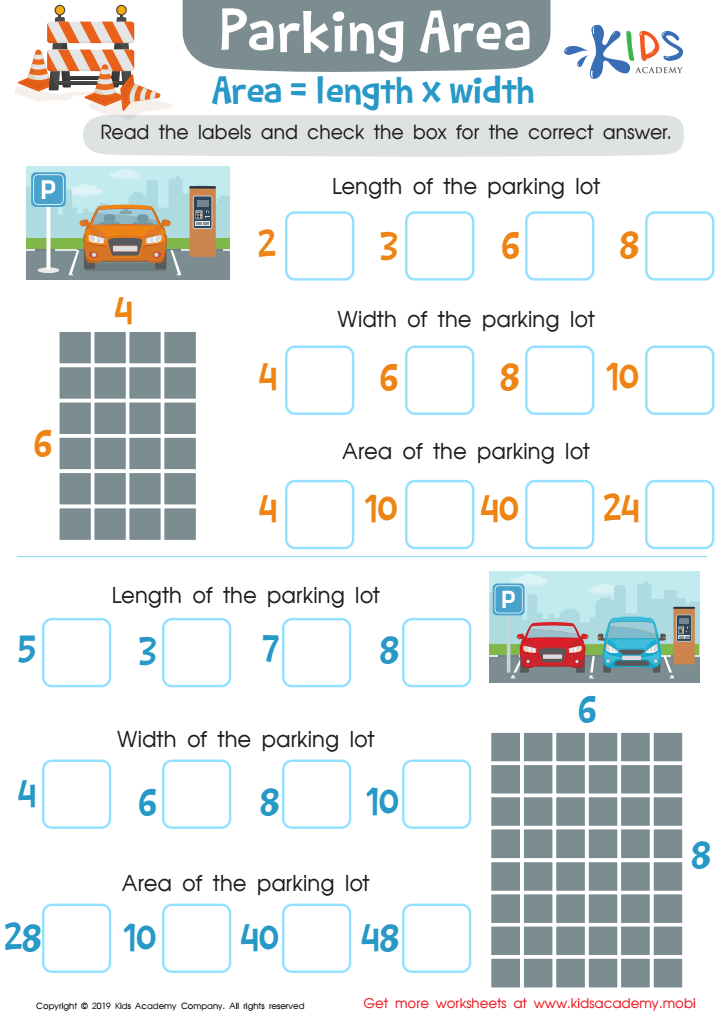
Parking Area Worksheet
 Assign to My Students
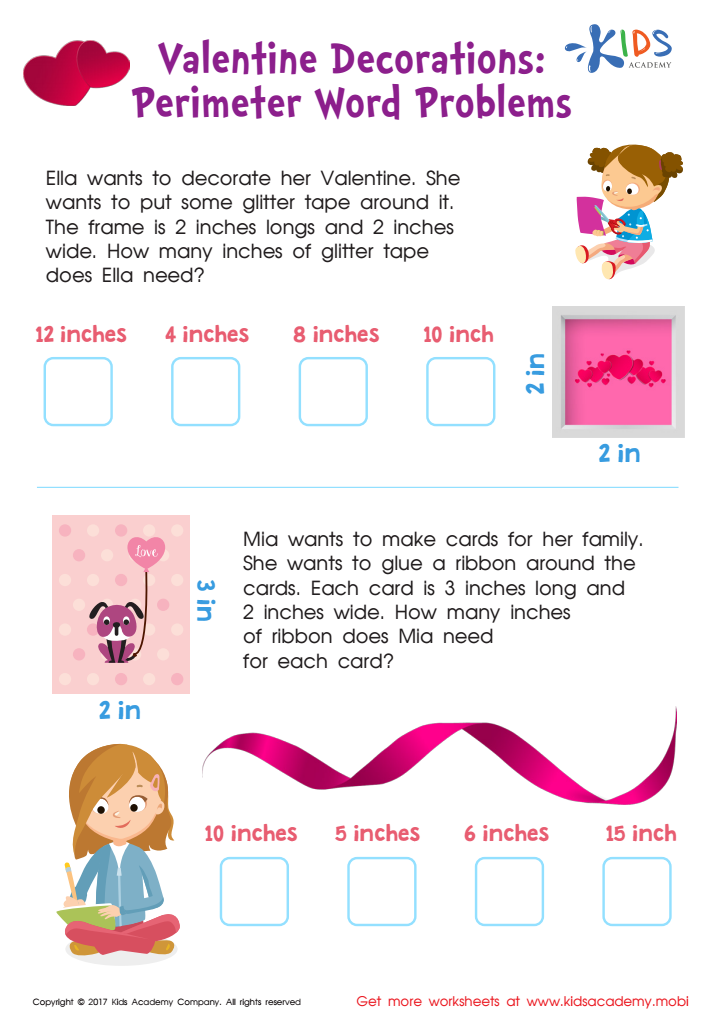
Perimeter Word Problems Worksheet
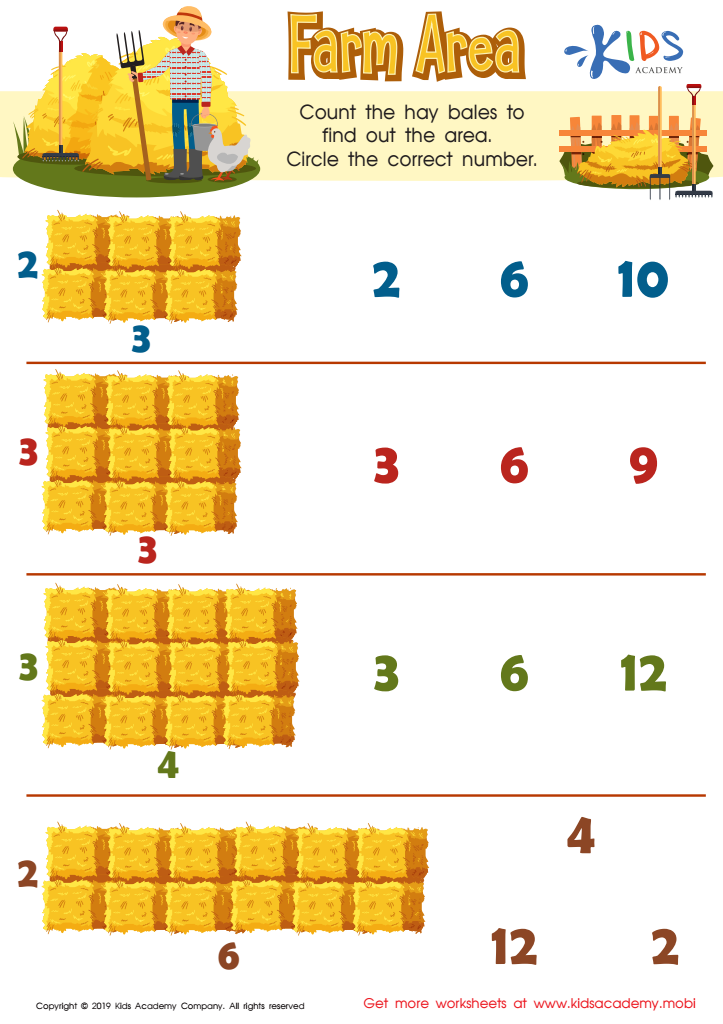
Farm Area Worksheet
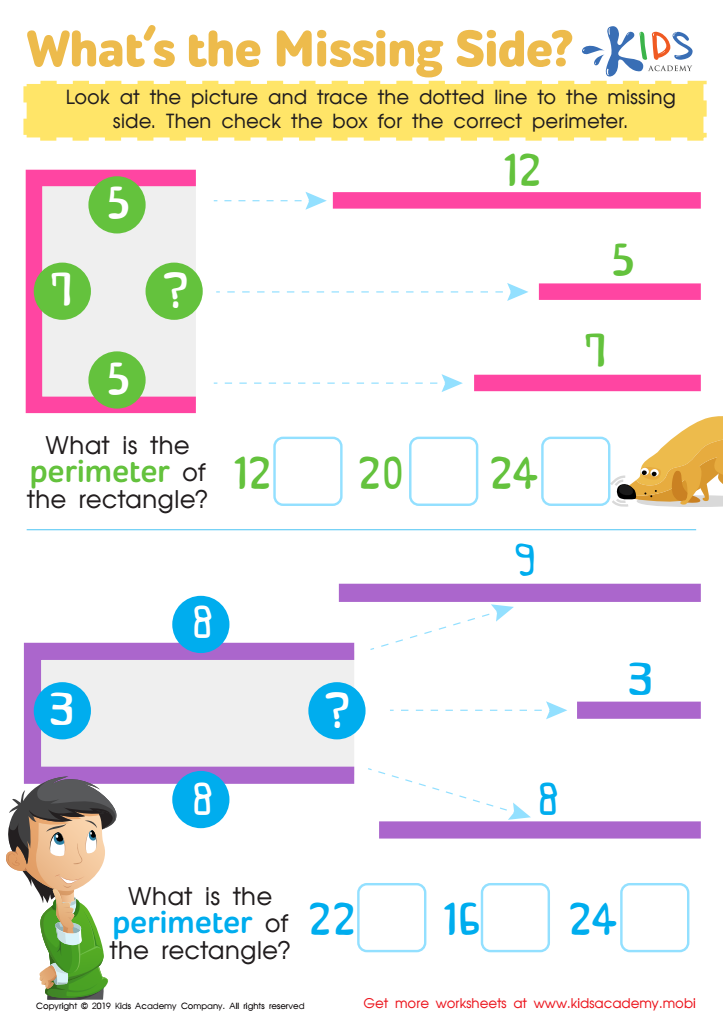
What's the Missing Side Worksheet
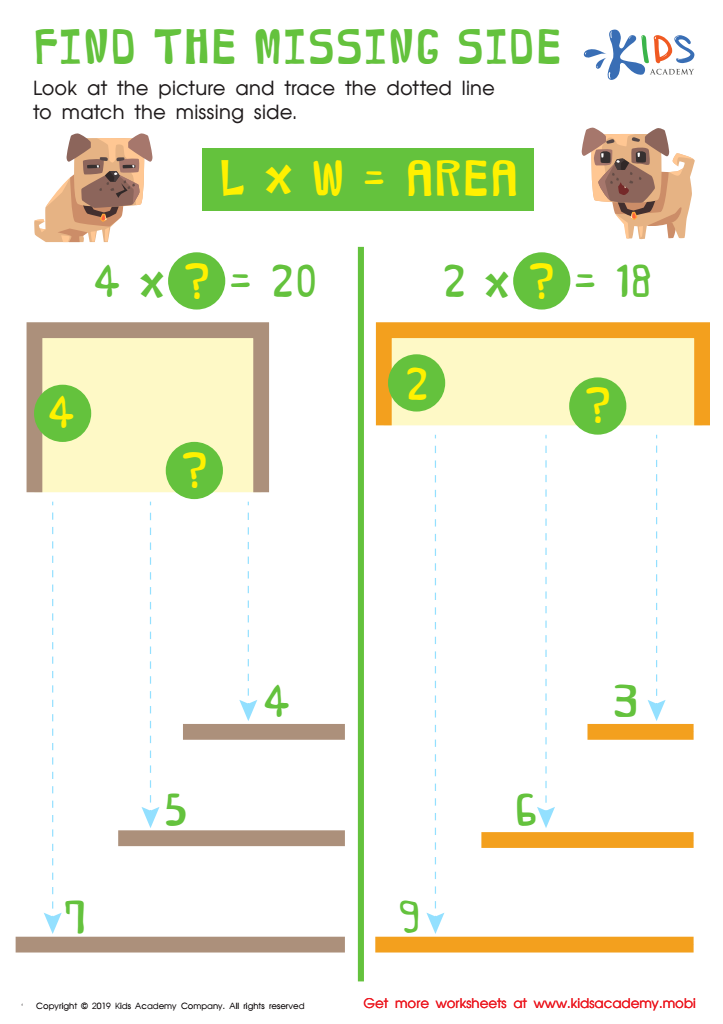
Find the Missing Side Worksheet
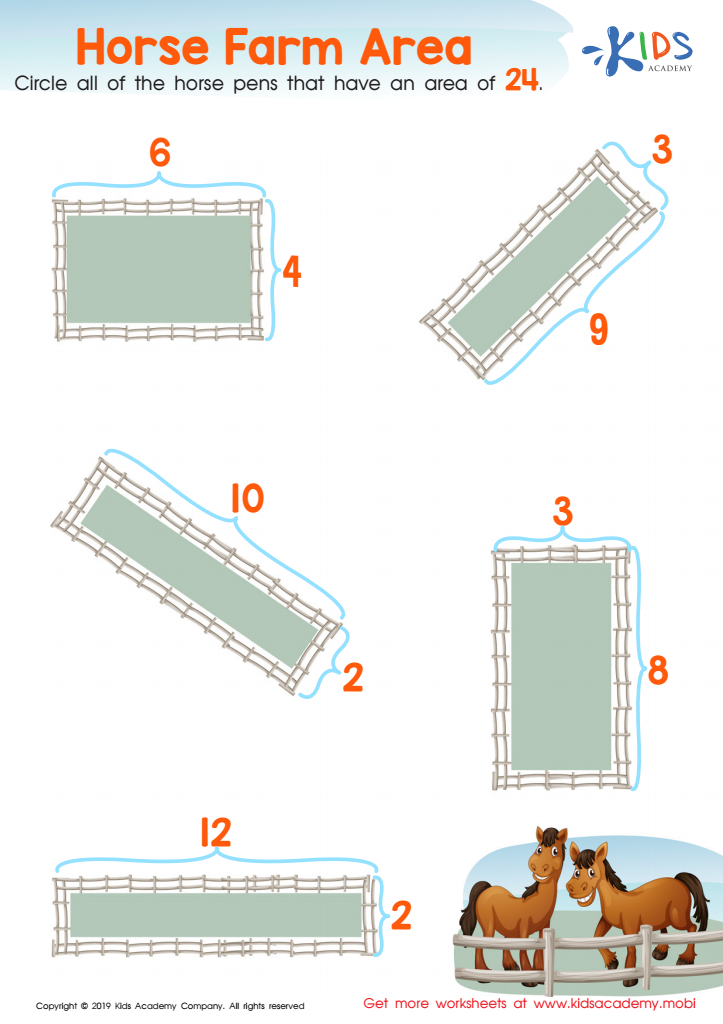
Horse Farm Area Worksheet
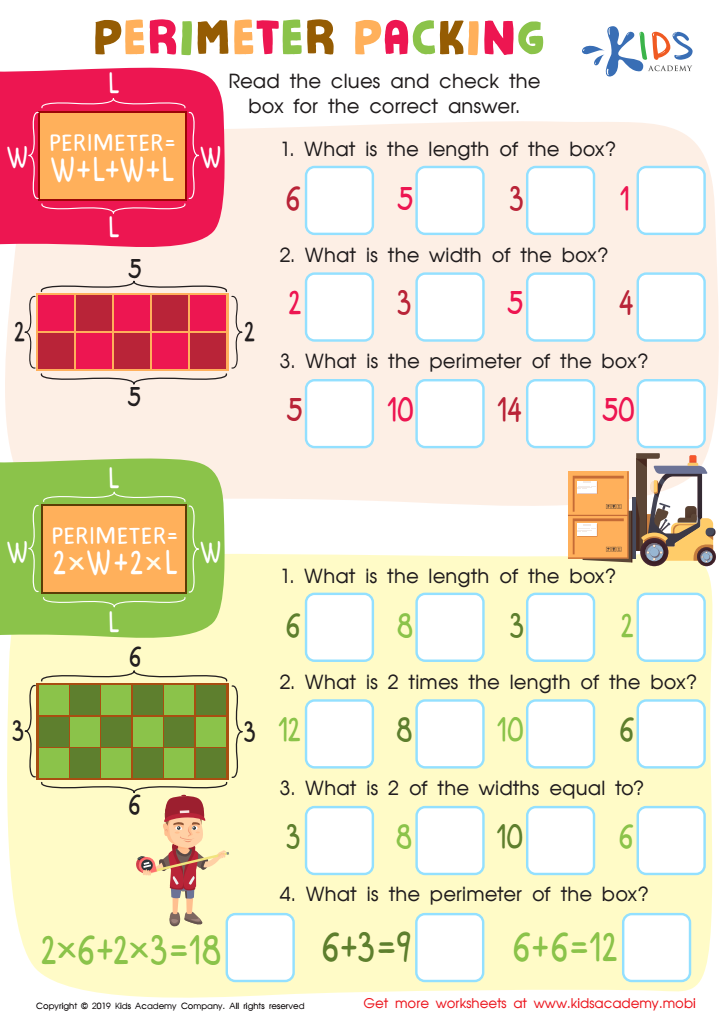
Perimeter Parking Worksheet
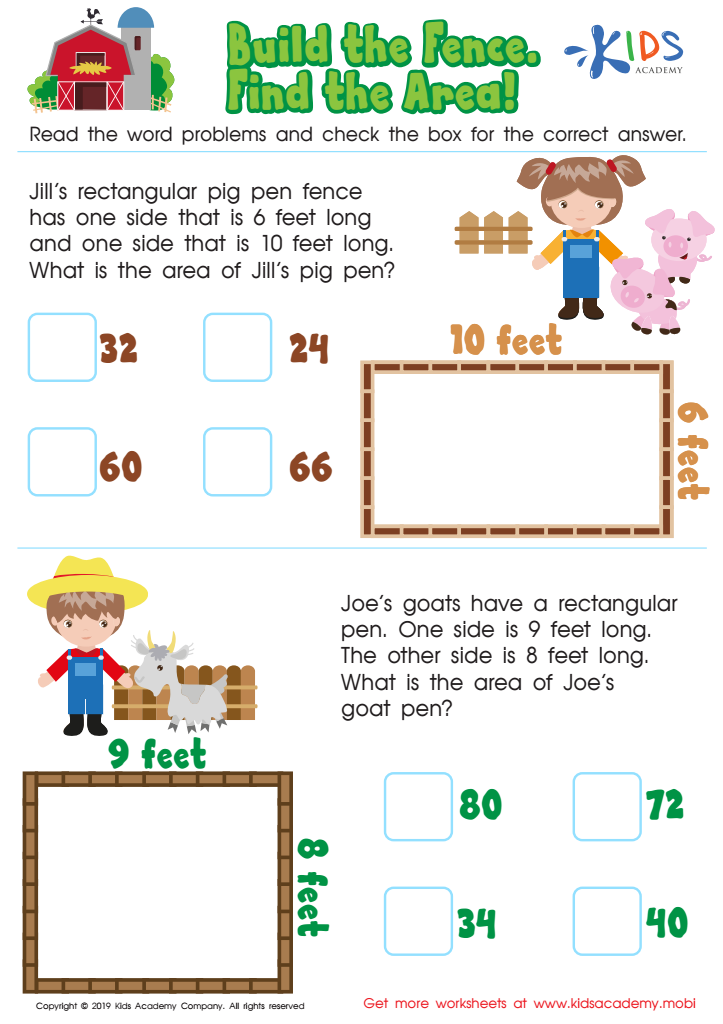
Build the Fence, Find the Area Worksheet








Problem-solving skills in the context of area and perimeter are crucial for 9-year-olds as they lay the foundation for critical mathematical thinking. At this age, children are developing the ability to understand spatial relationships and apply mathematical concepts to real-world situations. Caring about this skill area helps cultivate analytical ways of thinking, which are essential not just in math, but across all subjects and aspects of life.
By focusing on area and perimeter, teachers and parents can engage children in hands-on activities that make math tangible and enjoyable. For example, measuring objects to find their perimeter or calculating the area of a garden patch allows kids to apply knowledge practically, enhancing retention. This skill also promotes logical thinking, as children learn to break down a problem into manageable parts, strategize a solution, and consider alternative methods.
Moreover, strong problem-solving skills contribute to better preparation for future academic challenges, fostering a growth mindset. As children gain confidence in their ability to approach and solve problems, they develop perseverance, critical for lifelong success. Ultimately, a solid grasp of area and perimeter assists in obtaining not only mathematical competence but also boosts overall cognitive abilities and confidence in tackling complexities.