Multiplication practice Math Worksheets for 9-Year-Olds - Page 3
68 filtered results
-
From - To
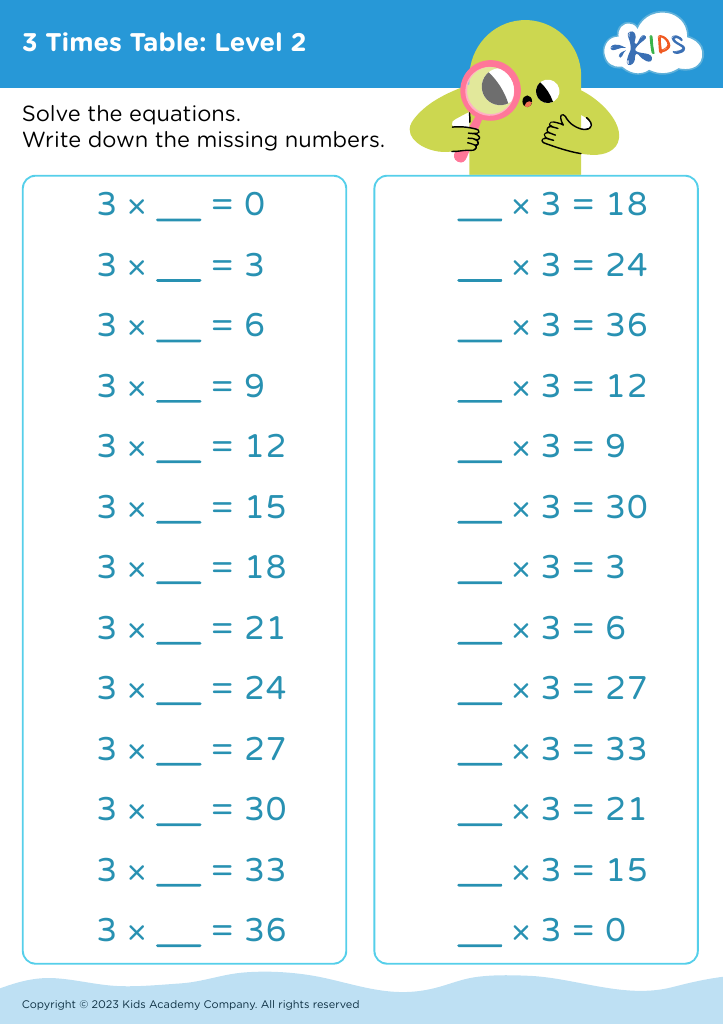
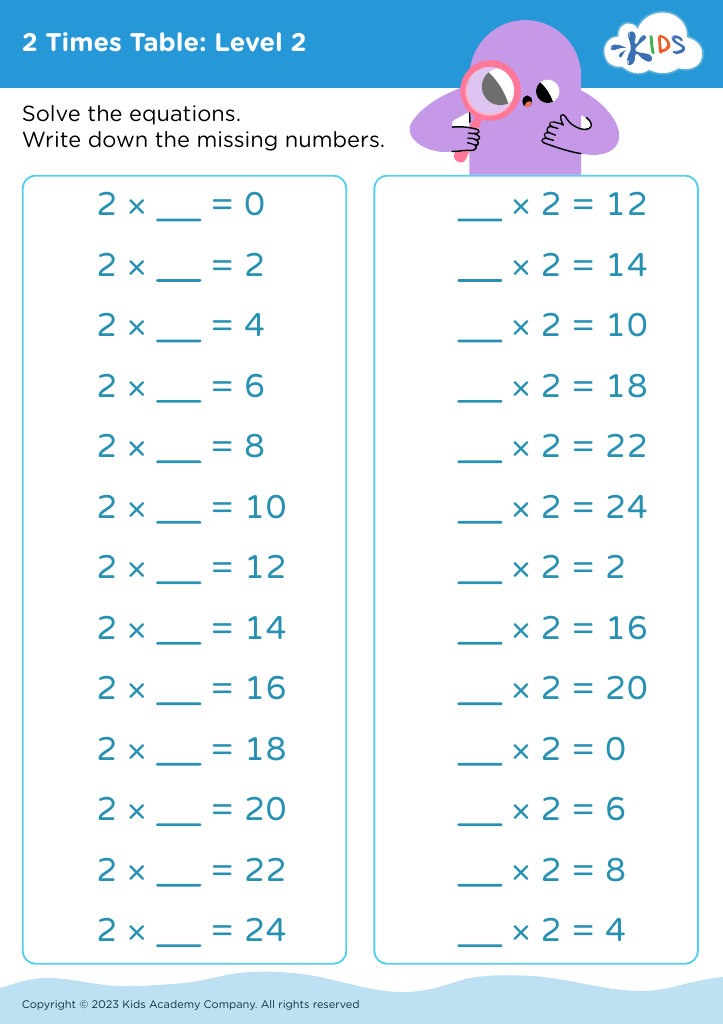
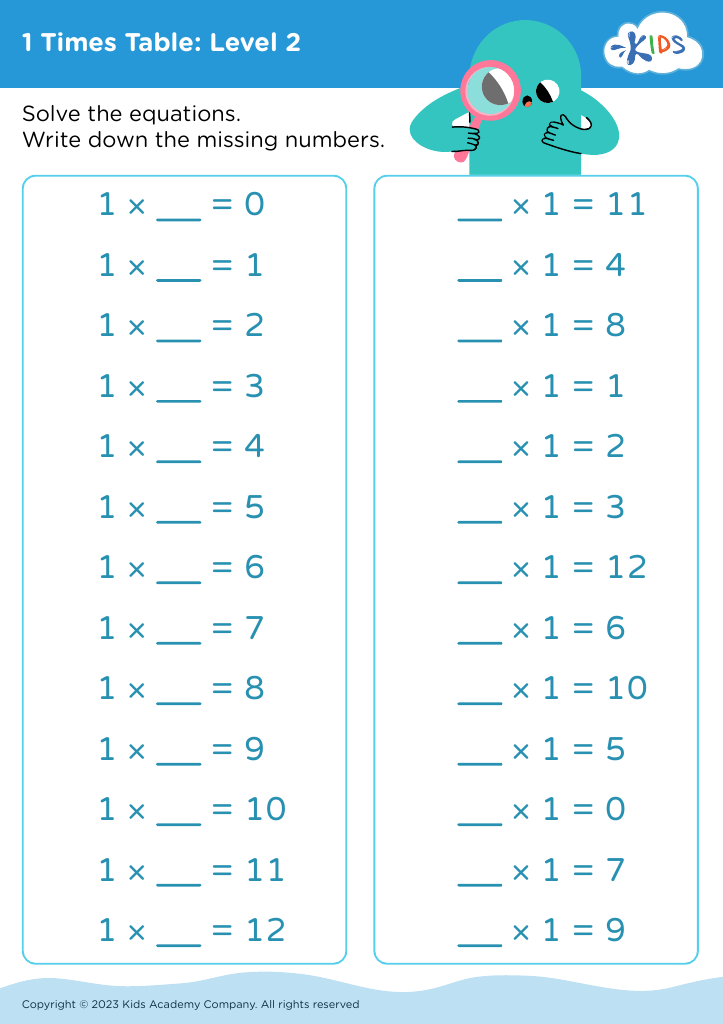
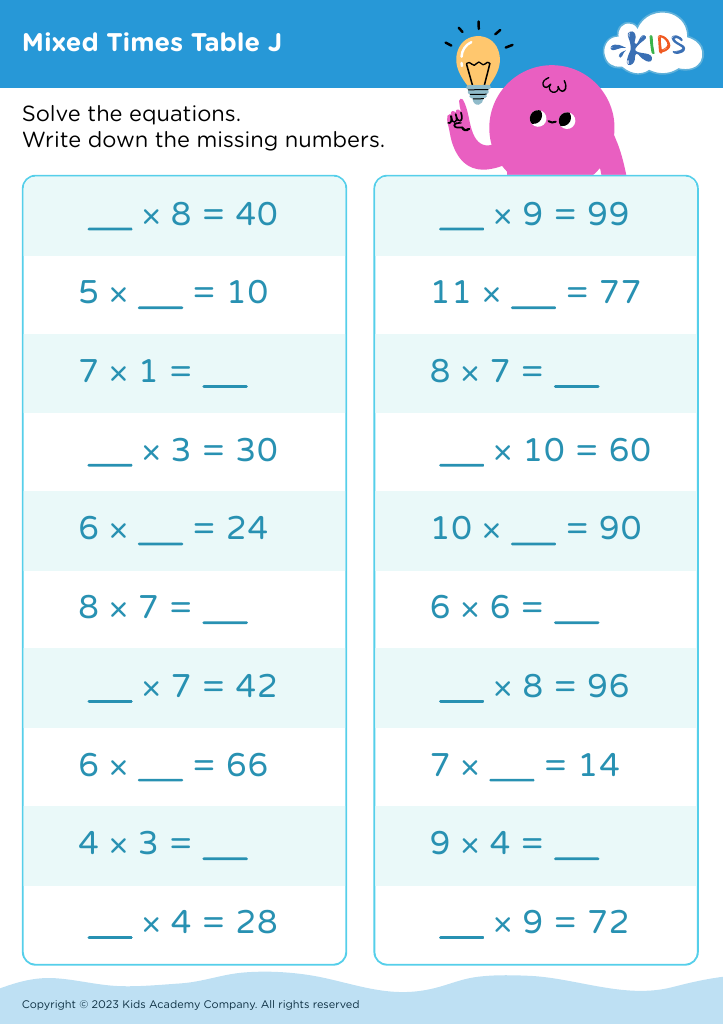
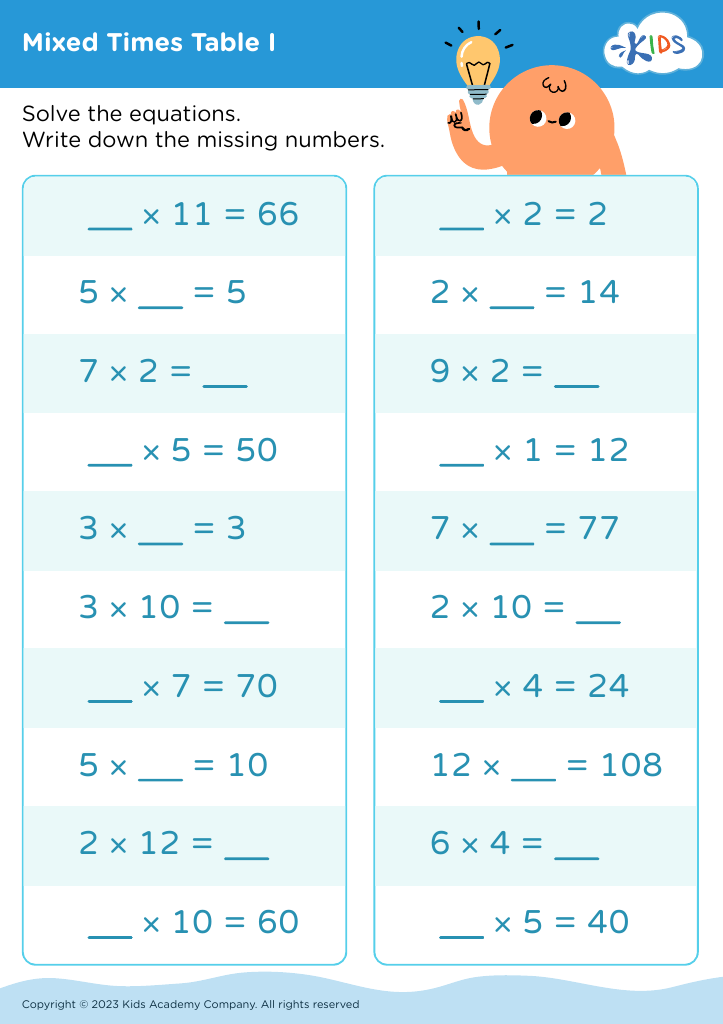
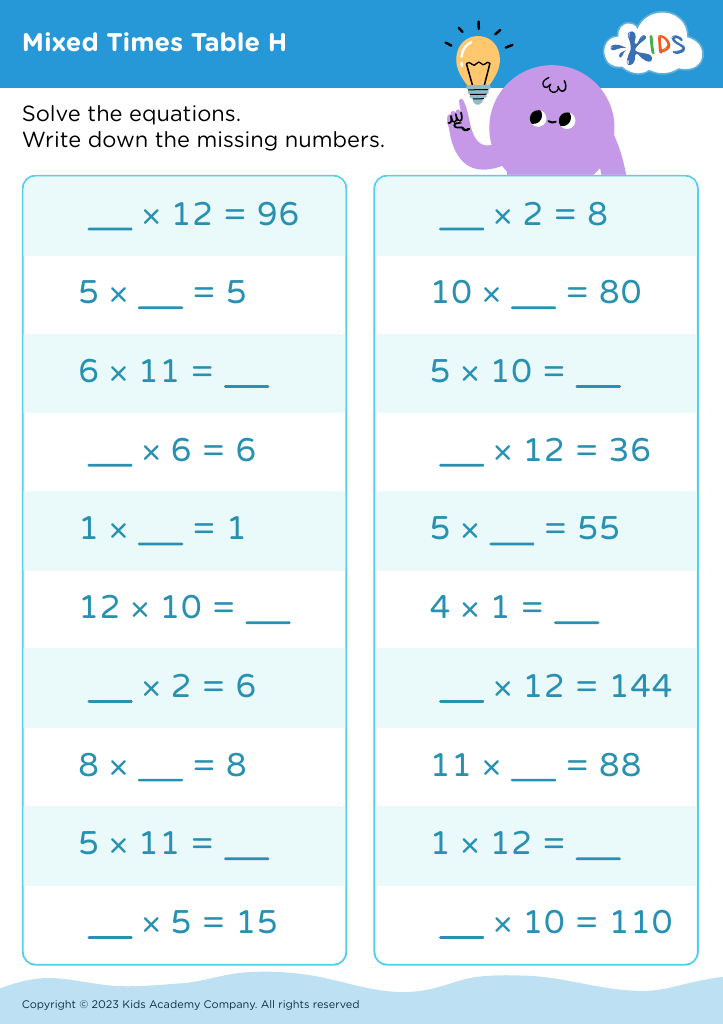
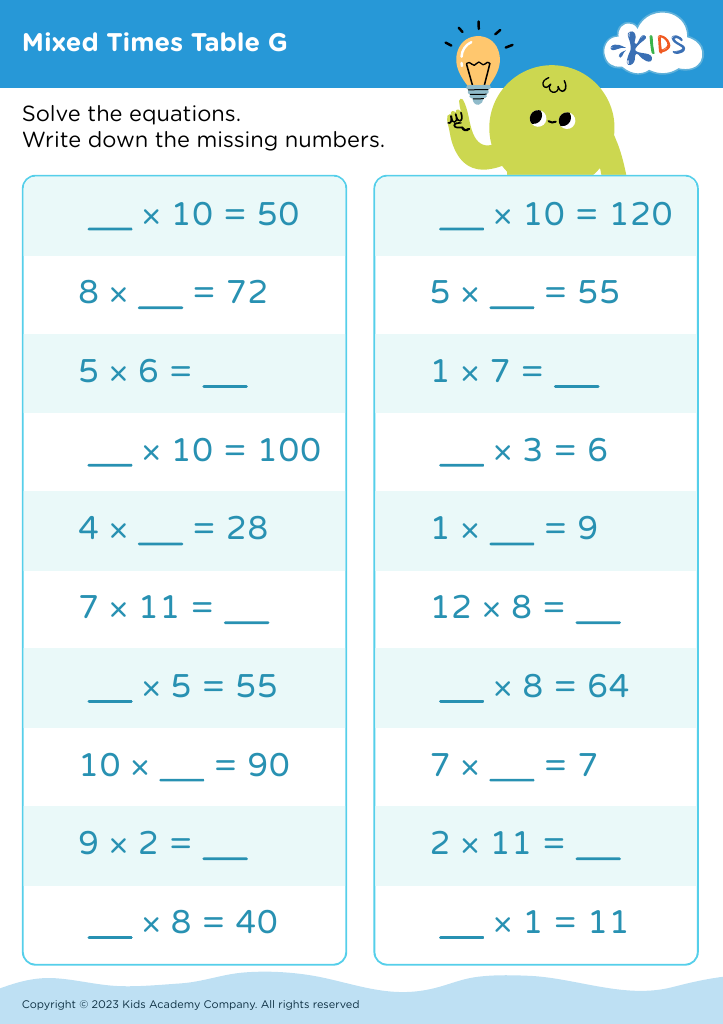
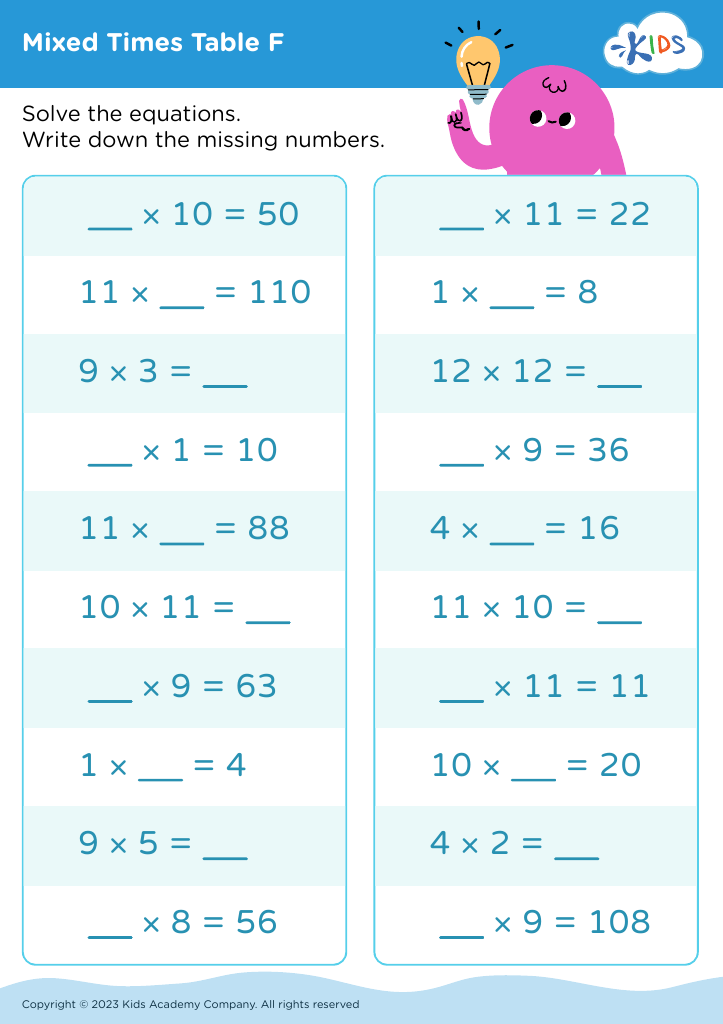
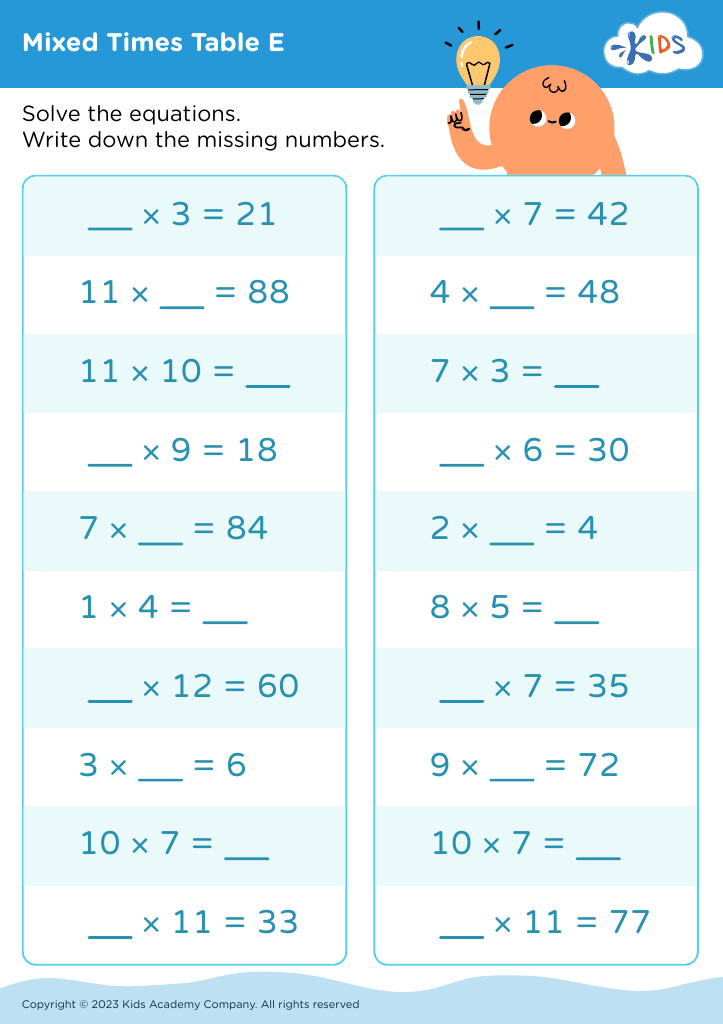
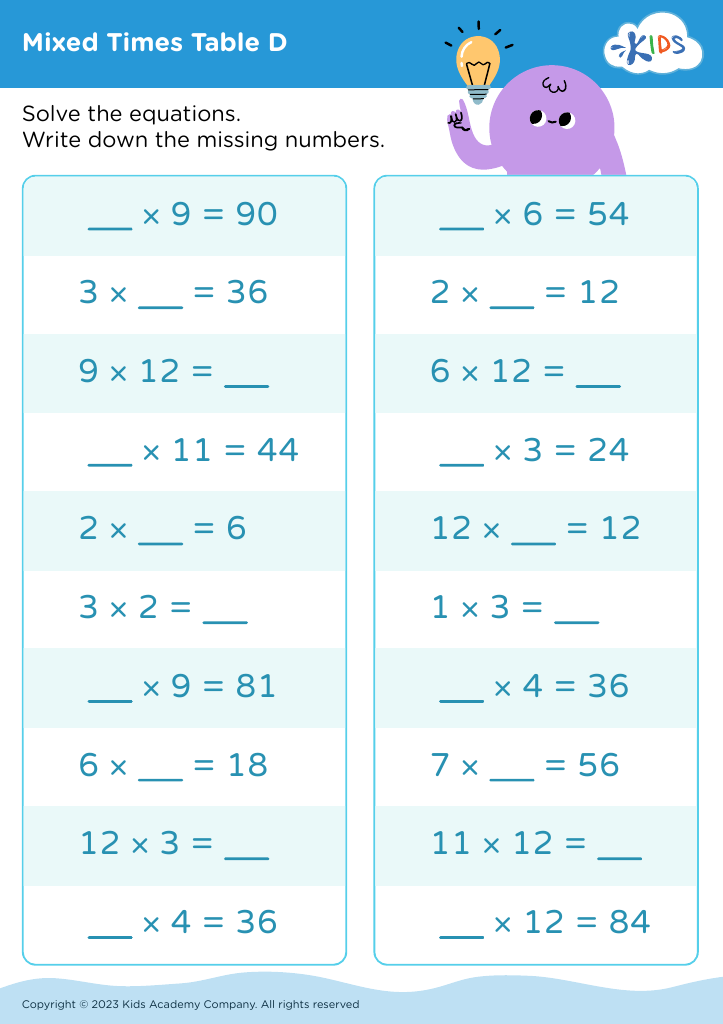
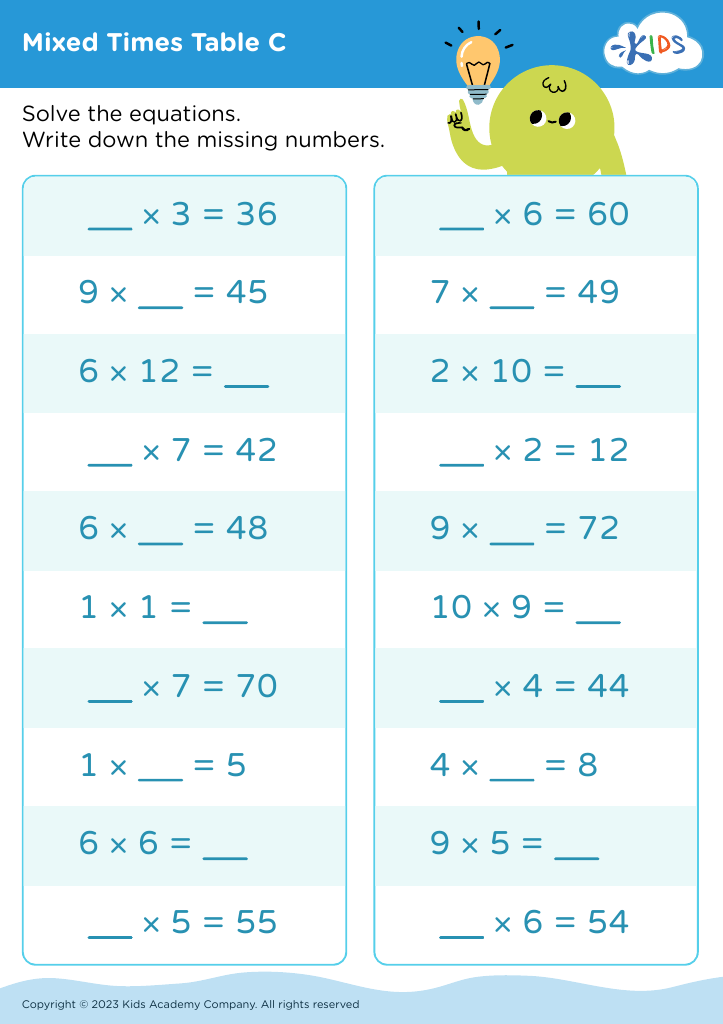
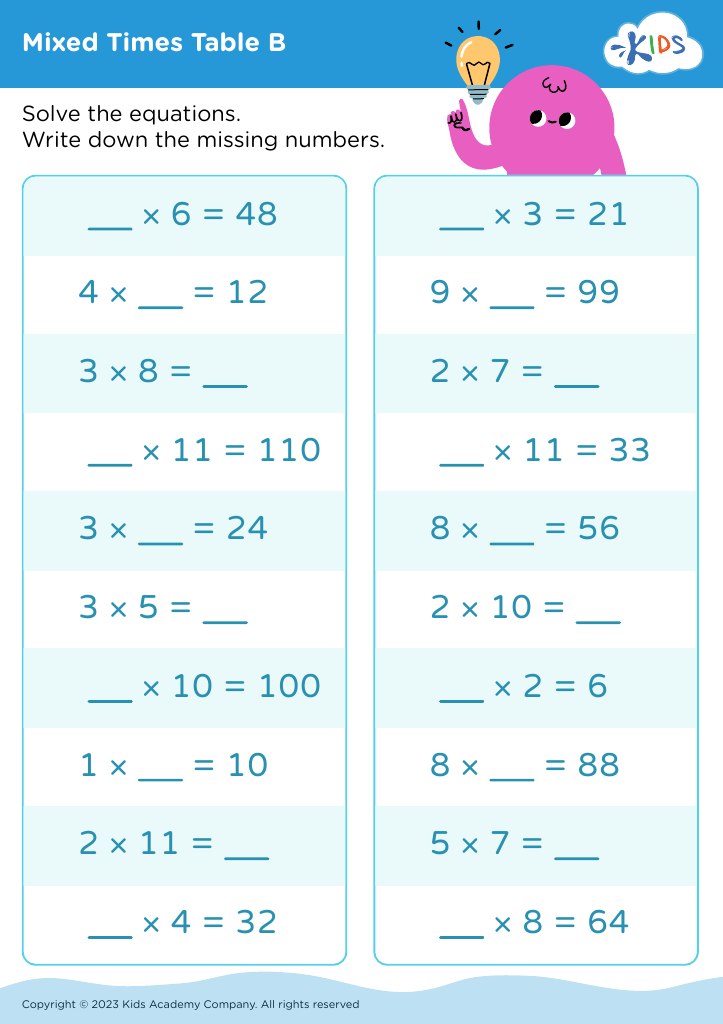
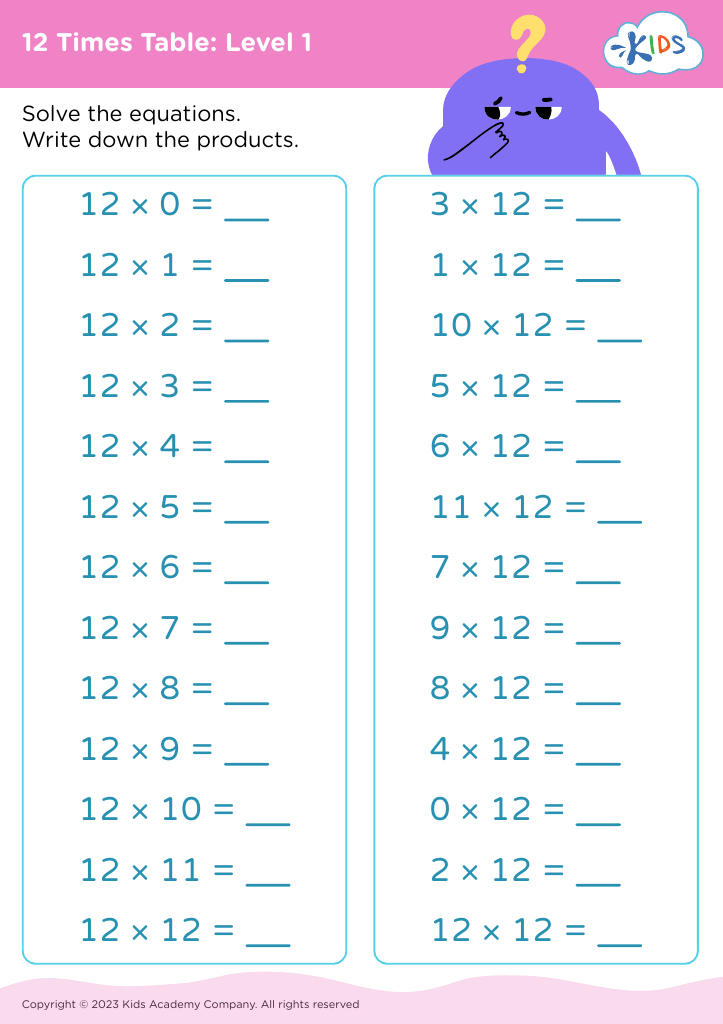
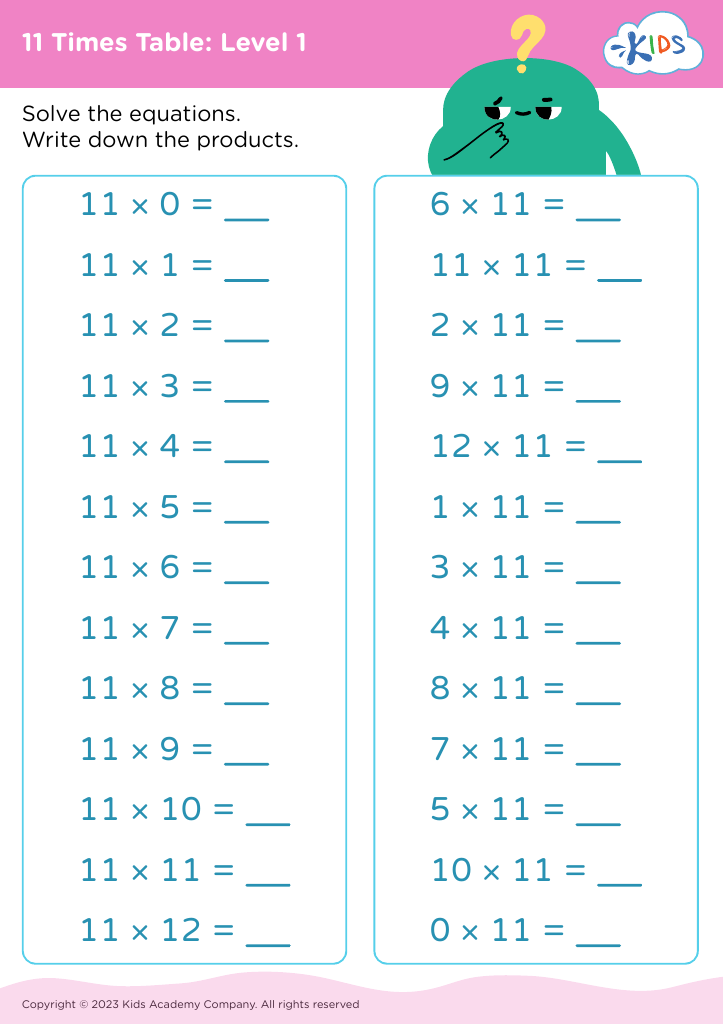
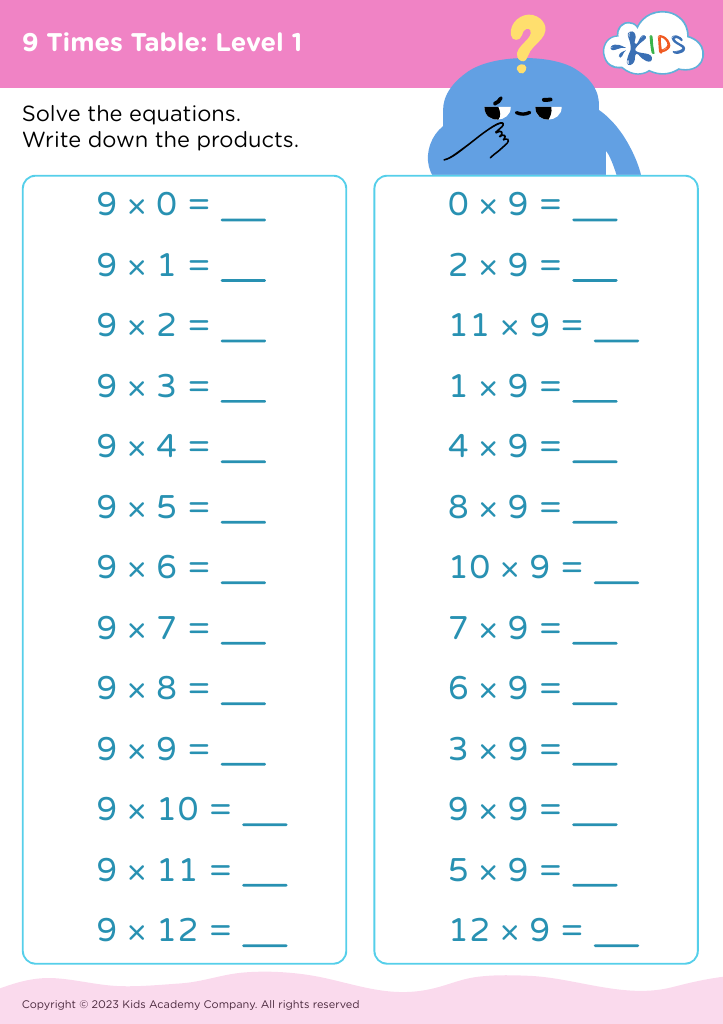
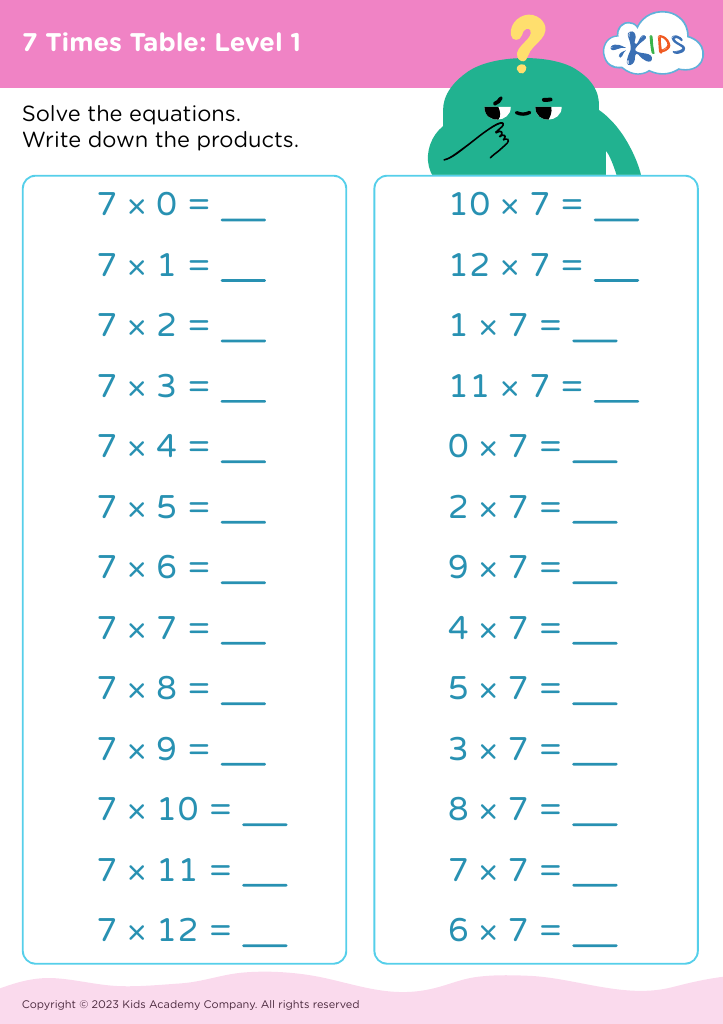
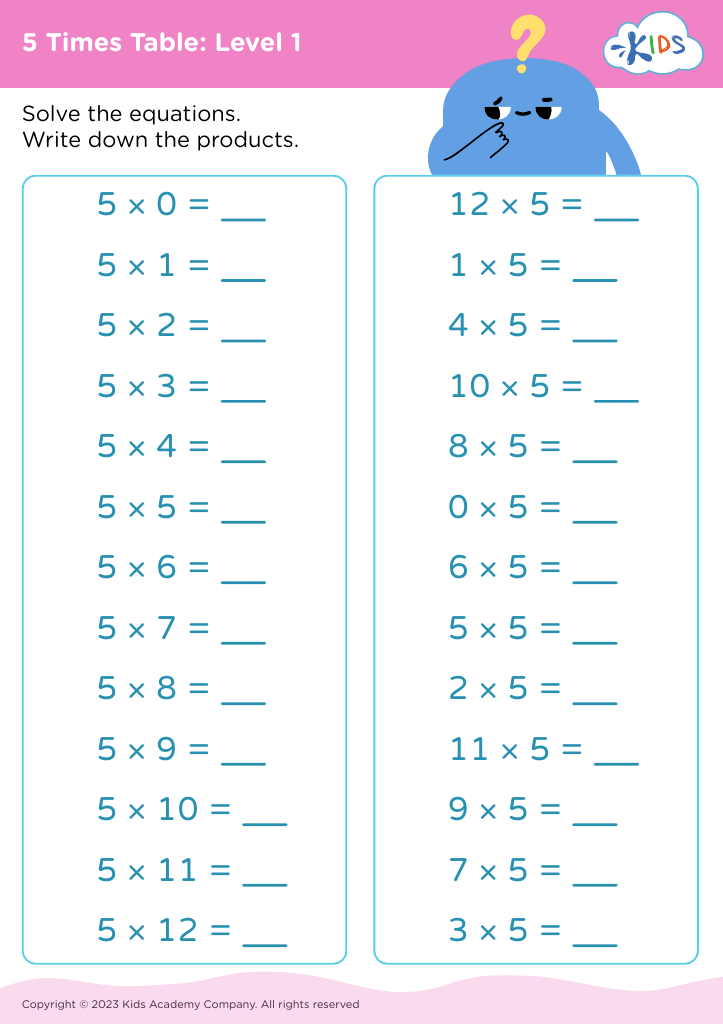
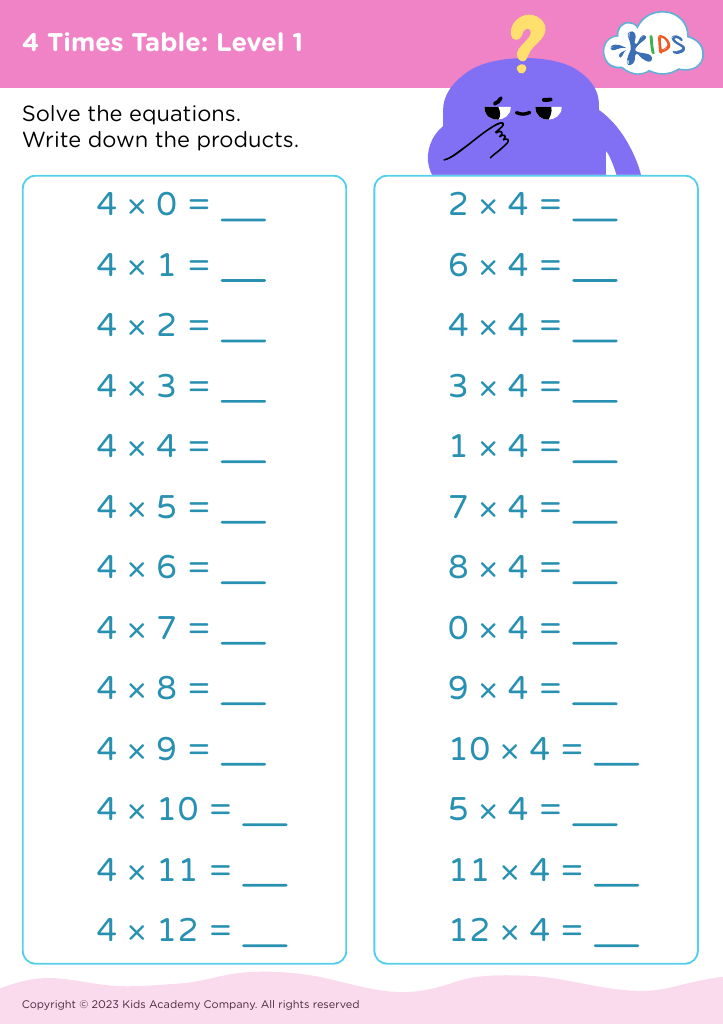
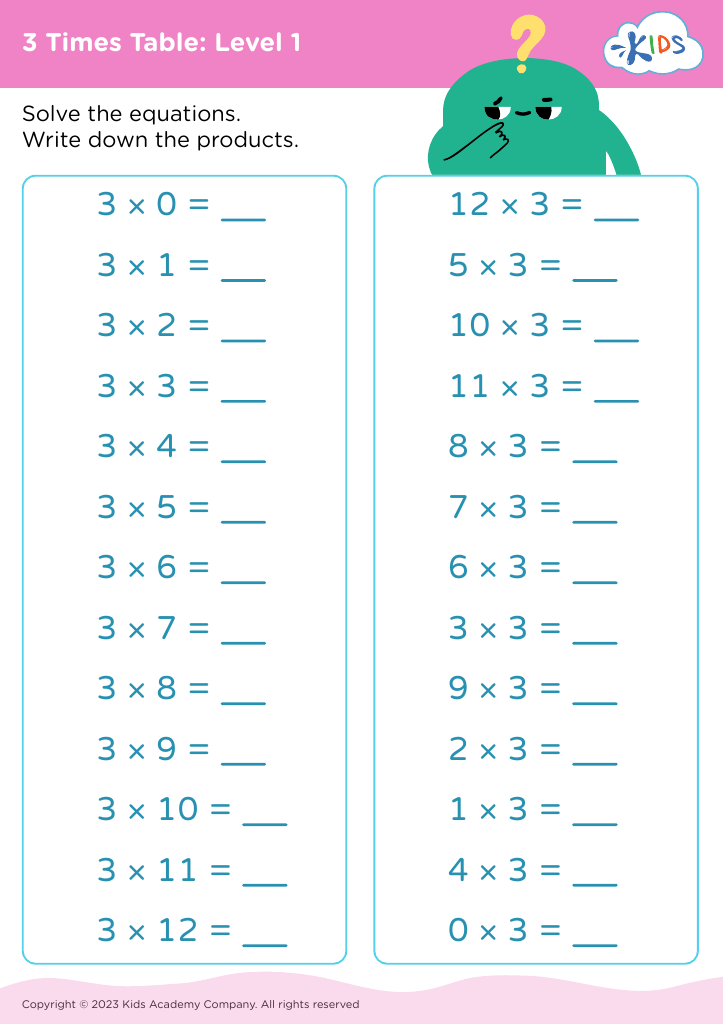
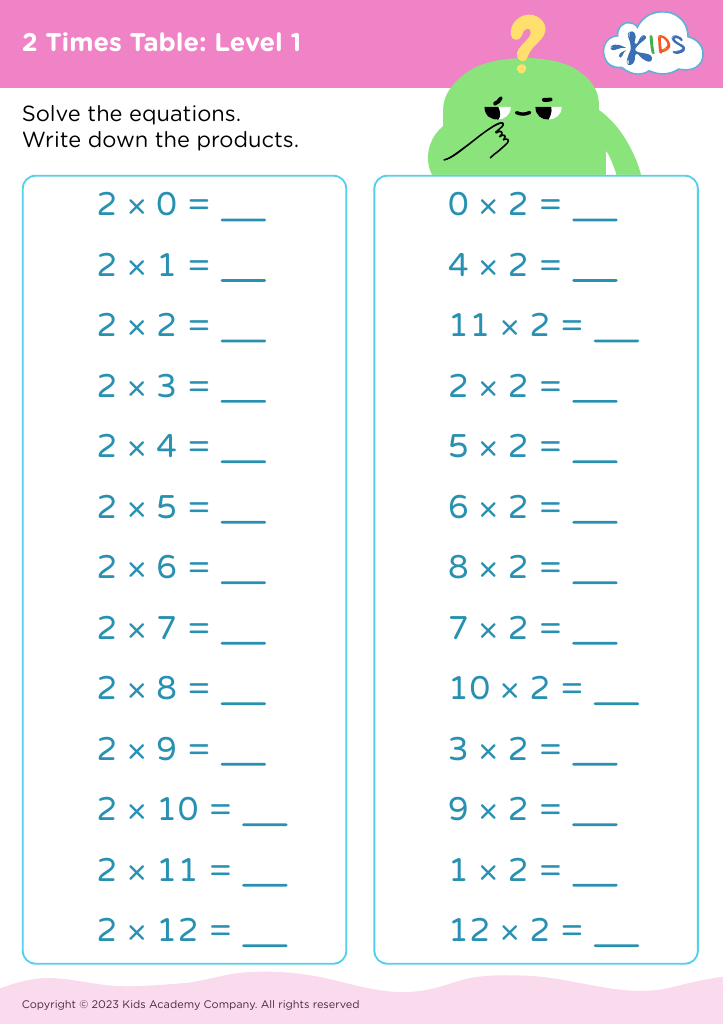






Fostering multiplication practice in 9-year-olds is incredibly important for both parents and teachers, as it lays the foundation for future mathematical understanding and academic success. At this age, children are at a critical stage in their cognitive development, where their brains are highly receptive to learning and solidifying fundamental concepts. Mastering multiplication is not just about memorizing times tables; it’s about building problem-solving skills, logical thinking, and an understanding of number relationships.
Regular multiplication practice equips 9-year-olds with essential skills for handling more advanced math topics, such as division, fractions, and algebra, which they'll encounter in later grades. Proficiency in multiplication also boosts their confidence and reduces math-related anxiety, fostering a more positive attitude towards mathematics.
In real-life scenarios, multiplication is widely used, whether they're calculating combinations in daily activities, sorting objects, or understanding spatial relationships. Parents and teachers who encourage regular practice help children see these connections, making math more relevant and engaging.
Moreover, early competency in multiplication supports academic performance across subjects, as math skills correlate with the ability to analyze data and solve problems. By prioritizing multiplication practice, parents and teachers pave the way for a lifetime of numeracy skills, critical thinking, and academic achievement.








