Hand-eye Coordination Tracing Numbers Worksheets for 9-Year-Olds
4 filtered results
-
From - To
Boost your child's hand-eye coordination and number recognition skills with our engaging Tracing Numbers Worksheets designed for 9-year-olds! These printable worksheets from Kids Academy offer a fun and educational way to practice tracing numbers, ensuring improved motor skills and better number comprehension. Ideal for young learners, our worksheets feature age-appropriate activities that challenge students while keeping them entertained. Enhance your child's confidence and precision in writing numbers, and watch them excel in their math lessons. Perfect for both classroom and at-home practice, these tracing worksheets are a must-have addition to your teaching toolkit.
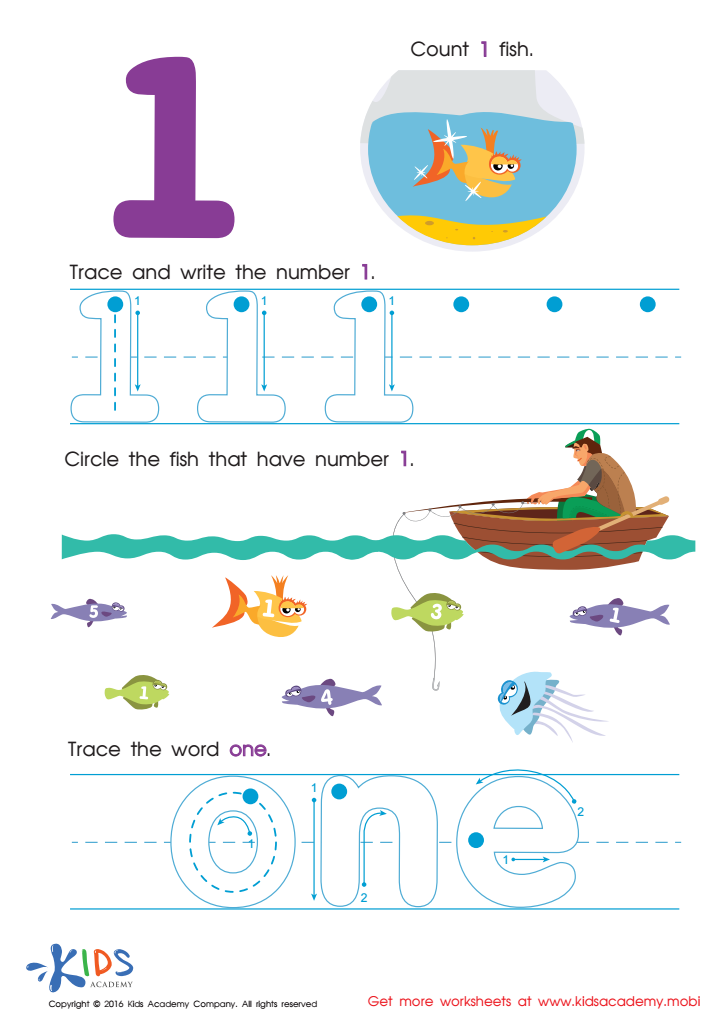
Learning to Write 1 Worksheet
 Assign to My Students
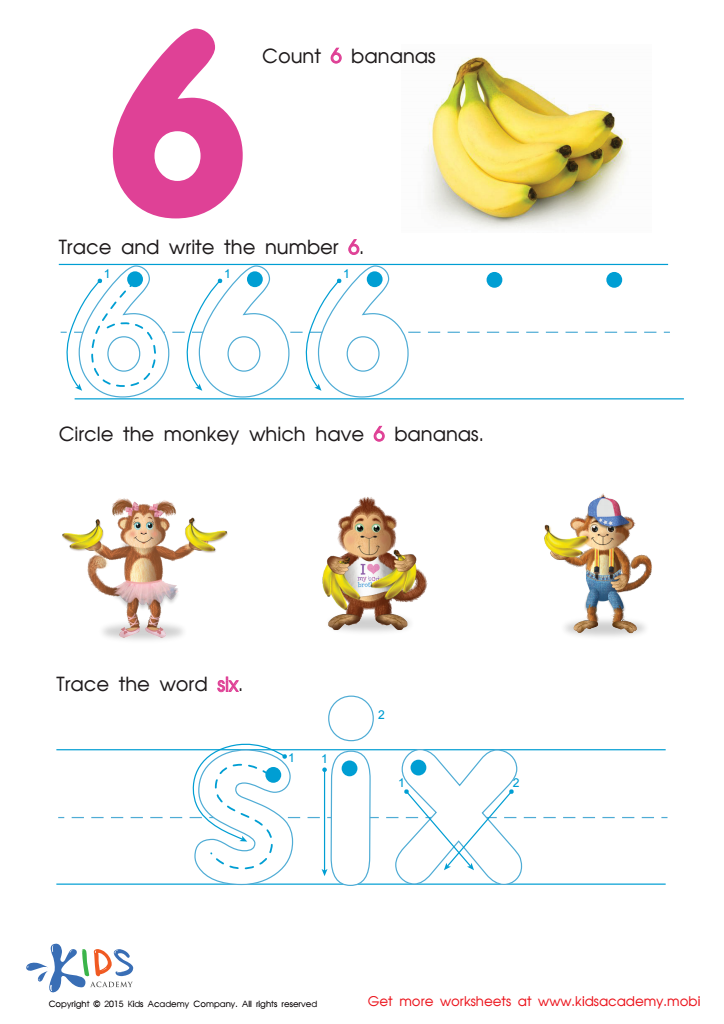
Tracing And Writing Number 6 Worksheet
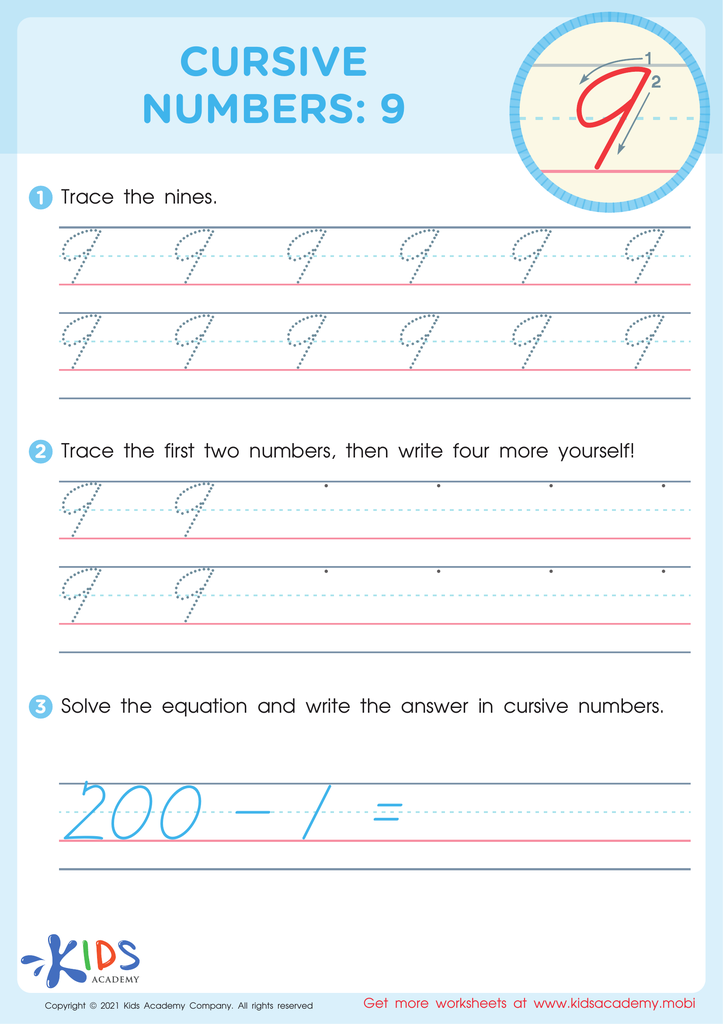
Cursive Numbers: 9 Worksheet
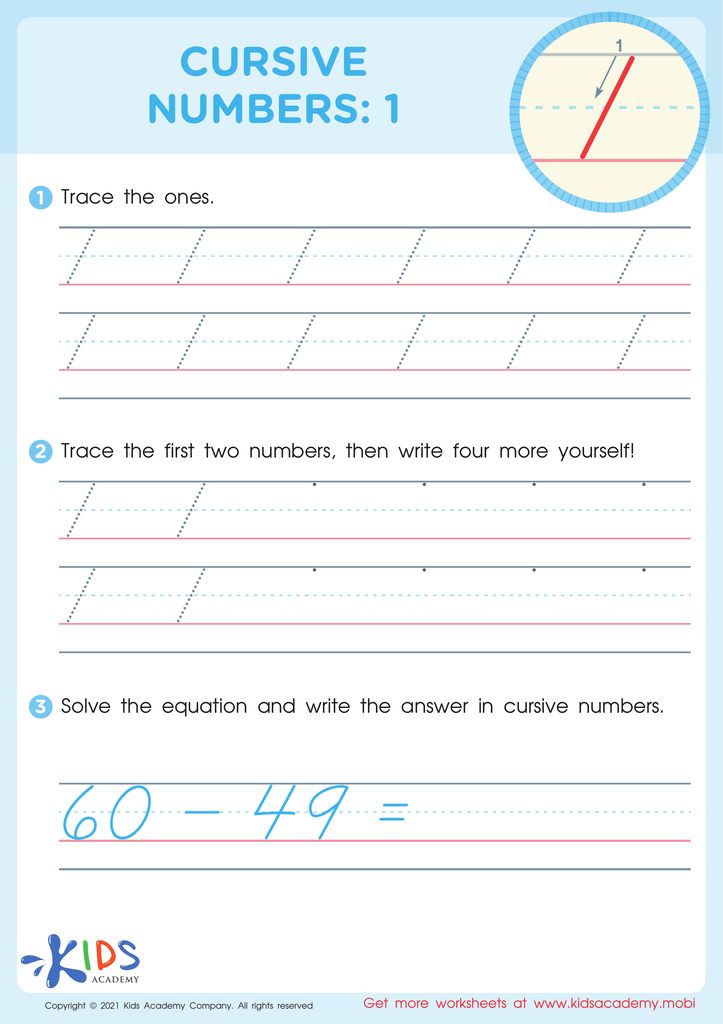
Cursive Numbers: 1 Worksheet








Hand-eye coordination is a crucial skill for children, and tracing numbers can play a significant role in developing it. For 9-year-olds, this skill is particularly important as it directly impacts their ability to perform tasks that require synchronization between visual input and hand movements, such as writing, drawing, or even playing sports.
At this age, children's academic demands increase, making fine motor control essential for effective learning. Tracing numbers helps to refine this control by encouraging precise, deliberate movements. This practice enables them to gain better control over their writing tools, leading to clearer and more legible handwriting, which is fundamental for their academic success. Moreover, enhanced hand-eye coordination supports their learning in other areas, such as mathematics and art, where visual-spatial skills are critical.
Additionally, the development of good hand-eye coordination has broader cognitive benefits. It strengthens neural pathways in the brain that are responsible for processing information, improving a child's capacity to focus and complete tasks efficiently. Engaging in activities like tracing numbers provides not only a fundamental skill set but also sets the stage for lifelong learning and development. Thus, parents and teachers should prioritize and encourage these activities to ensure well-rounded growth in children.