Division practice Plants and Animals Worksheets for 9-Year-Olds
4 filtered results
-
From - To
Discover our engaging Division Practice Worksheets focusing on Plants and Animals, specially designed for 9-year-olds! These worksheets offer a fun and interactive way to develop essential division skills while exploring the fascinating world of flora and fauna. Each worksheet incorporates vibrant visuals and educational content, making learning enjoyable and effective. Perfect for home or classroom practice, these resources cater to various skill levels, ensuring all students can confidently master division concepts. Encourage your child’s curiosity in science while enhancing their mathematical abilities! Download your division practice worksheets today and watch your child's skills blossom. Join the adventure of learning!
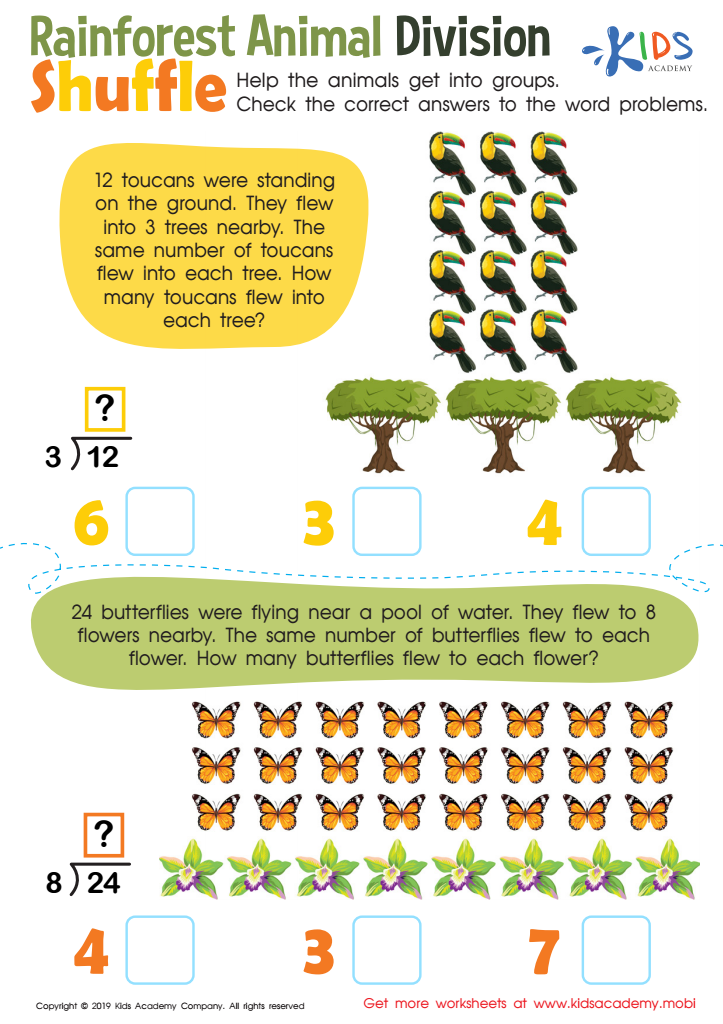
Rainforest Animal Division Worksheet
 Assign to My Students











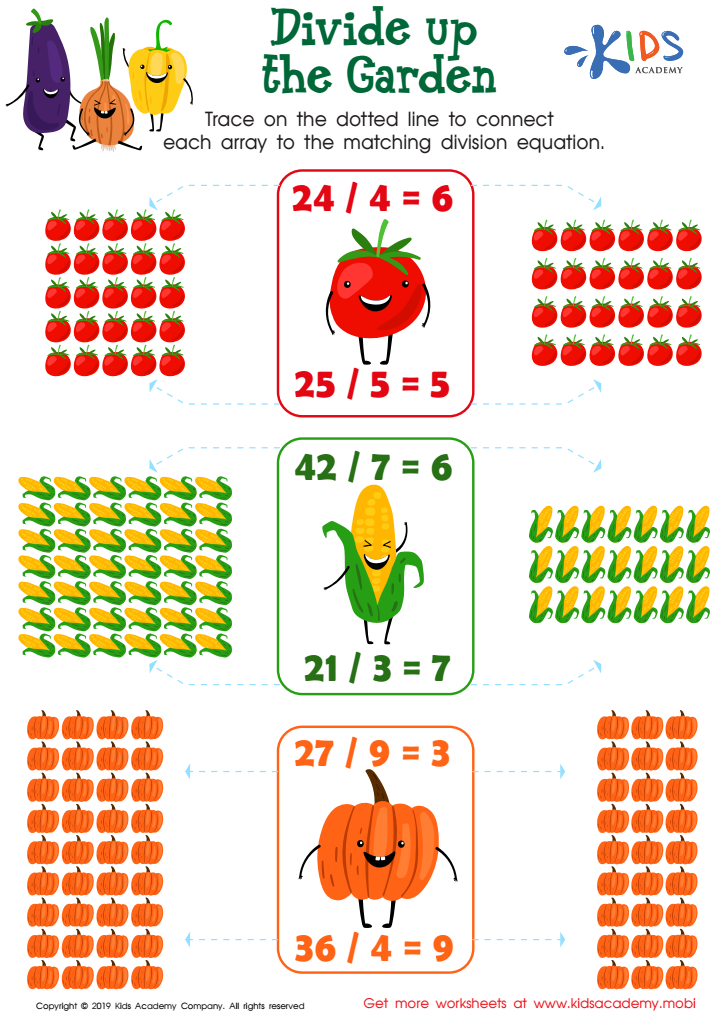
Divide up the Garden Worksheet
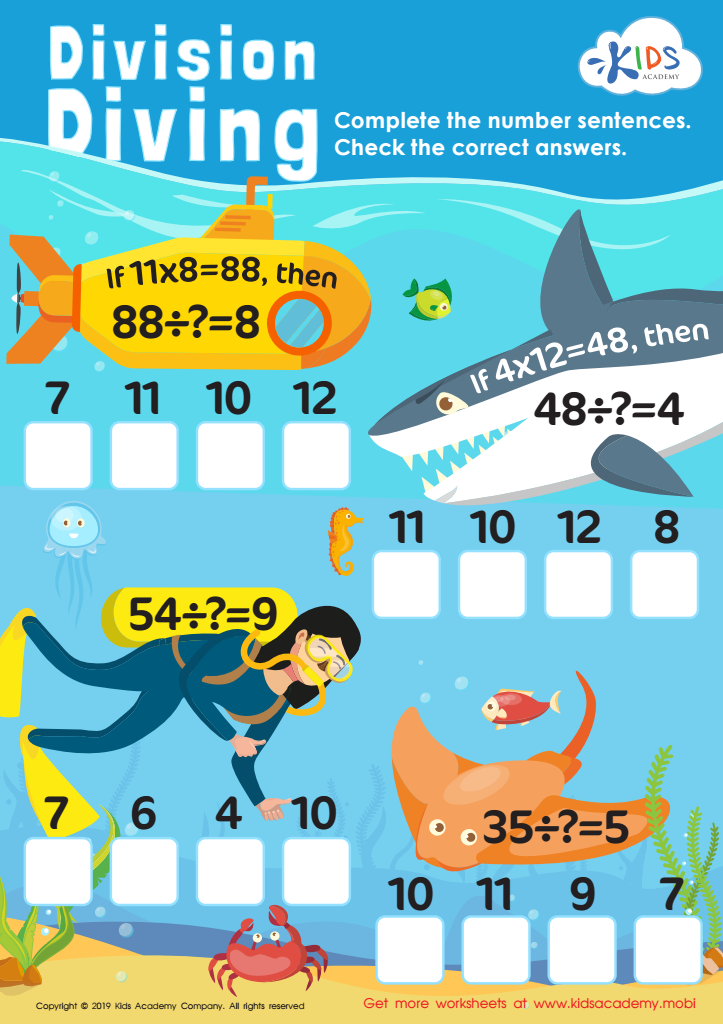
Division Diving Worksheet
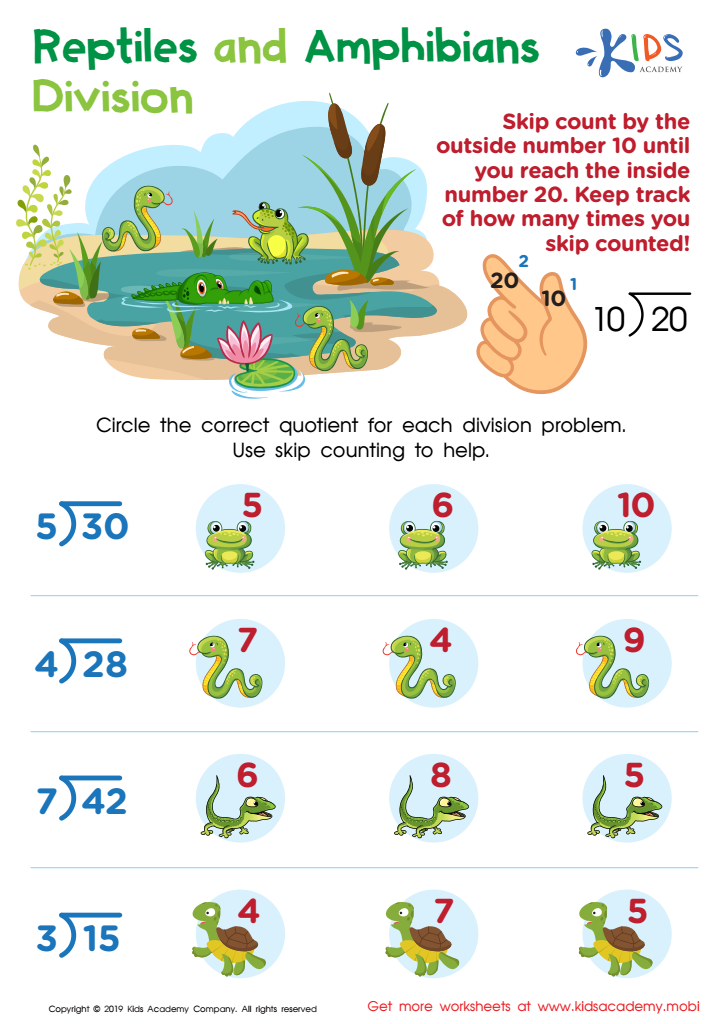
Reptile and Amphibians Division Worksheet








Division practice in the context of plants and animals is crucial for 9-year-olds, as it integrates mathematical skills with real-world applications, enhancing both understanding and engagement. At this age, children are developing critical thinking and problem-solving abilities, and learning division through relatable themes like animals and plants makes the concept more tangible and enjoyable. For example, dividing groups of animals (e.g., how many legs are there on five dogs) helps children visualize division as sharing or grouping, fostering a deeper understanding of the operation.
Moreover, such practice promotes cross-curricular learning, where students not only improve their math skills but also gain knowledge about biology and ecology. Understanding biodiversity and resource management can inspire environmental awareness, encouraging children to care for nature.
Additionally, division exercises involving real-life scenarios can help strengthen students’ ability to work beyond textbooks, preparing them for practical encounters in their daily lives. Parents and teachers who prioritize this integrated approach nurture well-rounded learners capable of both mathematical proficiency and environmental stewardship, ultimately laying a solid foundation for future academic success and responsible citizenship. Enhancing division skills in a context that resonates with students emphasizes the importance of math in everyday life, fostering lifelong learning.








