Matching skills Alphabet Worksheets
3 filtered results
-
From - To
Enhance your child's learning experience with our engaging Matching Skills Alphabet Worksheets! Designed for early grade learners, these worksheets help children develop essential cognitive and fine motor skills by matching uppercase and lowercase letters within the alphabet. Engaging illustrations make the activity fun and interactive, allowing children to build their understanding of letter recognition and sounds. Perfect for classroom and home use, these worksheets encourage independent practice while fostering literacy skills. Download now to spark your child's interest in the alphabet, promote critical thinking, and lay a strong foundation for reading success. Explore our diverse range of educational resources today!
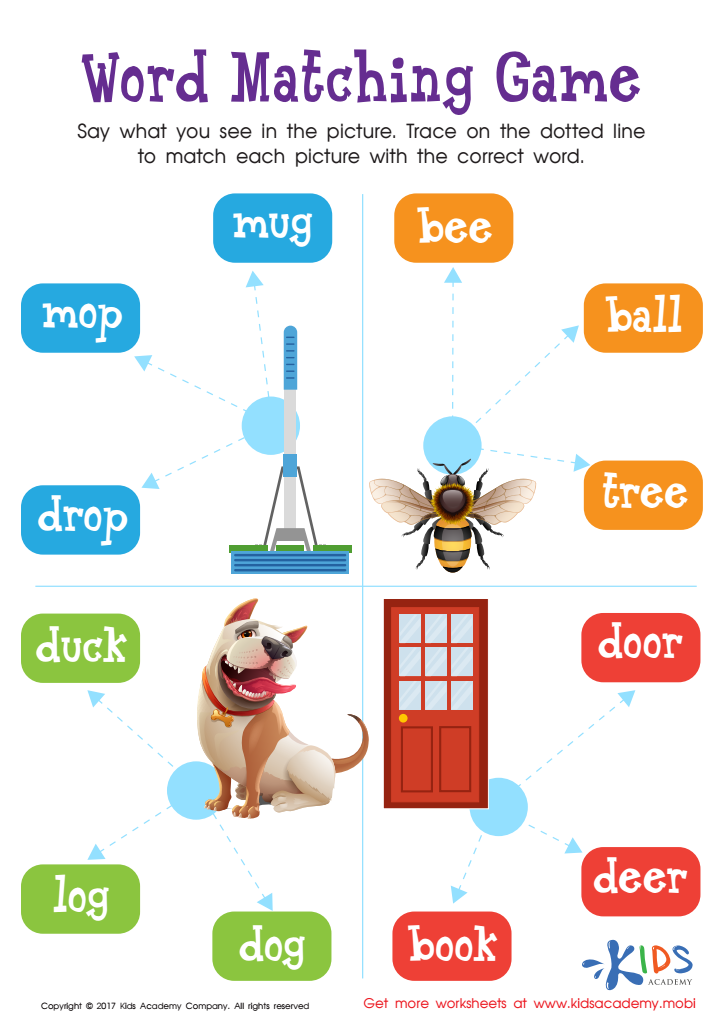
Word Matching Game Worksheet
 Assign to My Students
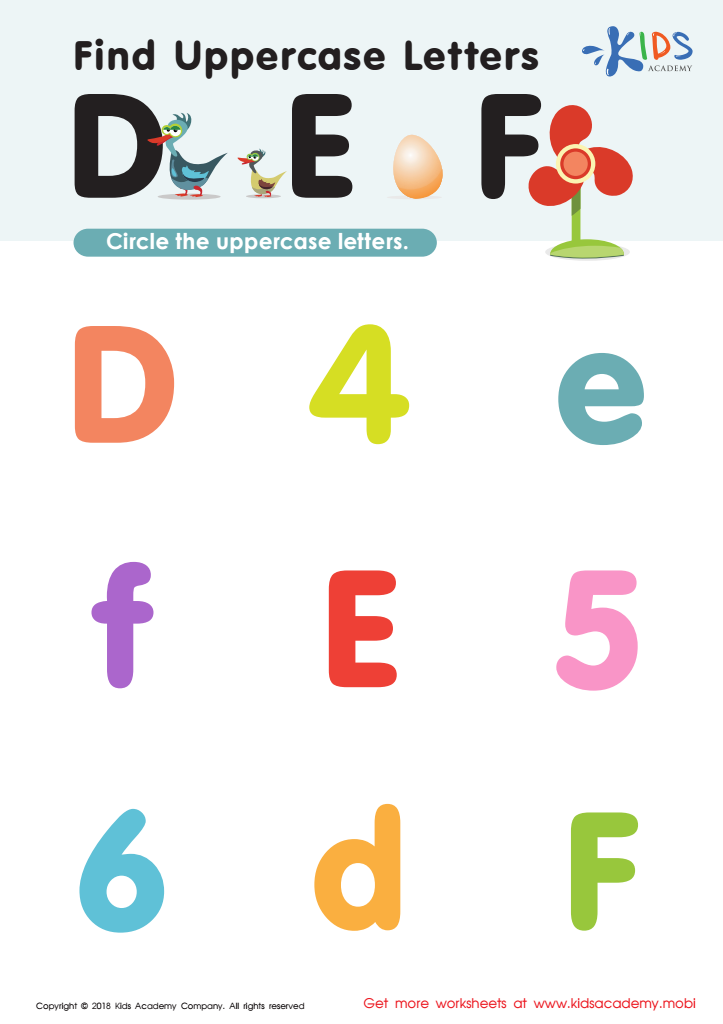
Find Uppercase Letters D, E, and F Worksheet
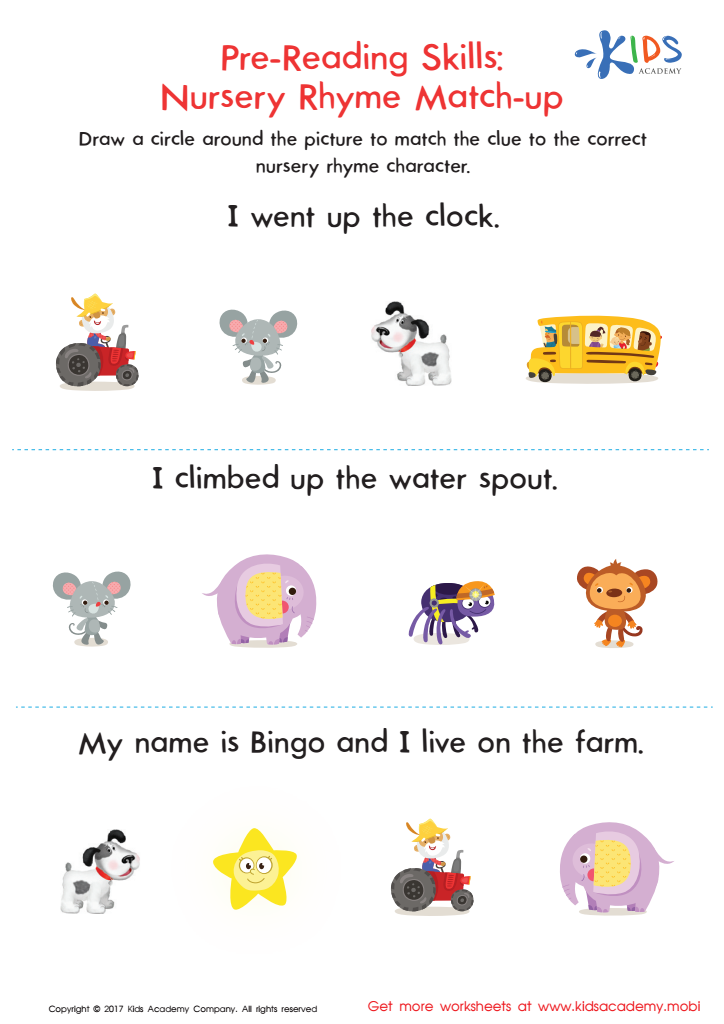
Nursery Rhyme Match–Up Worksheet


.jpg)



Matching skills with the alphabet are pivotal in early childhood development, significantly impacting a child’s literacy and cognitive abilities. Parents and teachers should care about this skill for several reasons.
Firstly, matching letters to sounds is foundational for reading. This skill helps children recognize letters and understand that each letter represents a specific sound, essential for phonics awareness. Early mastery of these skills lays the groundwork for future reading comprehension and fluency.
Secondly, engaging children in matching activities fosters critical thinking and problem-solving skills. When children match letters to pictures or objects, they develop both cognitive and motor skills, enhancing their overall learning experience.
Additionally, practicing these skills boosts children's confidence. As they progress in their ability to recognize and match letters, they feel a sense of accomplishment, encouraging further exploration of literacy.
Lastly, matching activities can be easily incorporated into fun games, making learning enjoyable. This engagement not only strengthens their understanding of the alphabet but also nurtures a love for learning.
In conclusion, fostering matching skills with the alphabet is vital for literacy development and overall growth, making it a key focus for both parents and educators.







