Word identification Phonics Worksheets
10 filtered results
-
From - To
Enhance your child's reading skills with our engaging Word Identification Phonics Worksheets! Designed for early learners, these worksheets focus on helping children recognize and decode words through fun activities and exercises. By using phonics principles, kids will develop strong word identification skills that are crucial for reading fluency. Our printable resources feature colorful visuals and interactive tasks that keep students motivated while reinforcing essential phonetic concepts. Perfect for classroom use or at-home learning, these worksheets provide an effective way to support children's literacy journey. Get started today and watch as your child becomes a confident reader!
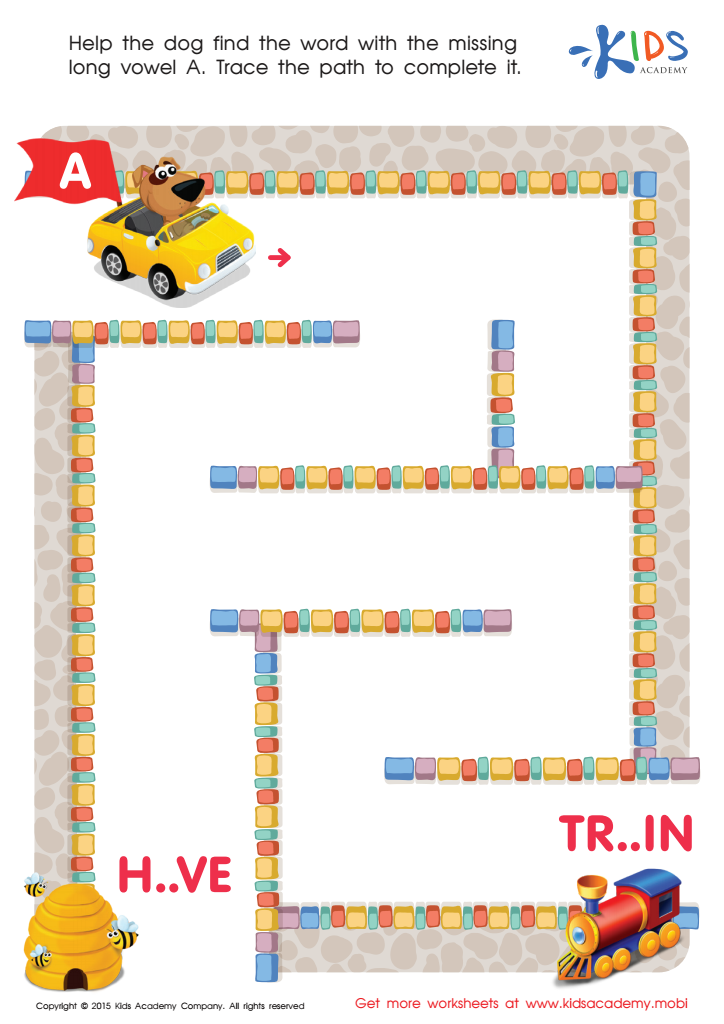
Long Vowel Sound A Worksheet
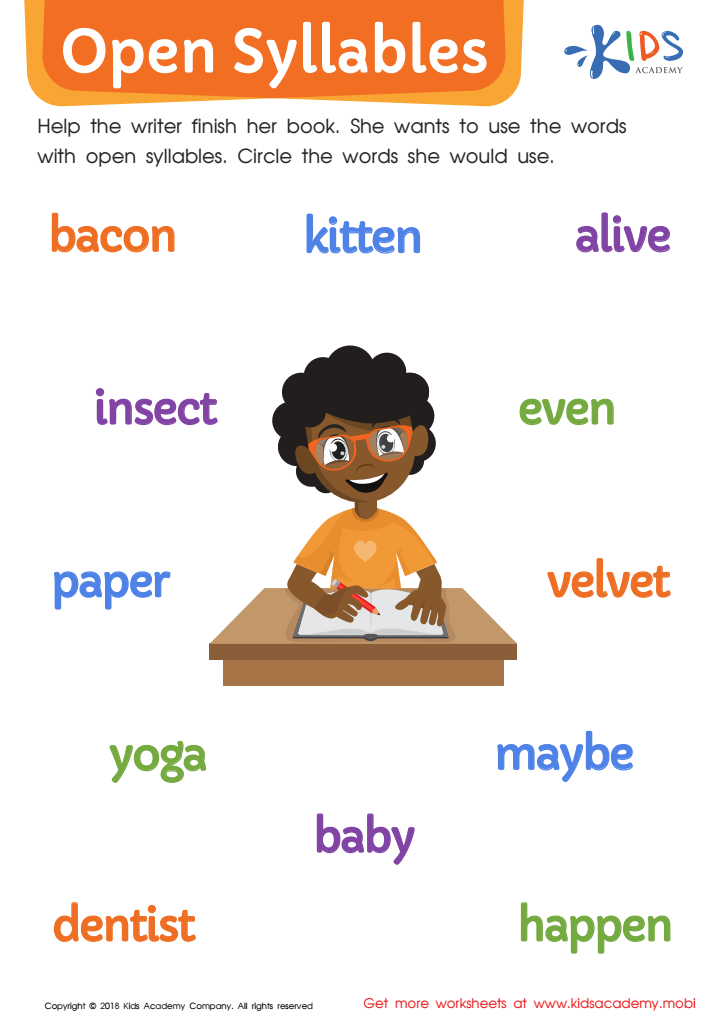
Open Syllables Worksheet
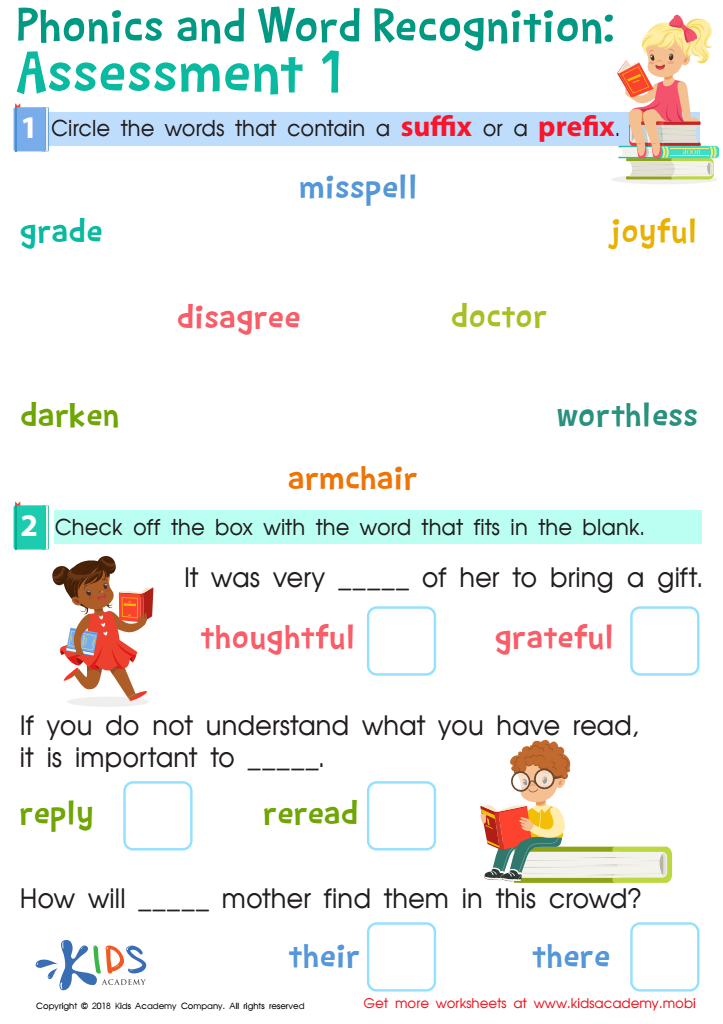
Phonics and Word Recognition: Assessment 1 Worksheet
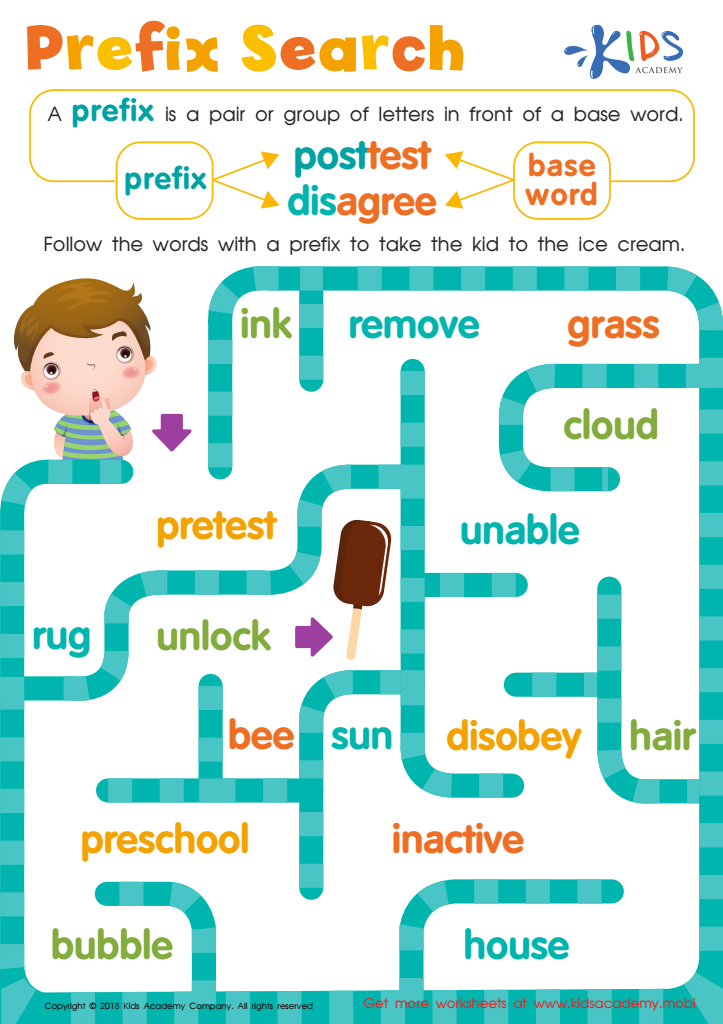
Reading: Prefix Search Worksheet
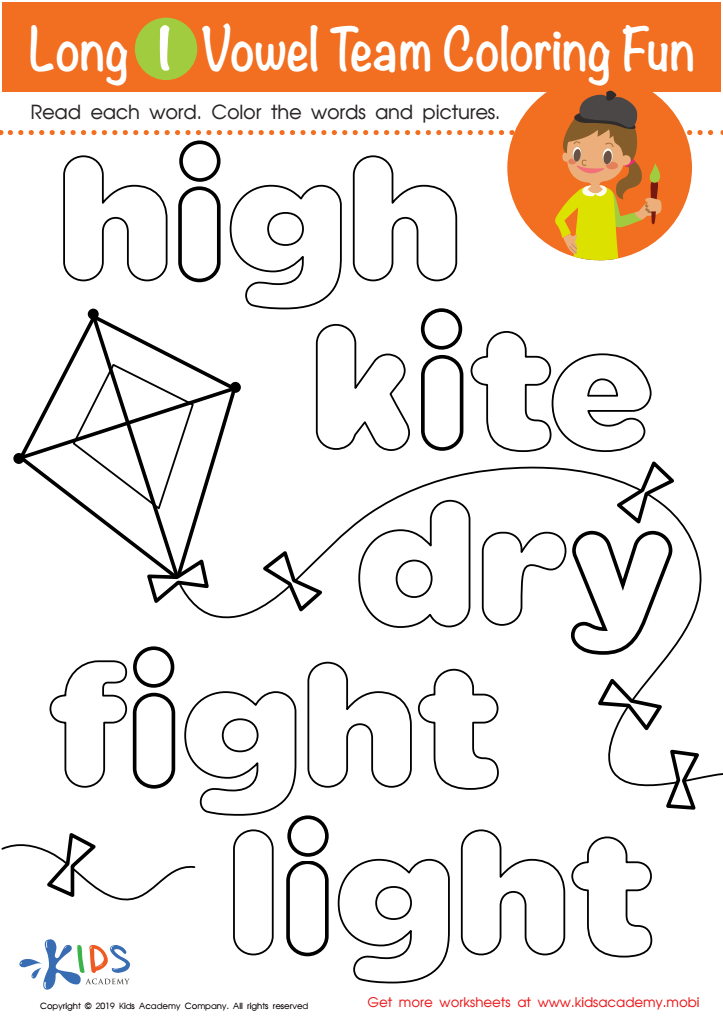
Long I Vowel Team Coloring Worksheet
 Assign to My Students
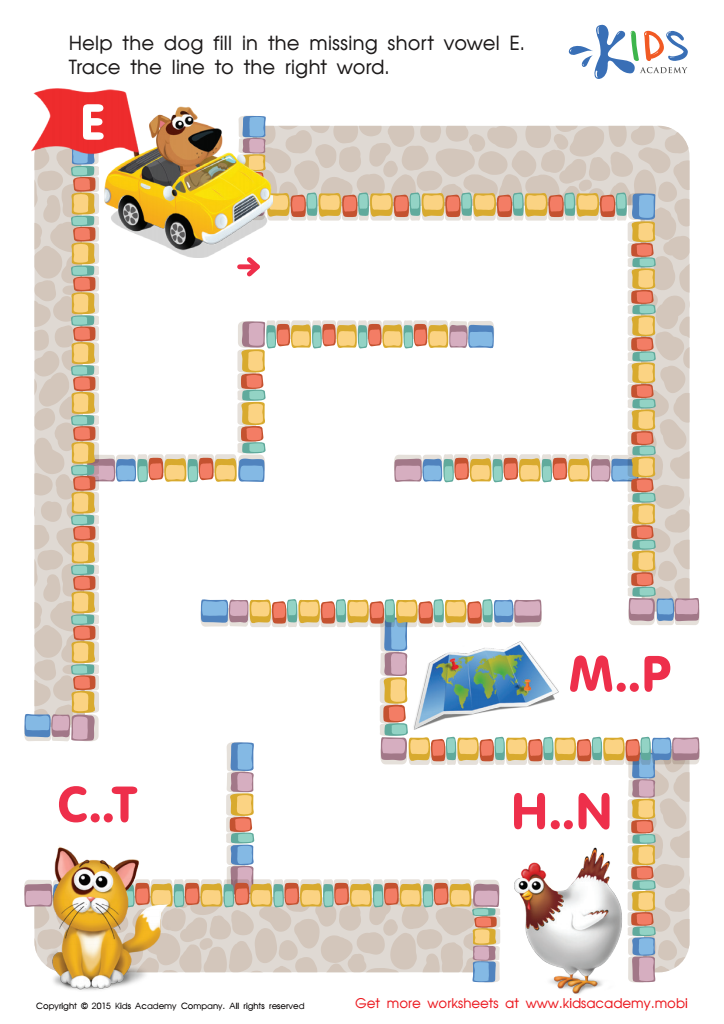
Short Vowel Sound E Worksheet
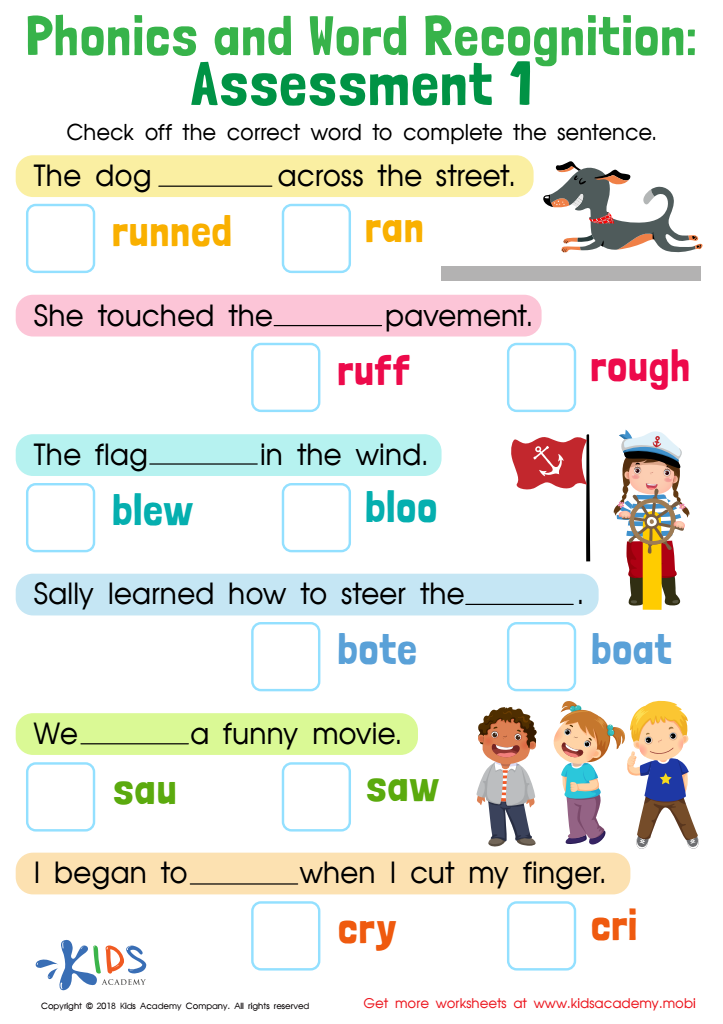
Phonics and Word Recognition: Assessment 1 Worksheet
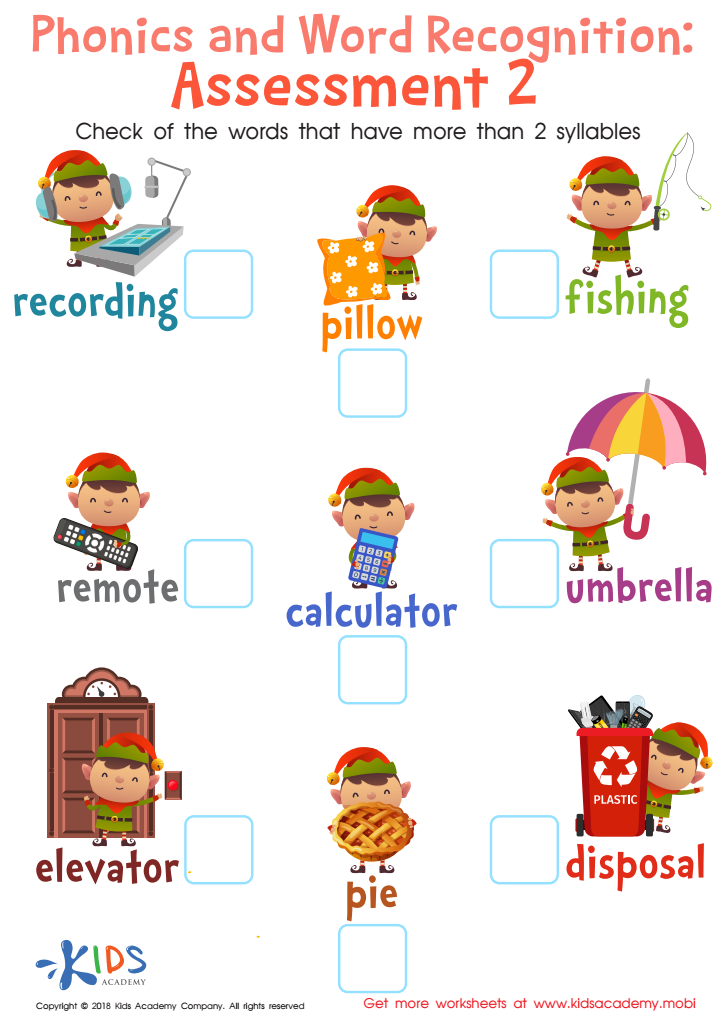
Phonics and Word Recognition: Assessment 2 Worksheet
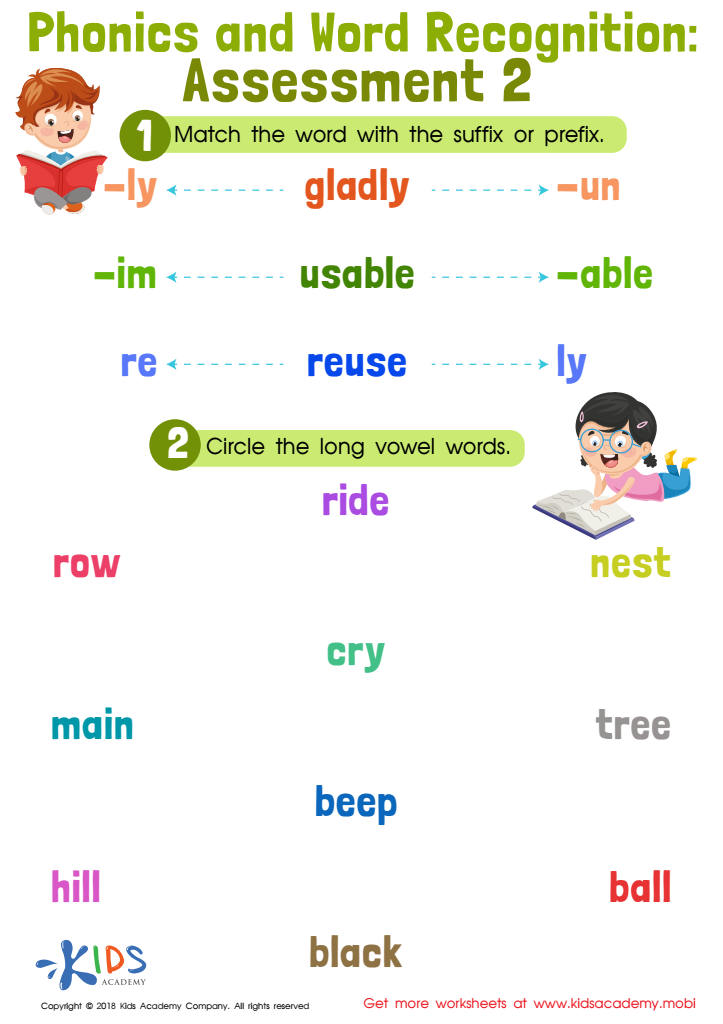
Phonics and Word Recognition: Assessment 2
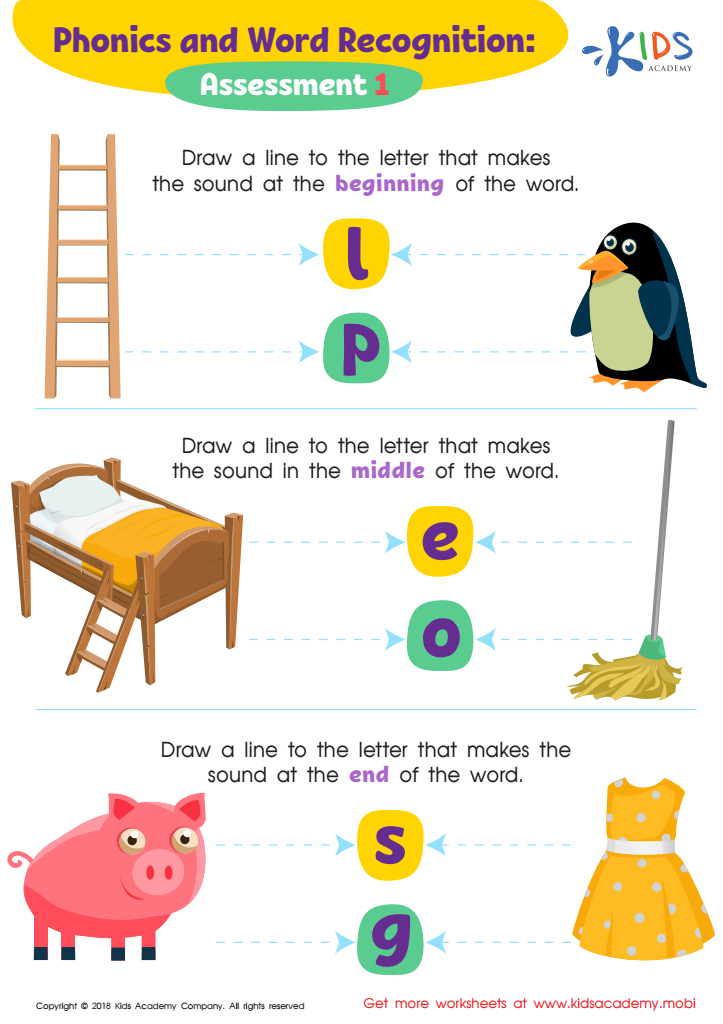
Phonics and Word Recognition: Assessment 1 ELA Worksheet








Word identification and phonics are foundational skills that significantly influence a child's reading development, making it essential for parents and teachers to emphasize their importance. Mastery in phonics—understanding the relationship between letters and sounds—empowers students to decipher unfamiliar words independently. This skill not only fosters fluent reading but also builds confidence in young learners as they navigate texts.
Moreover, strong word identification skills contribute to overall literacy. When children can recognize words quickly, they can focus on comprehension rather than deciphering each letter, enhancing their understanding of stories and information. For educators, incorporating effective phonics instruction into the curriculum ensures that all students, regardless of their starting point, can develop essential reading skills.
Additionally, engaging parents in their child's phonics education creates a supportive home learning environment. When families understand phonics strategies, they can reinforce learning through reading together and interactive games, deepening their child’s knowledge and love of reading.
In summary, phonics and word identification are critical for literacy, building a foundation that not only aids academic success but also nurtures a lifelong interest in reading. Parents and teachers play vital roles in fostering these skills, creating stronger, more capable readers.







