Filters

77 filtered results

Clear all filters
Favorites
With answer key
Interactive

77 filtered results

Difficulty Level

Grade


Check out this FREE Matching Trial Lesson for age 3-6!

Identify Categories with a Given Count

Favorites
With answer key
Interactive
  • Matching
  • 3-6
  • With answer key
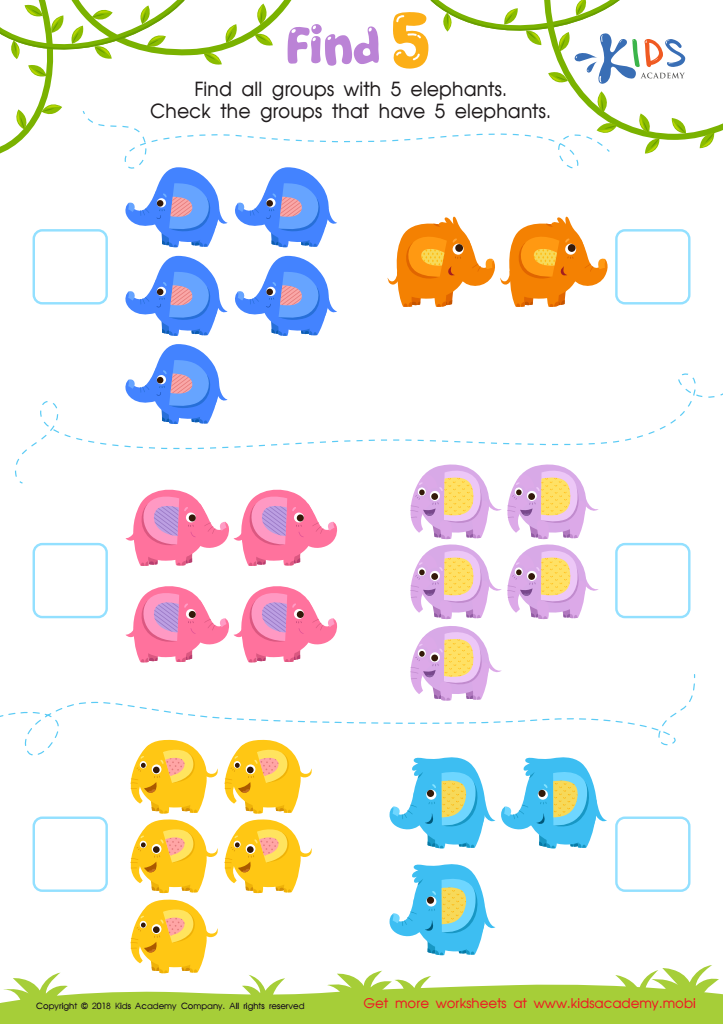
Find 5 Worksheet
Find 5 Worksheet

Find 5 Worksheet

Kids will love these cheery elephants that help them discover grouping and counting by fives. It's a great way to start learning addition and multiplication, while also developing fine motor skills. Download the free PDF and let the fun begin.
Find 5 Worksheet
Worksheet
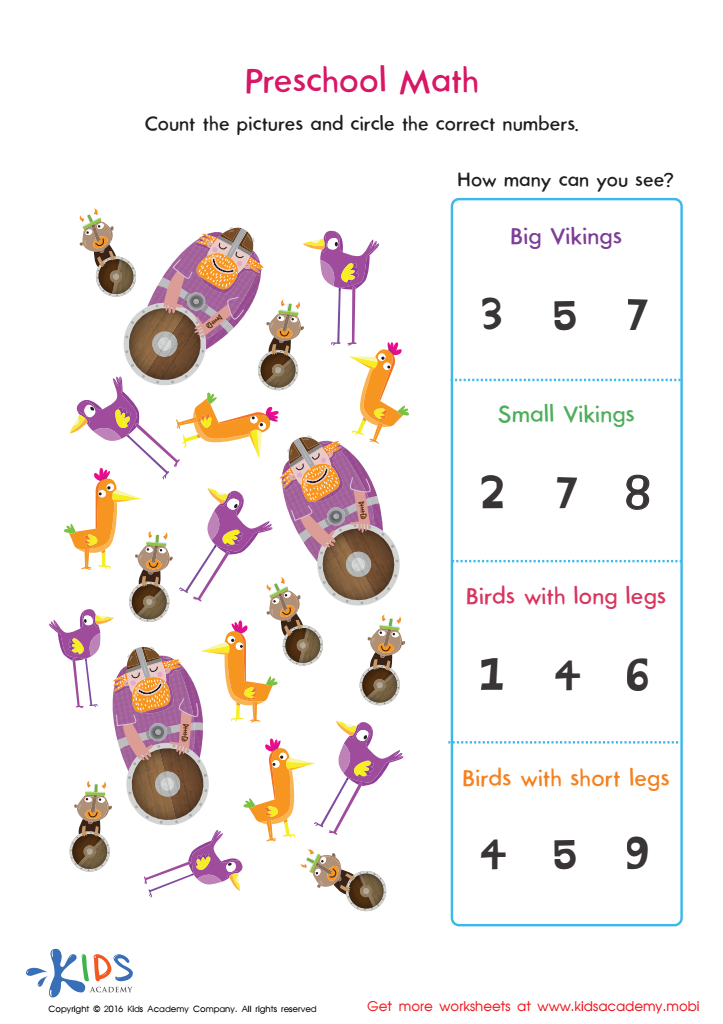
Printable Counting Worksheet for Preschool

Counting Worksheet: Preschool Math

Help your child practice counting and reading at the same time!
Counting Worksheet: Preschool Math
Worksheet
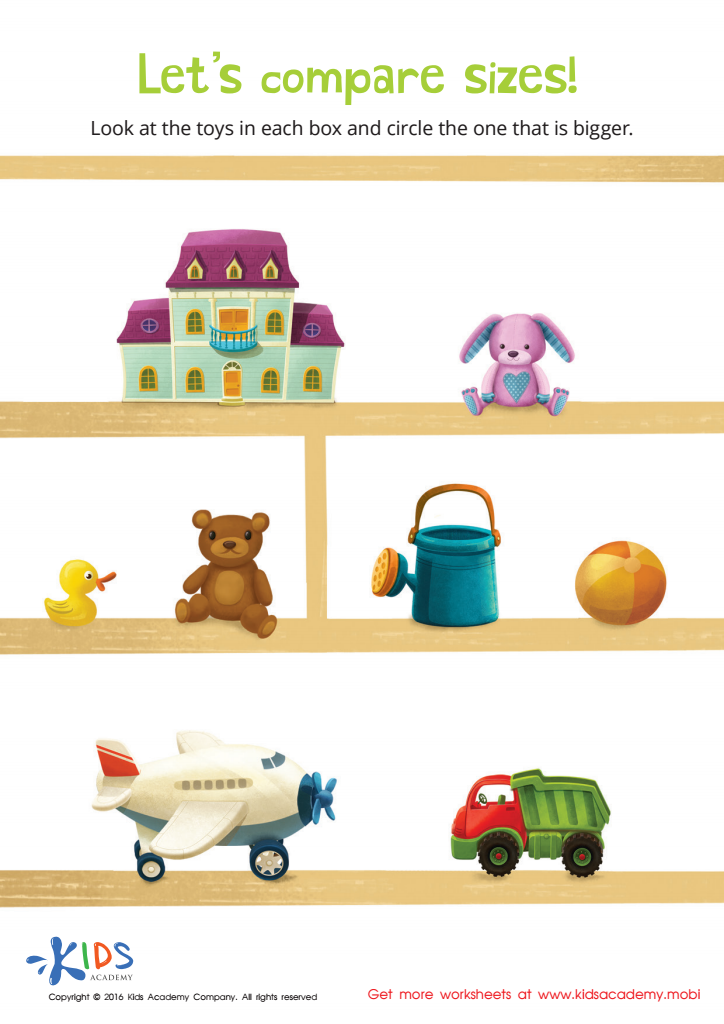
Size Comparison Worksheet

Classifying by Size Sorting Worksheet
Help your preschooler recognize differences in size using this fun worksheet! Your child will engage in important spatial recognition and problem-solving skills while talking with you about objects that can be small or large. Enjoy the vibrant pictures together!
Classifying by Size Sorting Worksheet
Worksheet
Sudoku worksheet pdf

Sudoku Worksheet

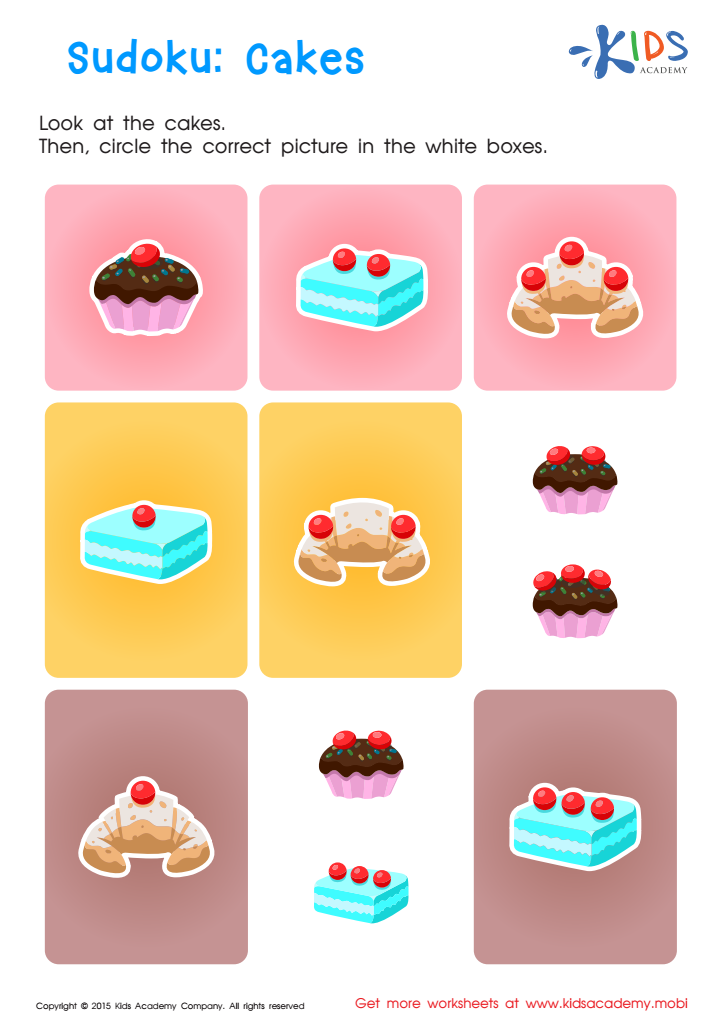
Playing sudoku helps kids develop pattern and logic recognition, key skills for problem solving. Get your free printable PDF worksheet and begin the fun! Kids can have fun and build problem-solving skills with this exciting sudoku PDF worksheet! Adults love solving sudoku puzzles, so get your free printable PDF and start your child early with this vibrant and challenging puzzle. They'll learn to recognize patterns and form logical reasoning, essential for future problem solving. Try it out today!
Sudoku Worksheet
Worksheet
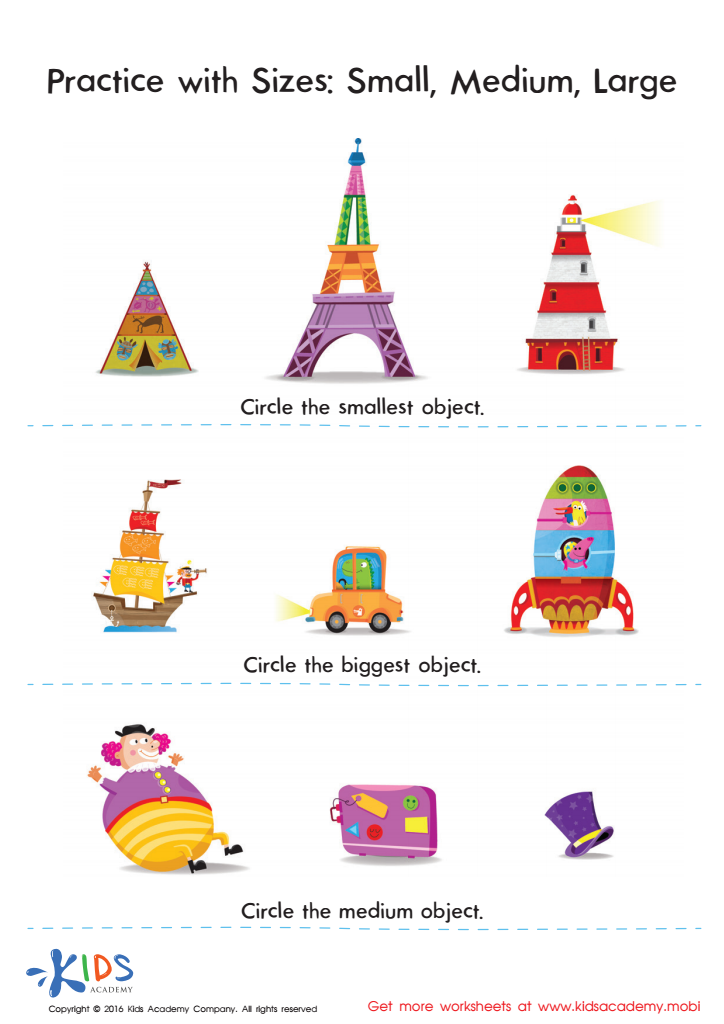
Size Worksheet: Big, Small, Medium

Practice with Sizes Size Worksheet

Practice with Sizes Size Worksheet
Worksheet


... 3 4

Parents and teachers should prioritize matching activities with answers for children aged 3-6 for several important reasons. First, these activities promote cognitive development by helping young learners enhance their critical thinking and problem-solving skills. When children engage in matching tasks, they practice recognizing relationships between different items, which is foundational for later learning.

Additionally, matching activities support language development by encouraging vocabulary expansion. Children learn to identify words and their meanings by matching words with pictures or related objects. This reinforces their understanding and helps them connect language with real-world concepts.

Moreover, these activities can enhance fine motor skills as children manipulate objects, improving their dexterity and hand-eye coordination. This is essential at a stage where these skills are still developing.

Socially, matching games can foster collaboration and communication when done in groups, teaching children to share, take turns, and work together towards a common goal.

Finally, these activities give immediate feedback as children can see their matches and correct mistakes on their own, promoting independence and self-confidence. In summary, matching activities with answers lay a crucial foundation for holistic development in young children, preparing them for future educational success.