Reading Non-Fiction Worksheets Activities With Answers for Ages 3-9
4 filtered results
-
From - To
Discover an engaging collection of reading non-fiction worksheets designed for ages 3-9 at Kids Academy! Our comprehensive activities help young learners develop vital reading skills while exploring fascinating topics. Each worksheet is crafted to enhance comprehension, vocabulary, and critical thinking, ensuring children not only read but also understand non-fiction content. With answer keys included, parents and educators can easily assess progress and reinforce learning. From exciting facts about animals to simple scientific concepts, our worksheets cater to diverse interests and learning styles. Ignite a love for reading and knowledge in your child—explore our educational resources today!
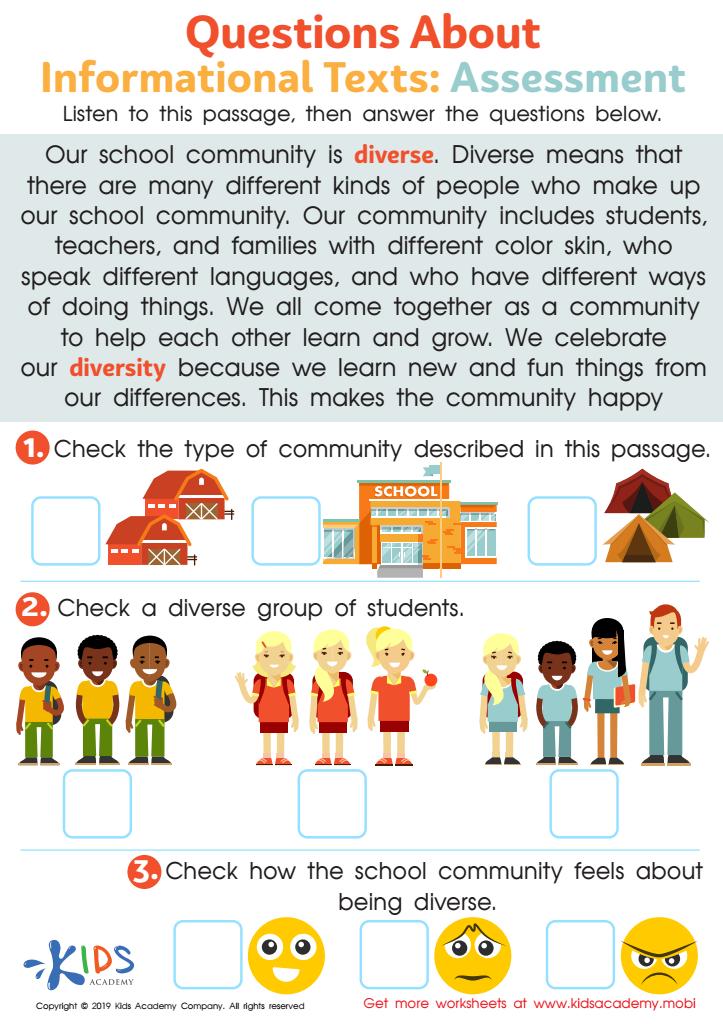
Questions About Informational Texts: Assessment 1 Worksheet
 Assign to My Students
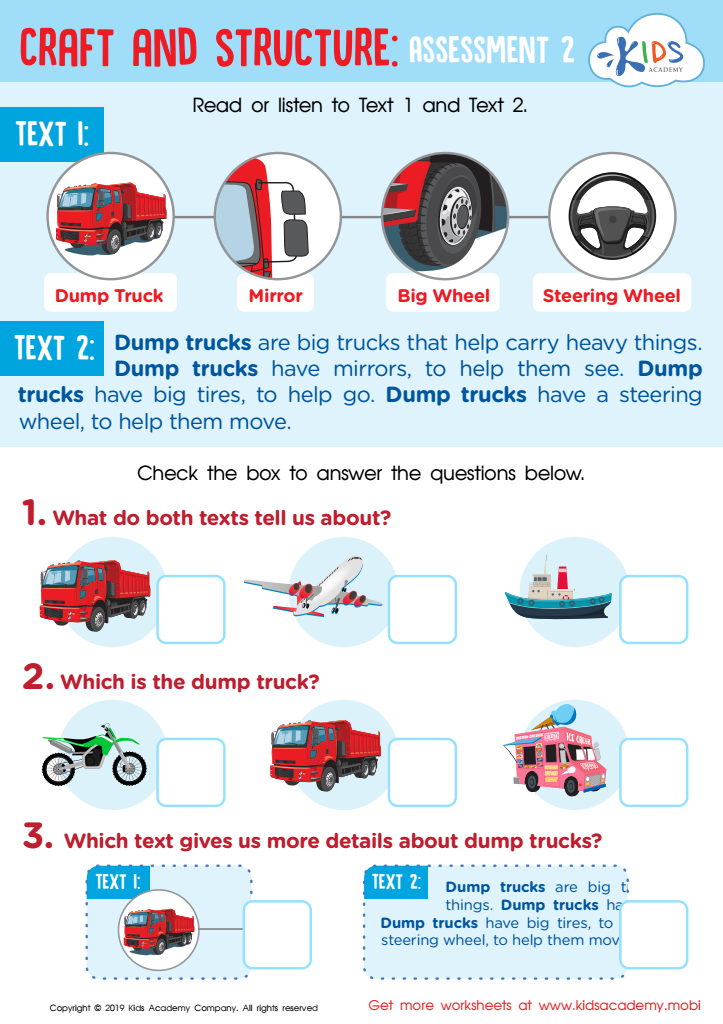
Craft and Structure: Assessment 2 Worksheet
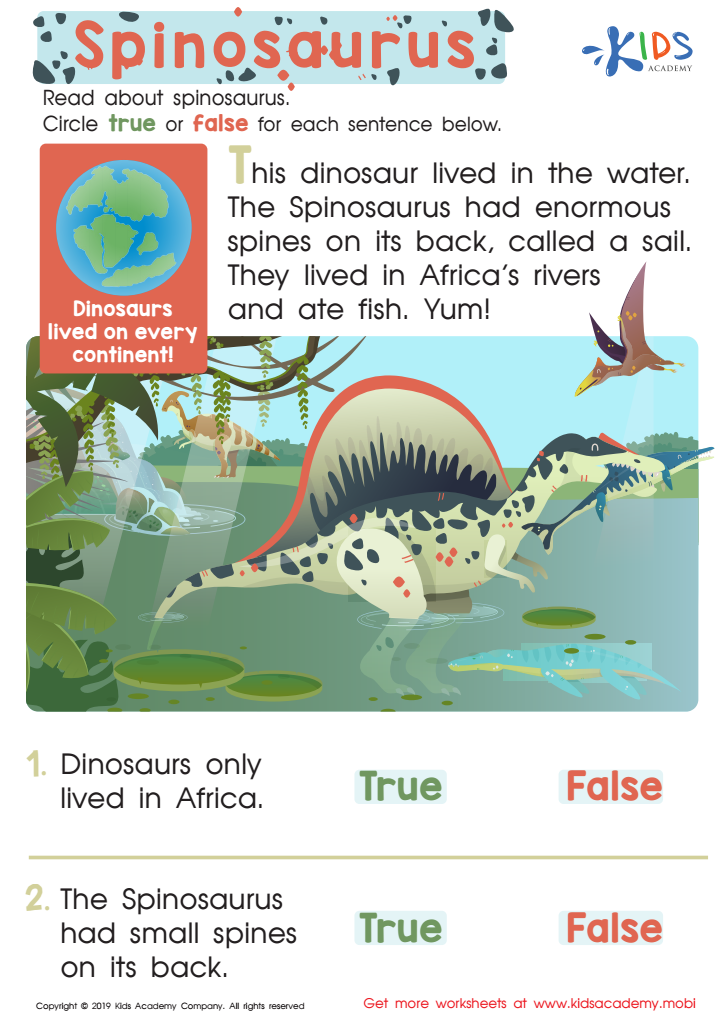
Spinosaurus Assessment Worksheet
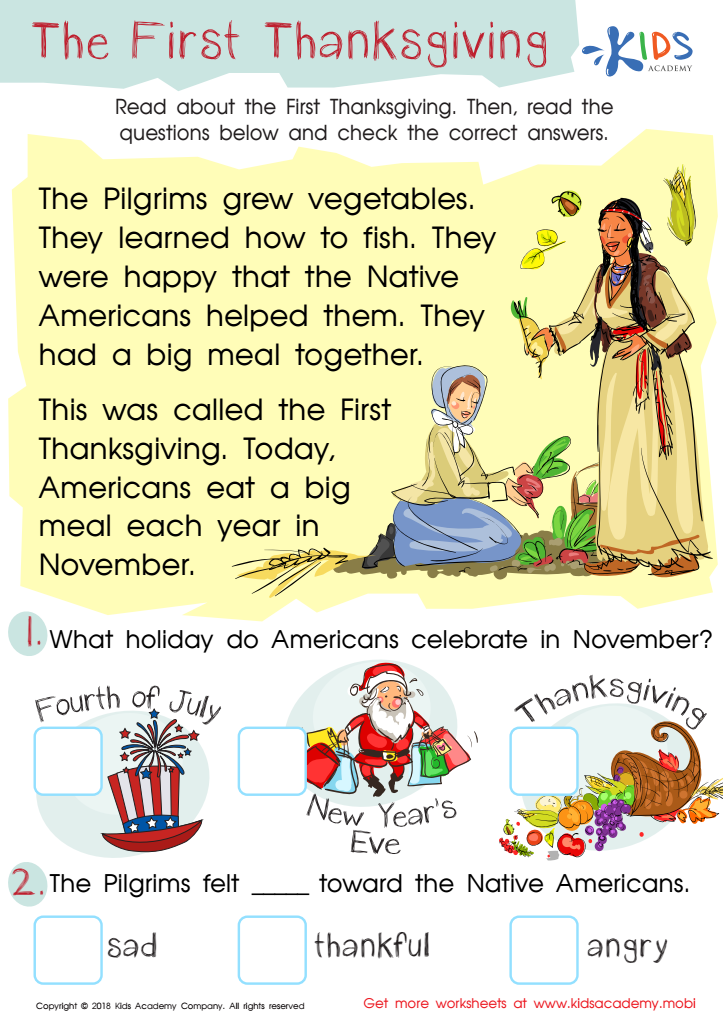
Assessment: First Thanksgiving Worksheet



.jpg)


Reading non-fiction activities for children aged 3-9 is crucial for both parents and teachers because it lays the foundation for critical thinking, curiosity, and lifelong learning. Non-fiction texts introduce young readers to a wealth of factual information about the world around them, encompassing diverse subjects such as science, history, and culture. Engaging children in non-fiction activities enhances their comprehension skills and teaches them how to process and evaluate information critically.
Moreover, non-fiction reading activities offer opportunities for interactive learning. They can spark discussions, stimulate questions, and encourage children to seek answers through research, fostering an investigative mindset. For instance, activities might involve reading a book about space and then creating a simple project or answering questions that promote exploration and creativity.
Furthermore, integrating non-fiction reading into the curriculum supports diverse learning styles. Children who may struggle with narrative texts might thrive when presented with factual content, discovering a love for reading that transcends traditional storytelling.
Overall, implementing non-fiction activities equips children with essential literacy skills while igniting a passion for knowledge, preparing them for academic success and an informed life beyond the classroom. For parents and teachers, promoting such activities is an investment in children's future learning journeys.








