Filters

6 filtered results

Clear all filters
Favorites
With answer key
Interactive

6 filtered results

Difficulty Level

Grade


Enhance your child's language skills with our "Easy Building Vocabulary Worksheets Activities with Answers" designed specifically for ages 4-8. Our interactive worksheets are perfect for young learners, providing fun and engaging ways to expand their vocabulary. Each activity focuses on essential words and concepts, encouraging kids to explore and use new vocabulary in context. With clear answer keys included, parents and educators can easily track progress and provide guidance. Perfect for home or classroom use, these worksheets will make learning vocabulary enjoyable and effective. Spark your child's love for language today with our user-friendly resources!

Check out this FREE Building Vocabulary Trial Lesson for age 4-8!

Prefixes un-, pre-

Favorites
With answer key
Interactive
  • Building Vocabulary
  • 4-8
  • With answer key
  • Easy
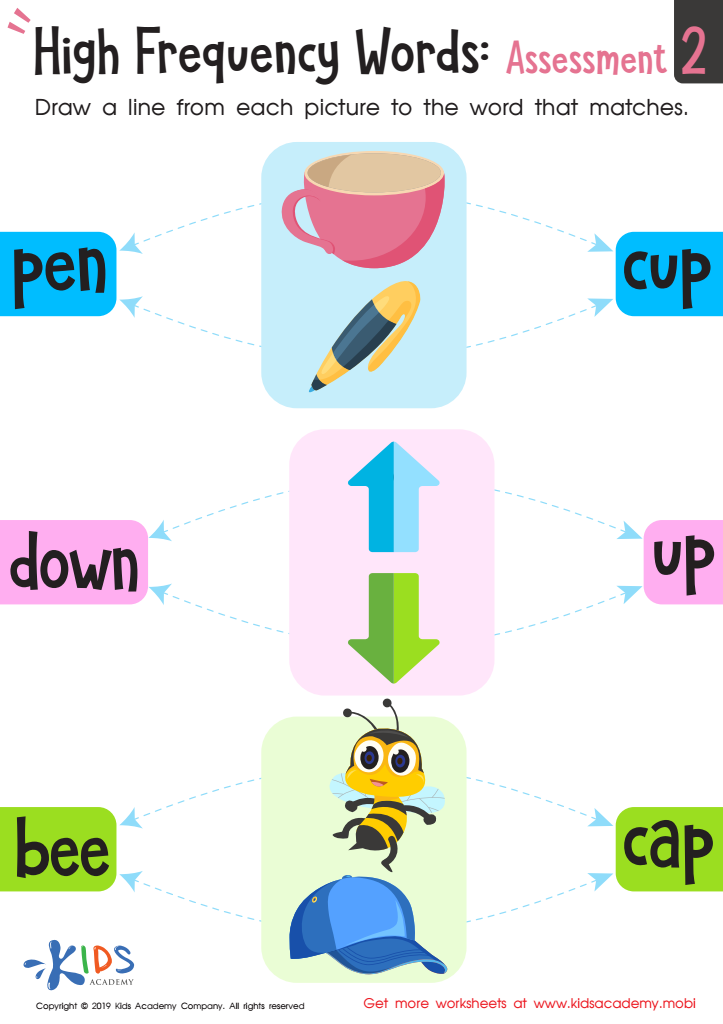
High Frequency Words: Assessment 2 Worksheet

High Frequency Words: Assessment 2 Worksheet

Having knowledge of high frequency words can make emergent readers stronger and boost comprehension. This free assessment worksheet uses traceable lines to connect the picture to its corresponding words, allowing them to feel successful. It's a great way to reinforce high frequency words with familiar imagery.
High Frequency Words: Assessment 2 Worksheet
Worksheet
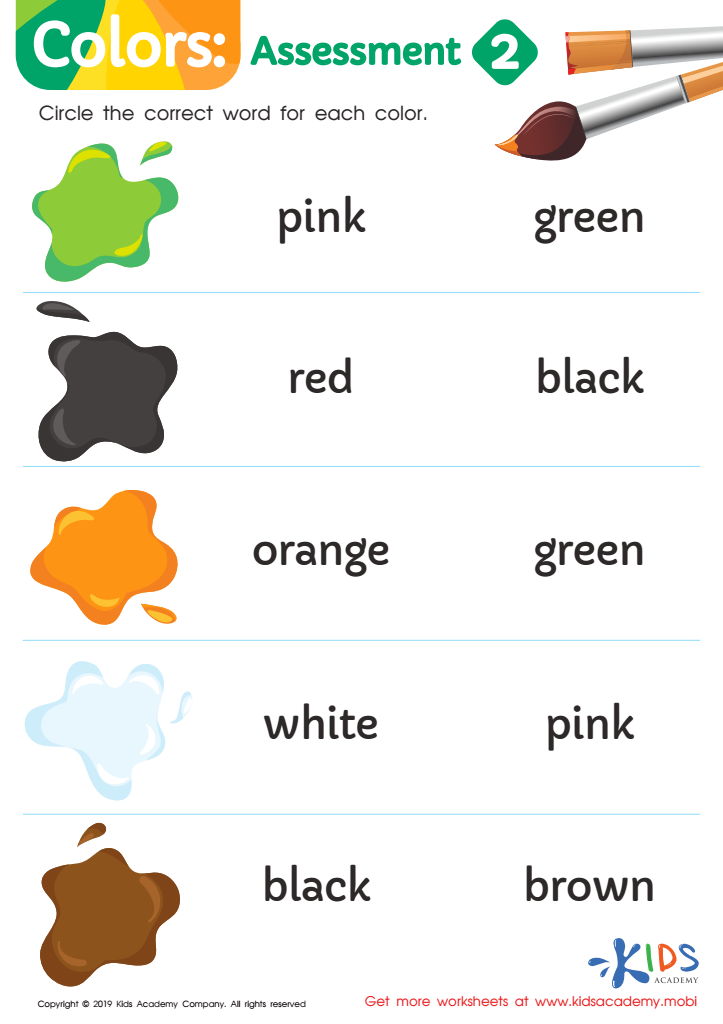
Colors: Assessment 2 Worksheet

Colors: Assessment 2 Worksheet

Teach color words to young students to build fluency and confidence. Check knowledge with an assessment worksheet. Have students look at paint samples and circle the correct color word. This assessment helps parents and teachers measure a child’s accuracy when reading color words.
Colors: Assessment 2 Worksheet
Worksheet
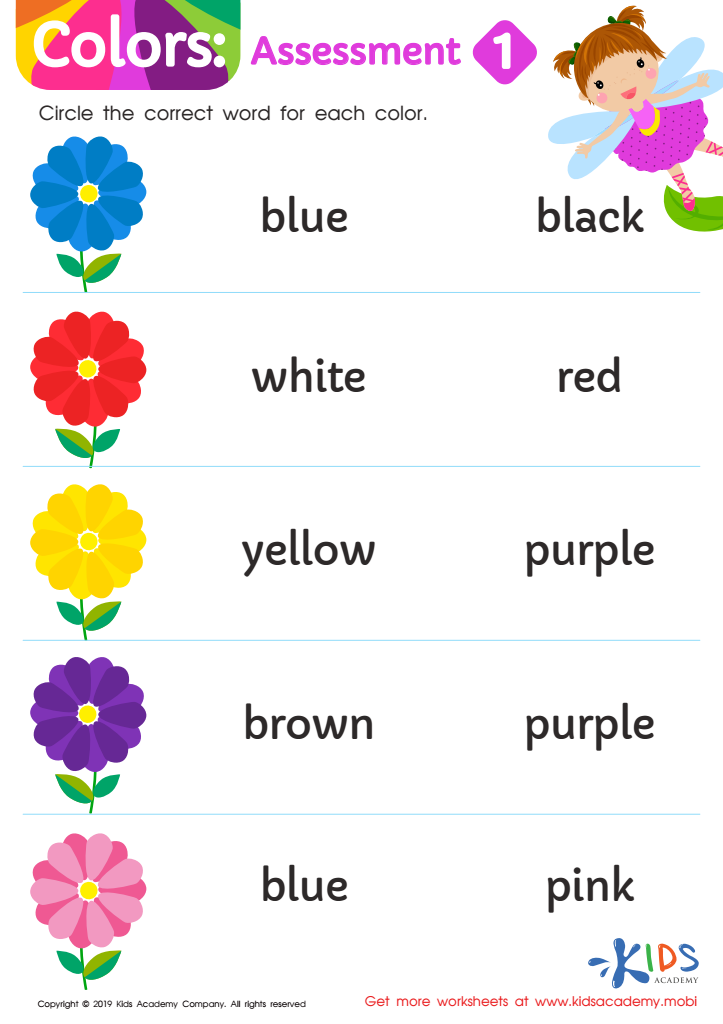
Colors: Assessment 1 Worksheet

Colors: Assessment 1 Worksheet

Children can decode unfamiliar words by sounding them out or by recognizing sight words. Color words are an important part of sight word knowledge, so add them to your child's list! This color word worksheet is an effective assessment tool for teachers to use with preschool and kindergarten students. It checks their knowledge of five color words - they simply look at the flower and circle the appropriate color word!
Colors: Assessment 1 Worksheet
Worksheet
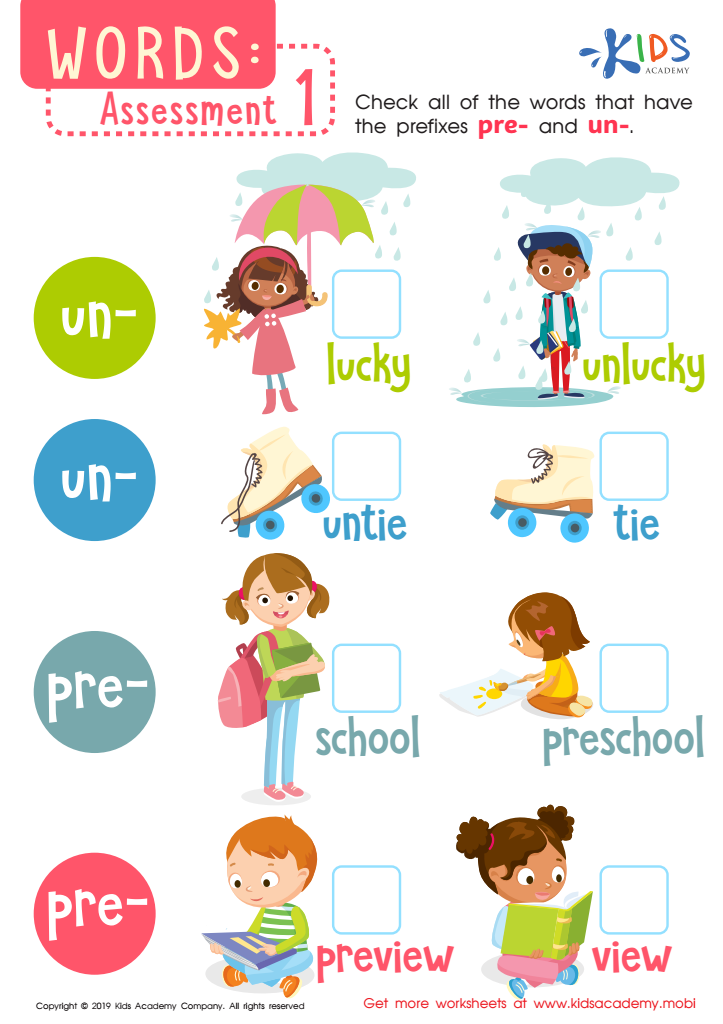
Words: Assessment 1 Worksheet

Words: Assessment 1 Worksheet

Help your child develop their knowledge of prefixes and suffixes with Kids Academy! This worksheet can test their understanding of pre- and un-. Have them view the illustrations and read the words to find the targeted prefix in each row. This is a great way to enhance their words and clarify meanings!
Words: Assessment 1 Worksheet
Worksheet
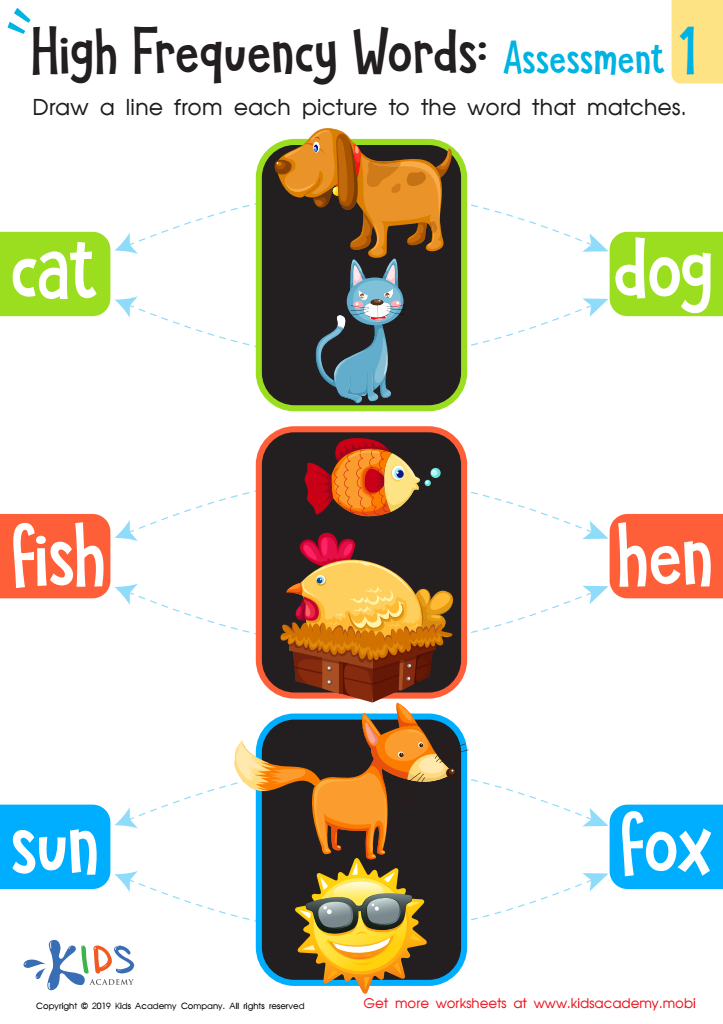
High Frequency Words: Assessment 1 Worksheet

High Frequency Words: Assessment 1 Worksheet

Emergent readers need to know high-frequency words accurately and quickly to develop fluency. Connecting these words to colorful, fun pictures helps reading prosody. This assessment worksheet uses traceable lines to help learners match pictures to words.
High Frequency Words: Assessment 1 Worksheet
Worksheet
Assessment: Aquarium Sign Worksheet


Assessment: Aquarium Sign Worksheet

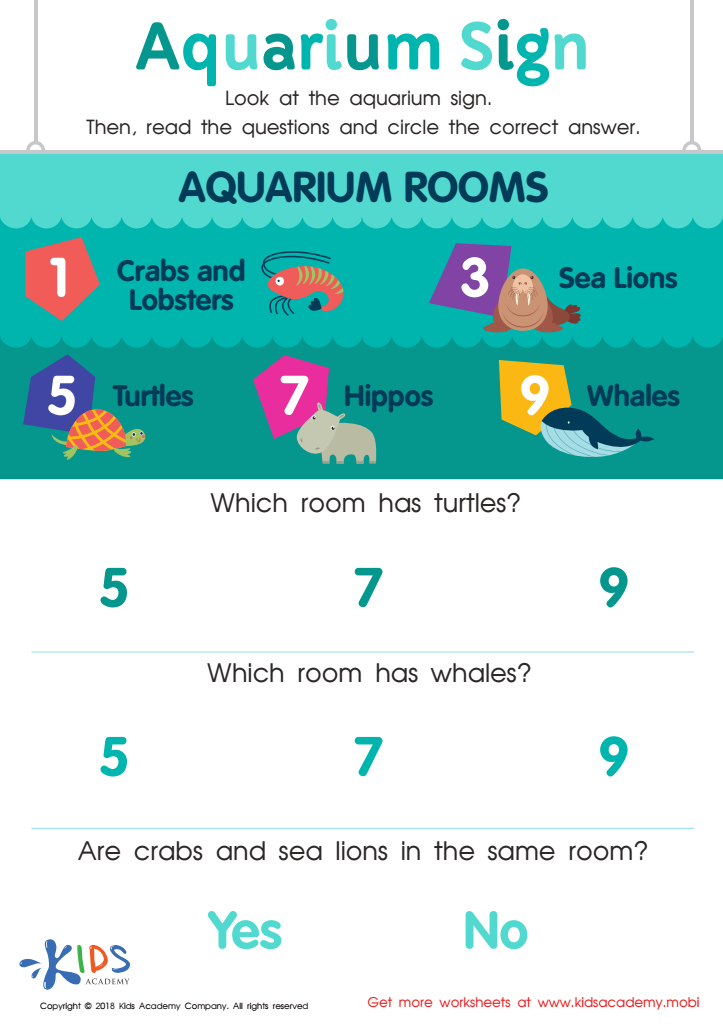
Take your kids to an aquarium and marvel at the sea creatures! Help them identify the animals they see, and ask them which one is their favorite. Look at the aquarium sign and point to each creature. Ask your kids the questions and help them circle the right answer.
Assessment: Aquarium Sign Worksheet

Worksheet


Parents and teachers should care about "Easy Building Vocabulary Activities with Answers for Ages 4-8" because early vocabulary development lays the foundation for a child’s reading, writing, and overall communication skills. At ages 4-8, children are in a critical stage of language acquisition, where engaging and interactive activities can significantly enhance their linguistic abilities.

These vocabulary activities provide fun and enriching ways for young learners to explore new words and concepts, helping to expand their language knowledge in an enjoyable manner. This not only fosters a love for learning but also enhances cognitive skills such as critical thinking and problem-solving.

Moreover, with provided answers, these activities not only save parents and teachers valuable time but also make it easier to track progress and identify areas that may need additional support. Regularly practicing vocabulary helps children express themselves more clearly, understand instructions better, and communicate more effectively with peers and adults.

By incorporating these vocabulary-building activities into daily routines, parents and teachers can create a nurturing environment that supports literacy development essential for success in future educational endeavors. Ultimately, investing in vocabulary education at a young age empowers children and sets them on a path toward lifelong learning.