Easy Tracing Shapes Worksheets Activities With Answers for 5-Year-Olds
2 filtered results
-
From - To
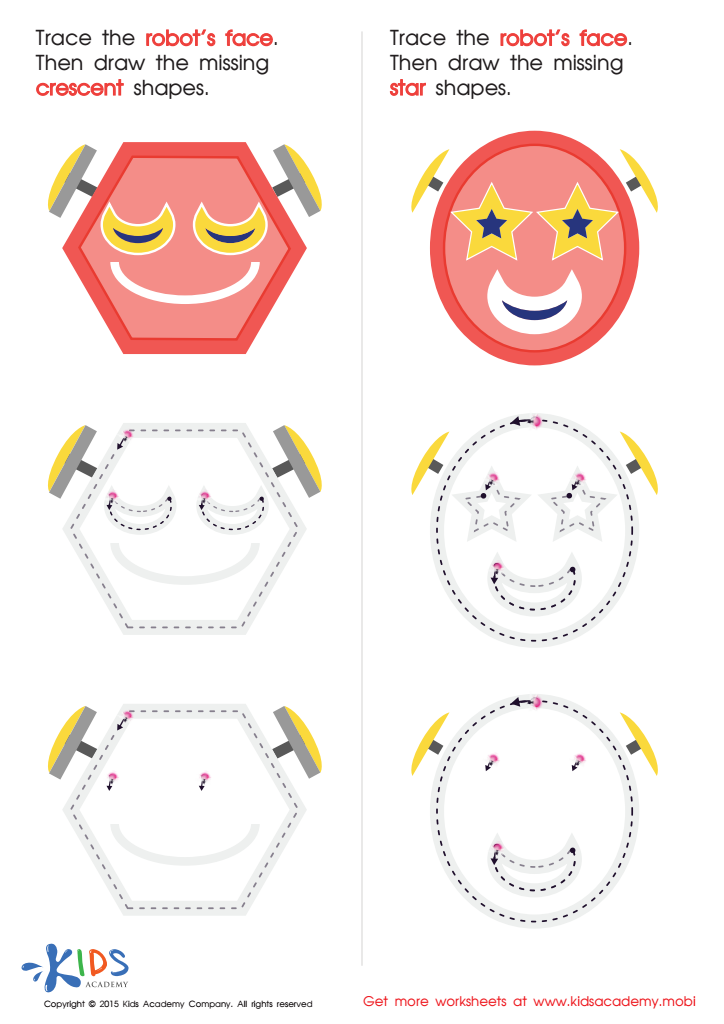
Composing a Robot's Face of Crescents And Stars Worksheet
 Assign to My Students
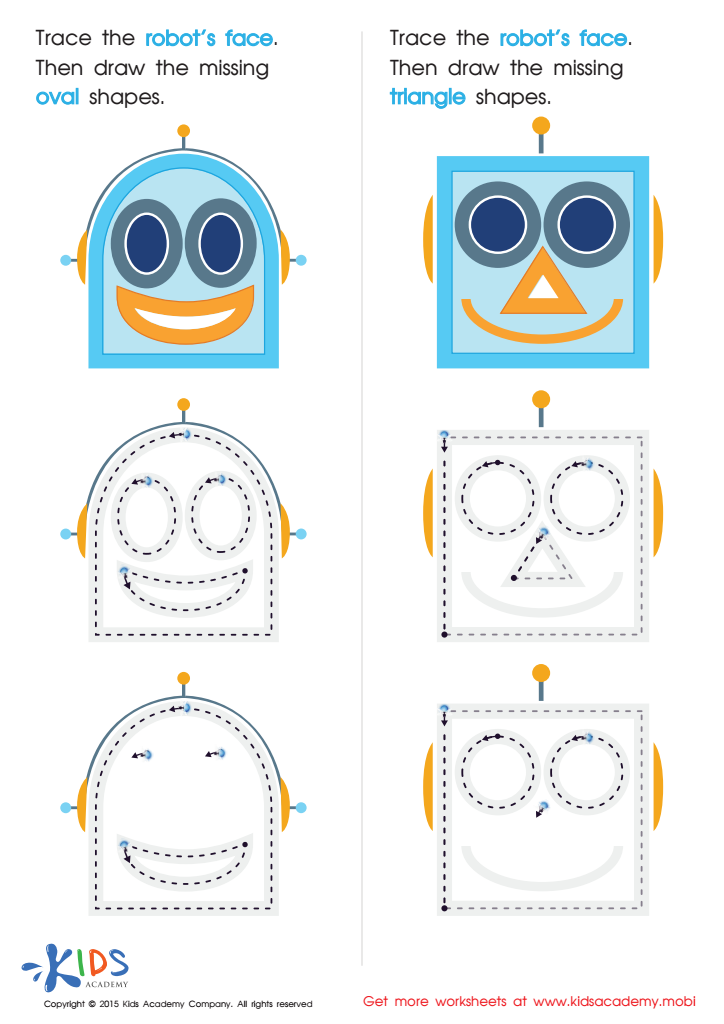
Drawing Ovals And Triangles with Fun Printable







Easy Tracing Shapes Worksheets Activities with Answers are incredibly beneficial tools for early childhood education. These simple yet effective resources serve a multitude of purposes, making them an essential part of any foundational learning curriculum. Here are some reasons why they stand out as invaluable aids for young learners.
First and foremost, Easy Tracing Shapes Worksheets Activities with Answers help in the development of fine motor skills. As children trace various shapes, they learn to control their hand movements, which is crucial for writing readiness. The action of tracing strengthens hand-eye coordination, preparing them for more complex tasks such as writing letters and numbers.
Additionally, these activities introduce basic geometry concepts in an engaging way. Children learn to recognize and name different shapes, building a solid foundation for mathematical understanding. This early exposure to geometry helps in developing spatial awareness, an important skill for problem-solving and navigating the world around them.
Another significant benefit of Easy Tracing Shapes Worksheets Activities with Answers is the boost they provide to cognitive skills. As children focus on following the lines to complete the shapes, they improve their concentration and attention to detail. This practice not only aids in academic learning but also enhances their ability to complete tasks efficiently.
Moreover, these worksheets come with answers, making the learning process more rewarding. Children can immediately see the results of their efforts, which boosts their confidence and motivates them to tackle more challenging tasks. This immediate feedback is crucial in fostering a positive learning environment, encouraging persistence and resilience in young learners.
In conclusion, Easy Tracing Shapes Worksheets Activities with Answers are much more than simple drawing exercises. They play a pivotal role in developing fine motor skills, introducing basic geometry, enhancing cognitive abilities, and boosting confidence among young learners. Incorporating these activities into early childhood education can significantly contribute to a child’s overall development, making them an excellent resource for parents and educators alike.








