Normal Tracing Shapes Worksheets Activities With Answers for 5-Year-Olds
9 filtered results
-
From - To
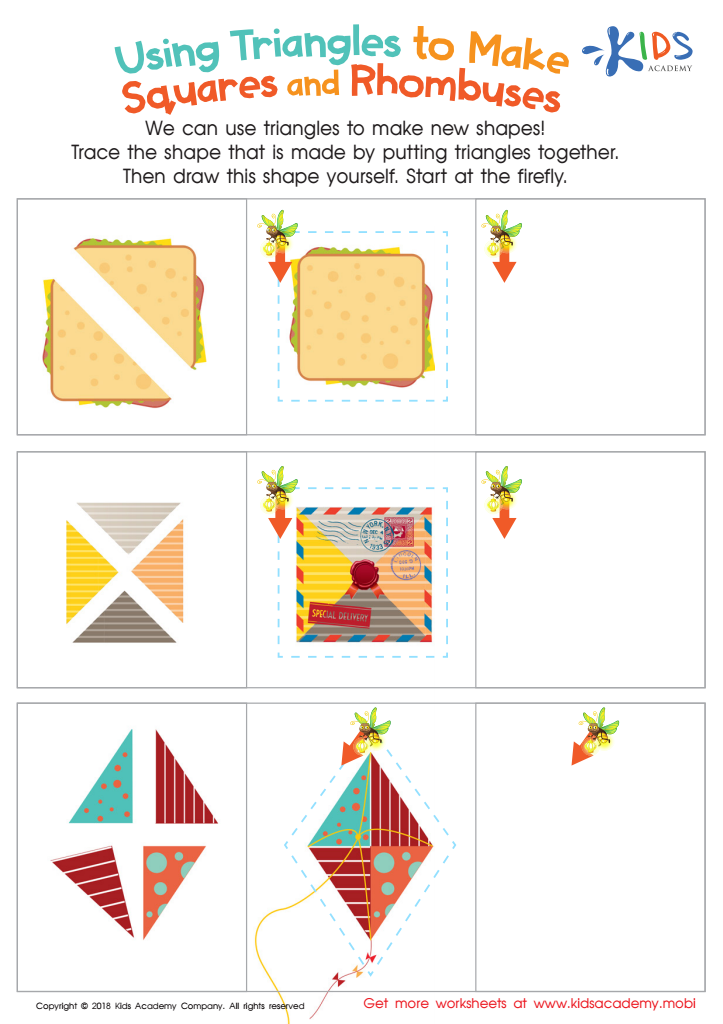
Using Triangles to Make Squares and Rhombuses Worksheet
 Assign to My Students
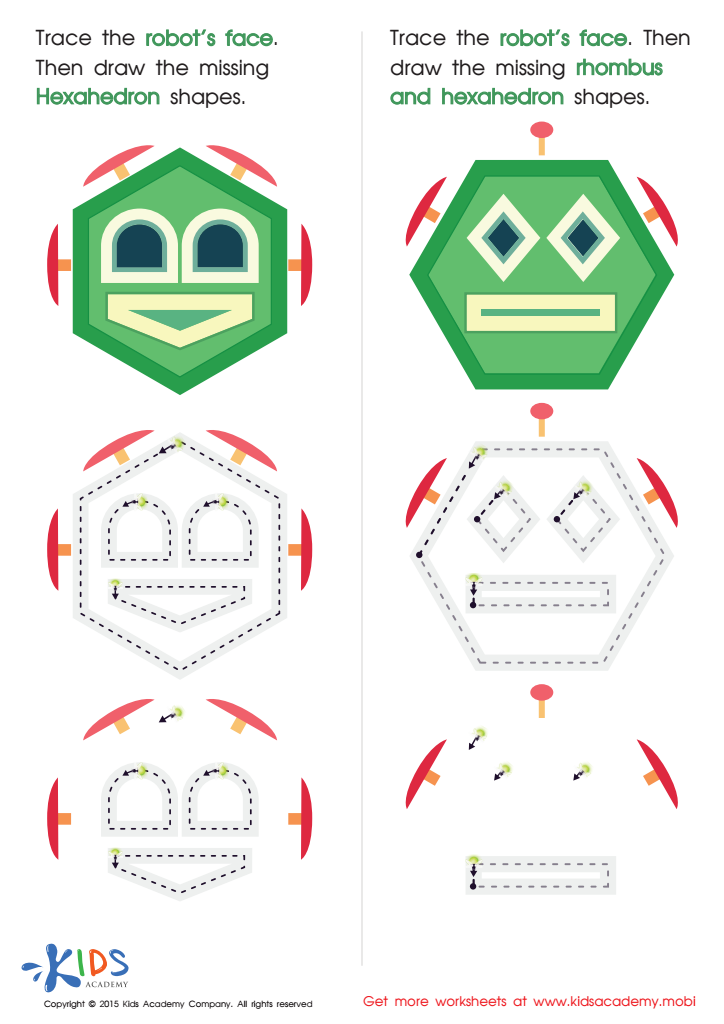
Practice Drawing Hexahedrons And a Rhombus Worksheet
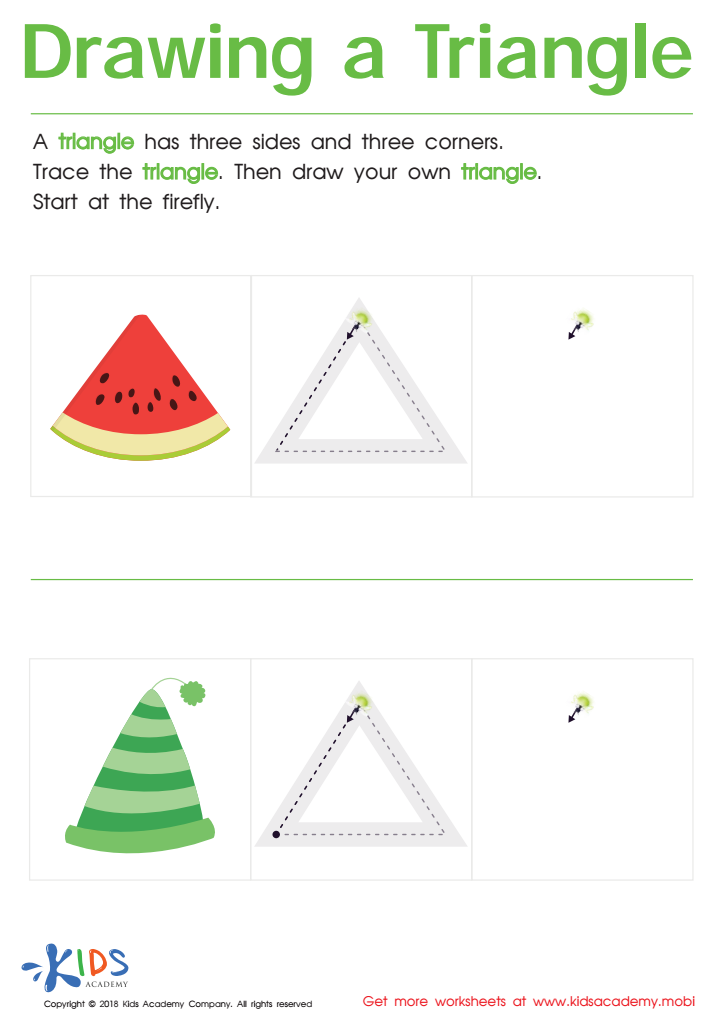
Drawing a Triangle Worksheet
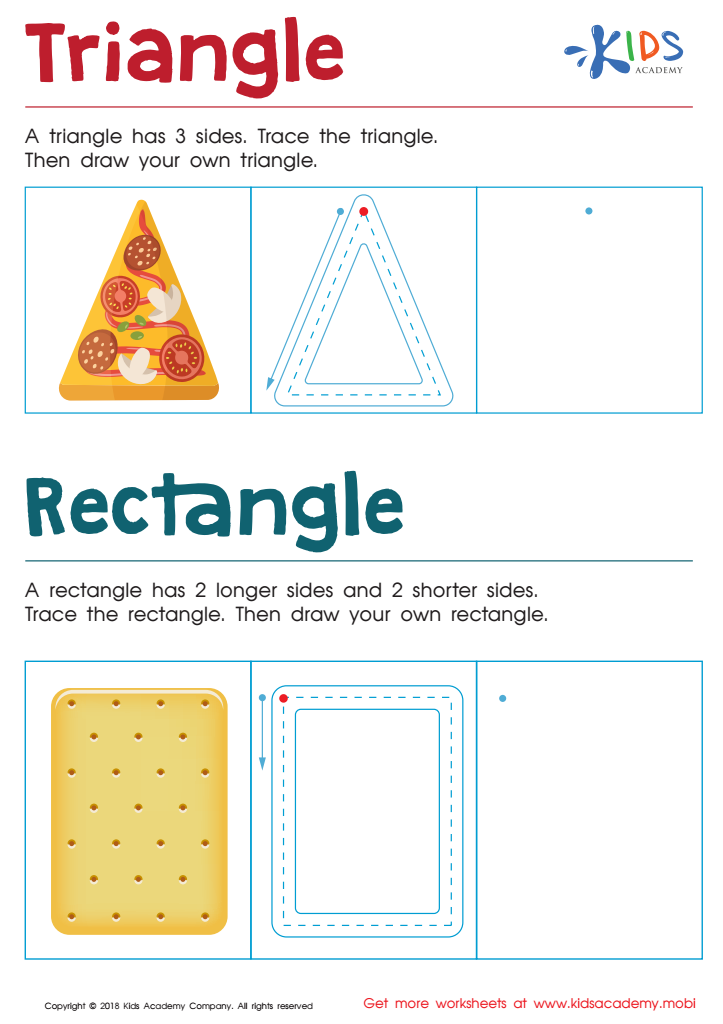
Triangle Rectangle Worksheet
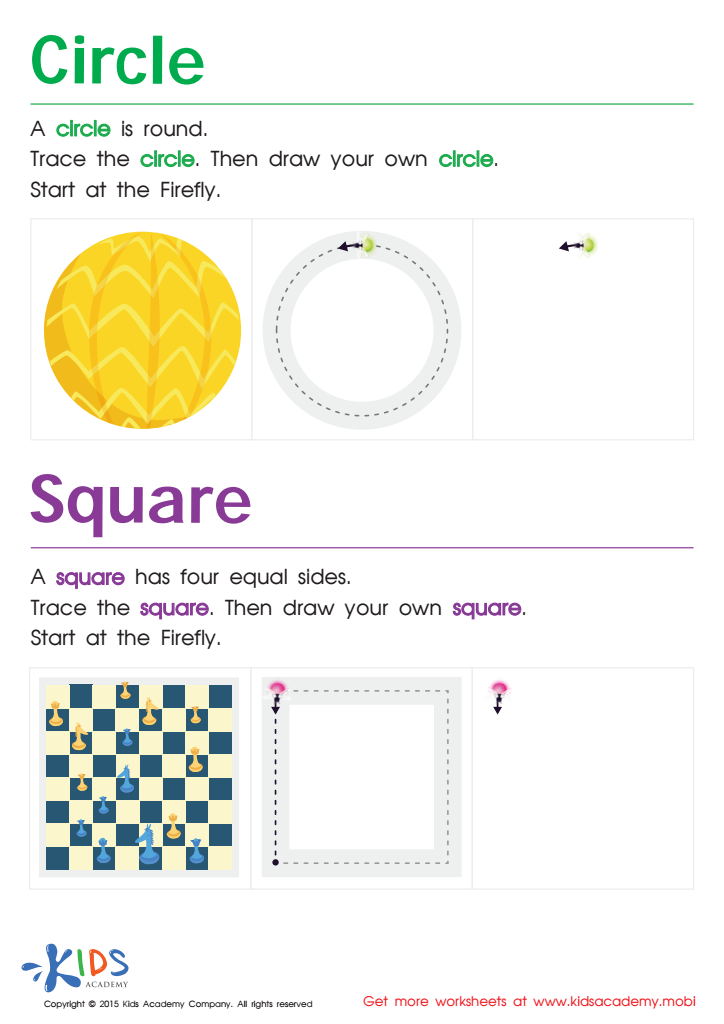
Trace And Draw a Circle And a Square Worksheet
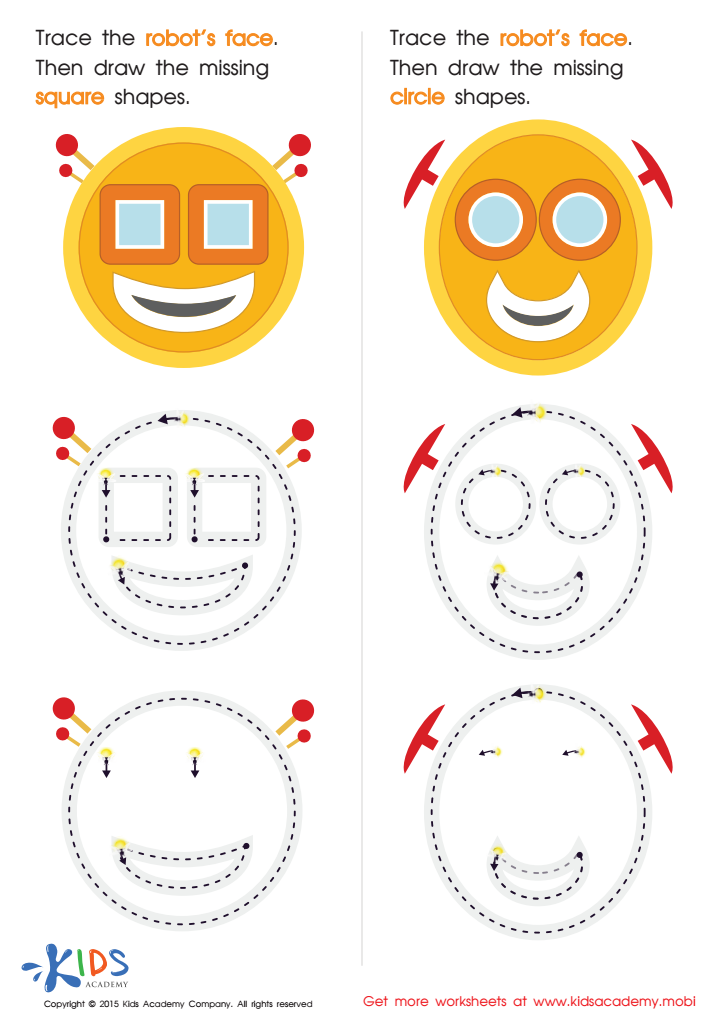
Practicing to Draw Circles And Squares Printable
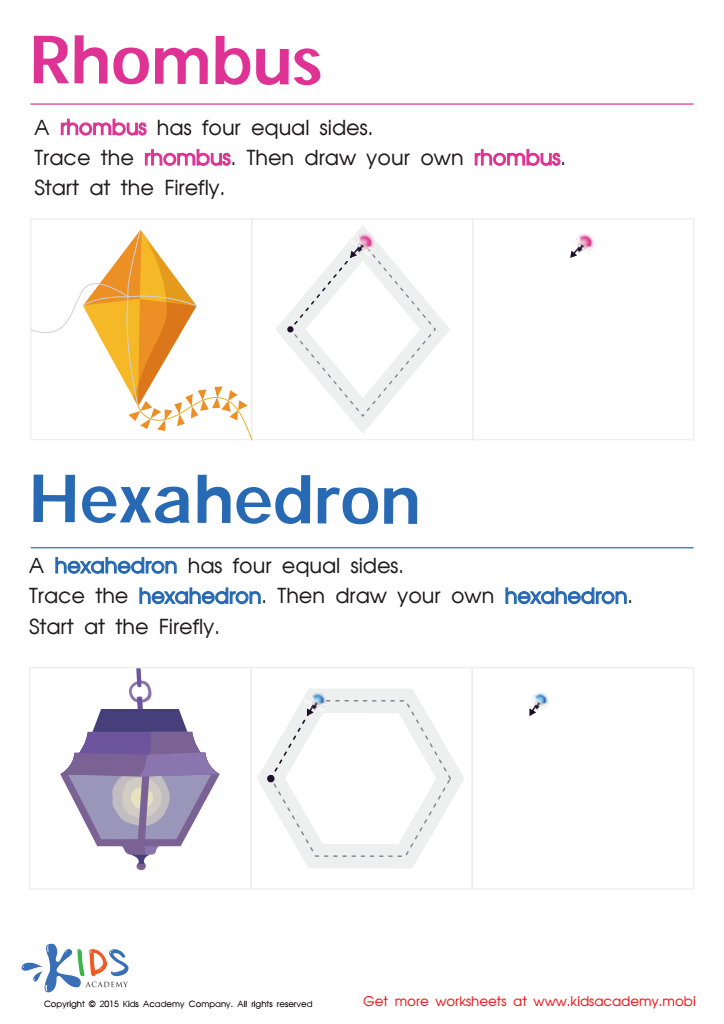
Draw a Rhombus And a Hexahedron Printable
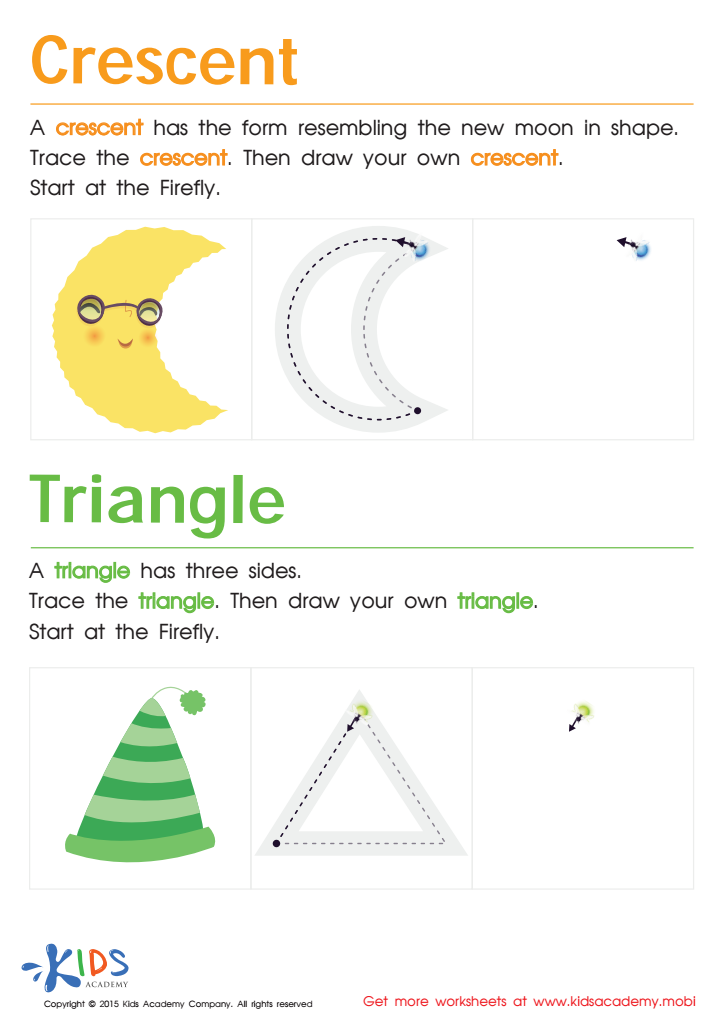
Learning to Draw Crescents And Triangles Worksheet
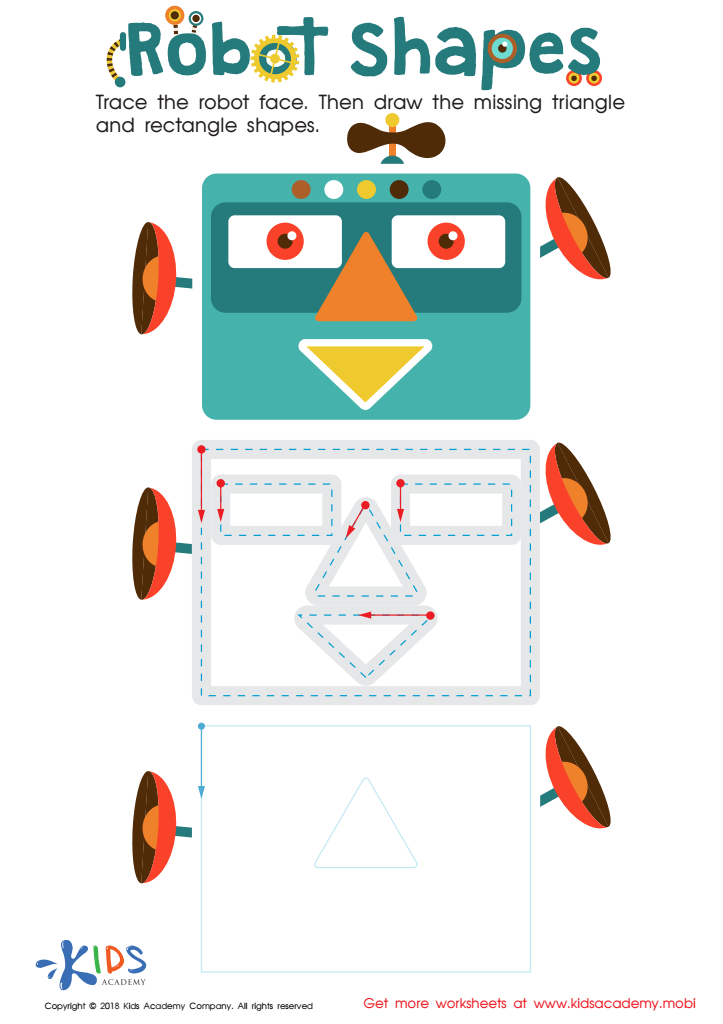
Robot Shapes Worksheet








Normal Tracing Shapes Worksheets Activities With Answers are an essential tool in the foundational development of young learners. These activities are designed not just to engage children in drawing lines and patterns but also to significantly enhance their cognitive and motor skills. Let's delve into why these worksheets are so beneficial.
Firstly, Normal Tracing Shapes Worksheets Activities With Answers provide a structured approach to learning shapes and patterns, crucial in the early stages of education. The act of tracing assists children in recognizing different shapes, an essential skill that forms the basis for more advanced mathematical concepts and spatial awareness. By frequently interacting with these worksheets, children become familiar with shapes, which helps in developing their visual discrimination skills.
Secondly, these worksheets are instrumental in improving fine motor skills. The precise movements required to trace shapes help in strengthening the muscles in the hands and fingers, laying a solid foundation for future writing skills. The grip, control, and movement needed to follow the tracing lines enhance hand-eye coordination and encourage the development of a proper pencil grasp.
Moreover, Normal Tracing Shapes Worksheets Activities With Answers come with the added benefit of providing immediate feedback. The answers or examples included in these worksheets allow children and educators to verify the correctness of the tracing, promoting a sense of achievement and motivating the learner to continue practicing.
These activities also promote independence and confidence in young learners. With clear instructions and answers provided, children can work on these worksheets at their own pace, making their learning experience more enjoyable and less stressful. This autonomous learning approach encourages children to take initiative and develops their problem-solving skills.
In conclusion, Normal Tracing Shapes Worksheets Activities With Answers are not just about tracing lines; they are a pivotal educational tool that supports the holistic development of young learners. By incorporating these activities into the learning curriculum, educators can ensure that children develop essential cognitive, motor, and academic skills in a structured yet engaging manner.








