Normal Tracing Worksheets Activities With Answers for Ages 3-6 - Page 5
97 filtered results
-
From - To
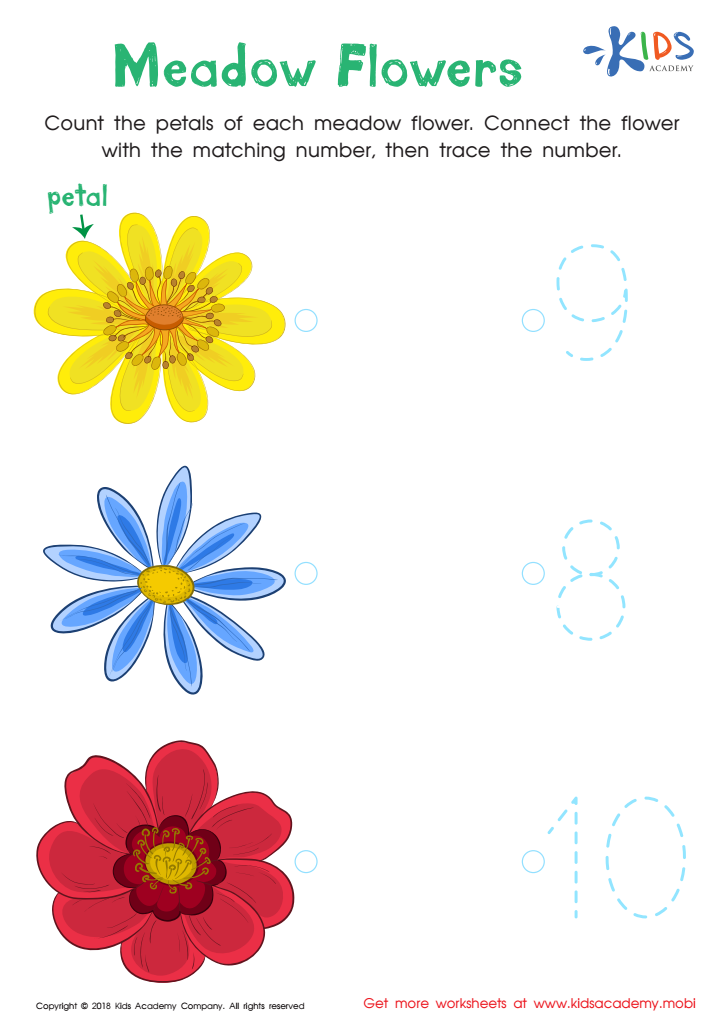
Kindergarten Number Tracing: Medow Flowers Worksheet
 Assign to My Students








Normal tracing activities are fundamental for children aged 3 to 6 as they play a crucial role in their early development. These activities not only enhance fine motor skills but also lay the groundwork for handwriting proficiency. Tracing shapes, letters, and numbers helps young learners practice control over their hand movements, fostering coordination essential for various daily tasks.
Moreover, tracing promotes cognitive skills. It engages children in recognizing patterns, shapes, and letters, which are foundational for reading and math concepts. As they trace, children also develop memory and focus, enhancing attention spans critical for their academic journey.
For parents and teachers, incorporating tracing activities into learning routines can make education more interactive and enjoyable. It encourages parent-child bonding when done together and enhances classroom engagement when introduced in group settings.
By caring about and integrating normal tracing activities, adults support children's overall growth—boosting their confidence in basic skills while encouraging creativity and self-expression. In addition, providing answers and guidance helps eliminate frustration, making learning a positive experience. In sum, normal tracing activities are essential tools in the toolkit of early childhood education, encouraging development in a holistic and engaging manner.








