Normal Reading Non-Fiction Worksheets Activities With Answers for Ages 5-9
4 filtered results
-
From - To
Discover a wealth of "Normal Reading Non-Fiction Worksheets Activities with Answers" designed specifically for children ages 5-9! Our engaging resources help young learners explore informative texts while developing critical reading skills. Each worksheet includes various interactive activities that challenge comprehension, encourage analytical thinking, and promote a love for learning about the world around them. With answer keys provided, educators and parents alike can easily facilitate learning and assess understanding. Ideal for both classroom and home use, these worksheets make reading non-fiction enjoyable and accessible, helping children gain confidence as they embark on their reading journey. Explore and learn today!
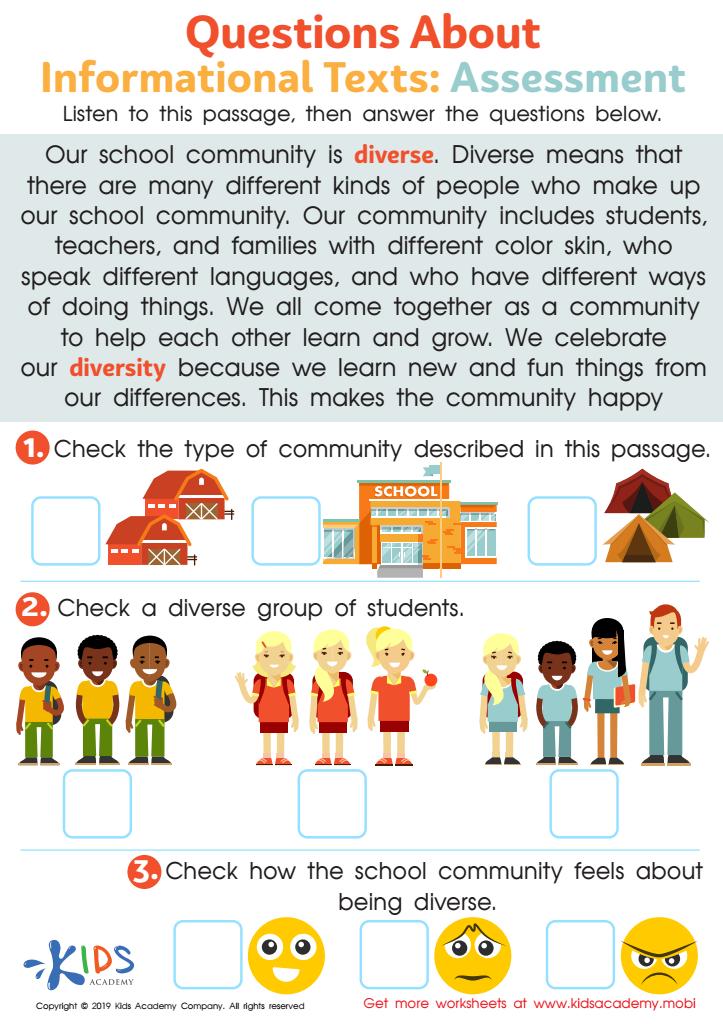
Questions About Informational Texts: Assessment 1 Worksheet
 Assign to My Students
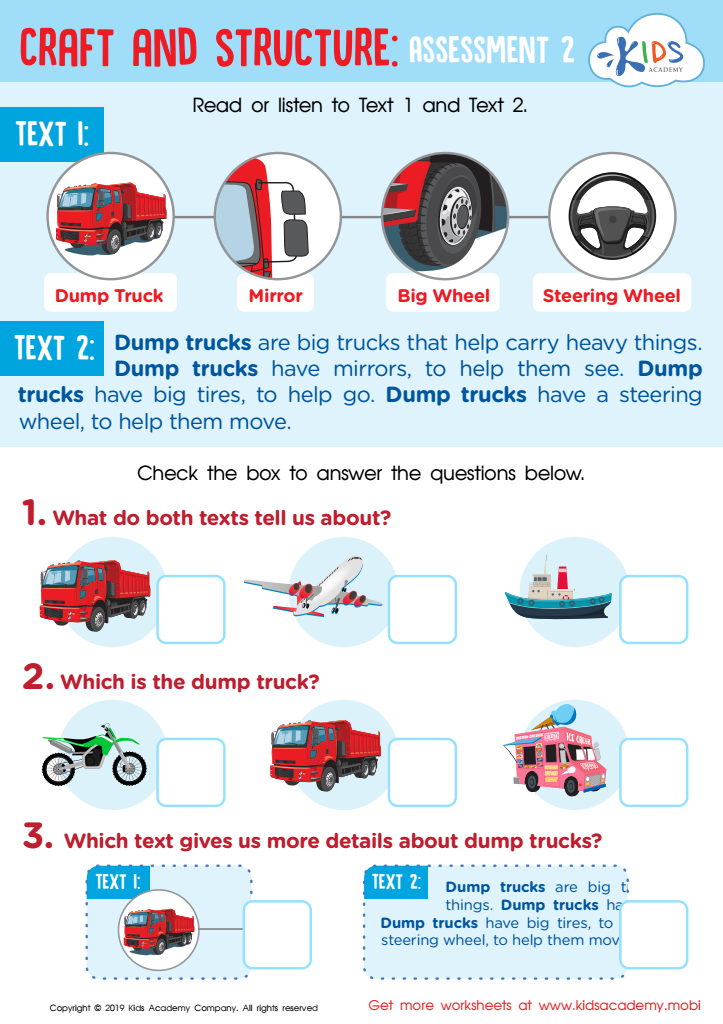
Craft and Structure: Assessment 2 Worksheet
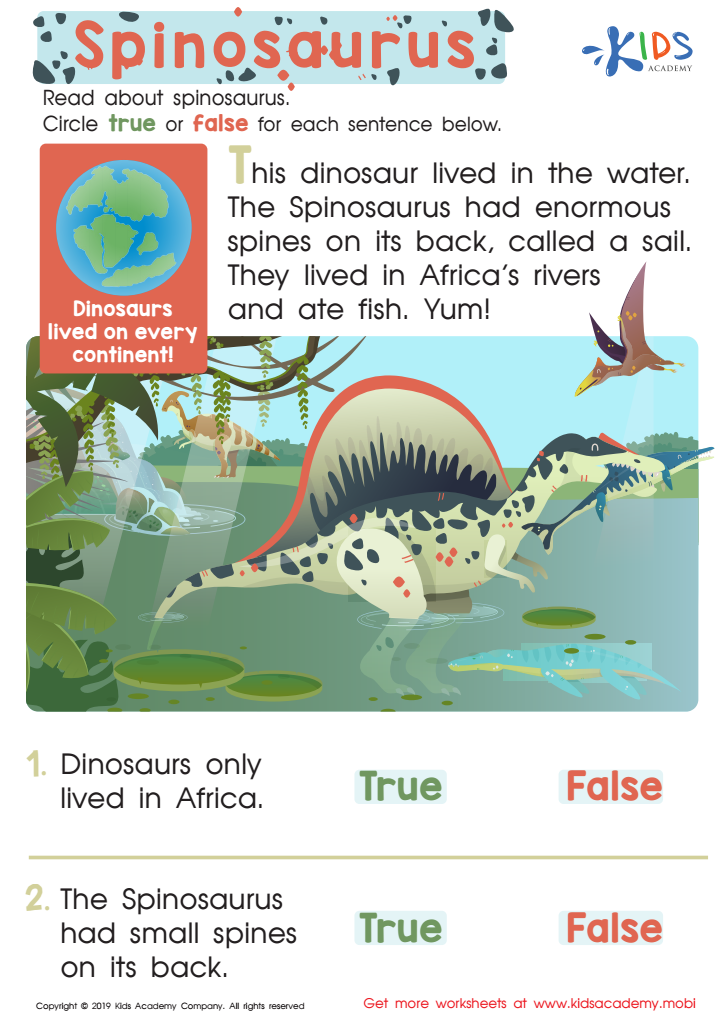
Spinosaurus Assessment Worksheet
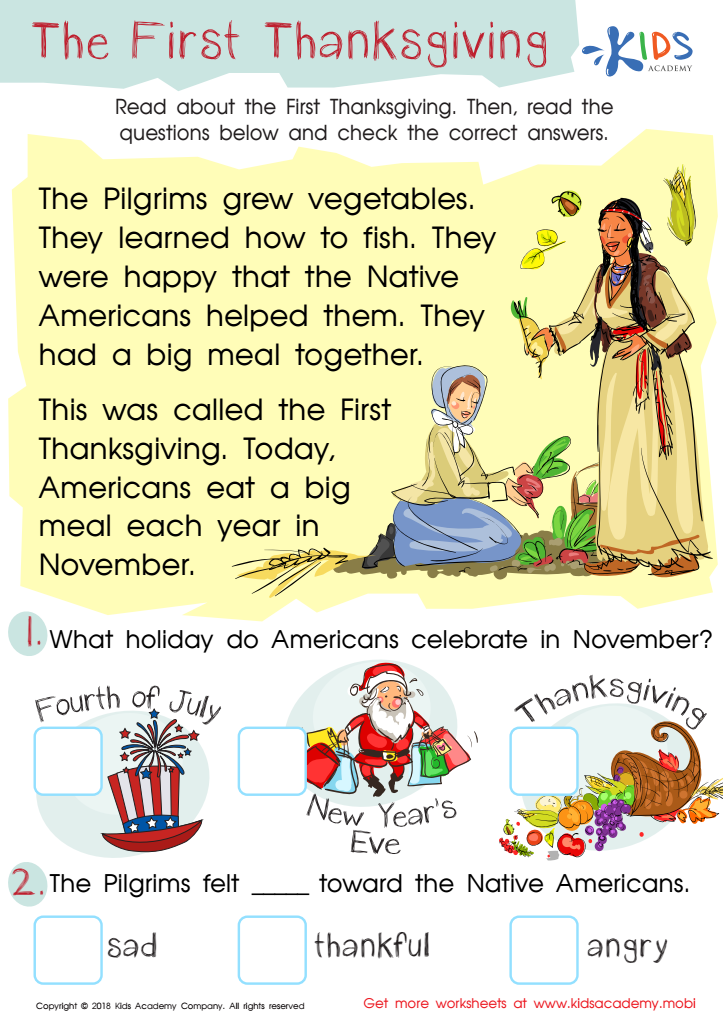
Assessment: First Thanksgiving Worksheet








Parents and teachers should prioritize Normal Reading Non-Fiction Activities for ages 5-9 because these activities foster essential literacy skills in young learners. At this crucial stage, children are developing their reading comprehension, vocabulary, and critical thinking abilities. Non-fiction reading exposes them to real-world concepts, igniting curiosity and a desire to learn about their surroundings. Through engaging activities that accompany these texts, children can actively demonstrate their understanding and connect new information to prior knowledge.
These activities not only support academic growth but also build confidence. When children practice answering questions and discussing non-fiction content, they enhance their comprehension skills and grow comfortable exploring more complex topics. Additionally, exposing students to a variety of non-fiction genres helps diversify their reading experiences, making them more adaptable, informed, and well-rounded individuals.
Moreover, older students will benefit from these skills in their future education, translating to improved performance in science, history, and other subject areas. In fostering a love for non-fiction reading early on, parents and teachers can instill a lifelong passion for learning and inquiry. By valuing these activities, they set the foundation for children’s academic success and critical thinking in a rapidly changing world.








