Word Problems Worksheets for Ages 3-4 - Page 5
107 filtered results
-
From - To
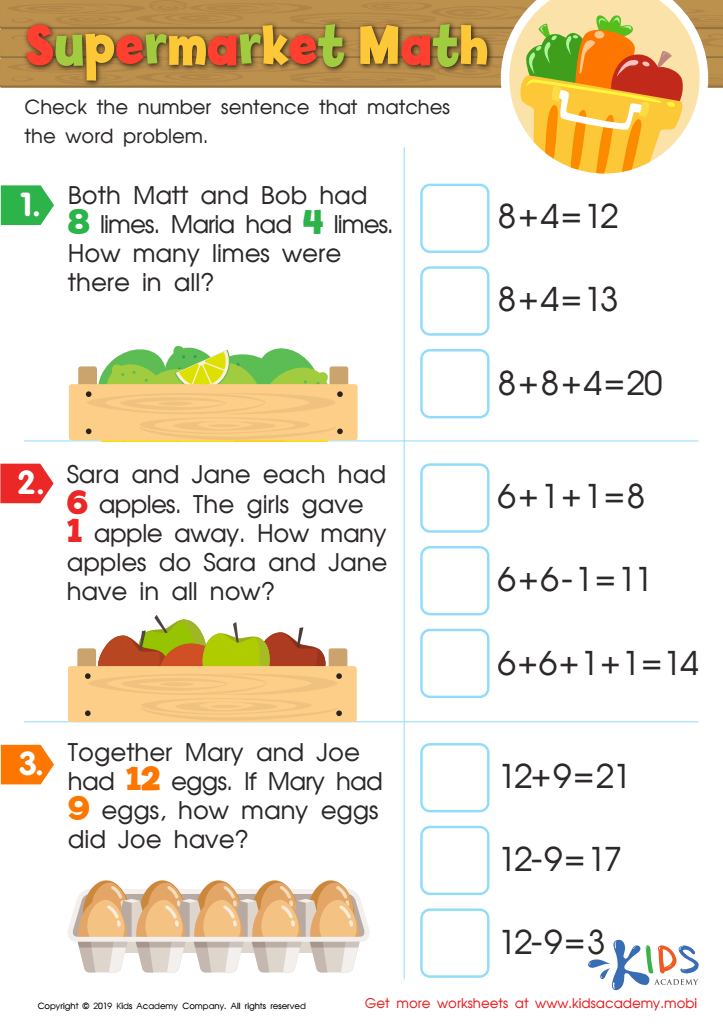
Supermarket Math Worksheet
 Assign to My Students
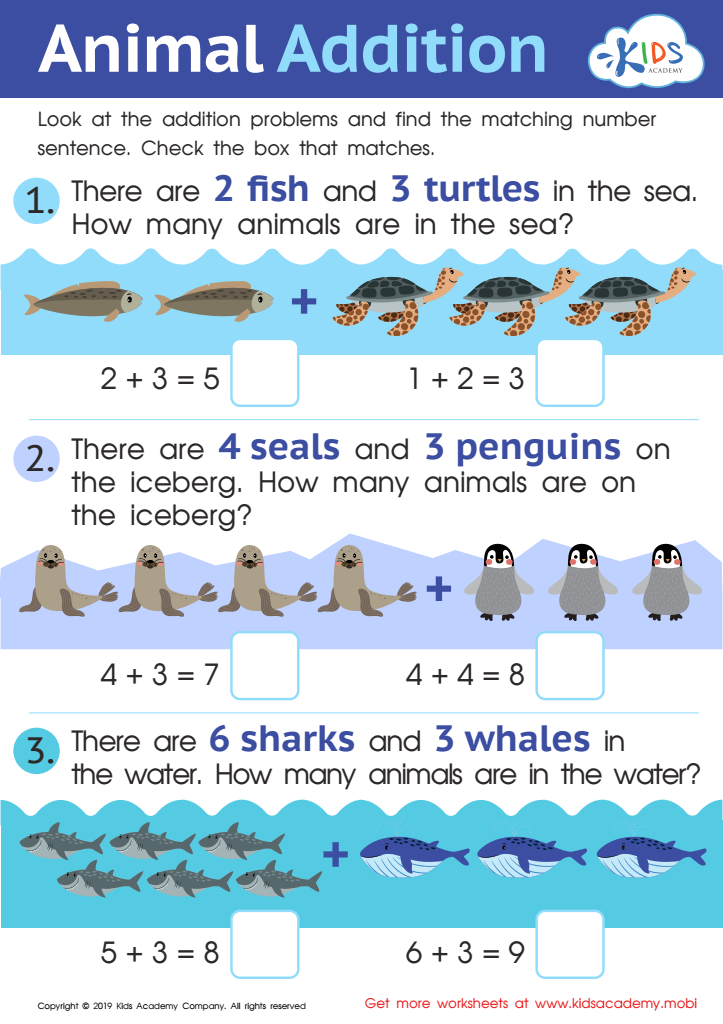
Animal Addition Worksheet
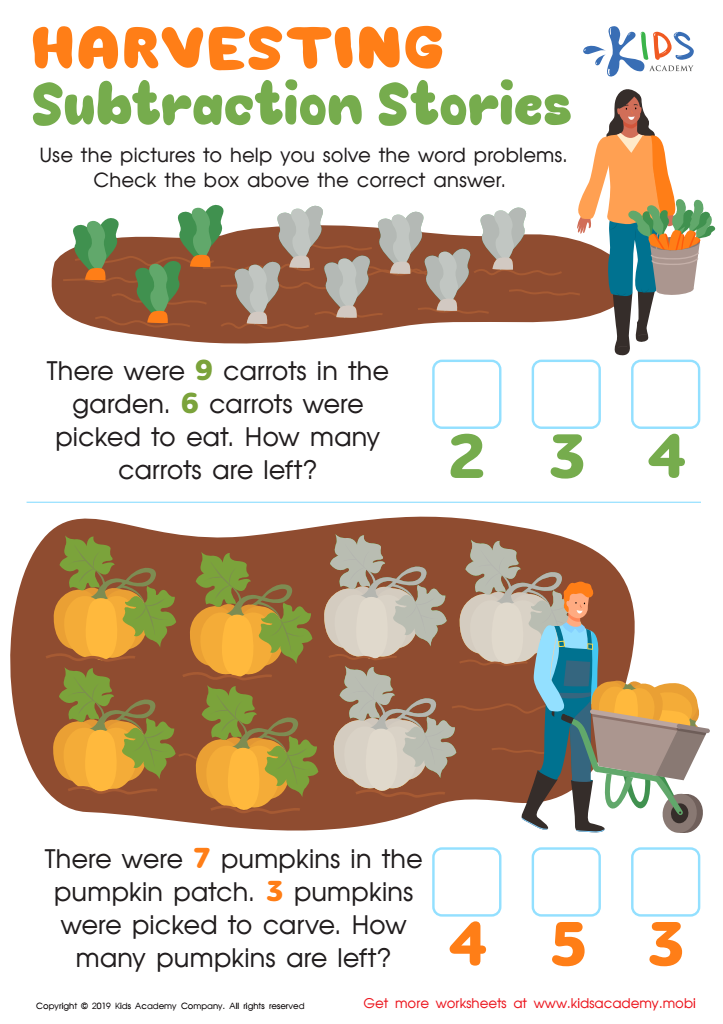
Harvesting Subtraction Stories Worksheet
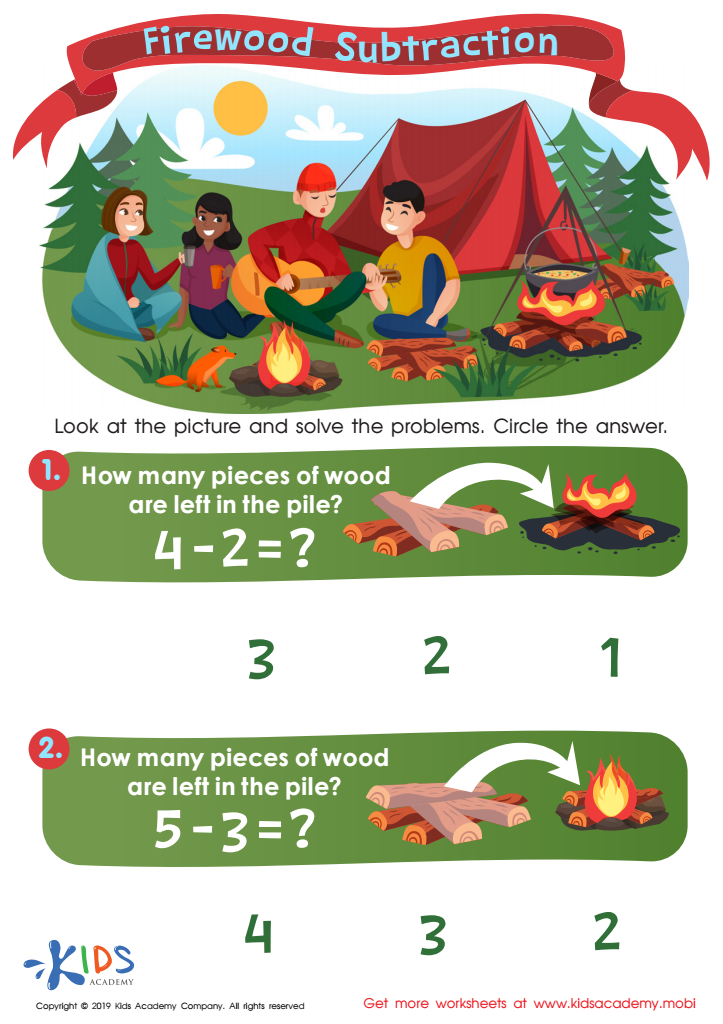
Firewood Subtraction Worksheet
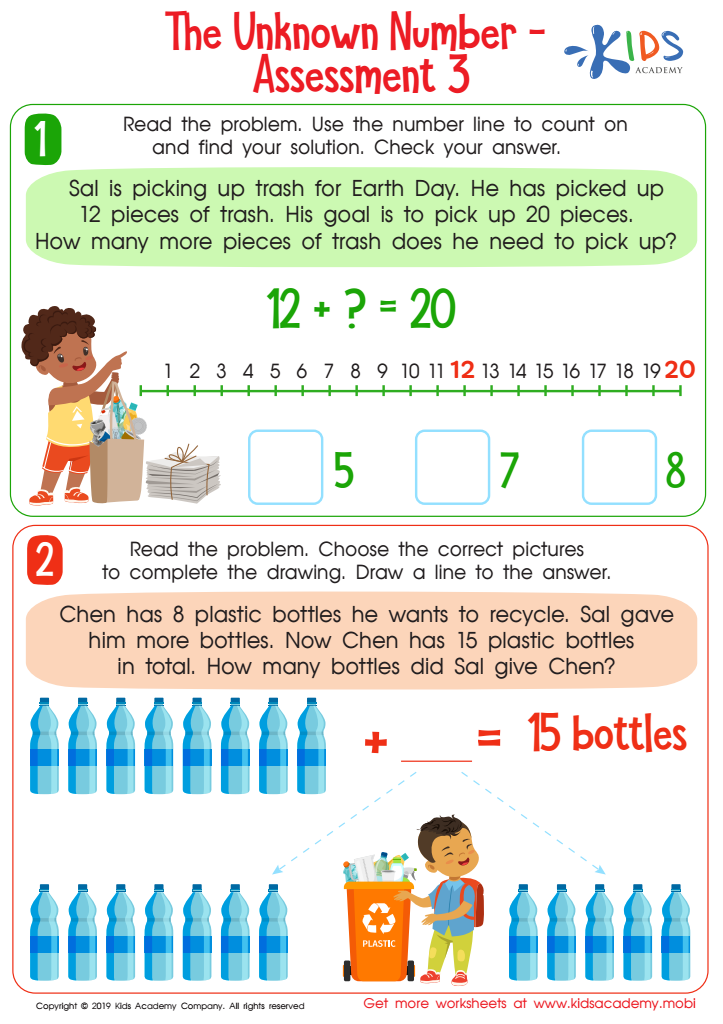
The Unknown Number - Assessment 3 Worksheet
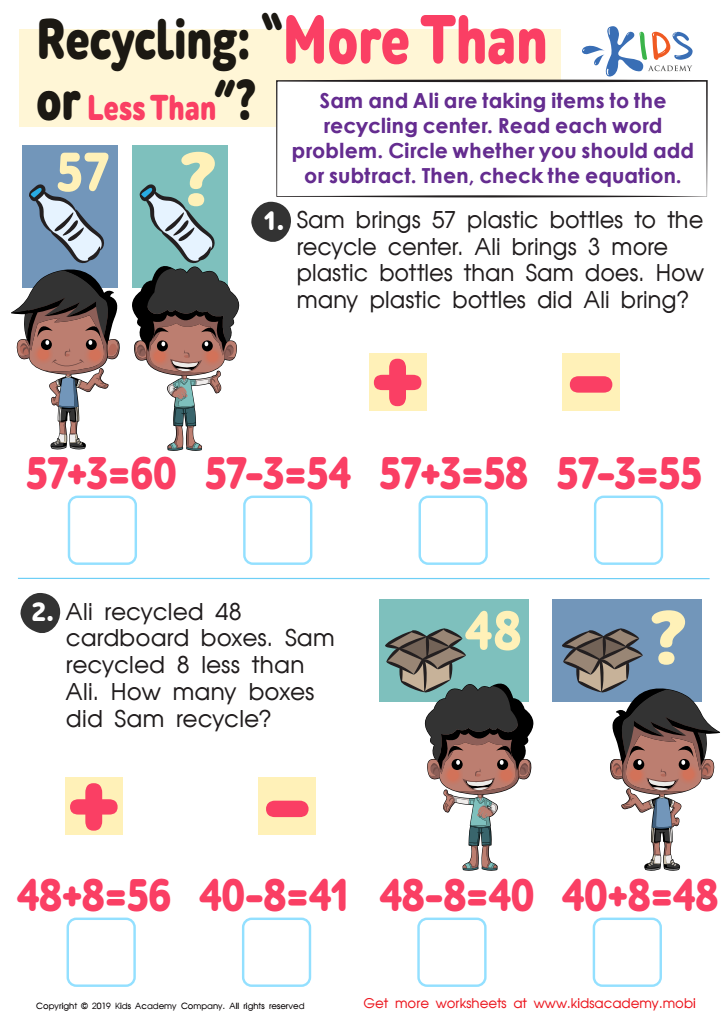
Recycling - More or Less Worksheet
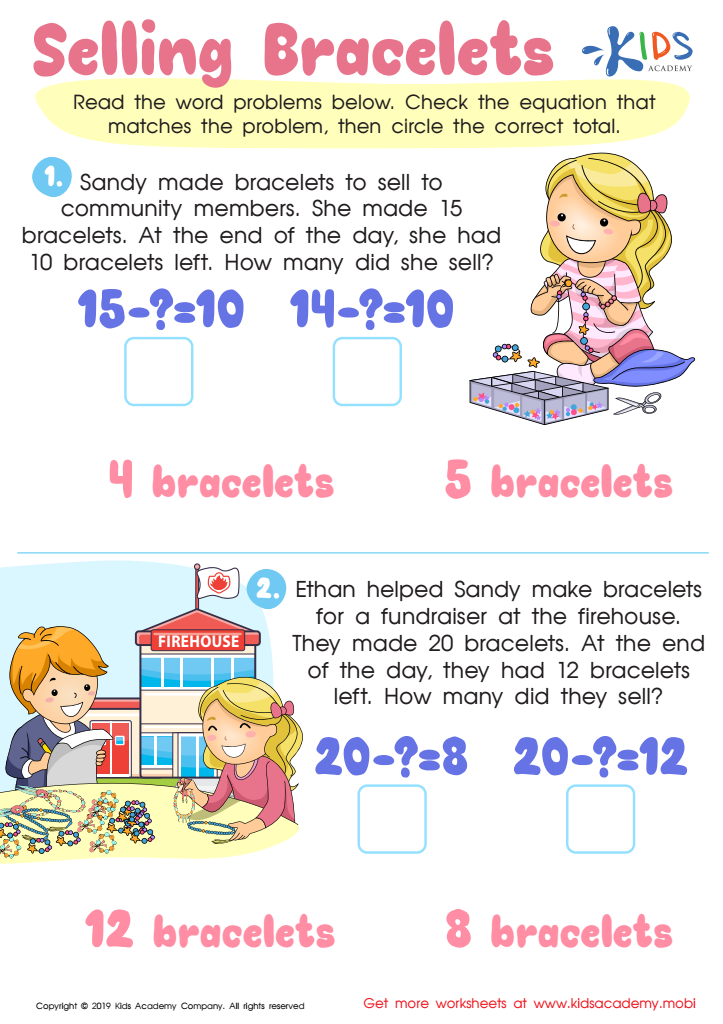
Selling the Bracelets Worksheet
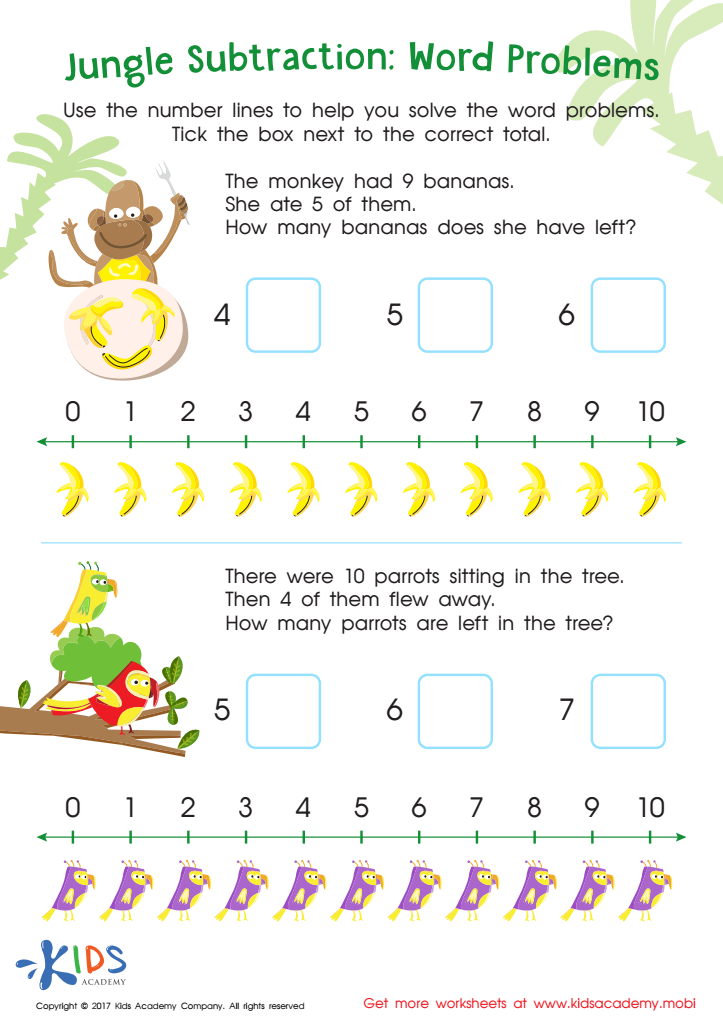
Jungle Subtraction Word Problems Substraction Worksheet
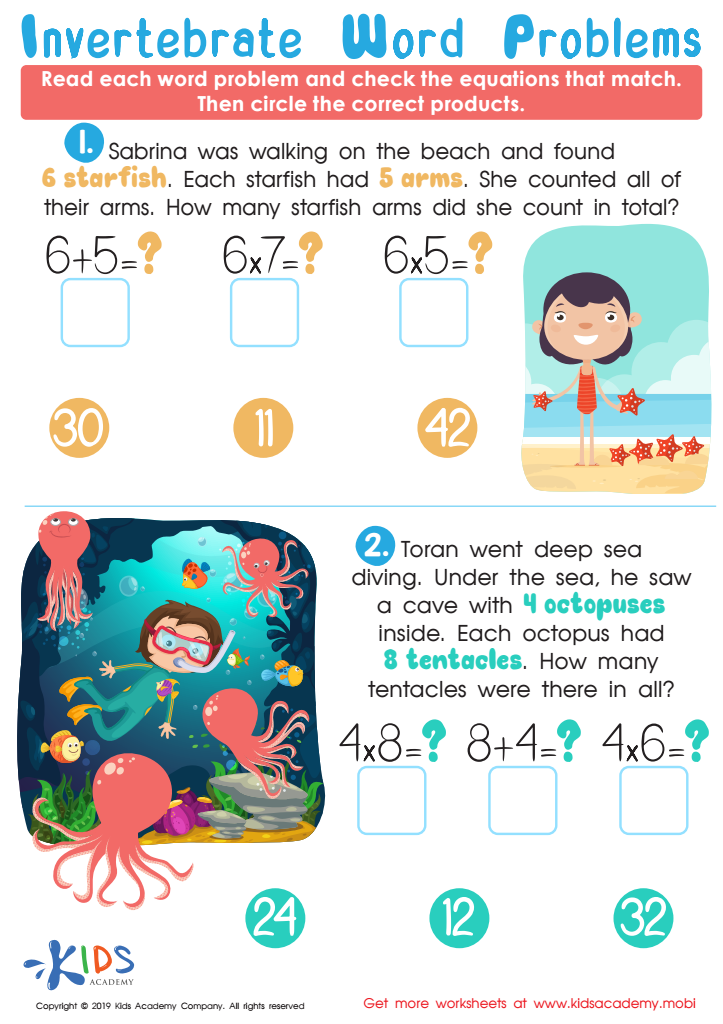
Invertebrate Problems Worksheet
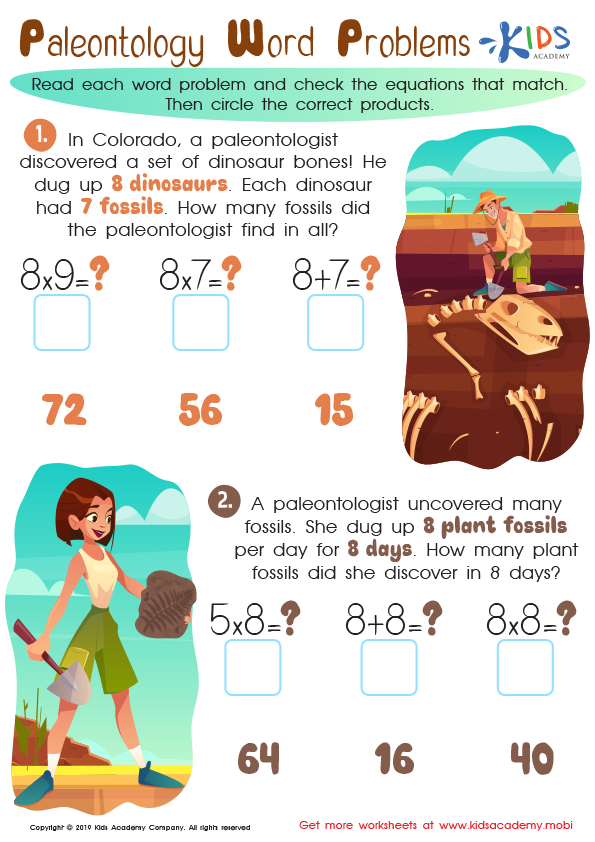
Archeology Word Problems Worksheet
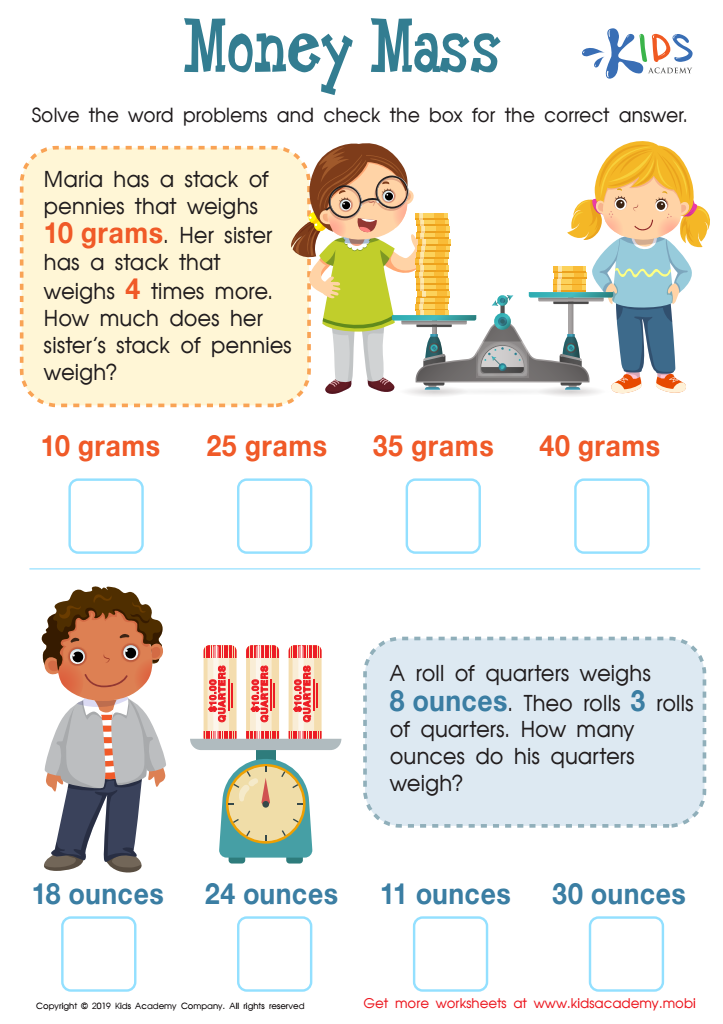
Money Mass Worksheet








The Value of Educational Printables: Word Problem Worksheets for 3-4-Year-Olds
In the early stages of childhood development, every experience and interaction serves as a building block for future learning. For children aged 3 to 4 years, educational activities need to be engaging and appropriate to their developmental stage. This is where educational printables, particularly worksheets focused on word problems, come into play as exceptionally valuable tools.
Word problems are not just about numbers. They incorporate language and scenarios that mimic real-life situations, providing a holistic educational experience that integrates math, reading, and critical thinking. For young children, these problems help develop not only cognitive skills but also foundational numeracy and literacy skills.
Cognitive Development
Educational printables designed for solving word problems help enhance a child’s cognitive development in several ways. Firstly, they introduce basic problem-solving skills. By engaging with word problems, children learn to listen, understand a scenario, and figure out what is being asked. This requires them to think logically and apply knowledge in a structured way.
Secondly, these worksheets encourage young learners to identify relationships between elements in a story problem. This aspect of cognitive development is crucial as it lays the groundwork for more complex mathematical concepts like addition and subtraction, which are introduced as they progress in their educational journey.
Language Skills
Word problems presented in educational printables for children aged 3 to 4 are written in simple language to help build their vocabulary and reading comprehension skills. As children read through the problems (often with the help of a parent or teacher), they learn new words and how to use them in context. This not only improves their language skills but also enhances their ability to follow instructions and understand narrative structures.
Numeracy Skills
Introducing basic mathematics through word problems helps children make sense of numbers in practical terms. Educational printables that include word problems require children to count, measure, and compare, which are essential skills in early math learning. By using familiar and relatable contexts, these worksheets make abstract concepts more concrete and understandable for young minds.
Confidence and Independence
Completing a worksheet gives a child a sense of accomplishment, which is vital for building self-confidence and motivation in learning. As they work through different problems, they learn to trust their judgment and abilities, fostering a sense of independence. Educational printables provide a structured yet flexible learning tool where children can pace themselves and explore solutions on their own or with minimal guidance.
Parental Involvement
Word problem worksheets also provide an excellent opportunity for parents to get involved in their child's early education. Educational printables can be used at home, allowing parents to observe and understand their child's learning style and areas of strength and challenge. This involvement is crucial as it enables parents to provide support tailored to their child's needs and makes learning a shared activity, strengthening the parent-child bond.
Ease of Access and Use
One of the significant advantages of educational printables is their ease of access and use. These resources are often available online and can be downloaded and printed from home or accessed in educational centers and libraries. This flexibility allows parents and educators to incorporate them into learning schedules conveniently, ensuring that children can practice consistently and build their skills over time.
Adaptability
Educational printables, including word problem worksheets, are highly adaptable. They can be modified to suit the individual learning pace and preference of each child. For children who might find certain word problems challenging, the difficulty level can be adjusted, or the problem can be simplified. Conversely, for those who need more stimulation, additional elements can be included to make the problems more complex. This adaptability makes educational printables a versatile tool in early childhood education.
Fun Factor
Lastly, it's important to make learning enjoyable for children, especially at such a young age. Many educational printables are designed with fun graphics and themes that attract young learners. When children enjoy what they are doing, they are more likely to stay engaged and retain the information they learn. Worksheets with colorful images, interesting storylines, and interactive elements can turn a routine learning activity into a delightful experience, making learning fun.
In conclusion, educational printables focusing on word problems for children aged 3 to 4 years are more than just sheets of paper with exercises. They are a comprehensive educational tool that supports cognitive development, language skills, and numeracy skills. These worksheets foster confidence, independence, and parental involvement, making them invaluable in the formative years of a child's educational journey. With their adaptability and engaging formats, they ensure that learning foundational skills is not only effective but also enjoyable.








