Upper & Lowercase Letters Worksheets for Ages 3-6 - Page 3
50 filtered results
-
From - To
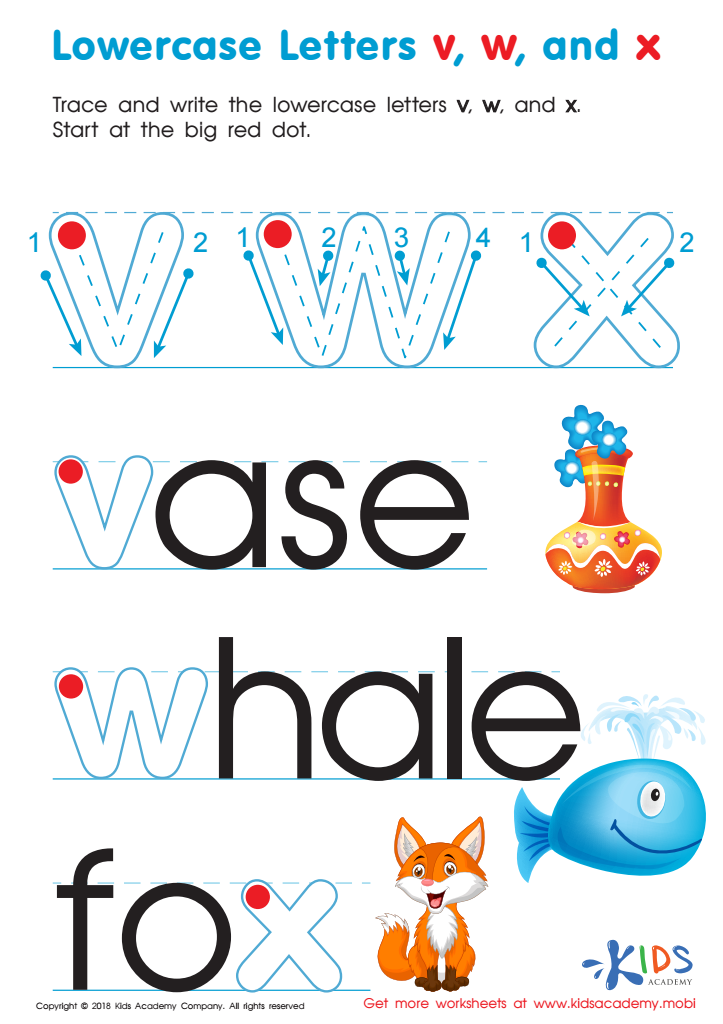
Lowercase Letters v w x Worksheet
 Assign to My Students

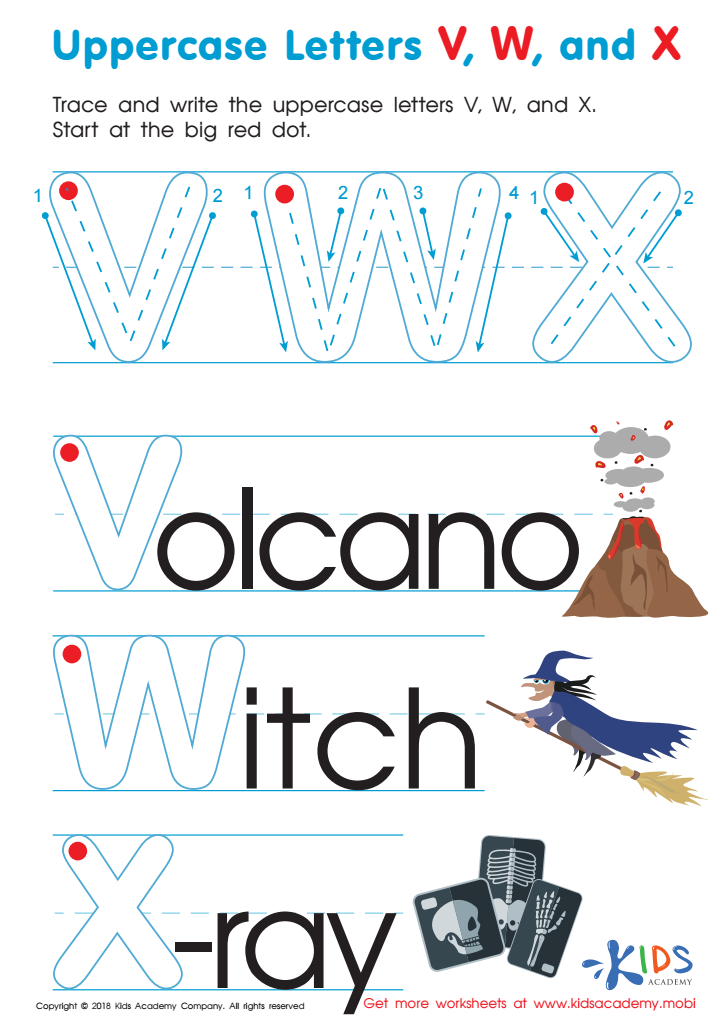
Uppercase Letters V, W, and X Worksheet






Understanding uppercase and lowercase letters is crucial for young children aged 3-6, as it lays the foundation for their literacy development. At this age, children are forming essential pre-reading and writing skills. Recognizing these letters helps them identify words and start to develop phonemic awareness, which is vital for reading comprehension later on. For instance, learning that 'A' and 'a' represent the same sound helps children grasp that letters can look different yet serve the same purpose in communication.
Additionally, differentiating between upper and lowercase letters aids in understanding sentence structure and rules of grammar. For example, children learn that sentences begin with a capital letter and that names are always capitalized—critical elements for effective writing.
Moreover, engaging children in activities that teach these concepts fosters their cognitive development and sparks an interest in reading. Through playful approaches like alphabet games or stories highlighting characters with varied names, parents and teachers can instill a love for language in children.
Ultimately, mastering uppercase and lowercase letters empowers young learners, boosting their confidence as they transition from scribbles to meaningful writing, paving the way for successful academic journeys ahead.







