Numbers up to 100 Worksheets for Ages 3-6 - Page 3
50 filtered results
-
From - To
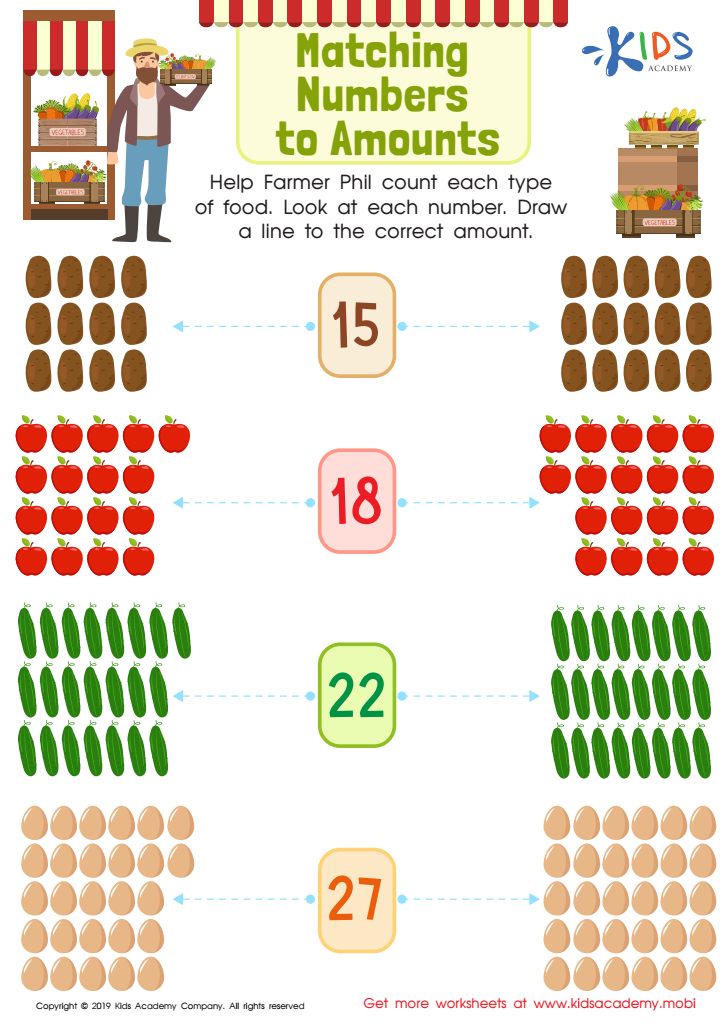
Matching Numbers to Amounts Worksheet
 Assign to My Students

Counting on the City Skyline: Dot-to-Dot Worksheet






%20(1).jpg)
Understanding numbers up to 100 is crucial for young children, as it lays the groundwork for more complex mathematical concepts later on. At ages 3-6, introducing numbers up to 100 helps develop numerical literacy and builds a strong foundation in mathematics. This skill contributes to better problem-solving abilities, logical thinking, and overall cognitive development. Number recognition and counting enhance memory, concentration, and organization of thought.
Parents and teachers should focus on numbers up to 100 because it introduces children to patterns, sequences, and relationships among numbers. This early exposure can also foster a positive attitude towards math by creating a sense of achievement and enjoyment in learning. Mastery of these basic numbers helps children understand addition, subtraction, and place value, essential for future math success.
Moreover, integrating numbers in everyday activities, like counting steps, toys, or fruits, makes learning relatable and enjoyable. Recognizing numbers in familiar contexts supports literacy and language development too, as children associate words with numerical quantities. Overall, caring about numbers up to 100 equips young children with necessary skills for academic success and practical life situations, ensuring they are confident and prepared as they progress in their education.