Middle Sounds Worksheets for Ages 3-7
4 filtered results
-
From - To
Discover our engaging middle sounds worksheets designed specifically for children ages 3-7! These worksheets help young learners master phonemic awareness by focusing on identifying the middle sounds in words. With colorful illustrations and age-appropriate activities, kids will enjoy practicing their listening and pronunciation skills. Each worksheet is crafted to reinforce vocabulary, boost reading readiness, and support early literacy development in a fun, interactive way. Perfect for classroom use, homeschooling, or additional practice at home, these resources make learning enjoyable and effective. Explore our collection to help your child build essential language skills and develop a love for reading!
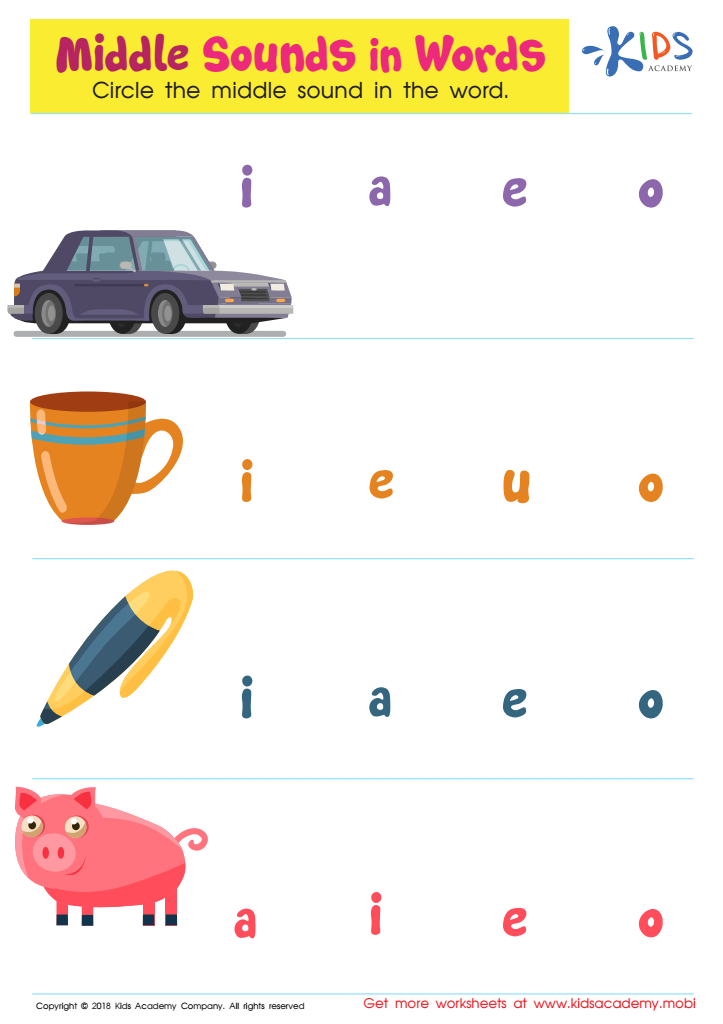
Middle Sounds in Words Worksheet
 Assign to My Students
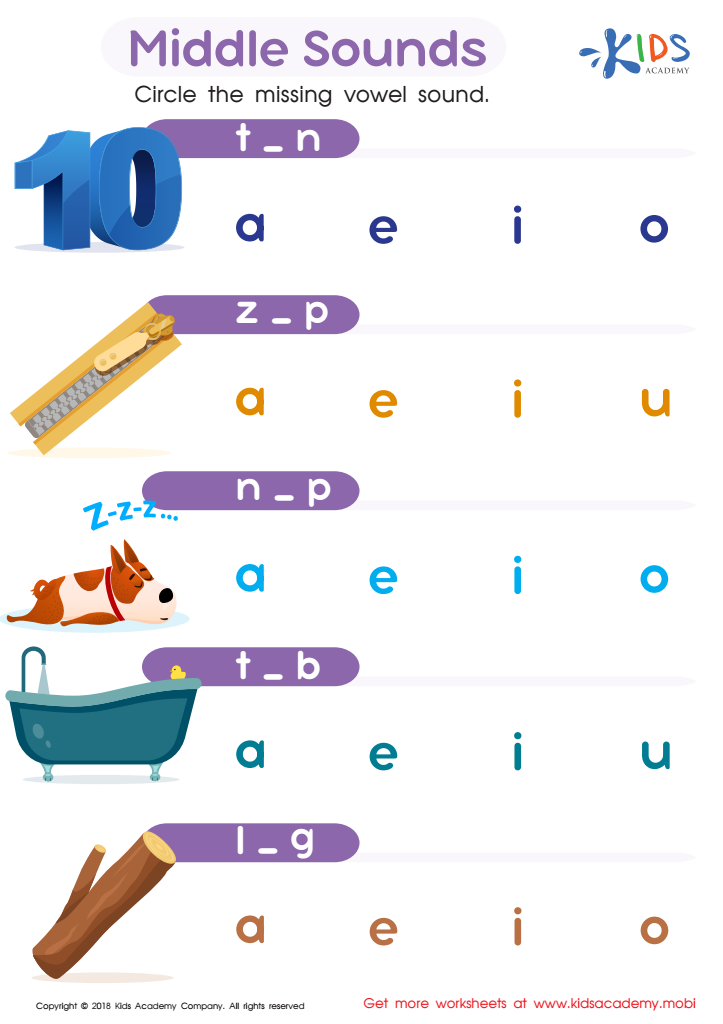
Middle Sounds Worksheet
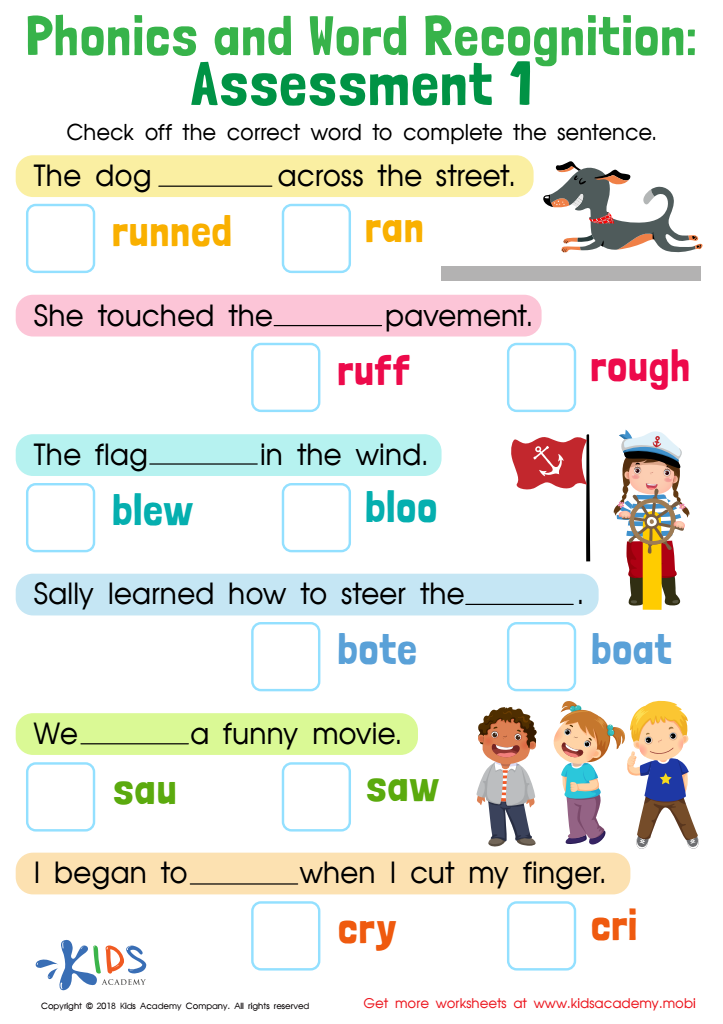
Phonics and Word Recognition: Assessment 1 Worksheet
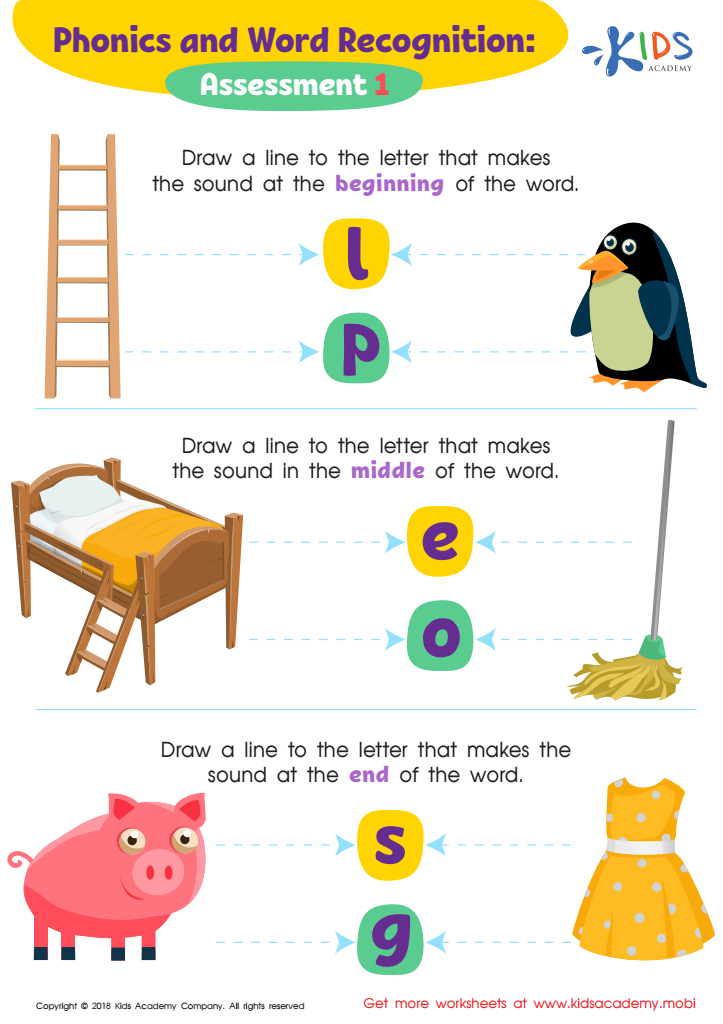
Phonics and Word Recognition: Assessment 1 ELA Worksheet





Middle sounds are critical for children ages 3-7 as they form the foundation of phonemic awareness, a key component of early literacy development. Understanding middle sounds helps children identify and manipulate individual sounds within words, which is essential for reading and writing. As children learn to recognize middle sounds, they become proficient in decoding unfamiliar words, ultimately leading to improved reading comprehension.
Furthermore, focusing on middle sounds aids in vocabulary expansion and phonological skills. Engaging with middle sounds through playful activities, such as rhyming games or phonics songs, makes learning enjoyable. This not only fosters a love for language but also strengthens communication skills.
For teachers and parents, emphasizing middle sounds encourages collaboration in early literacy development. By integrating these skills into daily routines—through storytelling, singing, and playful interactions—adults can support children’s language growth and critical thinking. Ultimately, developing a solid grasp of middle sounds equips young learners with the tools they need for academic success, lifelong learning, and effective communication. In summary, prioritizing middle sounds is not just about reading; it’s about nurturing confident, capable learners equipped for their educational journey.