Vowels and Consonants Worksheets for Ages 3-7 - Page 2
28 filtered results
-
From - To
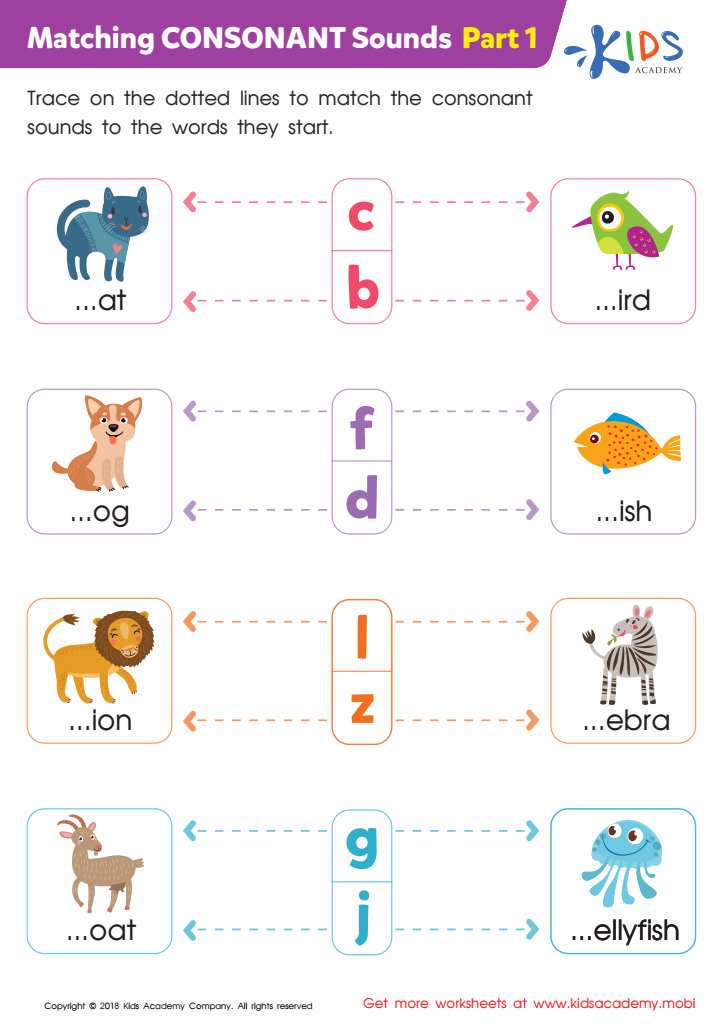
Matching Consonant Sounds: Part 1 Worksheet
 Assign to My Students
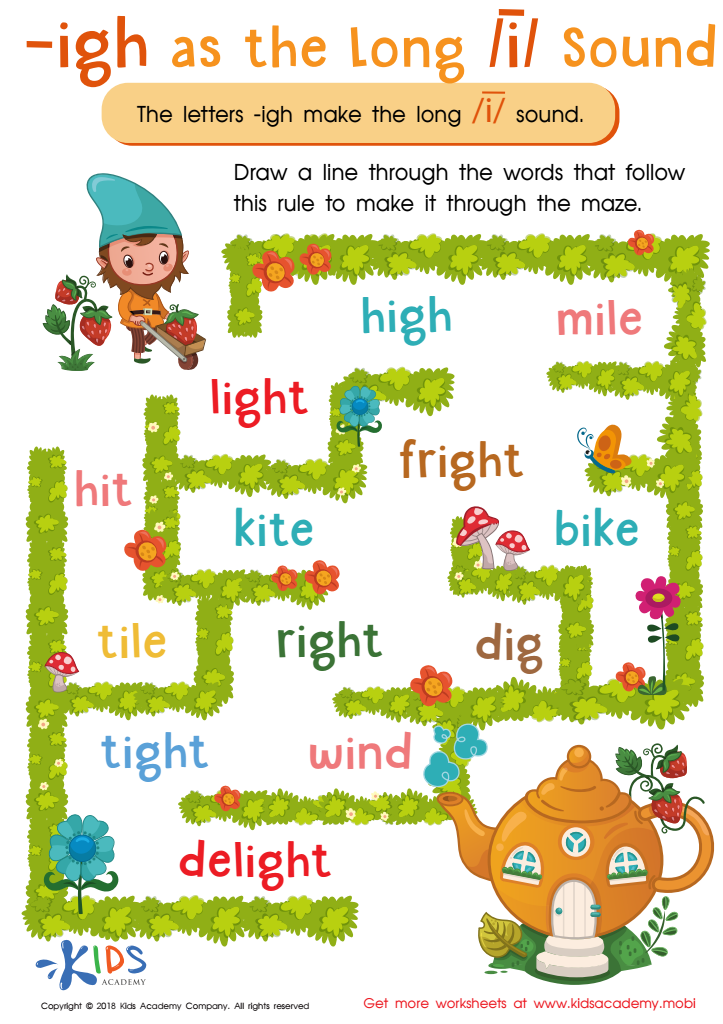
Reading: IGH as Long I Worksheet
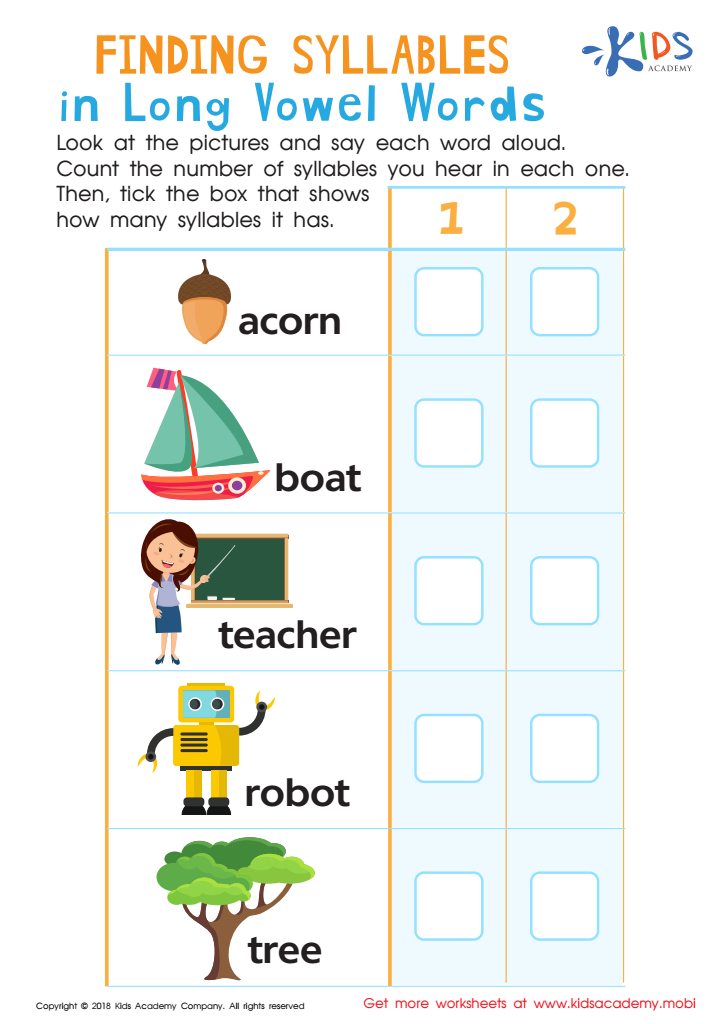
Finding Syllables in Long Vowel Words Worksheet
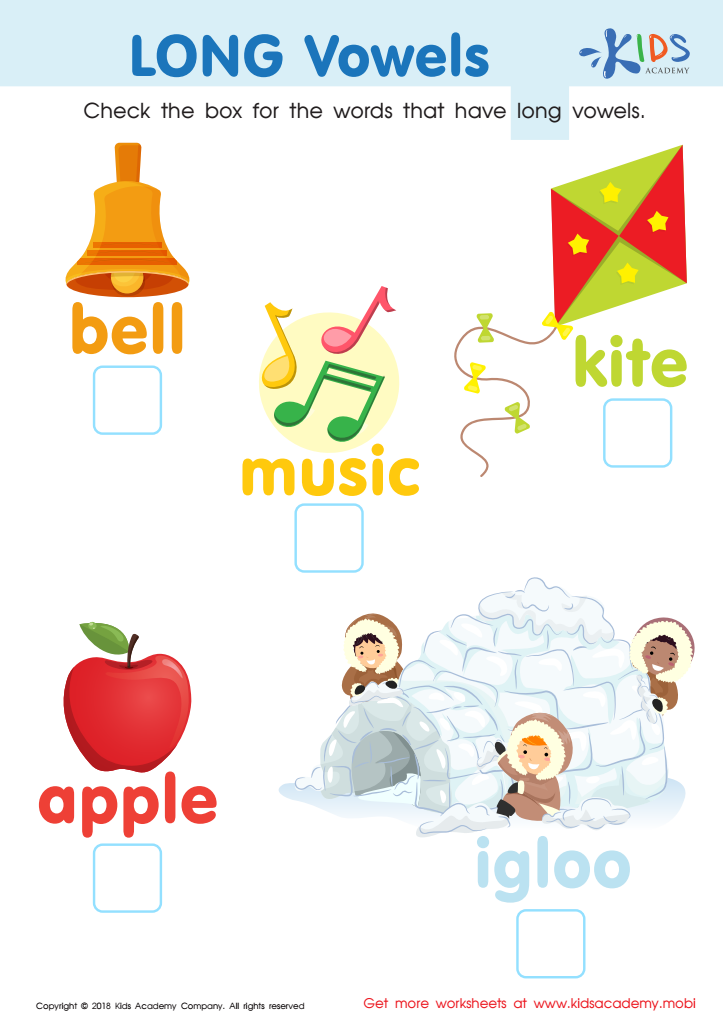
long vowels Worksheet



Understanding vowels and consonants is crucial for children aged 3-7 as it lays the foundation for reading and writing skills. Vowels (A, E, I, O, U) and consonants encompass the basic building blocks of language. At this age, children begin to develop phonemic awareness, which is the ability to recognize and manipulate sounds in words.
Familiarity with vowels and consonants helps children decode words, making them essential for early literacy. By learning how vowels create different sounds, children can start to sound out words and develop reading fluency. Recognizing consonants aids in spelling and constructing sentences, fostering a solid grasp of language structure.
Moreover, engaging in activities that emphasize vowels and consonants—such as rhymes, songs, and games—not only makes learning fun but also enhances cognitive skills, listening abilities, and critical thinking. It encourages phonological awareness, which is tied to later academic success.
Parents and teachers play a vital role in nurturing this knowledge, as it helps instill confidence in young learners. When children master these concepts, they are better prepared for more complex reading and writing tasks, paving the way for a positive literacy experience and a lifelong love for learning.