Long And Short Vowel Worksheets for Ages 4-8
19 filtered results
-
From - To
Our Long and Short Vowel Worksheets for children aged 4-8 make phonics fun and engaging! These expertly designed worksheets help young learners distinguish between long and short vowel sounds through interactive exercises and colorful illustrations. Ideal for preschool through early elementary grades, each printable encourages hands-on learning, reinforcing essential reading skills fundamental for language development. Boost your child's confidence in reading and writing by letting them explore vowel sounds with joyful activities and thorough practice. Perfect for both at-home learning and classroom use, these worksheets transform vowel practice into an enjoyable adventure! Instill a love for reading with Kids Academy today.
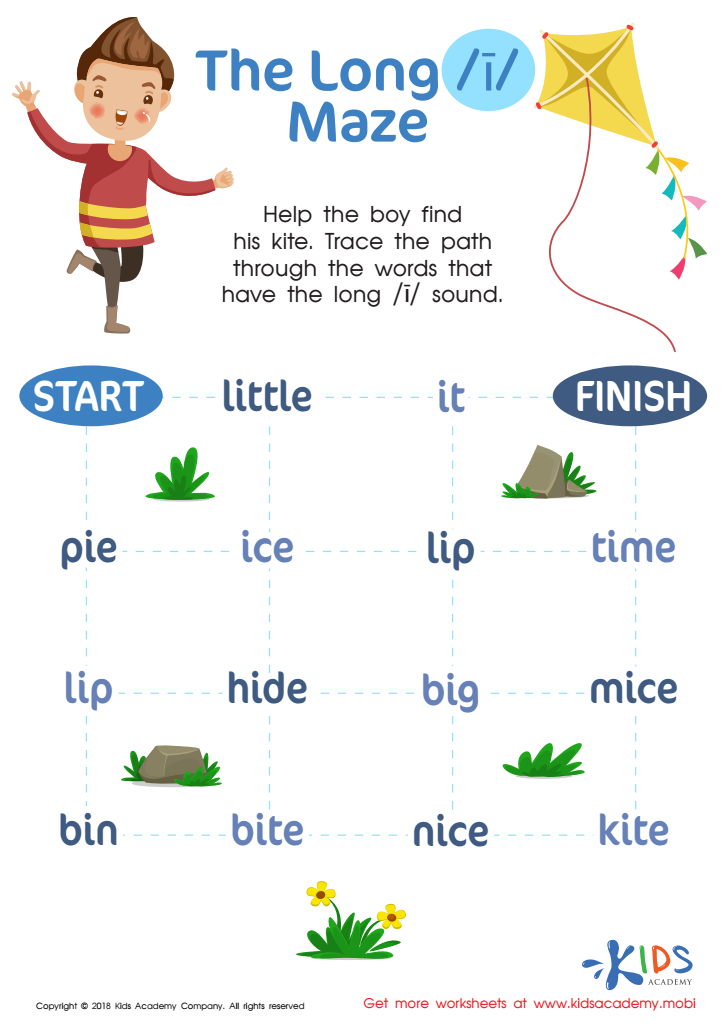
The Long I Maze Reading Worksheet
 Assign to My Students
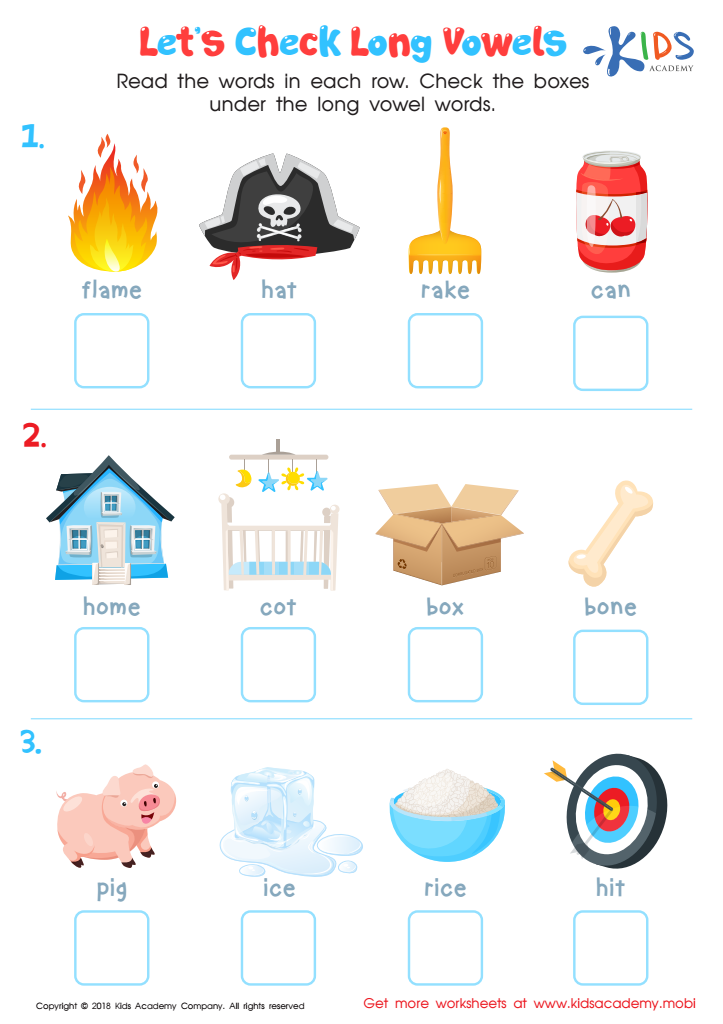
Let's Check Long Vowels: Assessment Worksheet
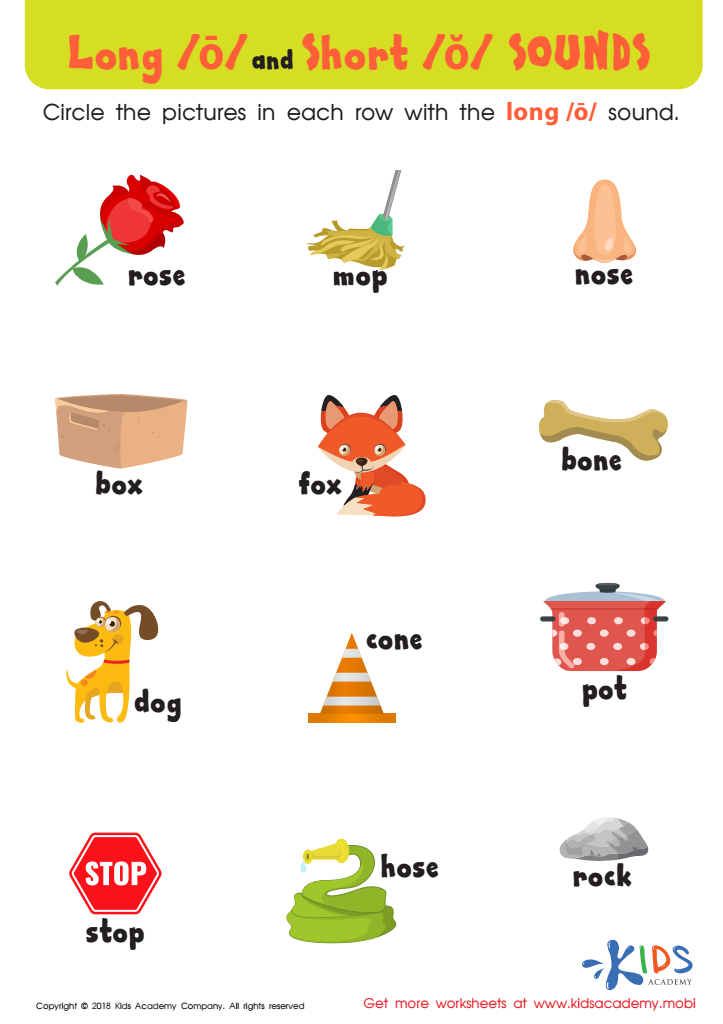
Reading: Long O and Short O Sounds Worksheet
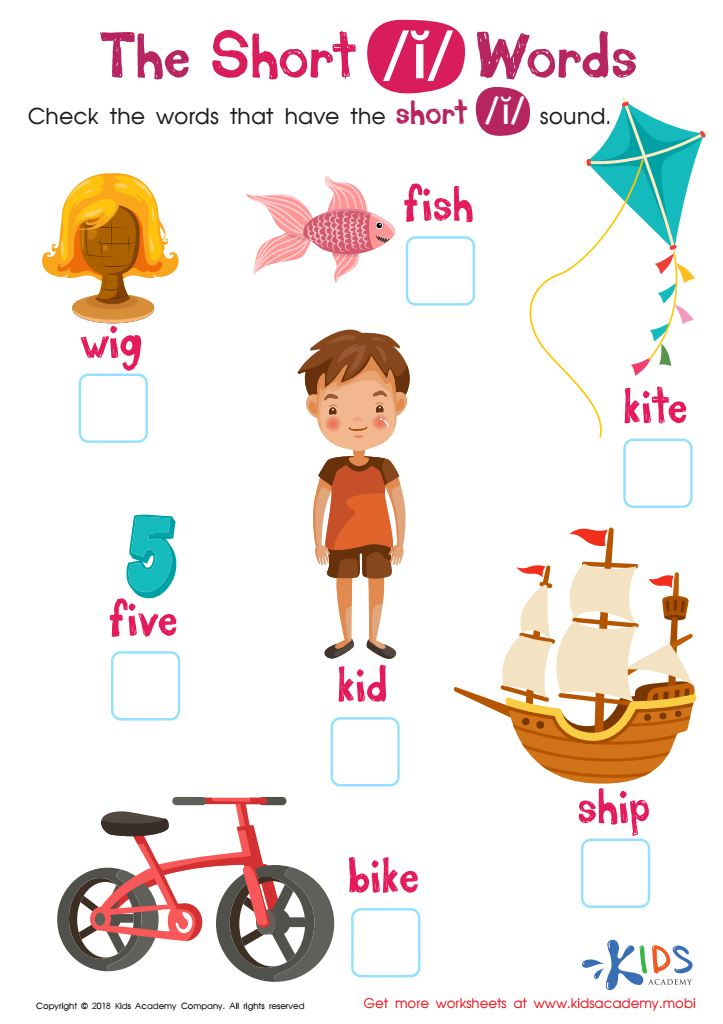
The Short I Words Reading Worksheet
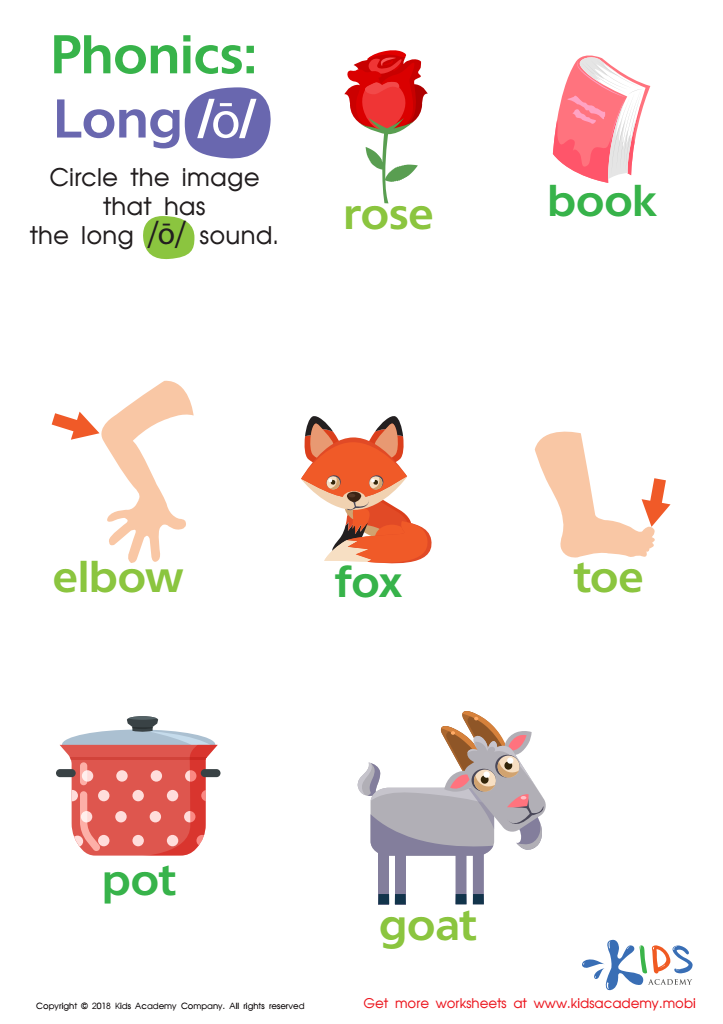
Phonics Long O Reading Worksheet
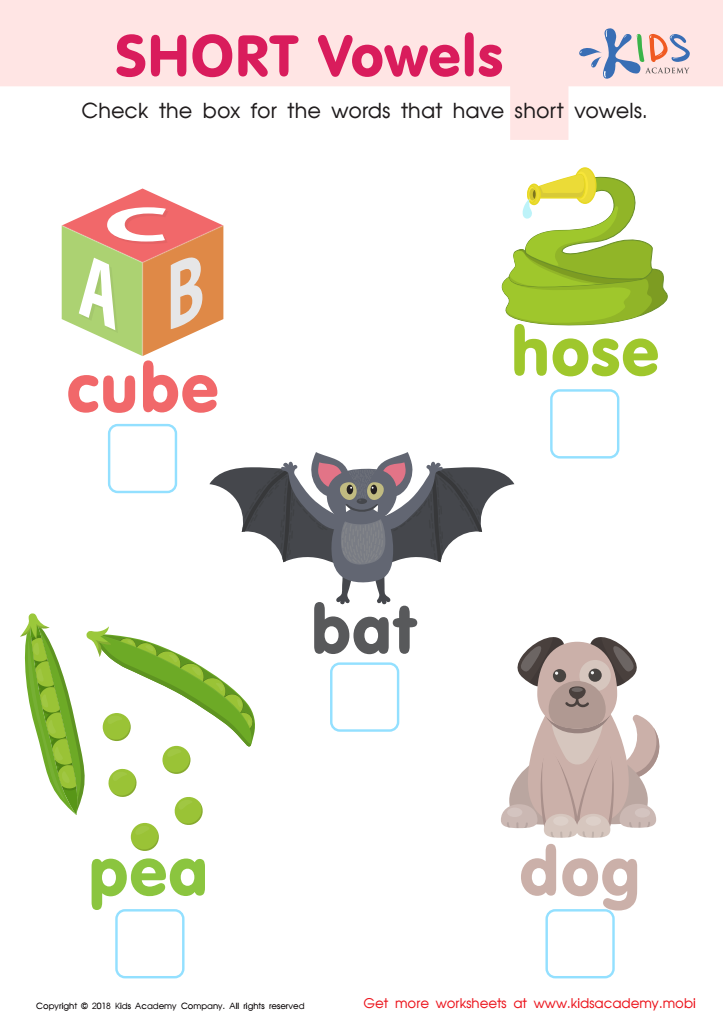
short vowels Worksheet
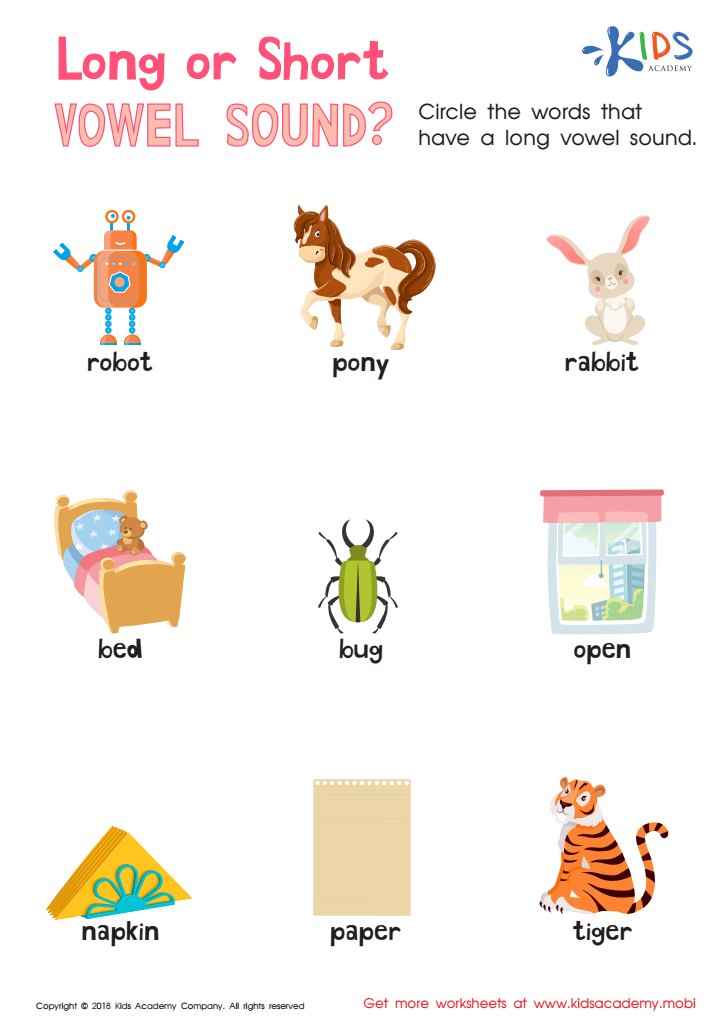
Long or Short Vowel Sound? Worksheet
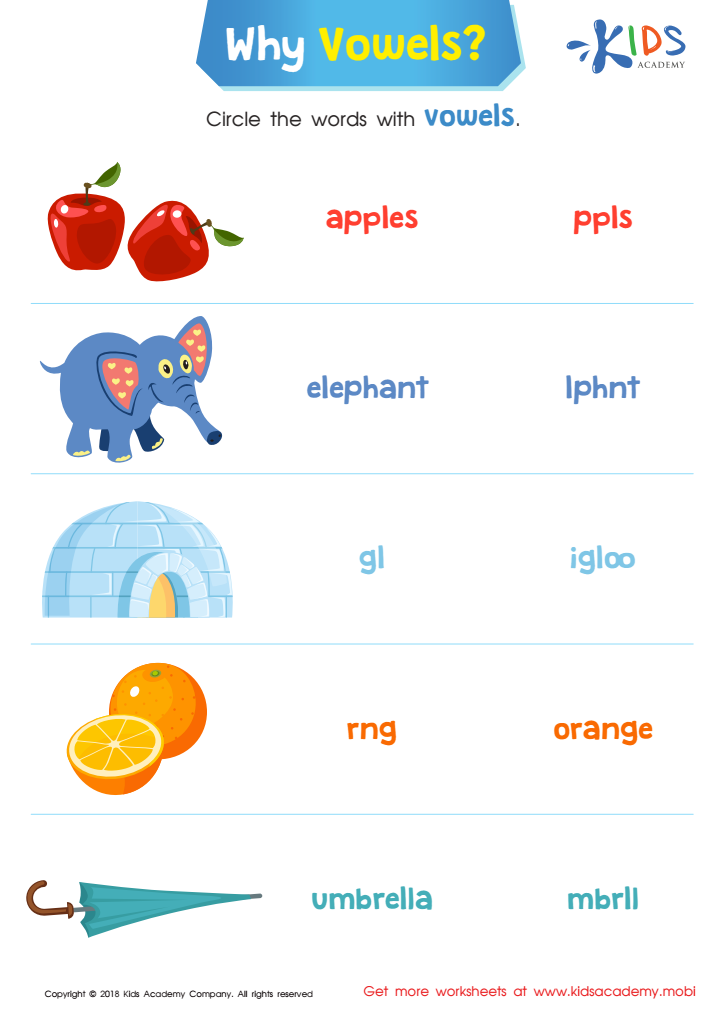
Why Vowels? Reading Worksheet
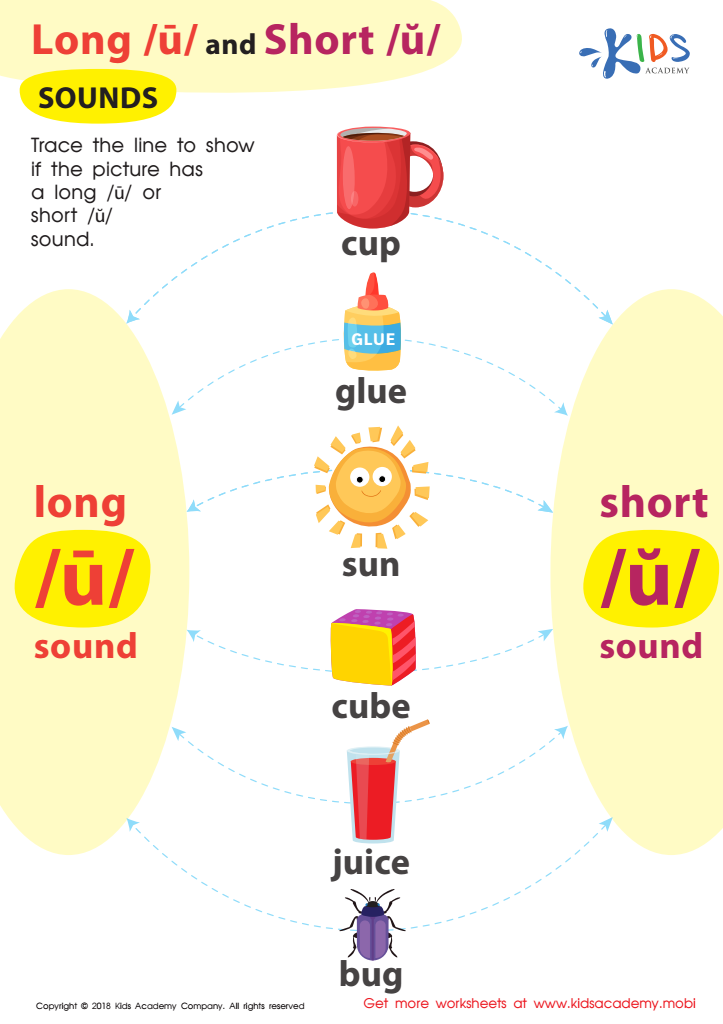
Reading: Long U and Short U Sounds Worksheet
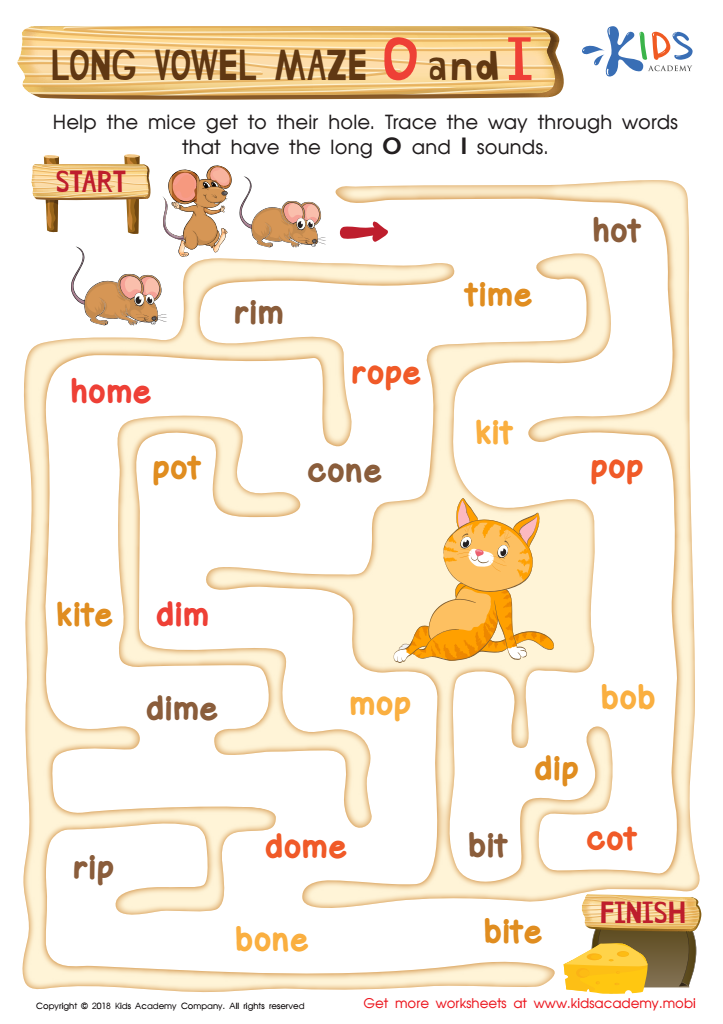
Long Vowel Maze /o/ and /i/ Worksheet
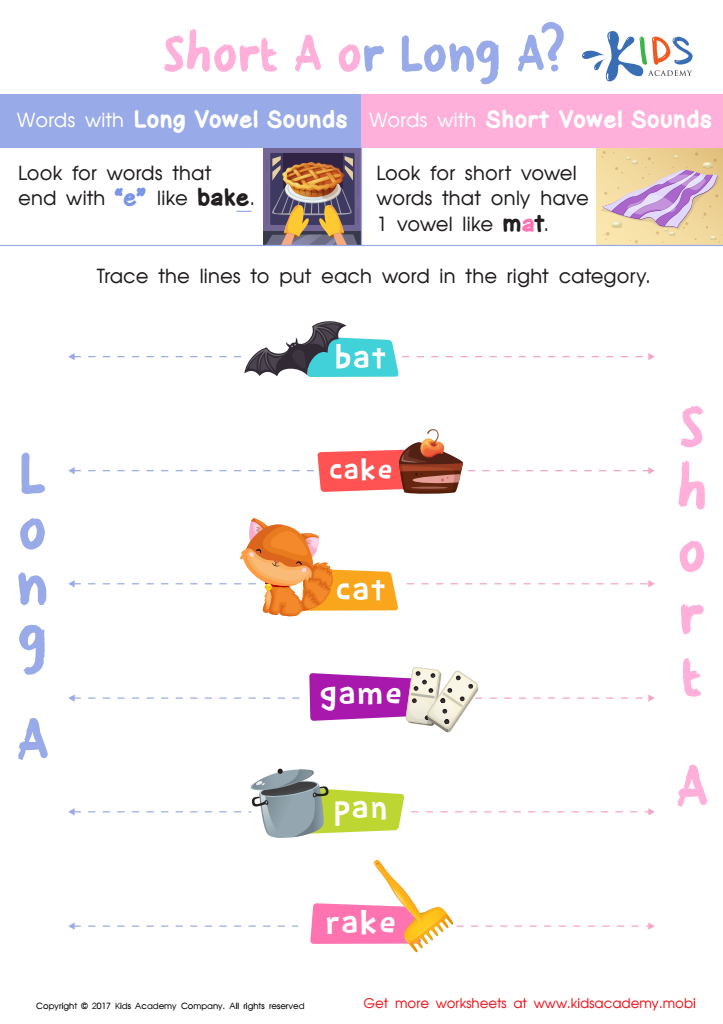
Short /a/ or Long /a/? Worksheet
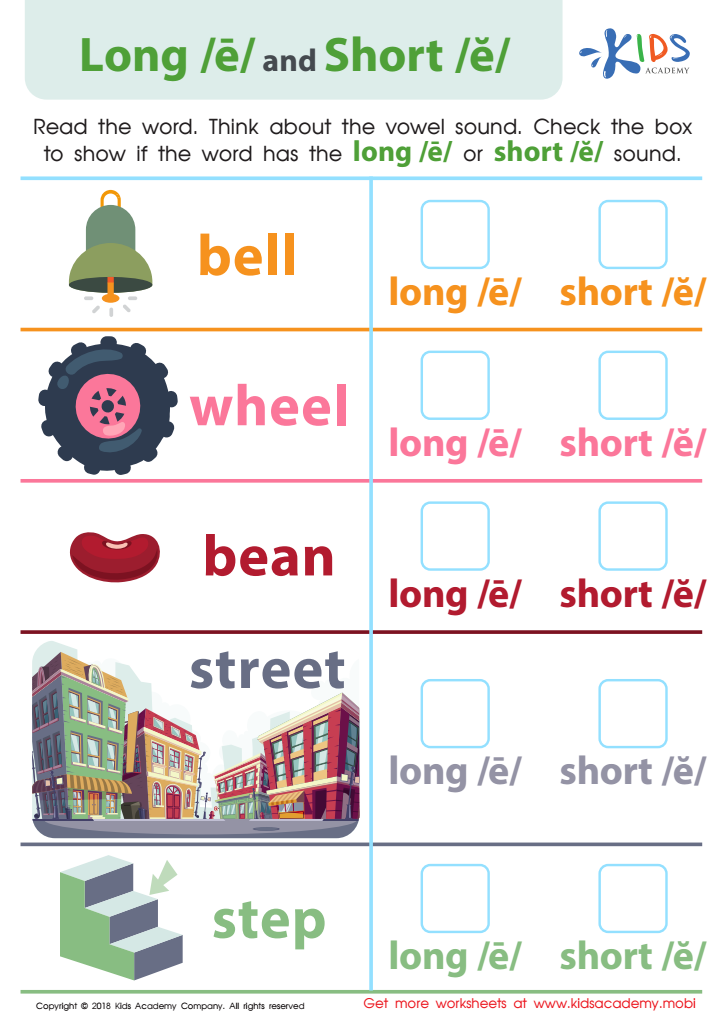
Reading: Long E and Short E Worksheet
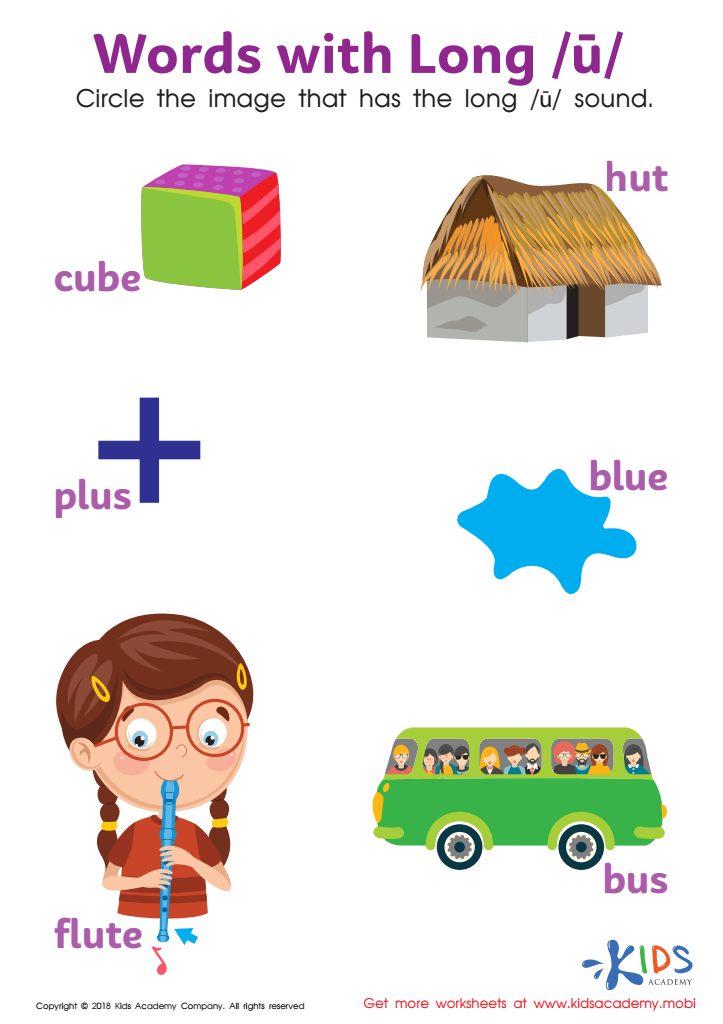
Words with Long U Reading Worksheet
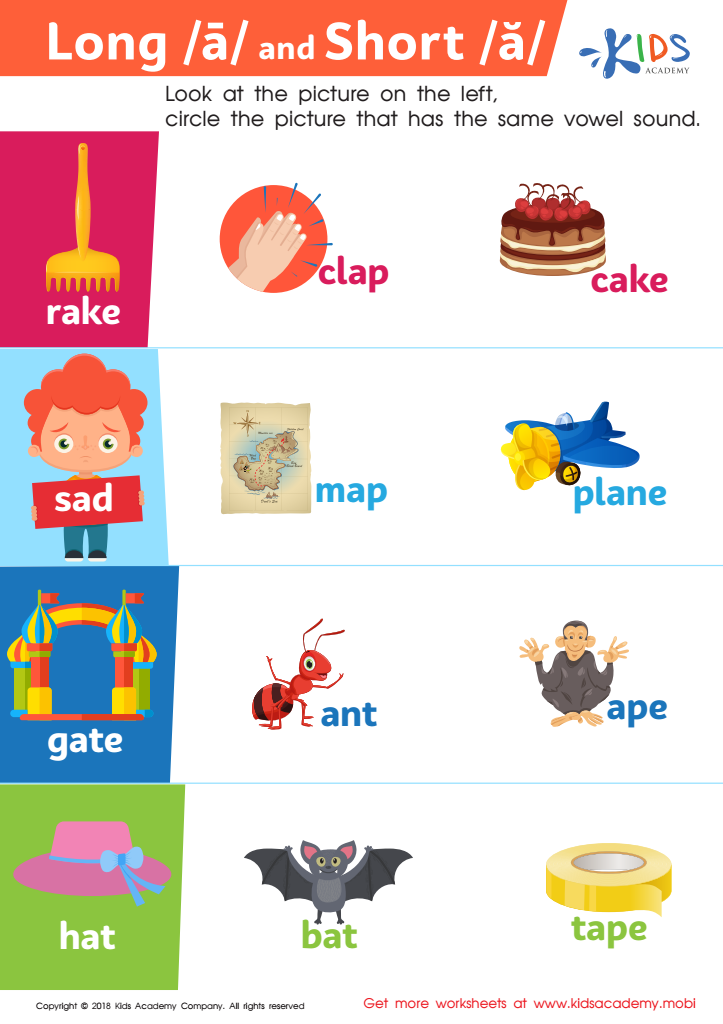
Reading: Long a and Short a Worksheet
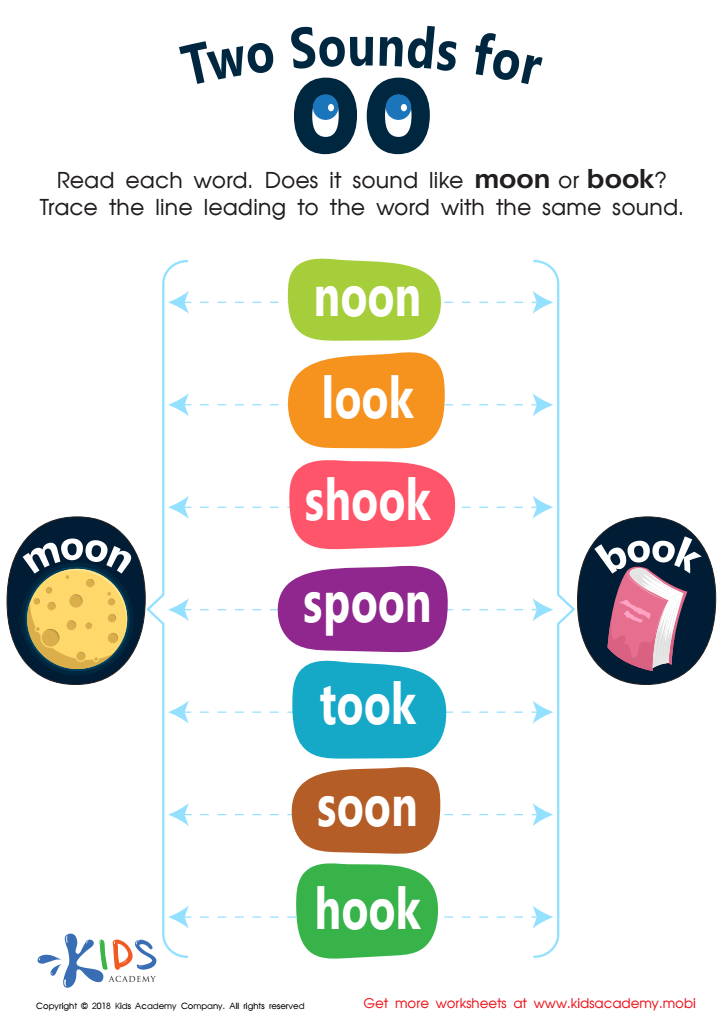
Two Sounds for OO Worksheet
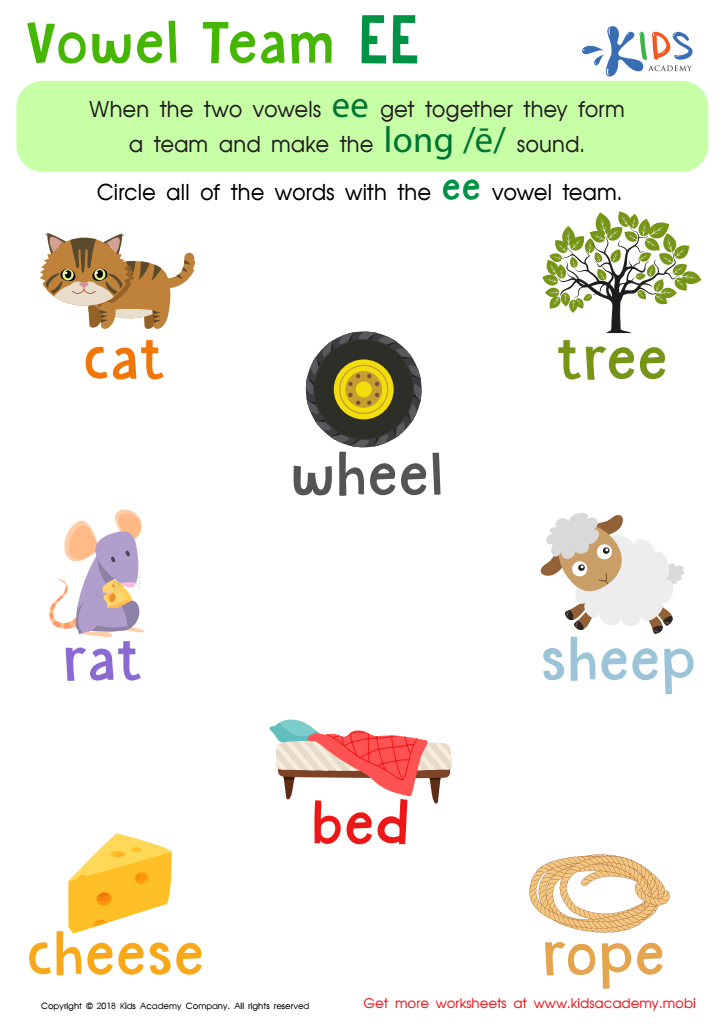
Reading: Vowel Team EE Worksheet
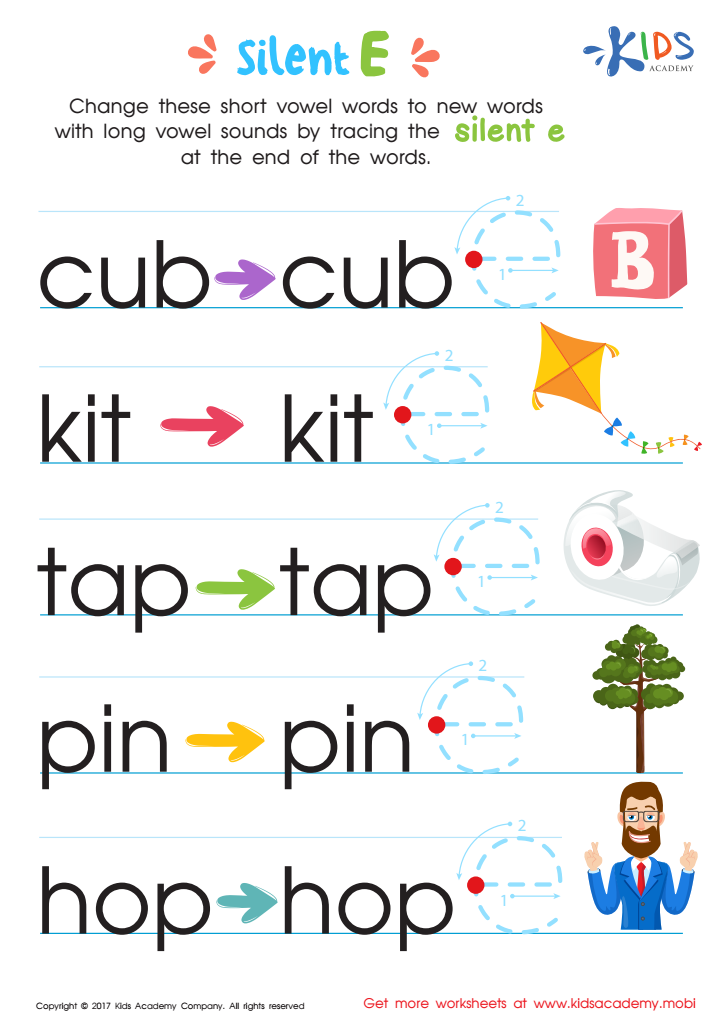
Silent E Words Worksheet
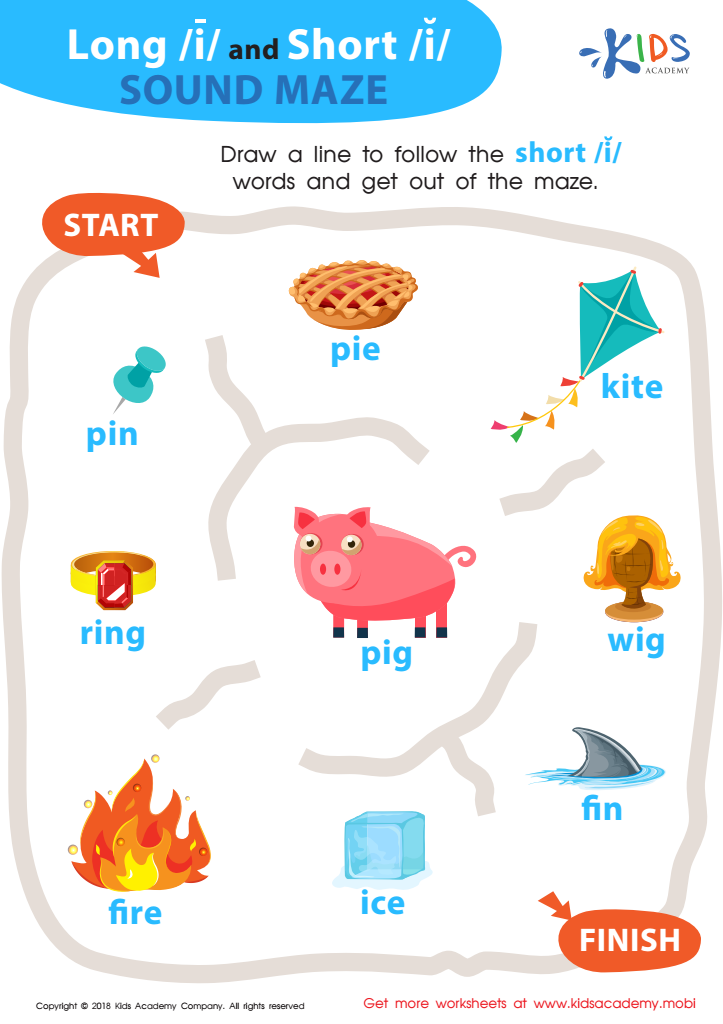
Reading: Long I and Short I Sound Maze Worksheet
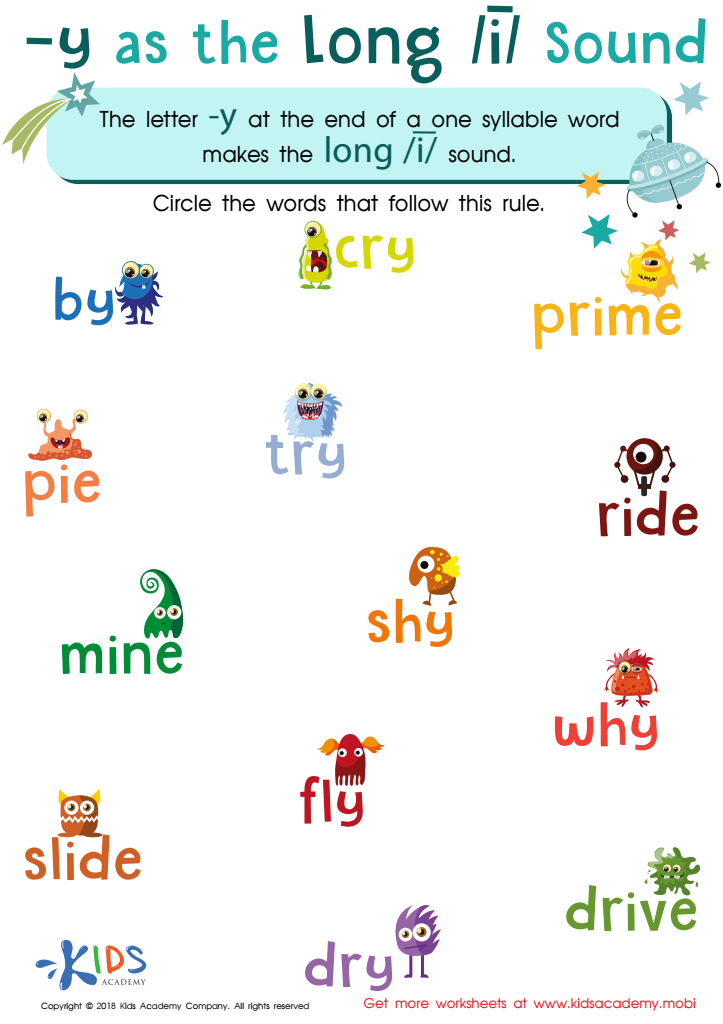
Reading: Y as Long I Worksheet




Understanding long and short vowel sounds is crucial for ages 4-8 because it lays the foundation for reading and spelling proficiency. At this developmental stage, children are typically in the pre-reading or early reading phase, where phonemic awareness—the ability to hear, recognize, and manipulate the sounds in words—plays a pivotal role. Long and short vowels differ in pronunciation and appearance in words, impacting comprehension and communication skills.
When children differentiate between long (e.g., the "a" in "cake") and short (e.g., the "a" in "cat") vowel sounds, they can decode words more accurately. This skill is essential for recognizing patterns in words, an important component of learning to read. For instance, the knowledge that a silent "e" often makes the preceding vowel long helps children decode a wide range of words, enhancing their reading fluency.
Furthermore, spelling relies heavily on understanding these vowel sounds. Mistaking a long vowel for a short one (or vice versa) can lead to incorrectly spelled words. Mastering long and short vowels provides students with the phonics rules necessary for both reading and writing, ensuring they're better equipped for more advanced literacy skills as they grow. Teachers and parents can support this learning through various engaging educational activities like phonics games, reading practice, and visual aids, making the learning process enjoyable and effective.