Nursery Rhymes Worksheets for Ages 5-7
5 filtered results
-
From - To
Discover our engaging Nursery Rhymes Worksheets designed specifically for children ages 5-7! These fun and educational resources encourage early literacy skills while introducing kids to the delightful world of classic nursery rhymes. With vibrant illustrations and interactive activities, your little ones will enjoy learning word recognition, rhyming patterns, and vocabulary development. Ideal for teachers and parents, our printable worksheets offer a creative way to explore language and rhythm. Make learning enjoyable with charming rhymes that spark imagination and curiosity. Dive into the magical world of nursery rhymes and watch your child flourish in their reading journey! Access these worksheets today!
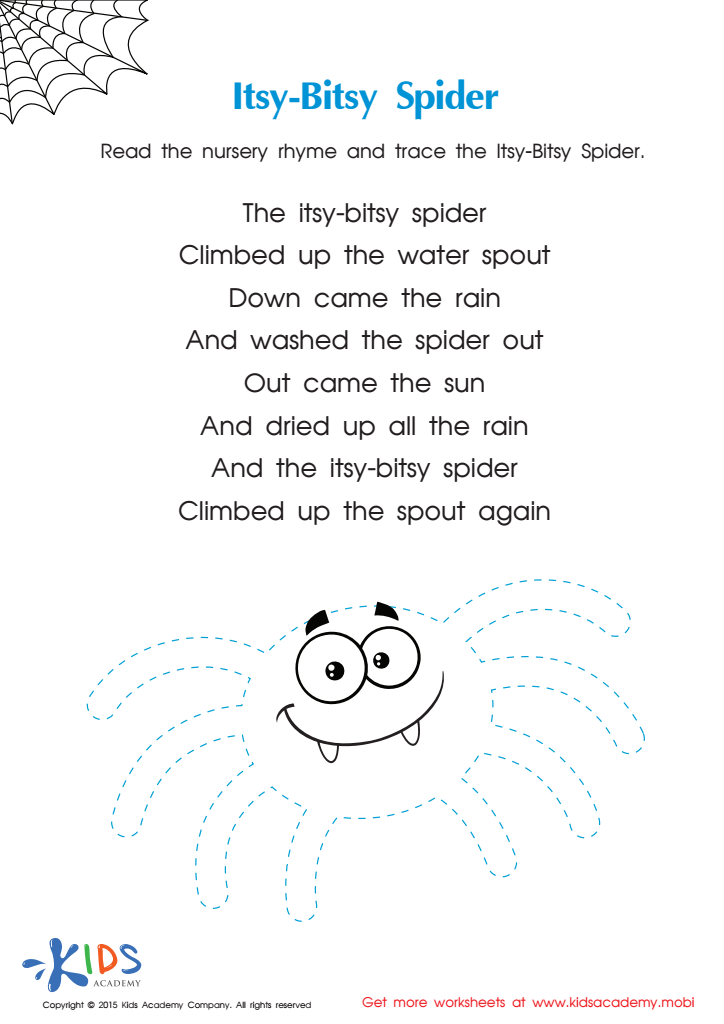
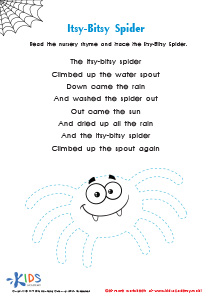
Itsy Bitsy Spider Nursery Rhyme PDF Worksheet
 Assign to My Students
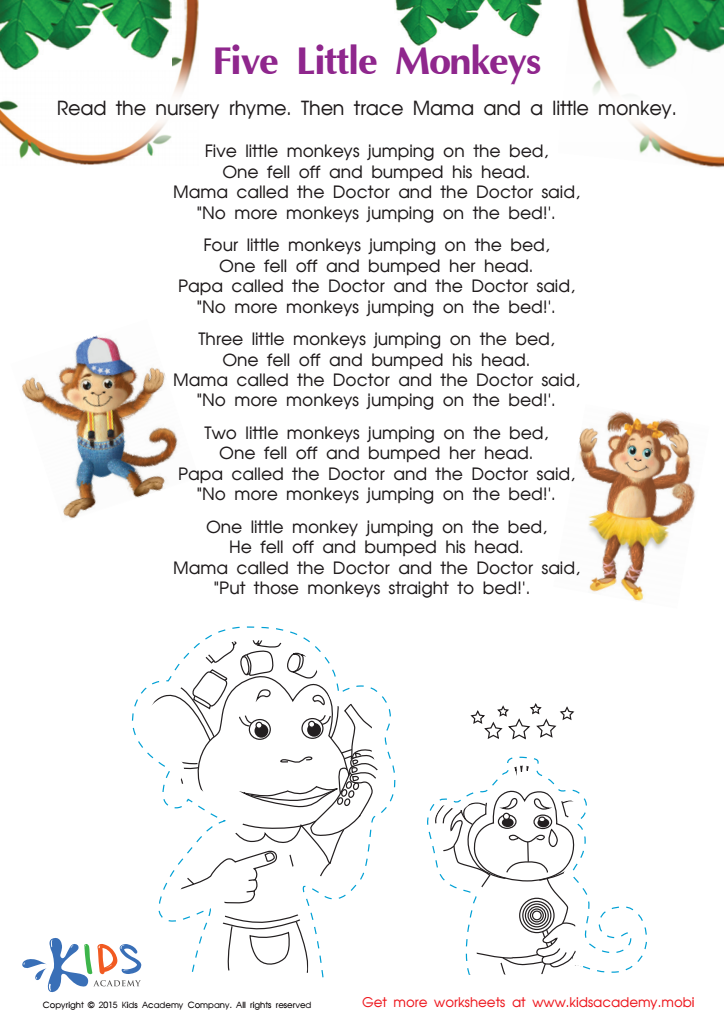
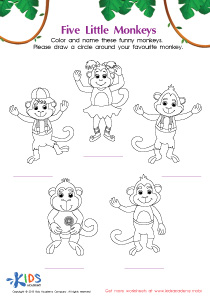
The Five Little Monkeys Nursery Rhyme Worksheet
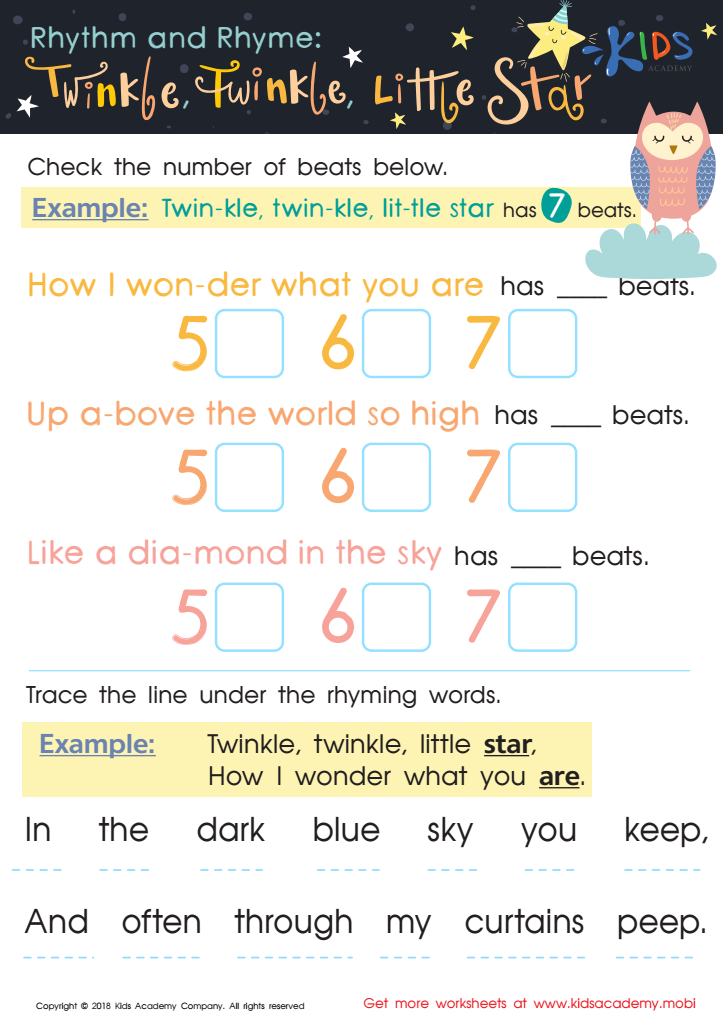
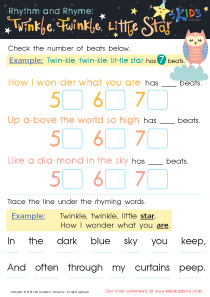
Rhythm and Rhyme: Twinkle, Twinkle, Little Star Worksheet
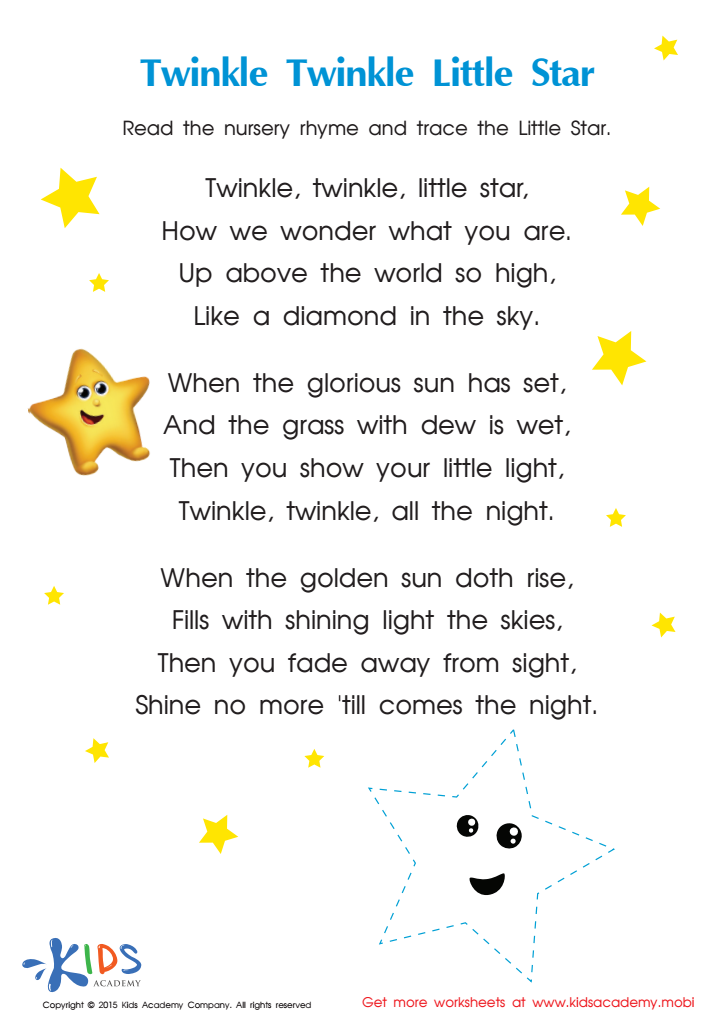
Nursery Rhymes: Twinkle Little Star Worksheet
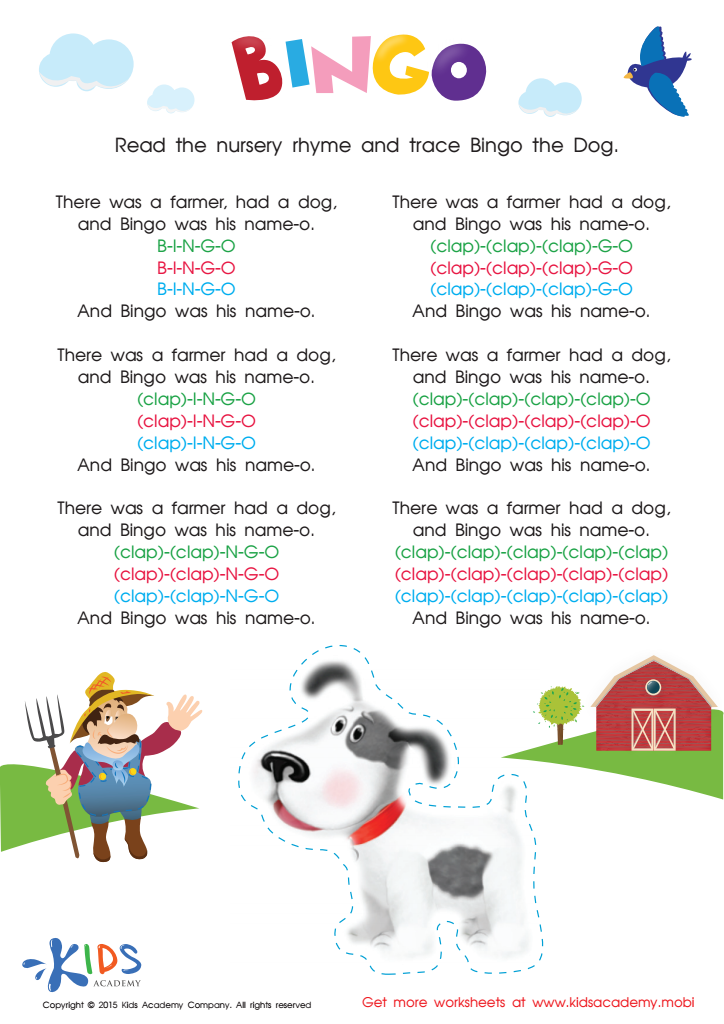
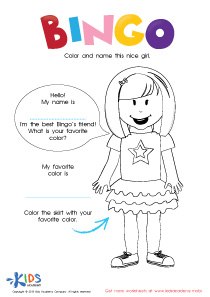
Nursery Rhymes: The Bingo Song Worksheet








Nursery rhymes are essential tools in the developmental journey of children aged 5-7, offering far more than mere entertainment. Firstly, rhymes enhance language development; their rhythmic and repetitive nature helps children learn vocabulary, pronunciation, and sentence structure in a fun way. Each verse introduces phonemic awareness, laying the foundation for reading skills.
Secondly, nursery rhymes support memory and cognitive development. The familiar patterns encourage children to predict what comes next, strengthening memory and critical thinking skills. As kids recite and memorize them, they develop not only language skills but also confidence in their verbal abilities.
Moreover, nursery rhymes often contain moral lessons or cultural insights, helping children grasp complex social concepts such as empathy and sharing. They foster creativity and imagination, prompting children to visualize stories and characters, further enriching their cognitive landscape.
Finally, incorporating nursery rhymes into daily activities nurtures a bond between parents/teachers and children. Shared interactions over these rhymes can promote emotional development and improve social skills as they engage in group singing or discussions. In essence, nursery rhymes are an invaluable resource that supports holistic child development; they contribute significantly to a child’s linguistic, cognitive, emotional, and social growth.