Filters

35 filtered results

Clear all filters
Favorites
With answer key
Interactive

35 filtered results

Difficulty Level

Grade


Subject

    Check out this FREE Trial Lesson on Elementary Phonics for age 5-8!

    Correctly use Frequently used Homophones and Antonyms

    Favorites
    With answer key
    Interactive
    • 5-8
    • With answer key
    • Elementary Phonics
    Let's Make New Words Worksheet
    Let's Make New Words Worksheet

    Let's Make New Words Worksheet

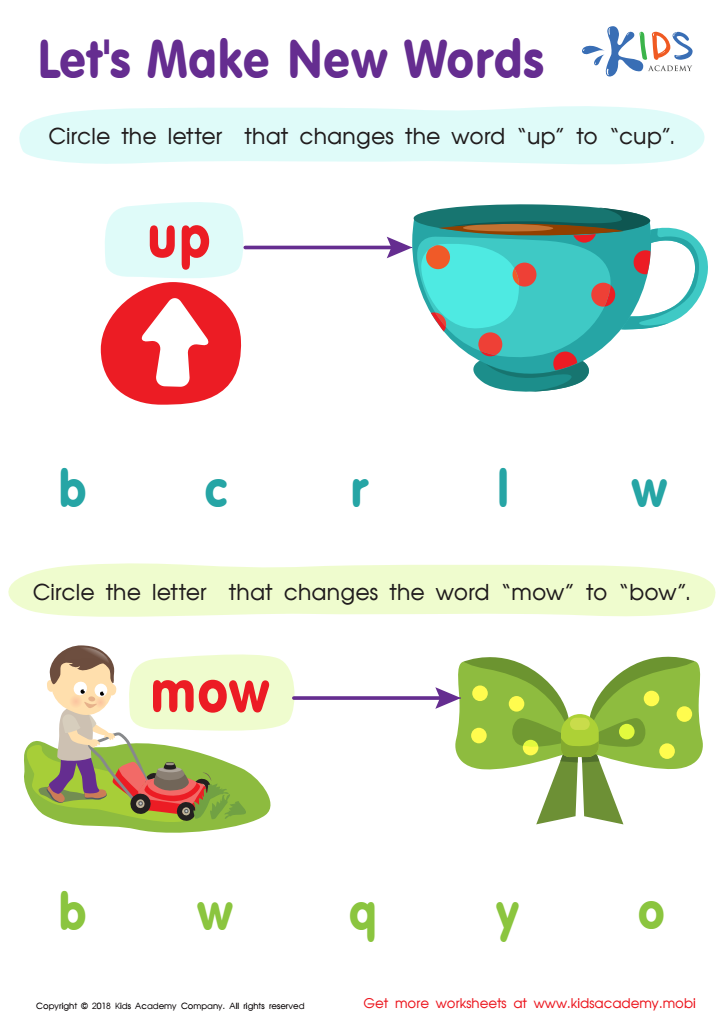
    This fun and colorful downloadable worksheet is perfect for helping young readers to build confidence and practice their skills. They'll circle the letters to magically make new words, while developing fine motor skills. It'll be so much fun, they won't even realize they're honing their reading skills!
    Let's Make New Words Worksheet
    Worksheet
    Finish the Rime Worksheet
    Finish the Rime Worksheet

    Finish the Rime Worksheet

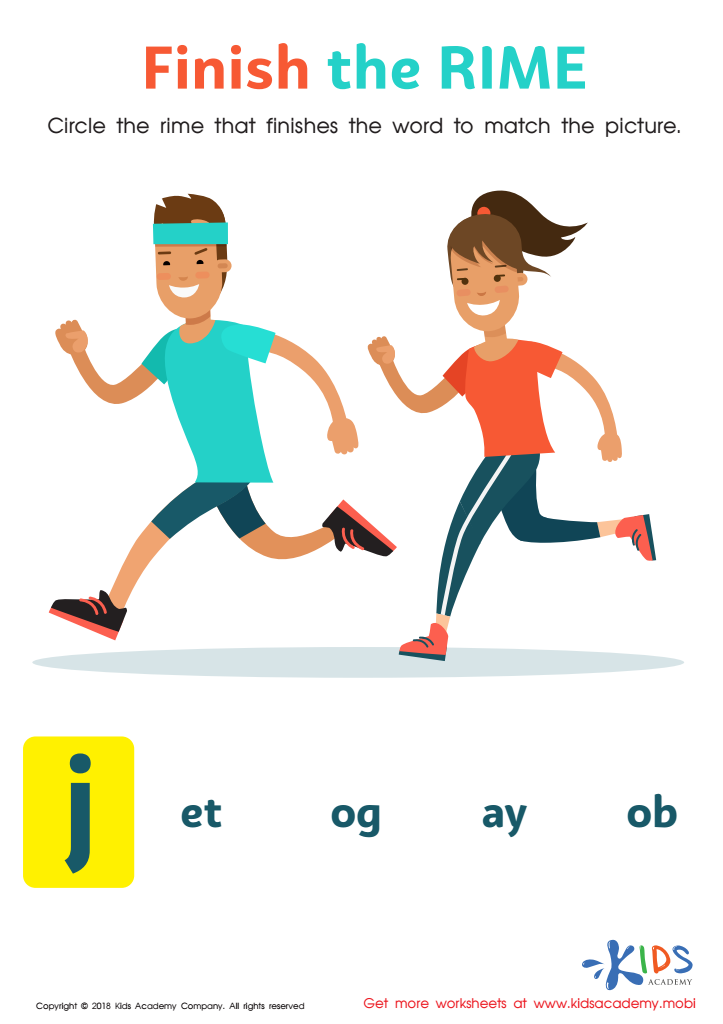
    Rimes help kids learn word families and spelling strategies. This PDF worksheet gives new readers practice with initial consonants, pictures, colors and motor skills. It's fun and cheery, and a great way to boost phonological awareness and rime identification.
    Finish the Rime Worksheet
    Worksheet
    Phonological Awareness: Assessment 5 Worksheet
    Phonological Awareness: Assessment 5 Worksheet

    Phonological Awareness: Assessment 5 Worksheet

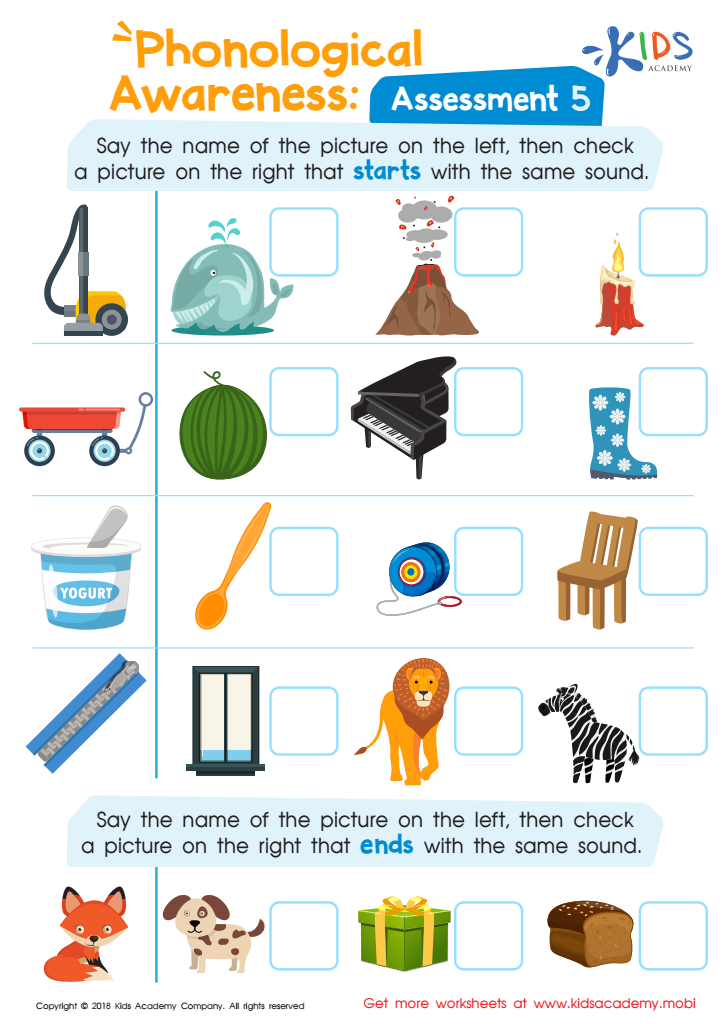
    Repetition is key to success! This worksheet tests kids' ability to match beginning and ending sounds in words. Instruct them to say each word and listen closely to the sounds they make. Focus on the starting sounds for the first four pics, then the last one to hear ending sounds and find the right match!
    Phonological Awareness: Assessment 5 Worksheet
    Worksheet
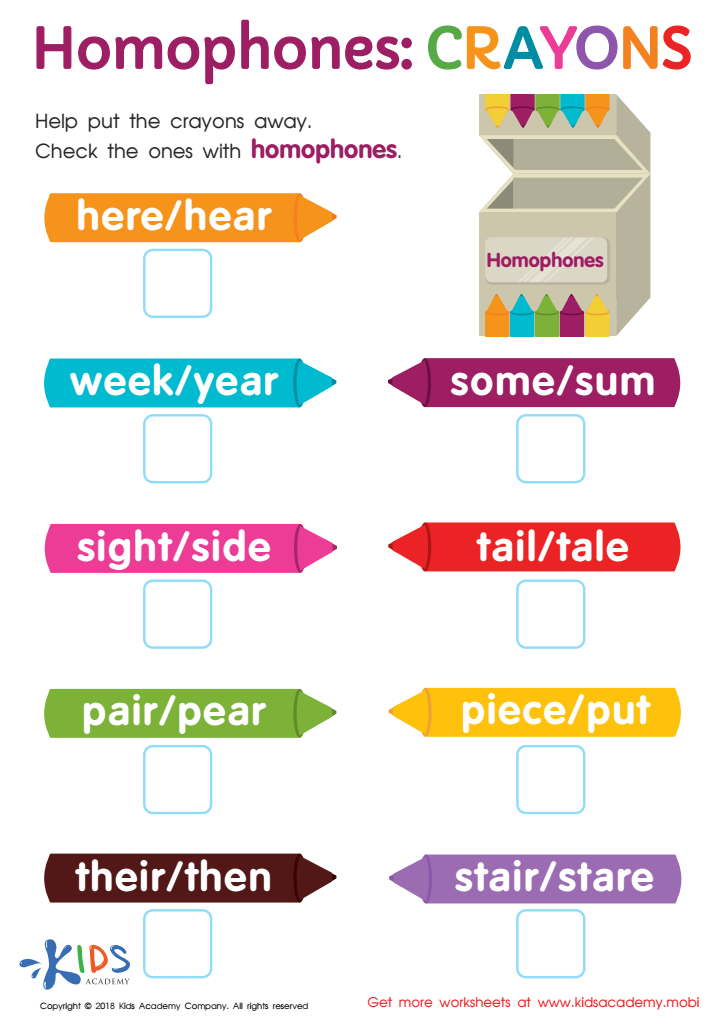
    Homophones: Crayons Worksheet
    Homophones: Crayons Worksheet

    Homophones: Crayons Worksheet

    Ask your kids: "What are homophones?" Explain that homophones are words that sound alike but have different meanings, like 'dare' and 'deer'. Ask them to identify homophones by putting the crayons in this printout away according to the words.
    Homophones: Crayons Worksheet
    Worksheet
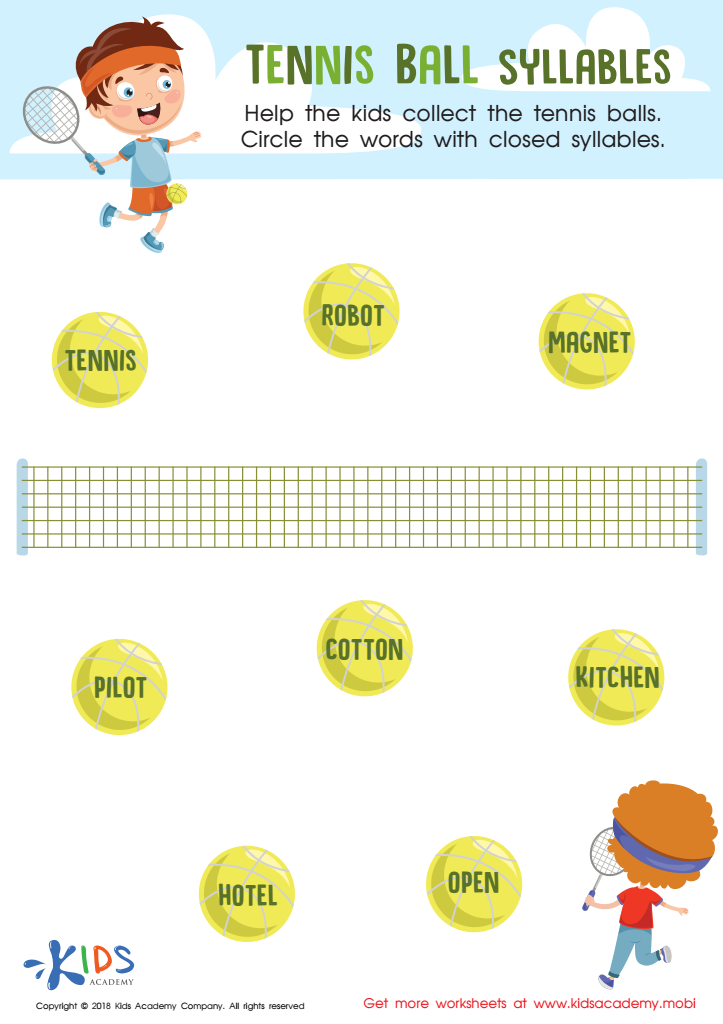
    Tennis Ball Syllables Worksheet
    Tennis Ball Syllables Worksheet

    Tennis Ball Syllables Worksheet

    To help your kids become fluent speakers, they need to learn syllables. A word can have one to seven syllables, with longer words having more. For this level, they will be working with one or two syllables. Assist them as they circle the words with closed syllables in this worksheet.
    Tennis Ball Syllables Worksheet
    Worksheet
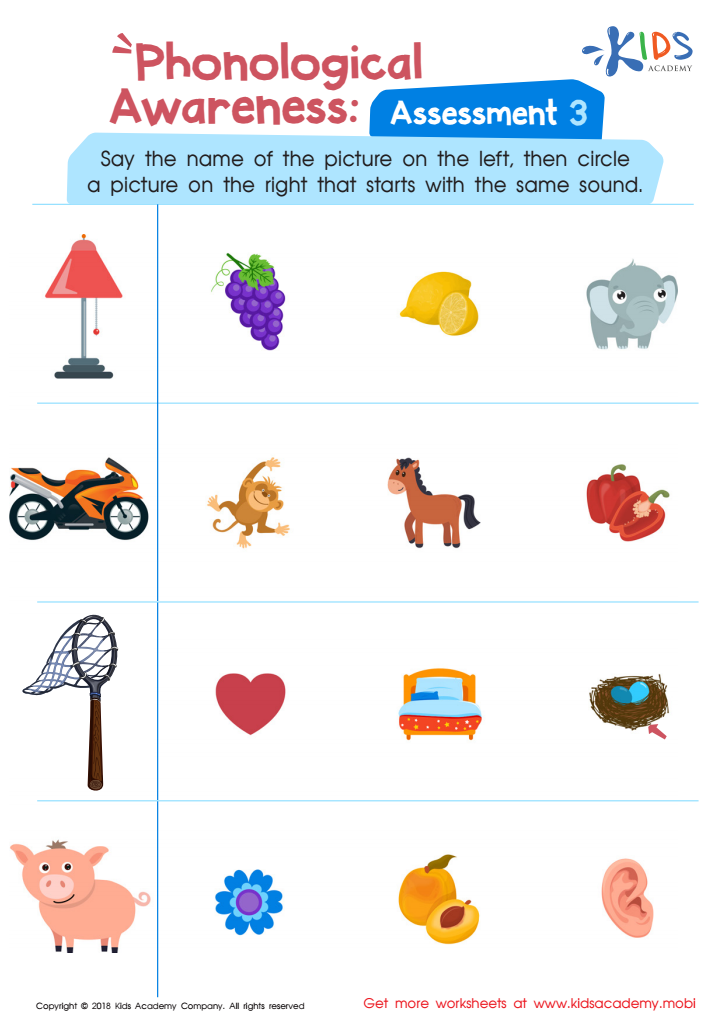
    Phonological Awareness: Assessment 3 Worksheet
    Phonological Awareness: Assessment 3 Worksheet

    Phonological Awareness: Assessment 3 Worksheet

    Test kids' reading readiness with a phonological awareness worksheet! With this PDF exercise, encourage children to name each picture aloud and match left to right. Help them learn to recognize word sounds at the start, middle and end of words. They'll be sure to remember that lamp doesn't sound like elephant!
    Phonological Awareness: Assessment 3 Worksheet
    Worksheet
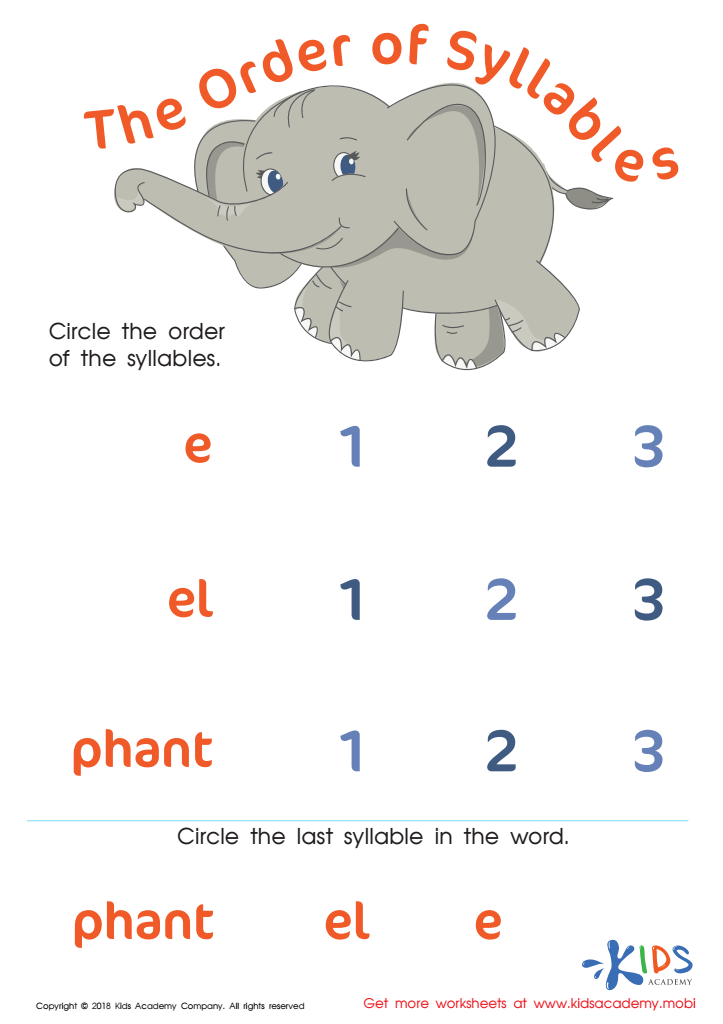
    The Order of Syllables Worksheet
    The Order of Syllables Worksheet

    The Order of Syllables Worksheet

    Syllabication is vital for prereading and decoding words. Download this fun, free worksheet to help your reader practice breaking words into syllables and arranging them for reading. It also strengthens fine motor skills as they trace the numbers for each syllable, guided by a cheerful elephant!
    The Order of Syllables Worksheet
    Worksheet
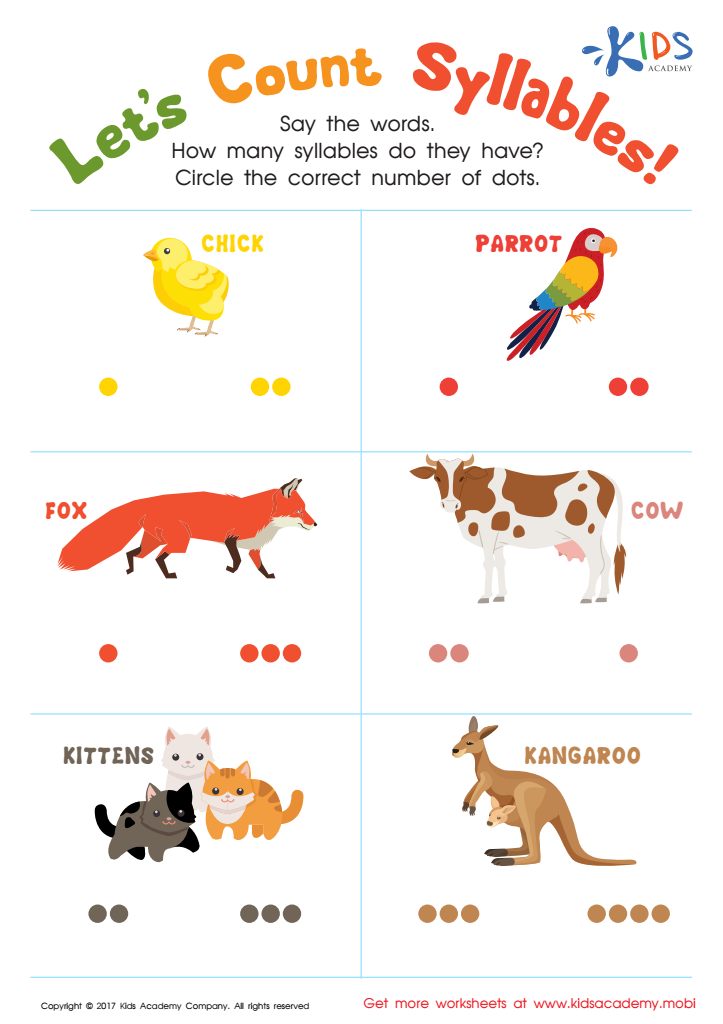
    Lets Count Syllables Worksheet
    Lets Count Syllables Worksheet

    Lets Count Syllables Worksheet

    This fun animal worksheet makes learning to read easier by breaking words into syllables. Bright, cheery pictures give context and help kids choose the right syllable count. Count together and enjoy as your child learns and gains success!
    Lets Count Syllables Worksheet
    Worksheet
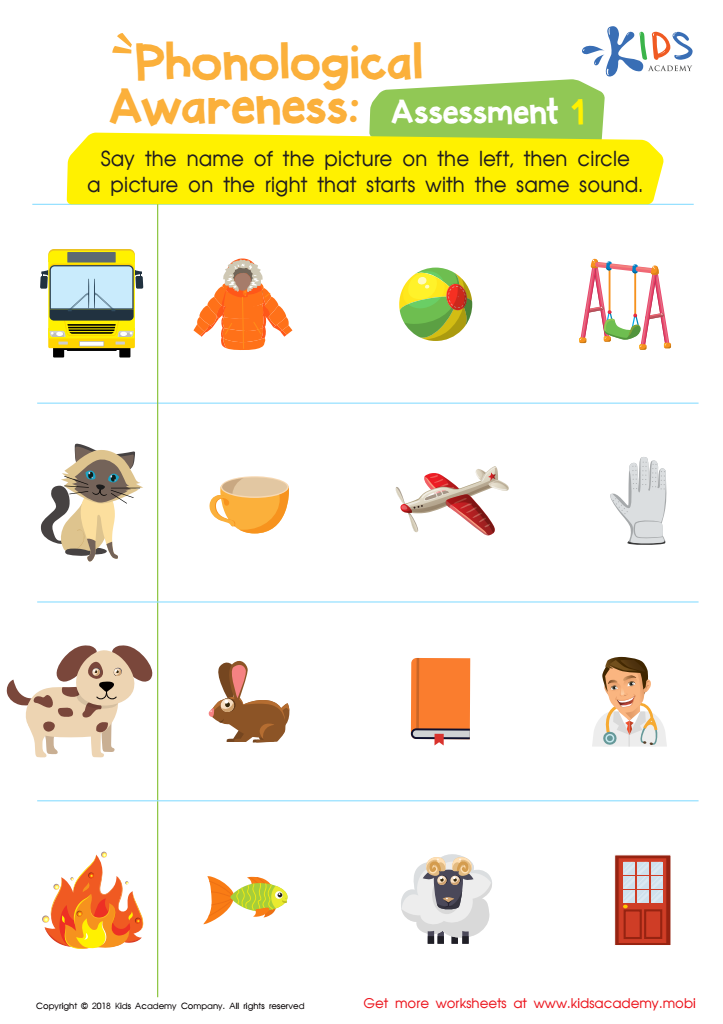
    Phonological Awareness: Assessment 1 Worksheet
    Phonological Awareness: Assessment 1 Worksheet

    Phonological Awareness: Assessment 1 Worksheet

    This worksheet helps kids build key phonics skills for pre-reading. They say each picture name aloud, focusing on the starting sound. Then, they match the sound with an image in the same row. Use as a checkpoint for kindergarten or grade 1 phonics readiness.
    Phonological Awareness: Assessment 1 Worksheet
    Worksheet
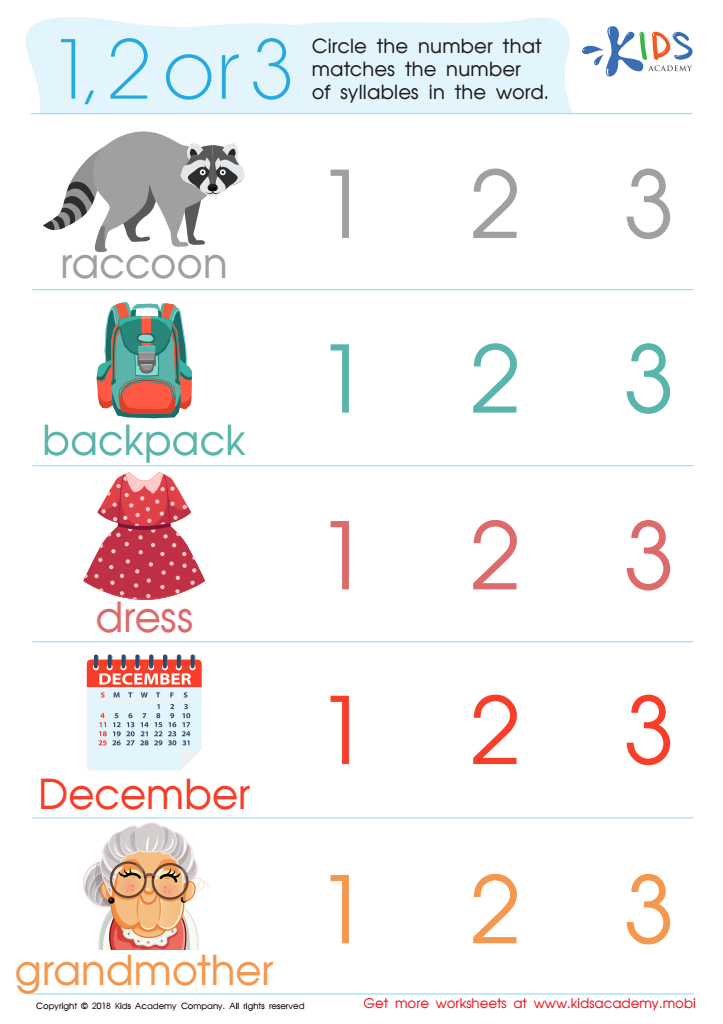
    1, 2 or 3? Worksheet
    1, 2 or 3? Worksheet

    1, 2 or 3? Worksheet

    Do your kids know about syllables? Test their understanding with this worksheet. Read the words aloud and ask them to say them with you. Help them circle the number that matches the number of syllables in each word. Perfect for expanding knowledge or testing how much they've already learned.
    1, 2 or 3? Worksheet
    Worksheet
    Which Is the Rime? Worksheet

    Which Is the Rime? Worksheet

    Which Is the Rime? Worksheet

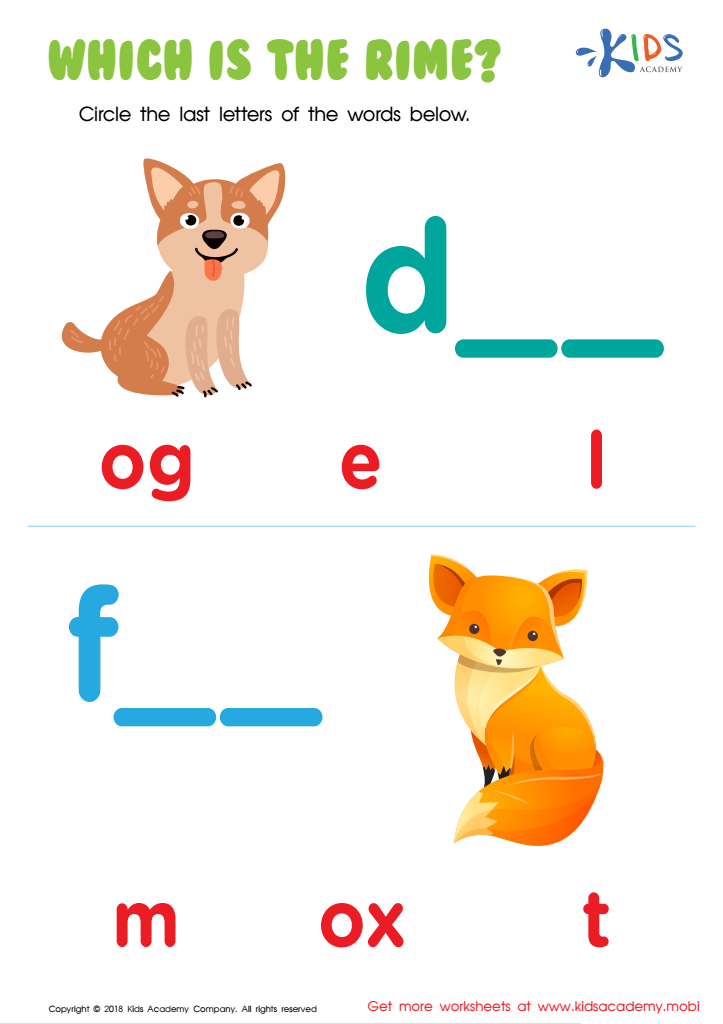
    Beginning readers benefit from rimes that aid letter familiarity, recognition, and spelling. With this fun PDF worksheet, kids can identify and spell the correct word for each image by circling the last letter. This activity develops fine motor skills as well.
    Which Is the Rime? Worksheet
    Worksheet


    Elementary phonics is essential for children aged 5-8 as it lays the foundational skills for reading and writing. Understanding phonics involves recognizing the relationship between sounds and letters, enabling students to decode words effectively. This skill is critical for young learners as it boosts confidence and fosters a love for reading, opening doors to a world of knowledge and creativity.

    Parents and teachers must prioritize phonics to ensure children develop strong literacy skills early on. When children grasp phonics, they become more proficient readers, helping them excel in other subjects that require reading comprehension. Additionally, a solid phonics foundation reduces frustration later in their educational journey, creating a more positive learning experience.

    Furthermore, learning phonics in a supportive environment enhances cognitive skills, such as memory and concentration, which are vital in their overall development. Engaging with phonics also promotes phonemic awareness—an essential skill for spelling and vocabulary acquisition.

    In the long term, mastering phonics sets children up for academic success and lifelong learning. In nurturing these skills together, parents and teachers can build a strong literacy foundation that empowers children to become competent, confident readers. Thus, prioritizing elementary phonics is crucial for every child's educational journey.