2D Shapes Worksheets for Ages 5-9 - Page 4
75 filtered results
-
From - To
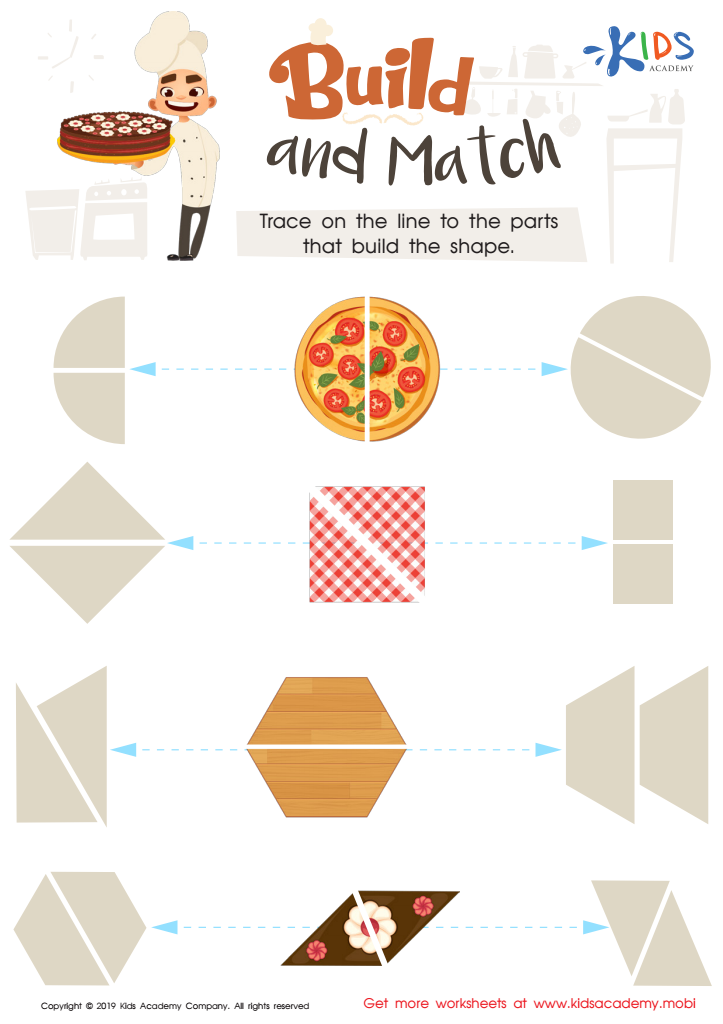
Build and Match Worksheet
 Assign to My Students











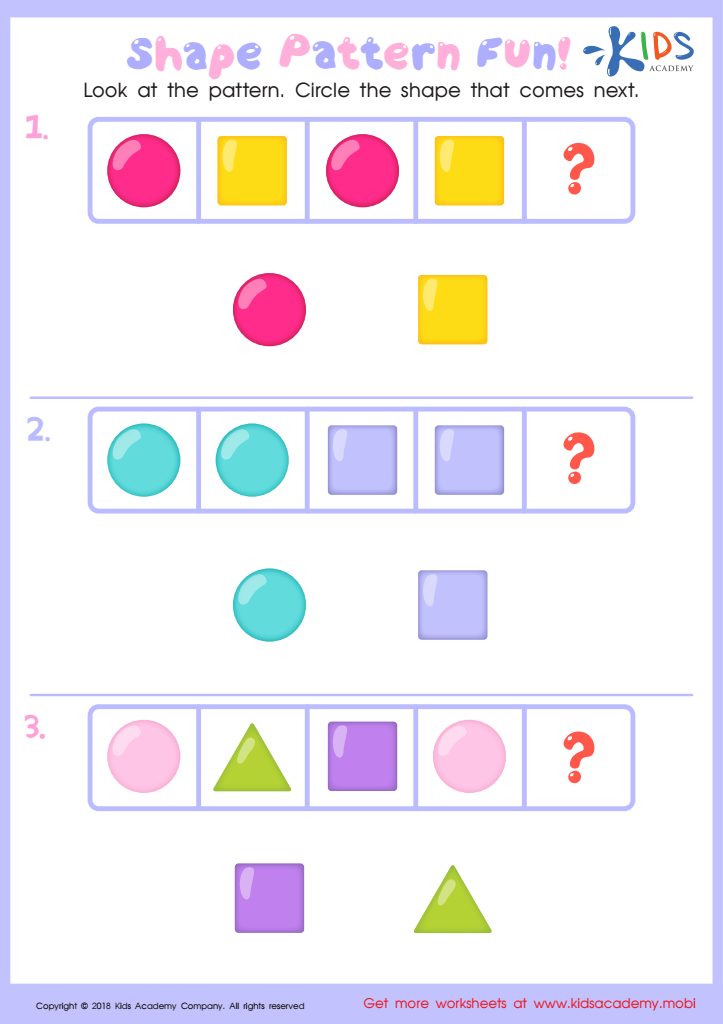
Shape Pattern Fun Worksheet
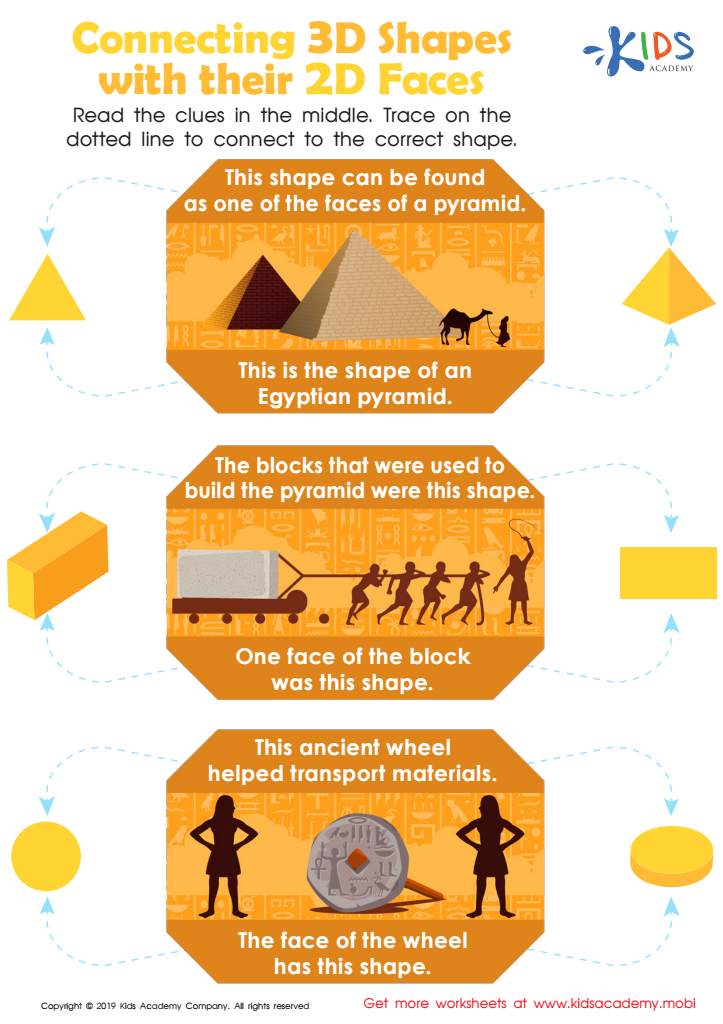
Connecting 3D Shapes with Their 2d Faces Worksheet








Parents and teachers should prioritize the understanding of 2D shapes for children aged 5-9 because they form the foundation of essential math skills. Recognizing and working with shapes such as circles, squares, triangles, and rectangles helps children develop spatial awareness, an important cognitive skill that supports language development and the ability to visualize scenarios.
Learning about 2D shapes also enhances critical thinking as children begin to understand how shapes fit together, can be transformed, or related to real-world objects. It encourages creativity through art and construction play, allowing children to explore and manipulate shapes in a meaningful way. Furthermore, the vocabulary associated with shapes—sides, angles, symmetry—enriches language skills and allows children to articulate mathematical concepts.
Engaging with 2D shapes in a variety of contexts strengthens problem-solving abilities and lays the groundwork for more complex mathematics in later years. When parents and teachers recognize the significance of these foundational skills, they can collaboratively create enriching experiences, whether through interactive games, stories, or hands-on projects, fostering a love for learning that extends beyond the classroom. This early focus on geometry is instrumental in nurturing confident and capable future learners.