Addition and Subtraction Word Problems Worksheets for Ages 6-7
90 filtered results
-
From - To
Introduce your young learners to the world of math with our engaging Addition and Subtraction Word Problems worksheets, perfectly tailored for children aged 6-7 years. These worksheets are thoughtfully designed to develop critical thinking and problem-solving skills through fun and practical math scenarios. Ideal for homeschool settings, our homeschool worksheets provide clear, easy-to-follow problems that boost confidence and enhance early mathematical proficiency. Each sheet is crafted to captivate young minds, ensuring learning remains exciting and interactive. Dive into our collection and watch your child embrace the joy of learning and mastering new skills in addition and subtraction!
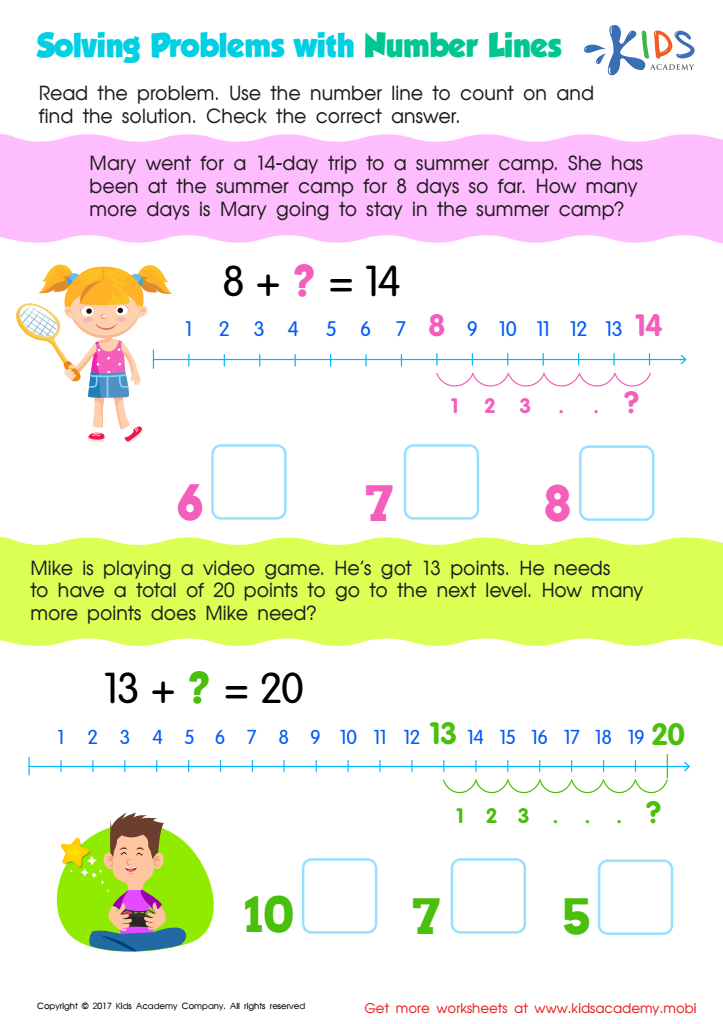
Solving Problems: Number Lines Worksheet
 Assign to My Students
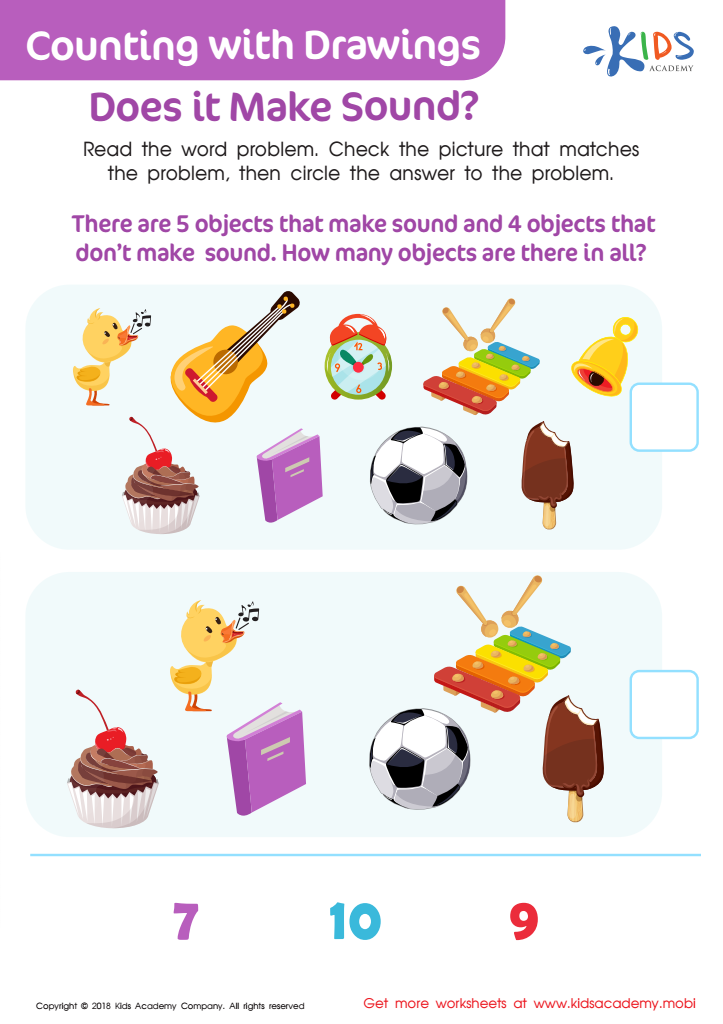
Counting With Drawings. Does It Make Sound? Worksheet
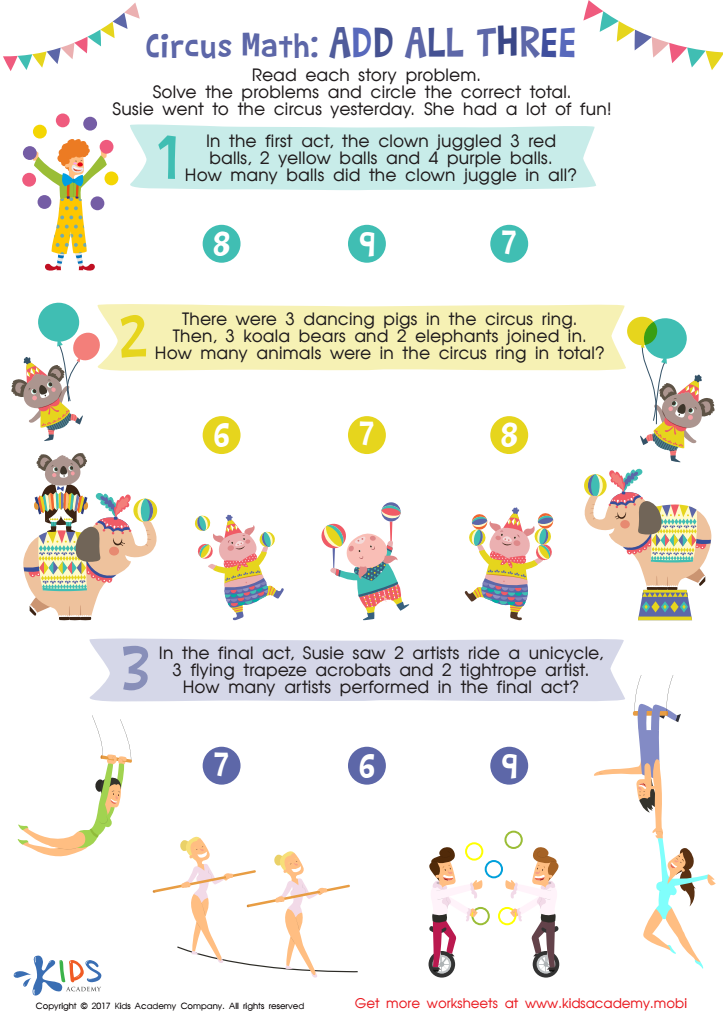
Circus Math Printable
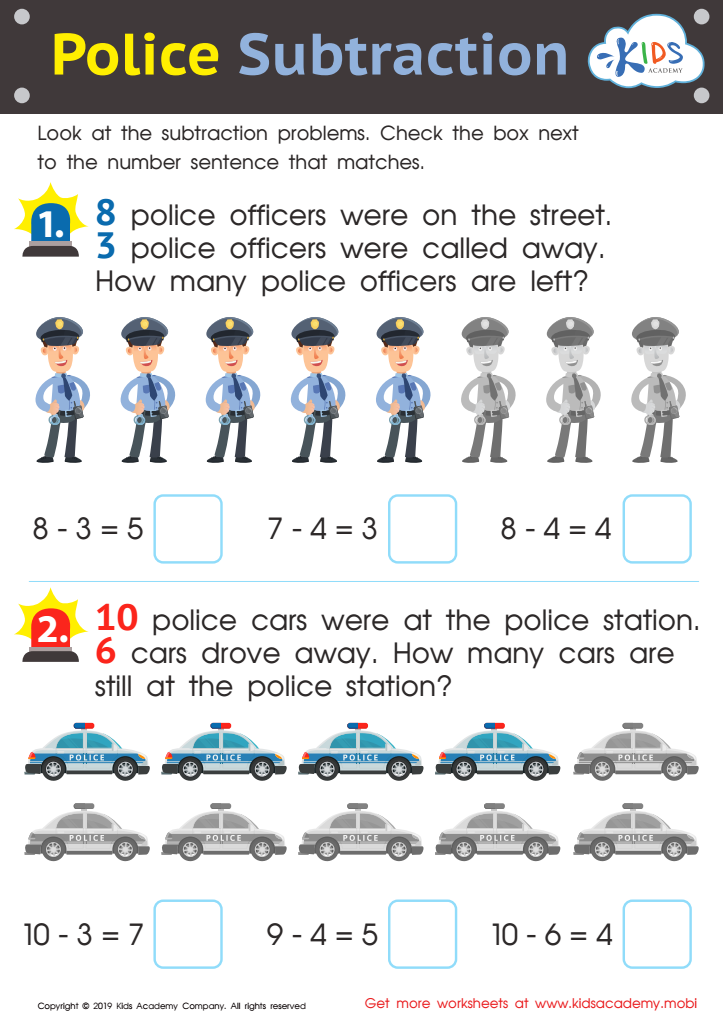
Police Subtraction Worksheet
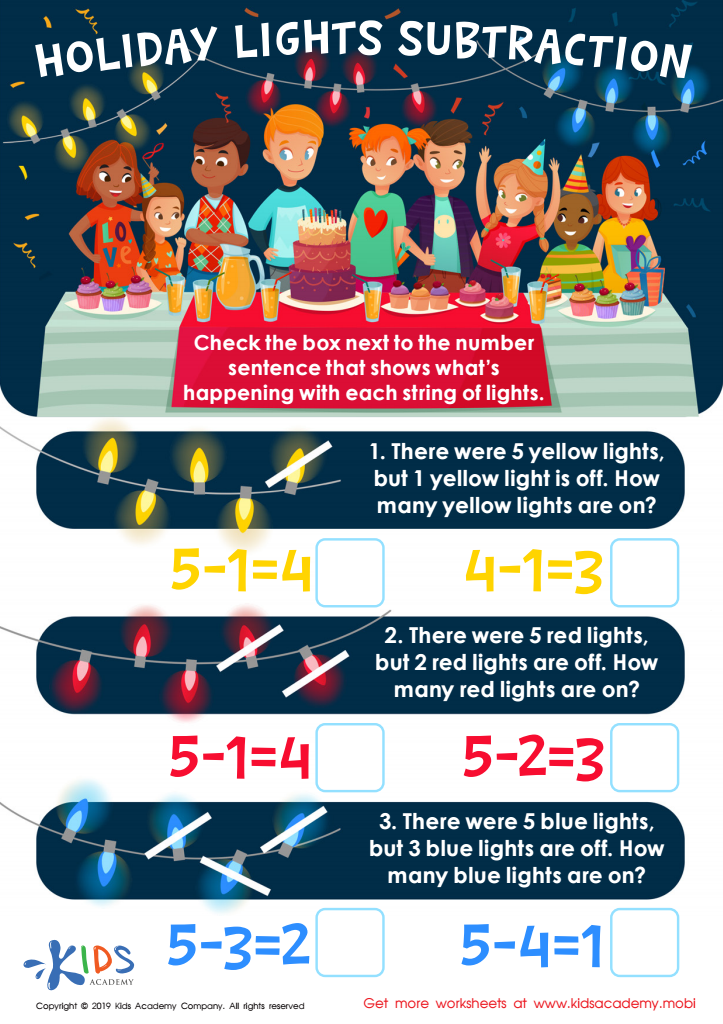
Holiday Lights Subtraction Worksheet
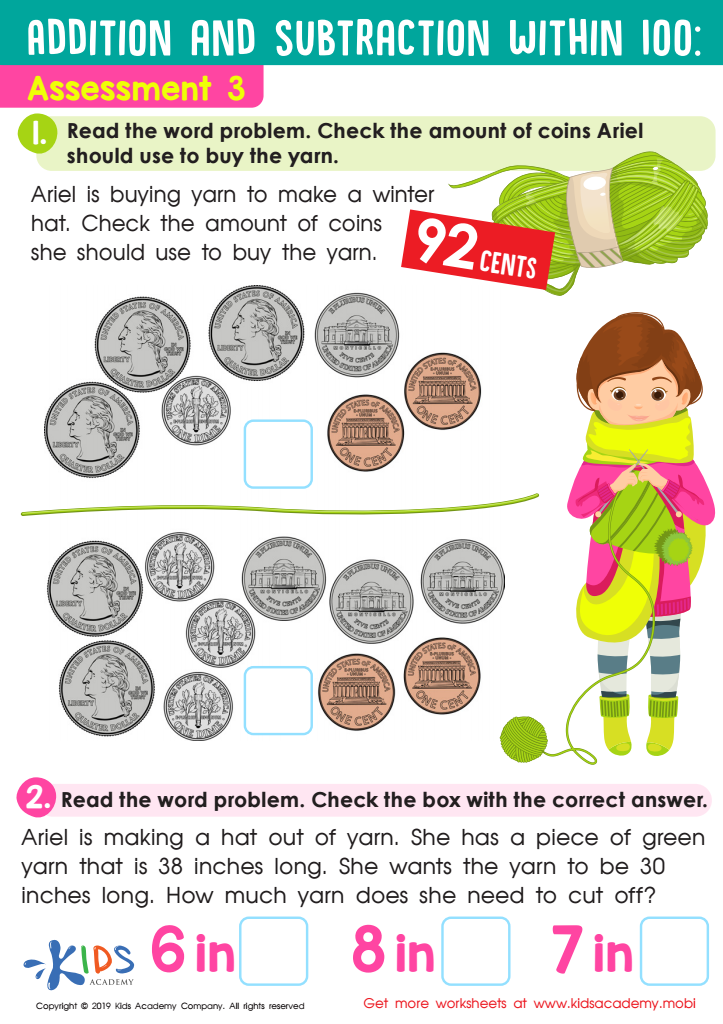
Assessment 3 Math Worksheet
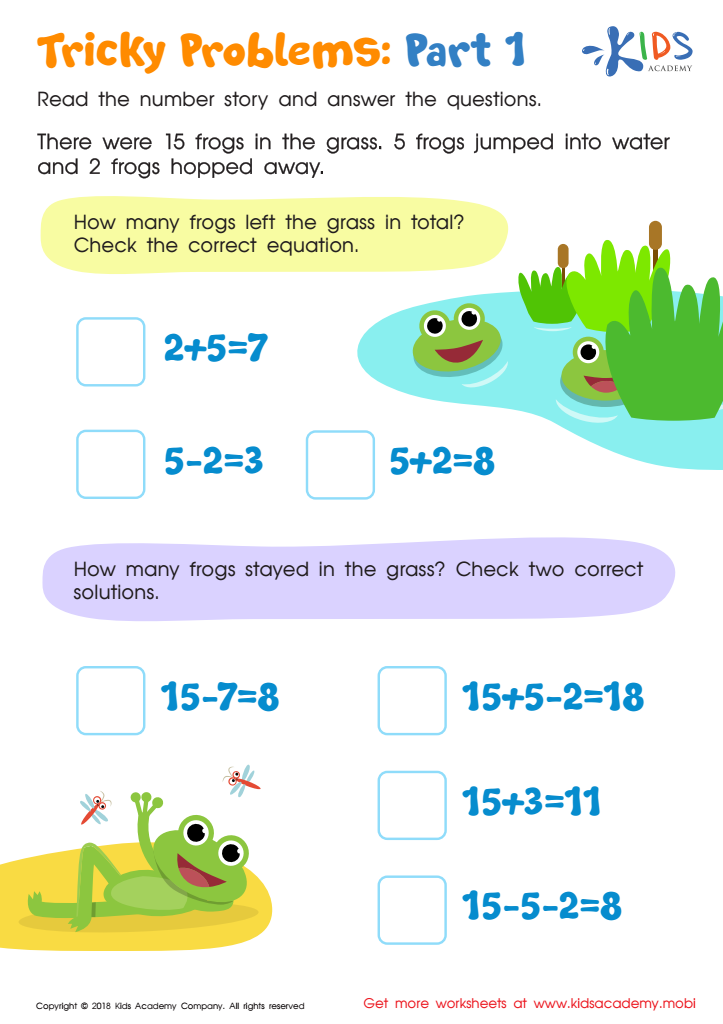
Tricky Problems Worksheet: Part 1
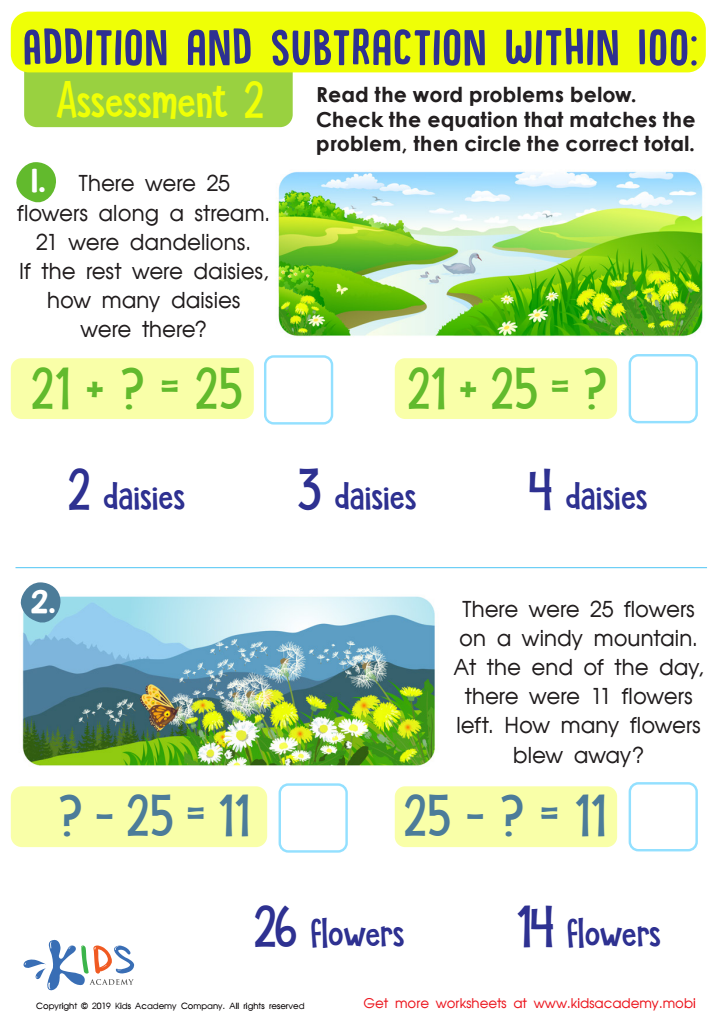
Assessment 2 Math Worksheet
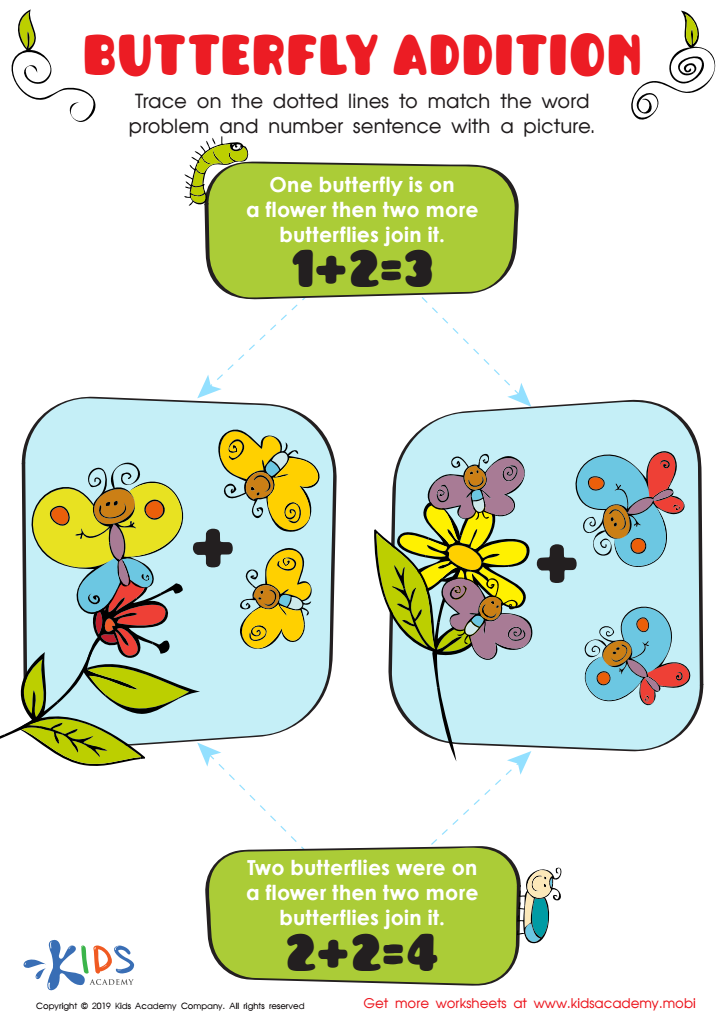
Butterfly Addition Worksheet
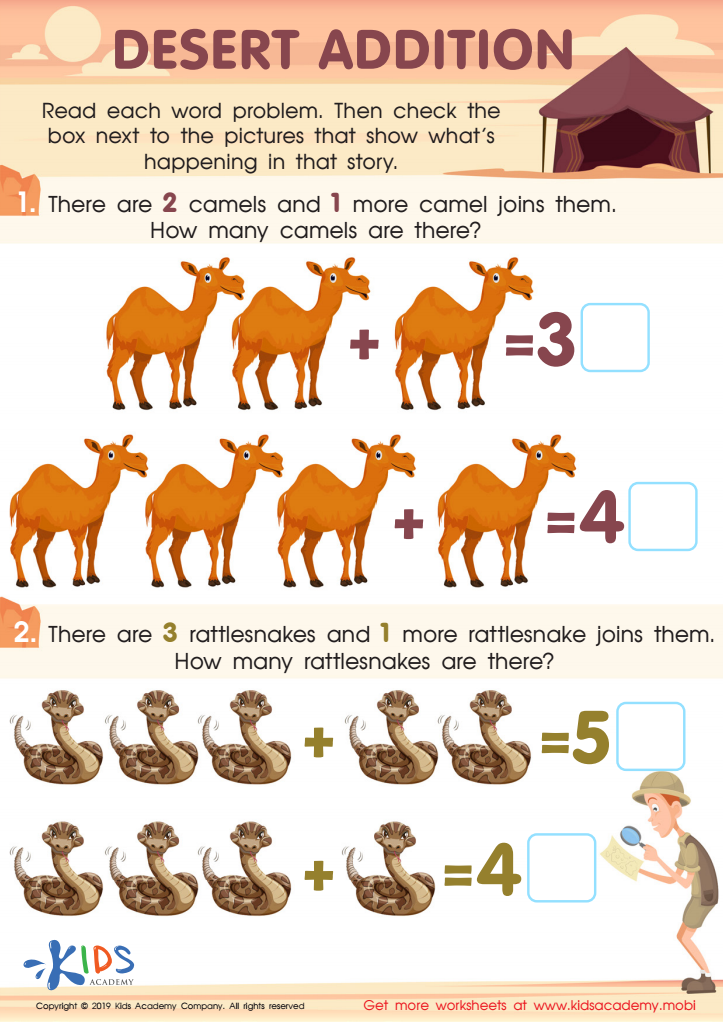
Desert Addition Worksheet
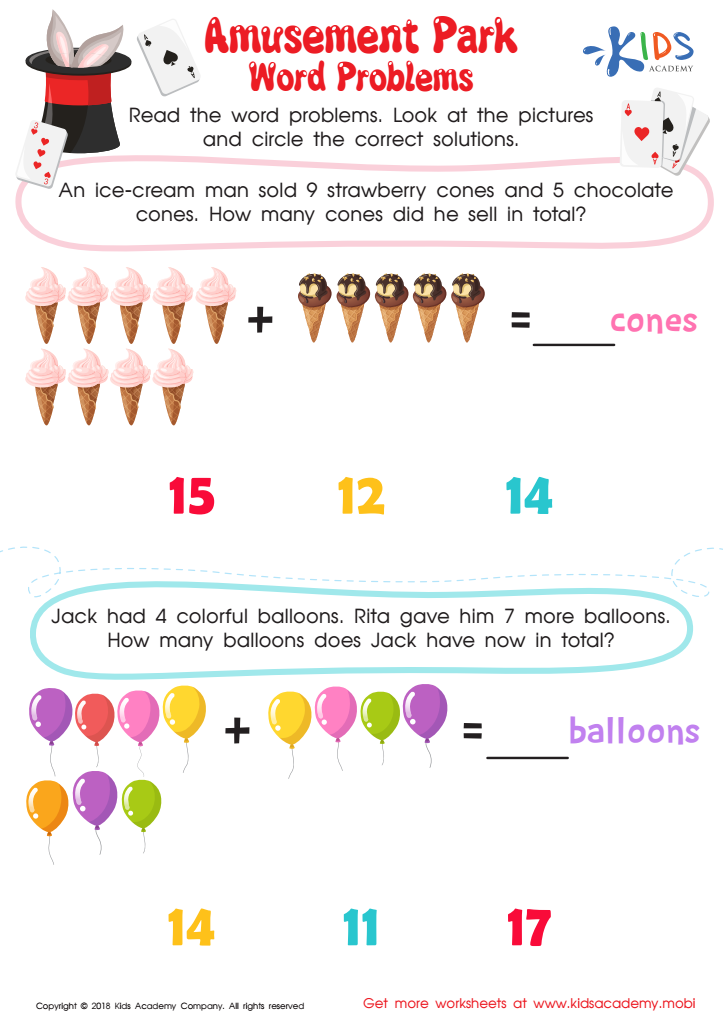
Amusement Park Word Problems Worksheet
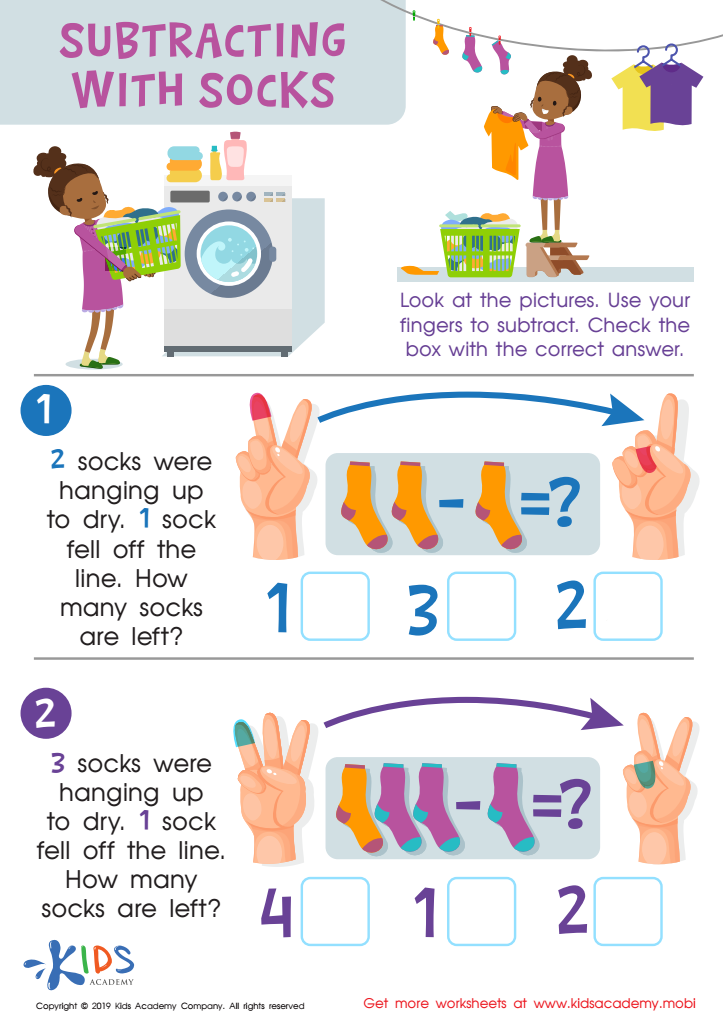
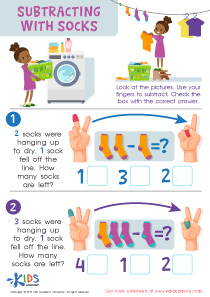
Subtracting Socks Worksheet
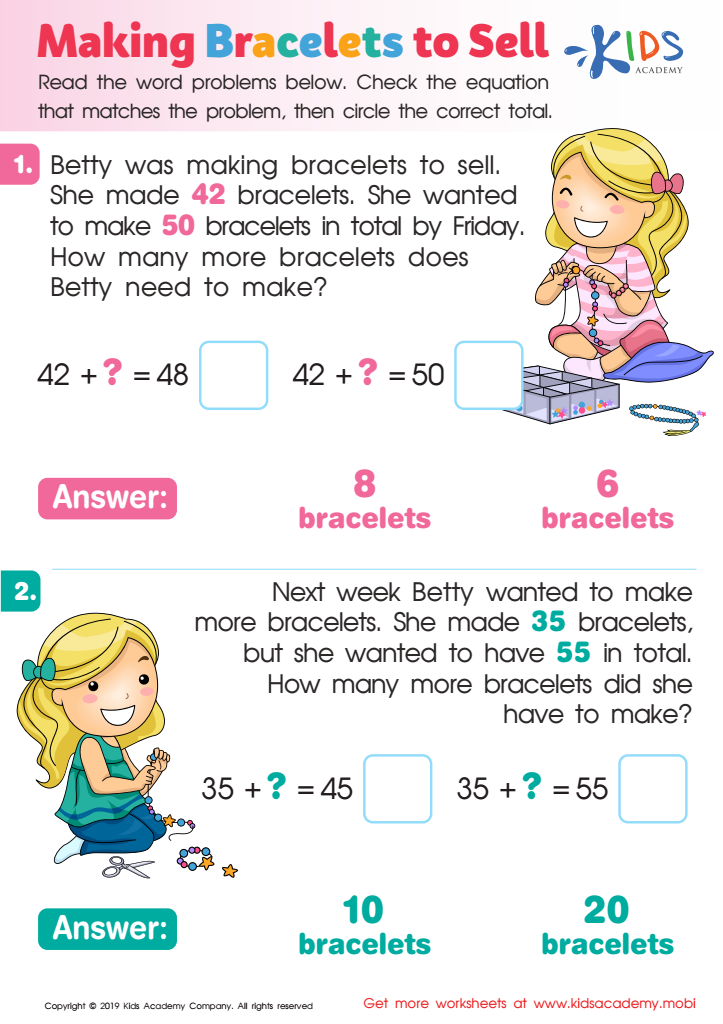
Making Bracelets to Sell Worksheet
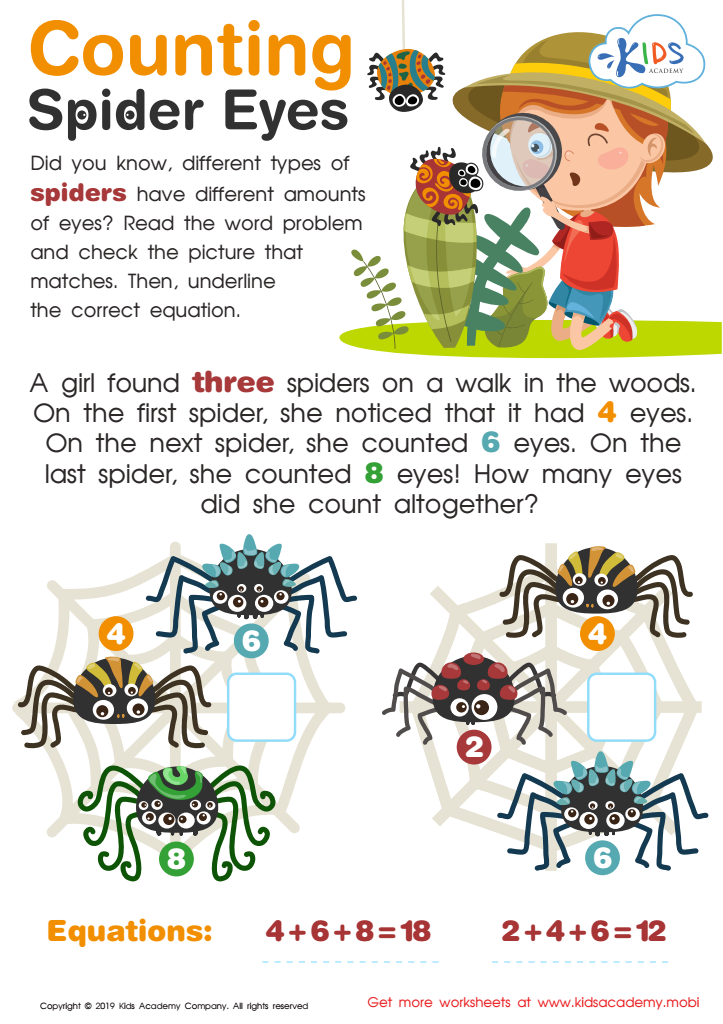
Counting Spider Eyes Worksheet
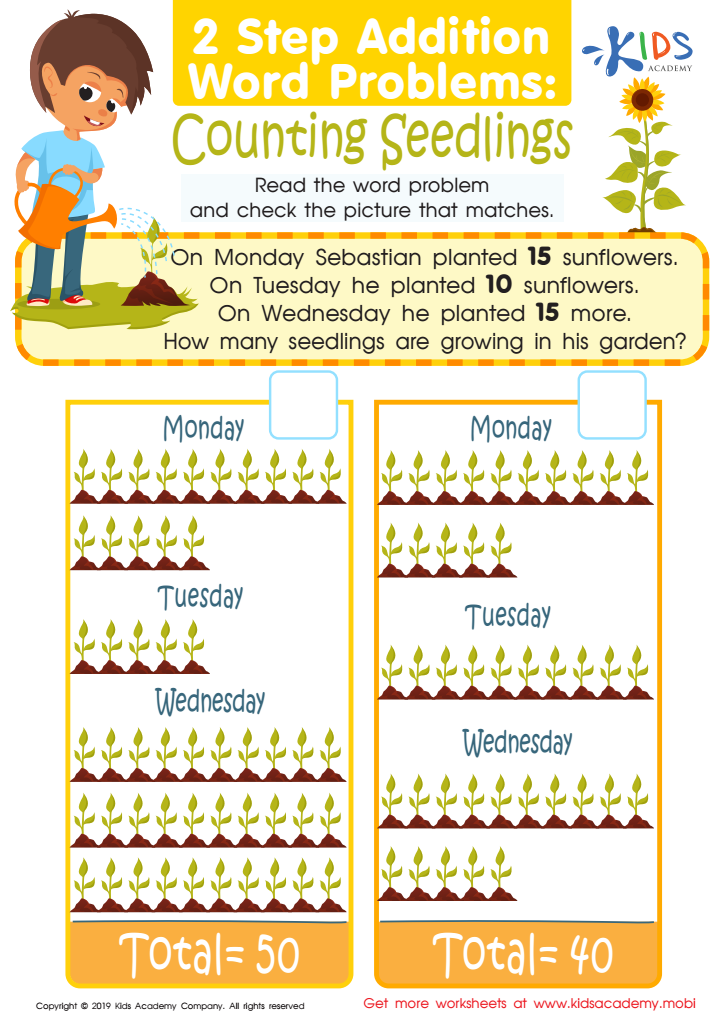
Counting Seedlings Worksheet
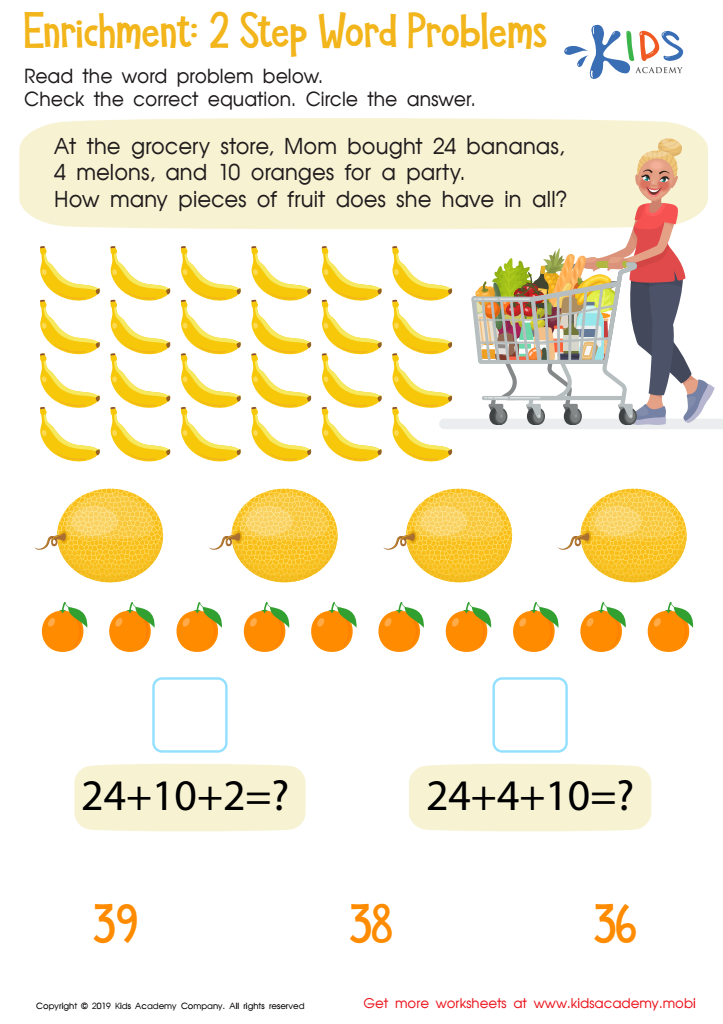
Enrichment -2 Step Word Problems Worksheet
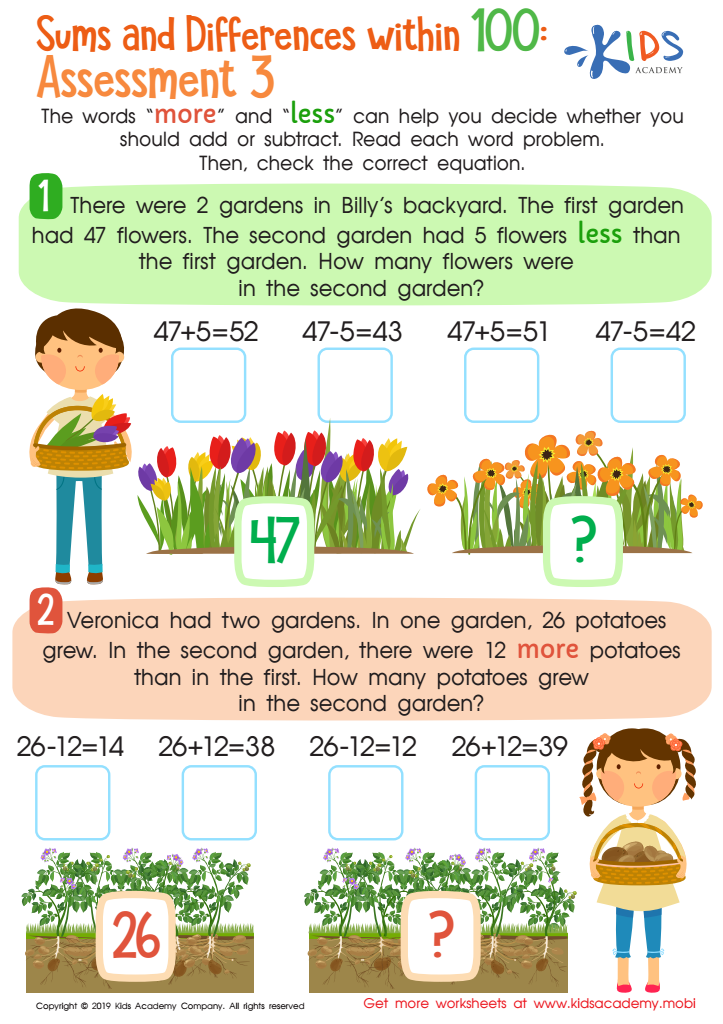
Sums and Differences Within 1 - Assessment 1 Worksheet
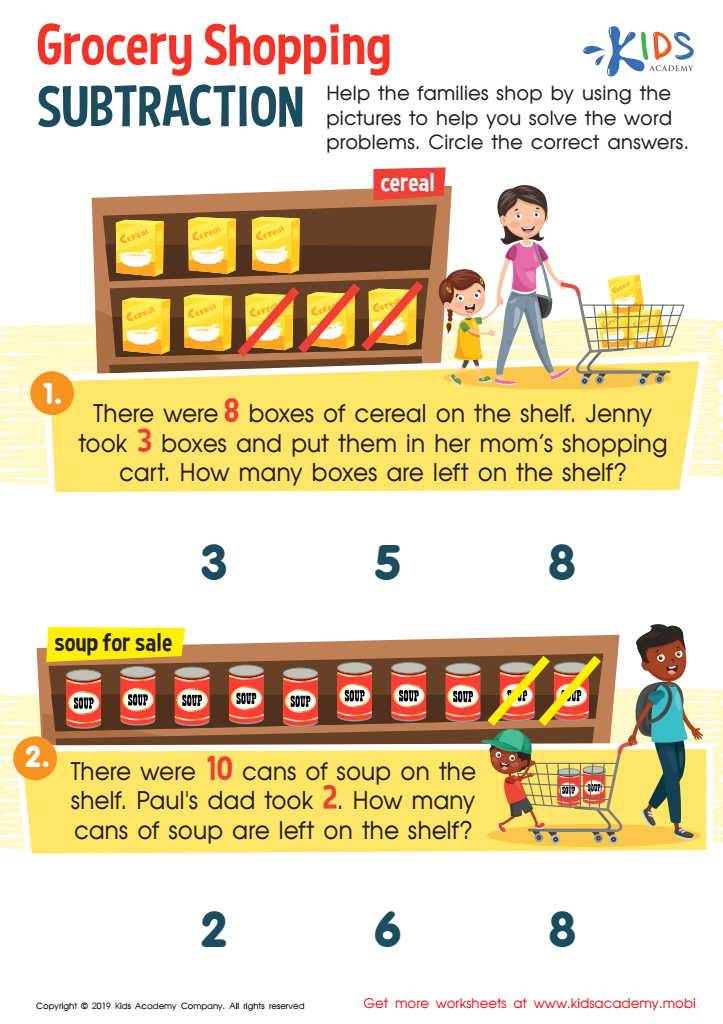
Grocery Shopping Subtraction Worksheet
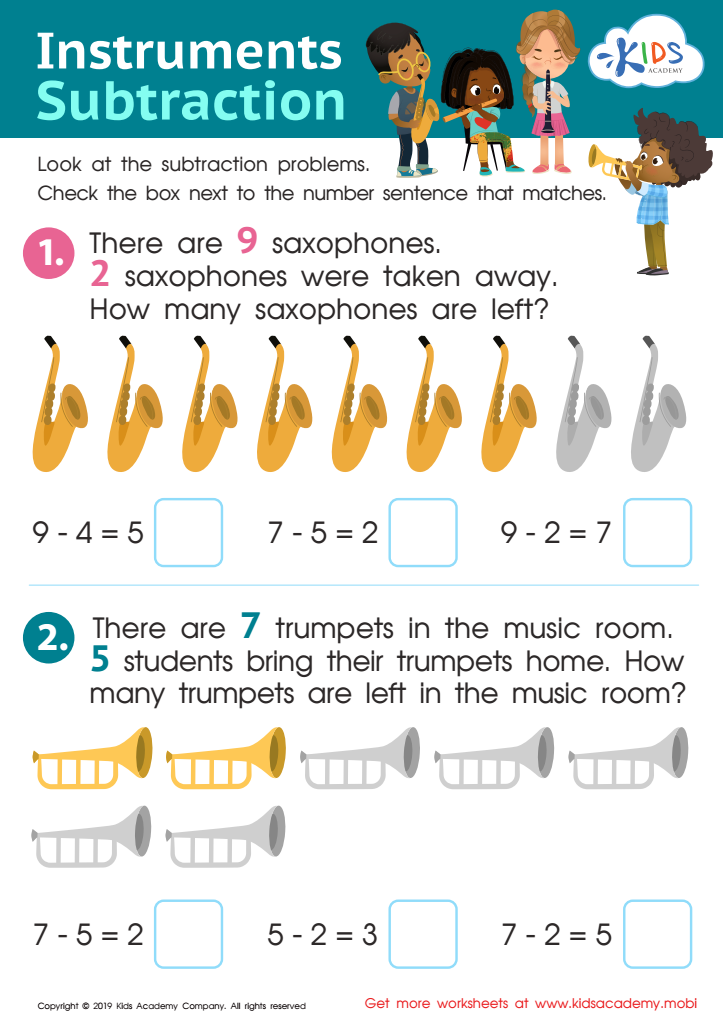
Instrument Subtraction Worksheet
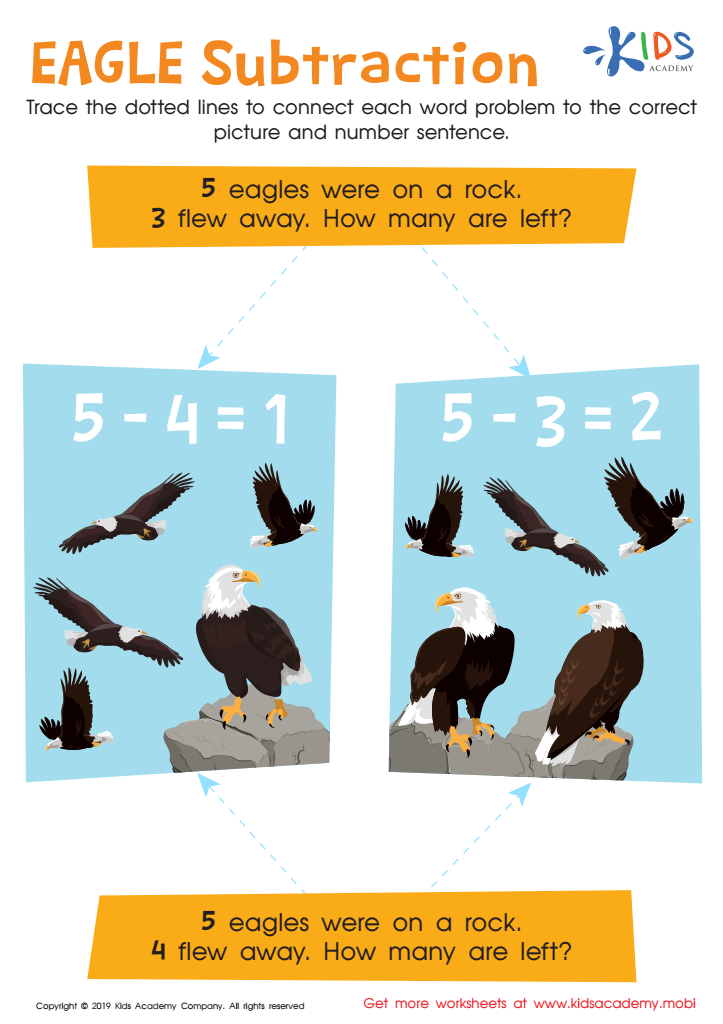
Eagle Subtraction Worksheet
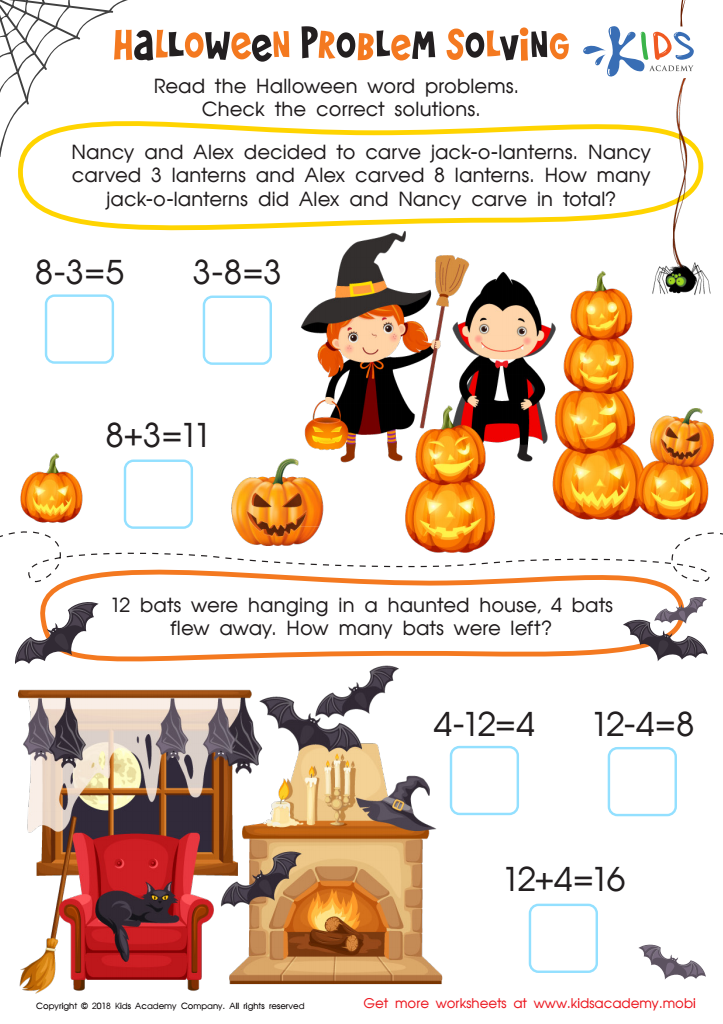
Halloween Problem Solving Worksheet
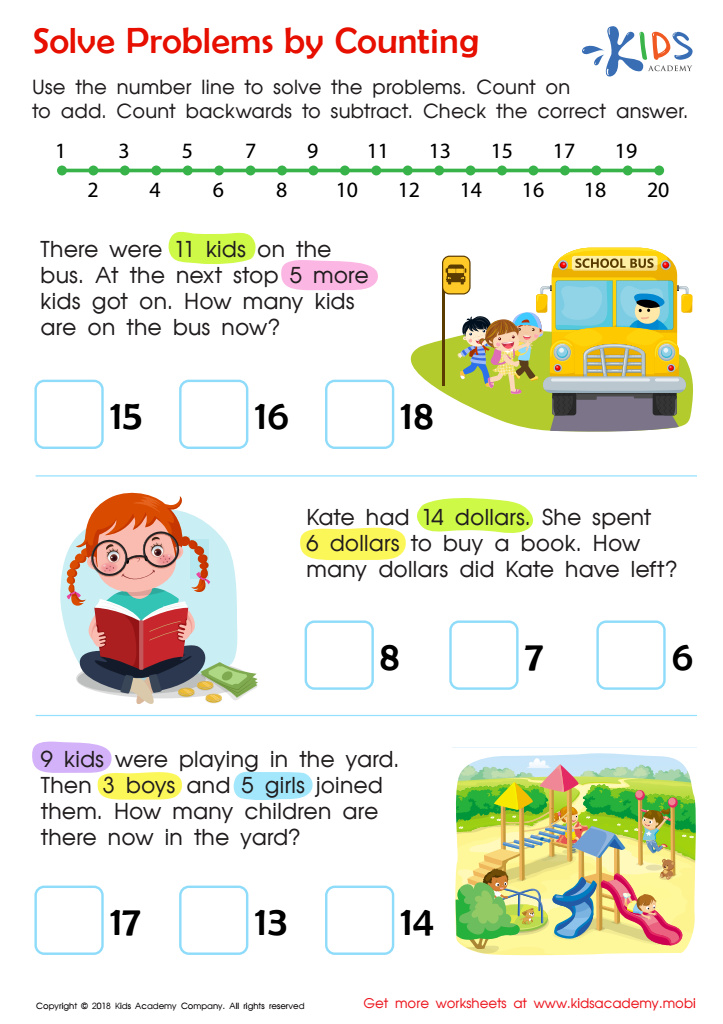
Solve Problems by Counting Worksheet
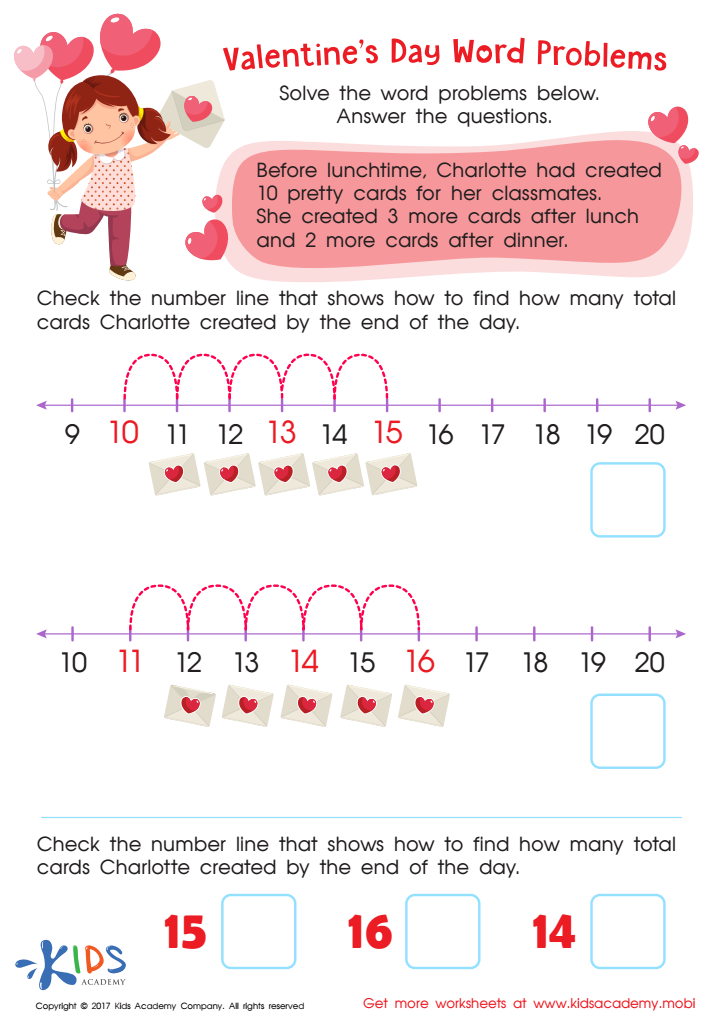
Valentines Day Word Problem Worksheet
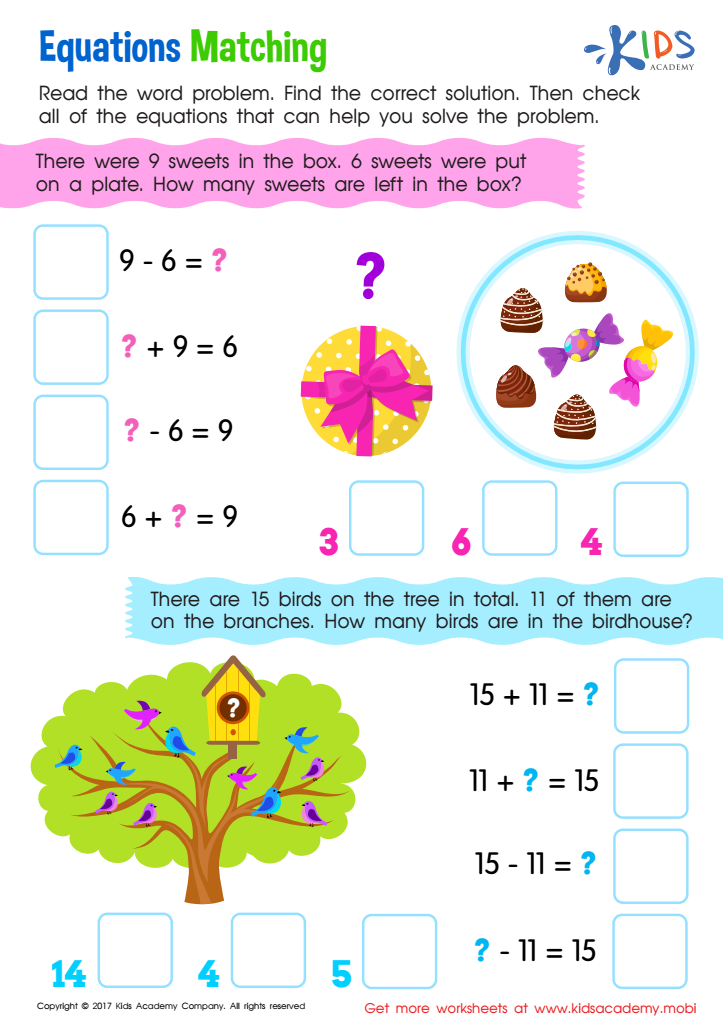
Equations Matching Word Problems Worksheet








Unlocking Early Math Skills with Addition and Subtraction Word Problems: The Value of Homeschool Printables
For children aged 6-7 years, developing foundational math skills is crucial. At this stage, children begin transitioning from abstract learning to applying what they’ve learned in practical scenarios. One effective tool in facilitating this critical shift are worksheets focused on Addition and Subtraction Word Problems. These worksheets not only reinforce basic arithmetic but also enhance comprehension and application skills in young learners. Incorporating homeschool printables into your teaching toolkit can significantly benefit your child’s early mathematical journey.
Why Focus on Addition and Subtraction Word Problems?
Word problems do more than just teach children to add and subtract. They are a bridge connecting mathematical theory to the real world. By presenting math in context, word problems help children understand why they are learning these concepts and how they can be applied outside the classroom or homeschool environment. Here are several key reasons why these worksheets are particularly useful:
-
Enhancing Reading and Comprehension Skills: Addition and subtraction word problems require reading and understanding a scenario before solving it. This dual demand helps children improve their reading comprehension while also learning to identify key mathematical elements in a text.
-
Developing Critical Thinking: These problems often involve more than straightforward calculation. Children must decide what operation to use, making them think critically about how everyday situations can be broken down into mathematical problems.
-
Boosting Confidence with Practical Application: As children successfully solve word problems, they see firsthand how math applies to daily life. This not only boosts their confidence in using numbers but also in their general problem-solving abilities.
-
Encouraging Independent Learning: Homeschool printables are particularly well-suited for encouraging self-directed learning. Children can work through problems at their own pace, revisiting concepts as needed, which fosters a sense of independence in their educational journey.
-
Customizable Learning Experience: With a range of homeschool printables available, parents and educators can select worksheets that match the learning style and pace of each child. Whether they benefit from visuals, step-by-step problem-solving guides, or challenges, there's a worksheet tailored to their needs.
The Role of Homeschool Printables in Learning
Homeschool printables offer a structured yet flexible approach to education, particularly beneficial in teaching mathematics. These resources are typically well-designed, easy to access, and can be used multiple times in various ways. For homeschooling parents, printables are a cost-effective tool to diversify the curriculum without continually investing in new books or software. This adaptability ensures that children not only learn at their own pace but also deepen their understanding through repetition and incremental difficulty.
Implementing Addition and Subtraction Word Problems in Homeschool Settings
To effectively integrate these worksheets into your homeschool curriculum, consider the following strategies:
-
Daily Practice: Incorporate a word problem or two into your daily math routine. This regular exposure helps children normalize the process of translating real-world situations into mathematical queries.
-
Interactive Sessions: Instead of having children complete worksheets independently, engage them in discussions about the problems. Ask probing questions like, "What do you think this problem is asking?" or "Why do you think that’s the right operation to use?" Such questions stimulate deeper understanding.
-
Real-Life Application: Occasionally, step away from the worksheets and create real-life scenarios for your child to solve. Whether it’s calculating the total cost of groceries, measuring ingredients for a recipe, or figuring out the time left until a playdate, these practical applications reinforce the relevance of their worksheet exercises.
-
Progressive Difficulty: Start with simpler problems and gradually introduce more complex scenarios as your child's skills improve. This progression builds confidence and ensures that each new challenge is a manageable step up from the last.
-
Rewarding Effort: Recognize and praise effort, not just correct answers. Encouraging the problem-solving process, regardless of whether it leads to the right answer, fosters a growth mindset and diminishes the fear of making mistakes.
Benefits Beyond Math
While the immediate aim of using addition and subtraction word problems is to enhance mathematical skills, the benefits extend beyond numeracy. These homeschool printables foster critical life skills such as problem-solving, logical reasoning, and decision-making. Moreover, by integrating literacy skills, they provide a comprehensive educational approach that supports overall academic success.
Conclusion
Addition and subtraction word problems are more than just arithmetic exercises; they are a fundamental part of a child’s educational development. Using homeschool printables to teach these concepts provides a versatile, engaging, and effective method of delivering these important lessons. As children decipher these problems, they not only learn math but also acquire essential skills that will aid them in academic pursuits and everyday life decisions. By choosing thoughtfully designed printables for your homeschool curriculum, you are setting a strong foundation for your child’s future learning.