Word Problems Worksheets for Ages 6-8 - Page 6
123 filtered results
-
From - To
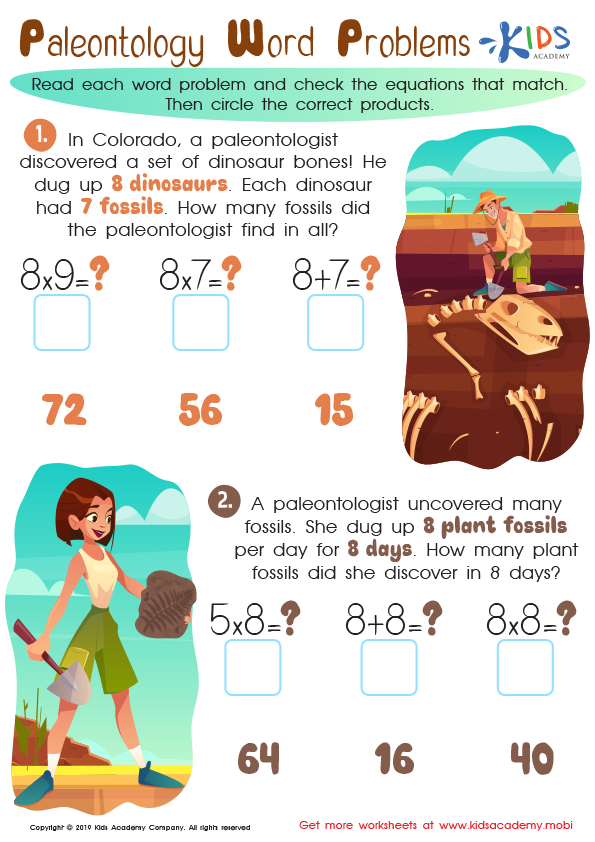
Archeology Word Problems Worksheet
 Assign to My Students
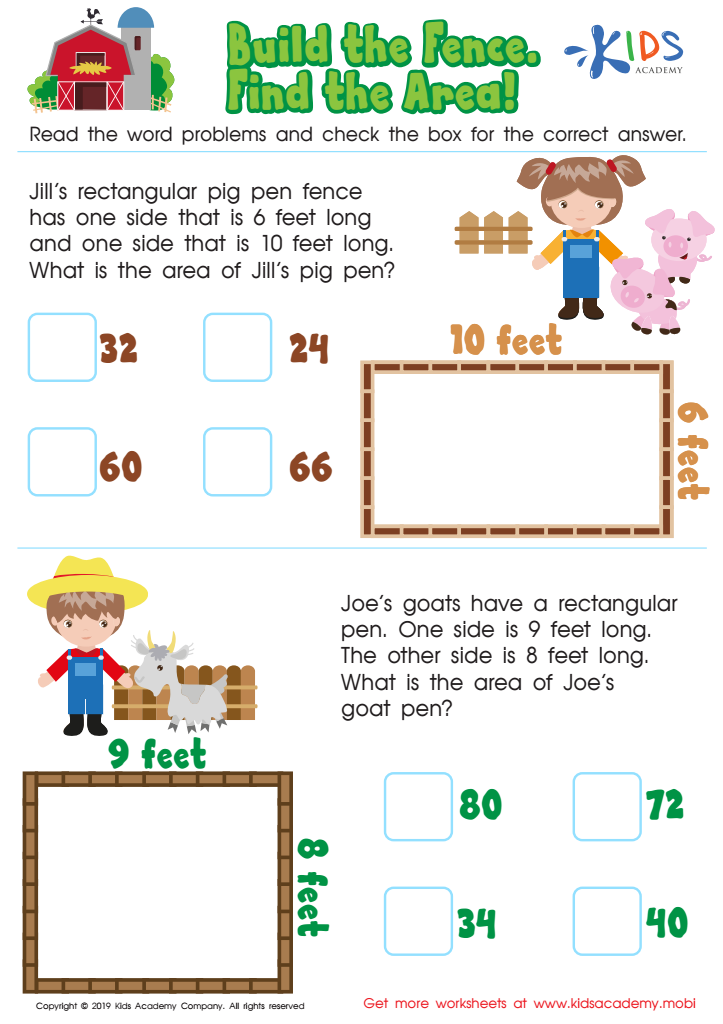
Build the Fence, Find the Area Worksheet
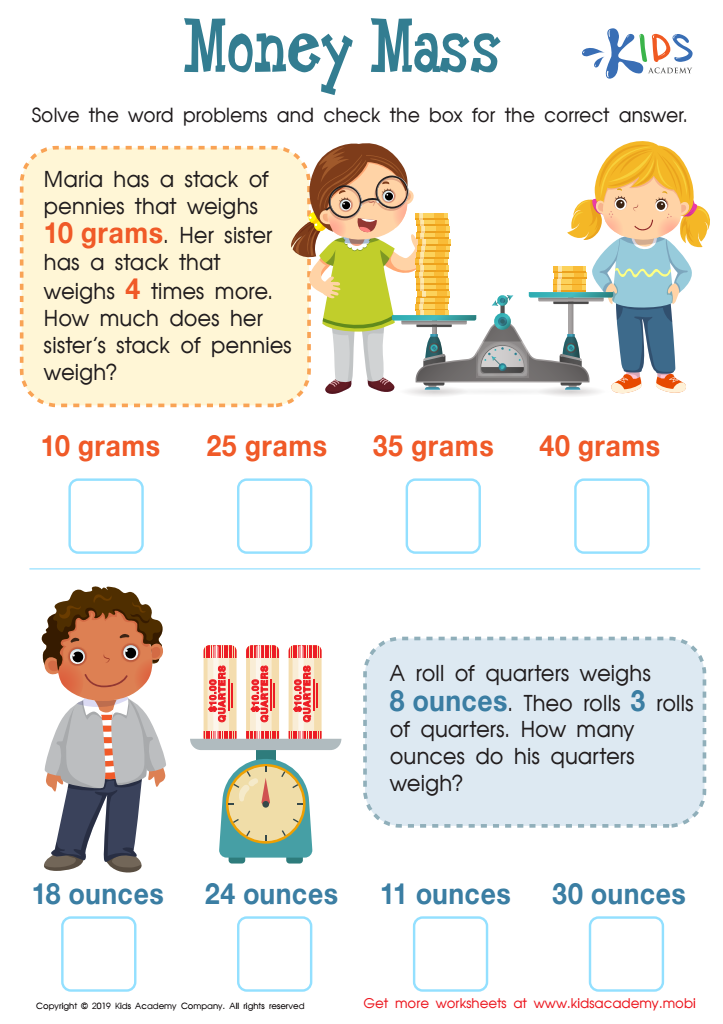
Money Mass Worksheet








Word problems play a crucial role in developing arithmetic skills in children aged 6-8. At this age, kids are transitioning from basic number recognition to applying their understanding in real-life contexts. Parents and teachers should care about word problems for several reasons.
Firstly, they help foster critical thinking and problem-solving skills. By interpreting situations and finding solutions, children learn to analyze information and apply their mathematical knowledge practically. This is essential for developing a well-rounded cognitive skill set.
Moreover, word problems enhance literacy and comprehension. Reading and understanding the problem involves decoding language and grasping concepts, which in turn strengthens reading skills. This dual focus on mathematics and literacy promotes overall cognitive growth.
Additionally, engaging with word problems can make learning more enjoyable and relatable. When children can see how math applies to everyday life—like counting fruits or calculating playtime—they are more likely to stay motivated and interested in the subject.
Ultimately, supporting children as they tackle word problems prepares them for future academic challenges, builds a solid foundation in math, and nurtures a love for learning that extends beyond the classroom.








