ABC Order Worksheets for Ages 7-9 - Page 2
26 filtered results
-
From - To
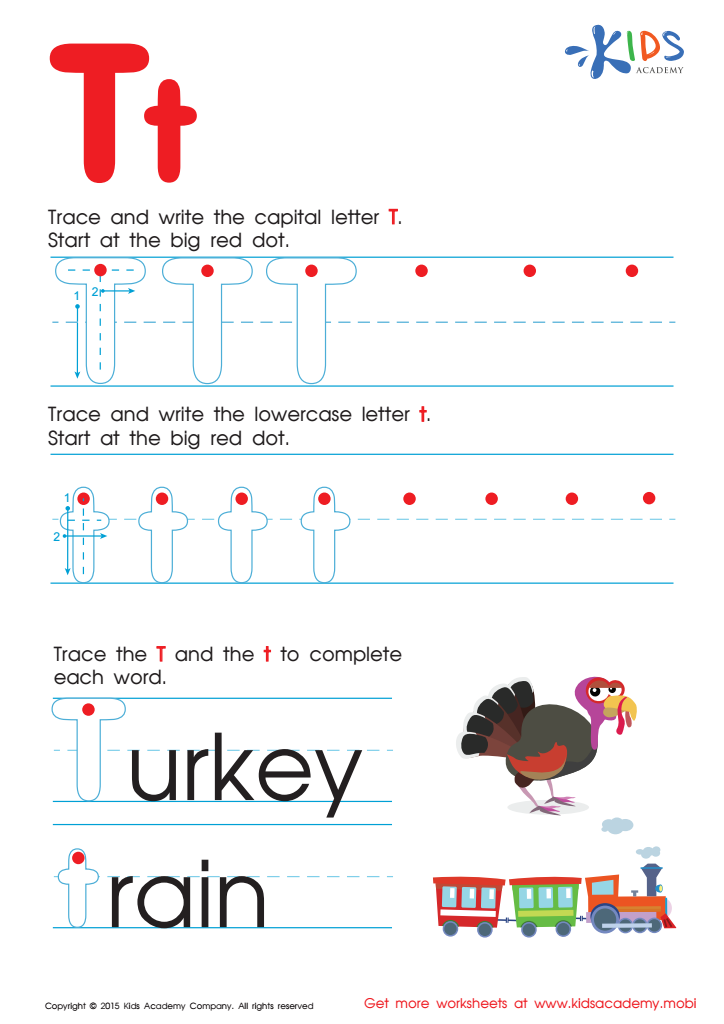
Letter T Tracing Page
 Assign to My Students








Letter D Tracing Page








Teaching children ages 7-9 about alphabetical order is crucial for several reasons. Firstly, it enhances their organizational skills and helps them develop a systematic way of thinking. When children learn to place words in ABC order, they engage in sorting and categorizing, skills that are fundamental in many areas of learning. This activity also strengthens their understanding of the alphabet, improving their reading and writing abilities.
Secondly, mastering alphabetical order is essential for navigating books, libraries, and other resource materials. Children equipped with this skill can efficiently find information as they progress in their education, leading to greater independence in research tasks. Parents and teachers should emphasize this skill to prepare them for more advanced learning situations.
Additionally, learning ABC order promotes memory and cognitive development. The repetition involved in remembering letter sequences and spotting patterns reinforces neural connections that will benefit children across subjects.
Ultimately, understanding alphabetical order is a building block for literacy. By fostering this skill in young learners, parents and teachers set them up for academic success and instill a love for reading and discovering new information, paving the way for lifelong learning.