Silent Vowels Worksheets for Ages 7-9
5 filtered results
-
From - To
Discover our engaging "Silent Vowels Worksheets for Ages 7-9," designed to enhance your child’s understanding of silent vowels through fun and educational activities! These worksheets provide a variety of exercises that will help kids identify silent letters in words, improving their reading and spelling skills. Each activity is tailored to spark curiosity and promote independent learning, while engaging challenging word puzzles, fill-in-the-blanks, and word searches. Suitable for home or classroom use, these worksheets are perfect for young learners eager to master phonics. Let your child's reading prowess blossom with these colorful, interactive resources today!
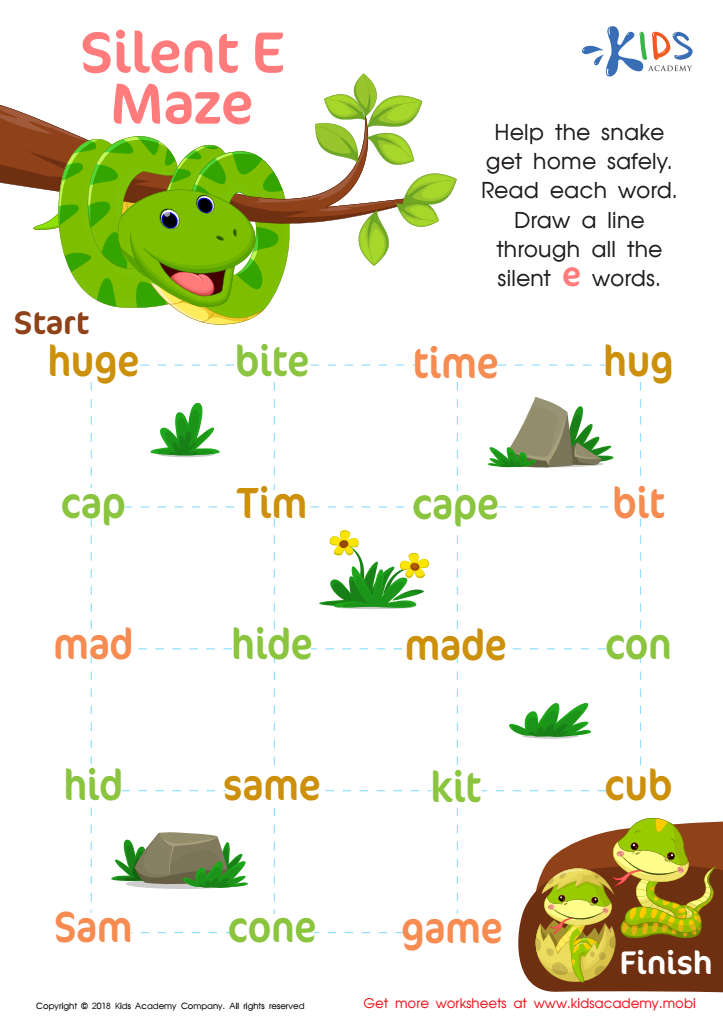
Silent E Maze Worksheet
 Assign to My Students
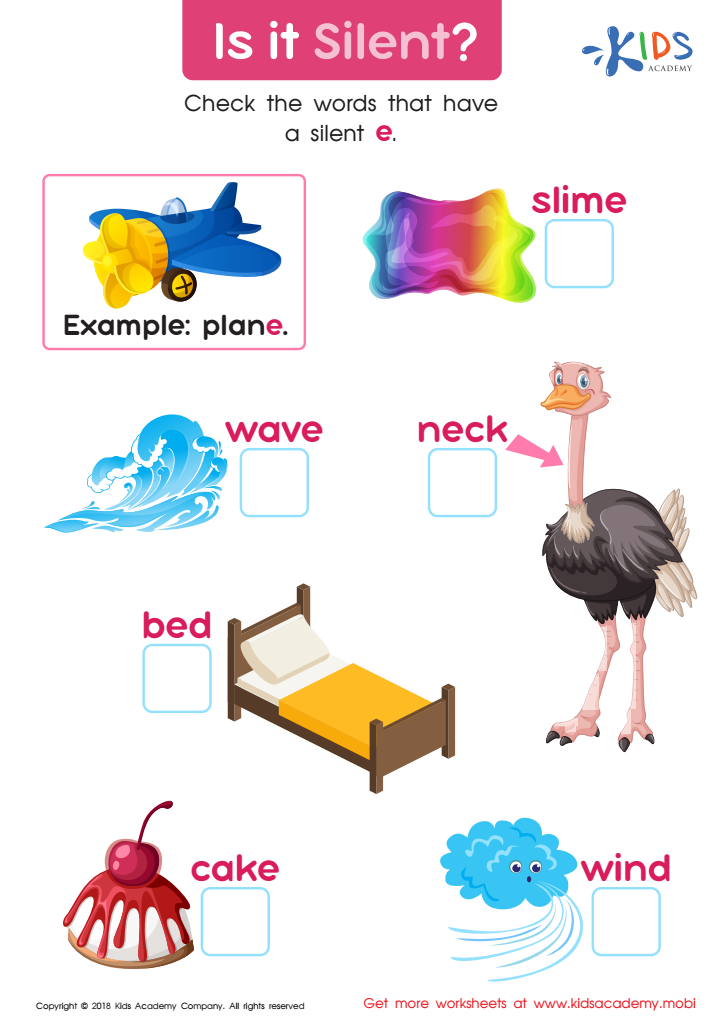
Is It Silent? Worksheet
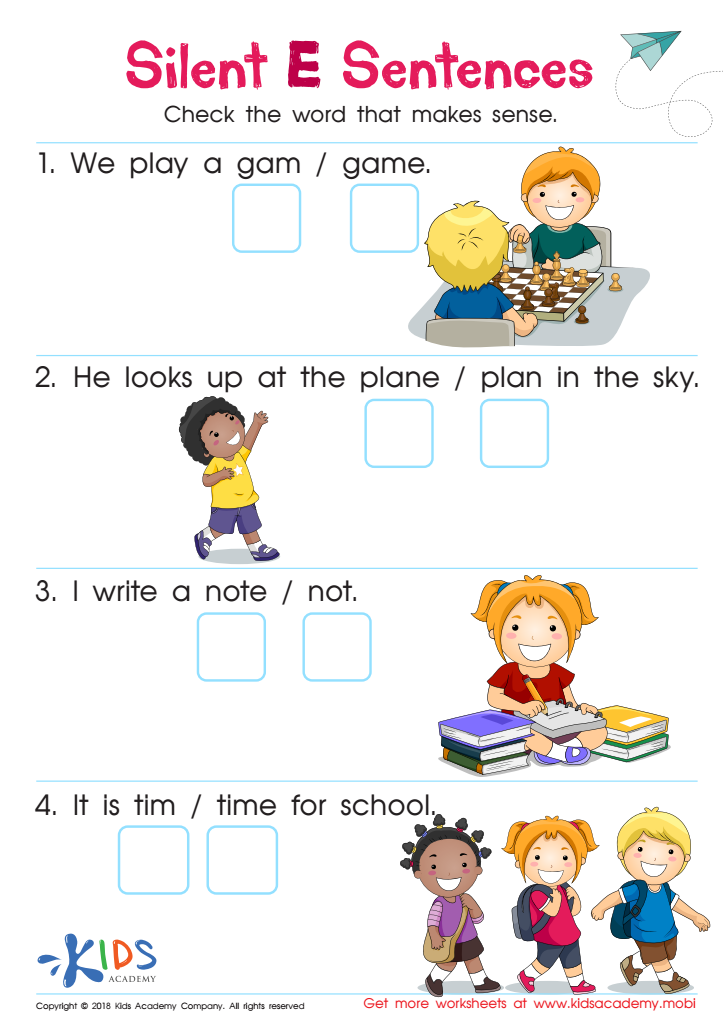
Silent E Sentences Worksheet
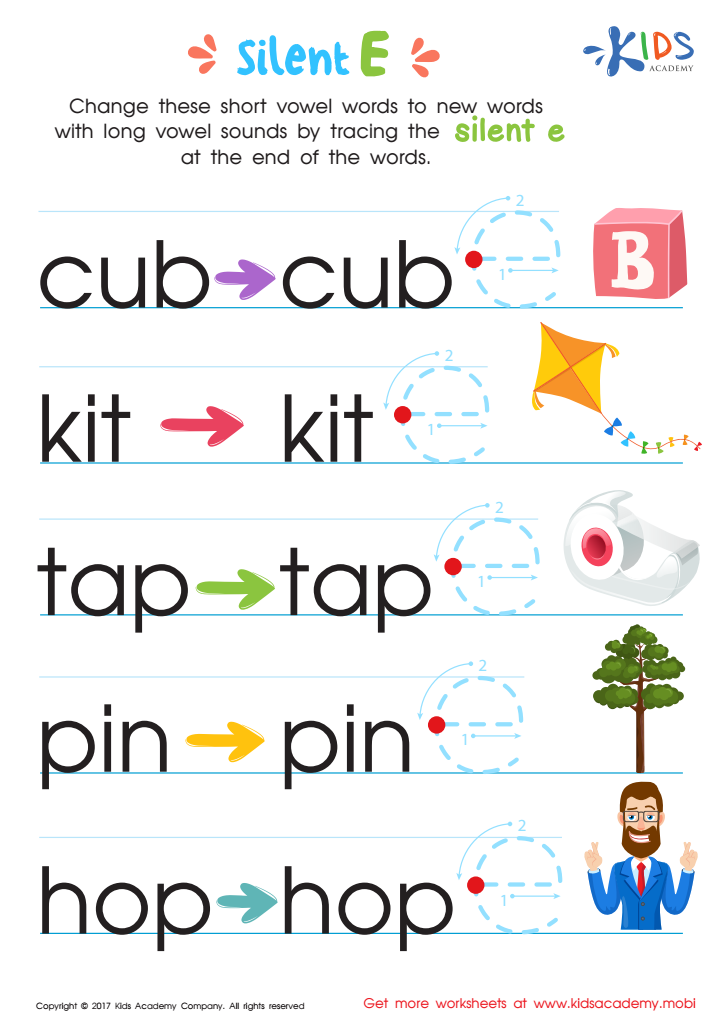
Silent E Words Worksheet
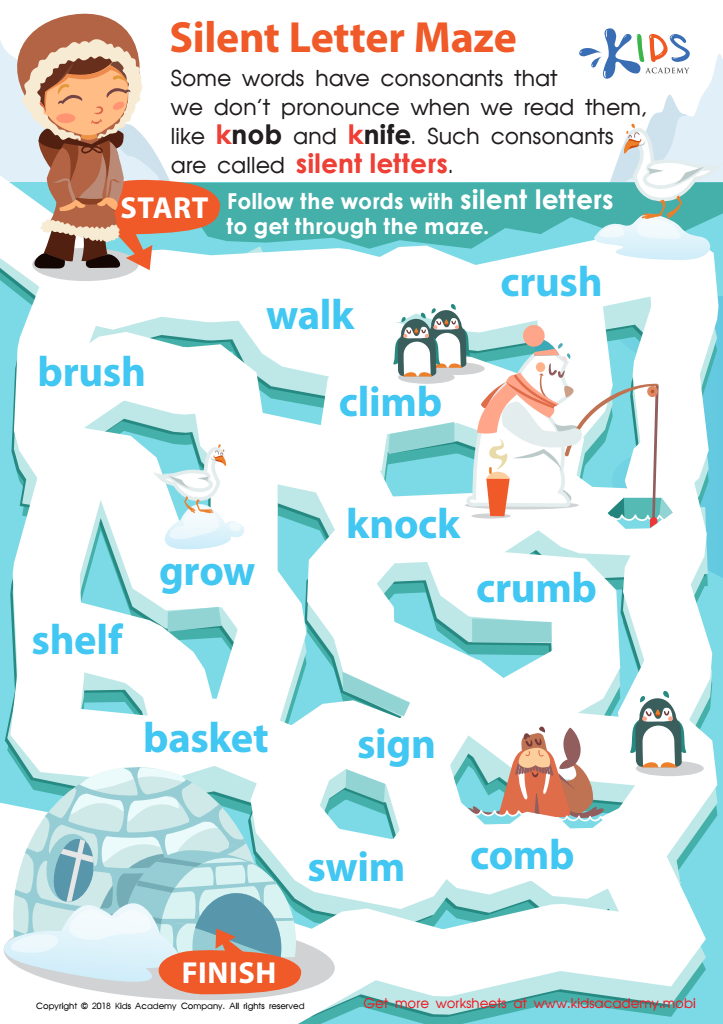
Silent Letter Maze Worksheet


Silent vowels are an often-overlooked aspect of phonics that play a crucial role in helping children aged 7-9 develop their reading and writing skills. Understanding silent vowels equips students with the ability to decode unfamiliar words, enhancing their overall literacy. When children encounter words with silent vowels, such as "hike" or "bake," they need to correctly identify where these letters are present and how they influence pronunciation.
Teachers and parents should emphasize the significance of silent vowels because they aid in fostering phonemic awareness, a critical skill for differentiating sounds in spoken language. This understanding helps mitigate reading difficulties and boosts confidence in literacy. Additionally, recognizing patterns involving silent letters enhances vocabulary acquisition. Children will be better prepared to spell and comprehend words, improving their writing and communication abilities.
Moreover, as children expand their reading palettes, awareness of silent vowels supports a richer literary experience. Engaging with texts featuring these elements fosters deeper comprehension and cultivates a love for reading. In essence, silence may hang in the letters, but the lessons resonate loudly in the journey to literacy. Prioritizing silent vowels ultimately leads to well-rounded communicators and enthusiastic learners.








