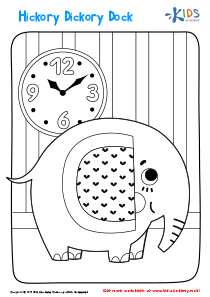
Easy Nursery Rhymes Worksheets for Ages 6-9
4 filtered results
-
From - To
Introducing our "Easy Nursery Rhymes Worksheets for Ages 6-9"! Combining fundamental learning with fun, these worksheets make literacy development engaging and enjoyable. Each activity features beloved nursery rhymes and is designed to enhance reading comprehension, vocabulary, and phonics. With colorful illustrations and interactive exercises, children can boost their reading skills while having fun. Perfect for both classroom and at-home practice, these worksheets provide parents and teachers a delightful resource to support early readers. Encourage your child's love for reading with our curated, easy-to-follow nursery rhymes worksheets today!
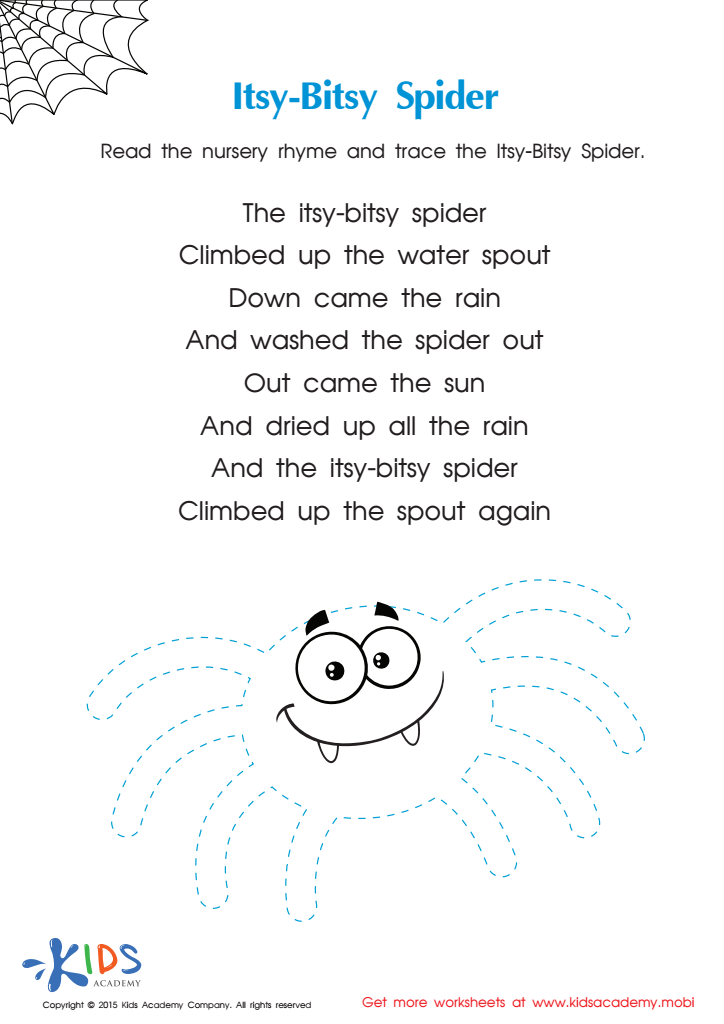
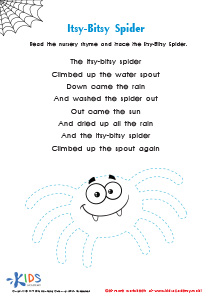
Itsy Bitsy Spider Nursery Rhyme PDF Worksheet
 Assign to My Students
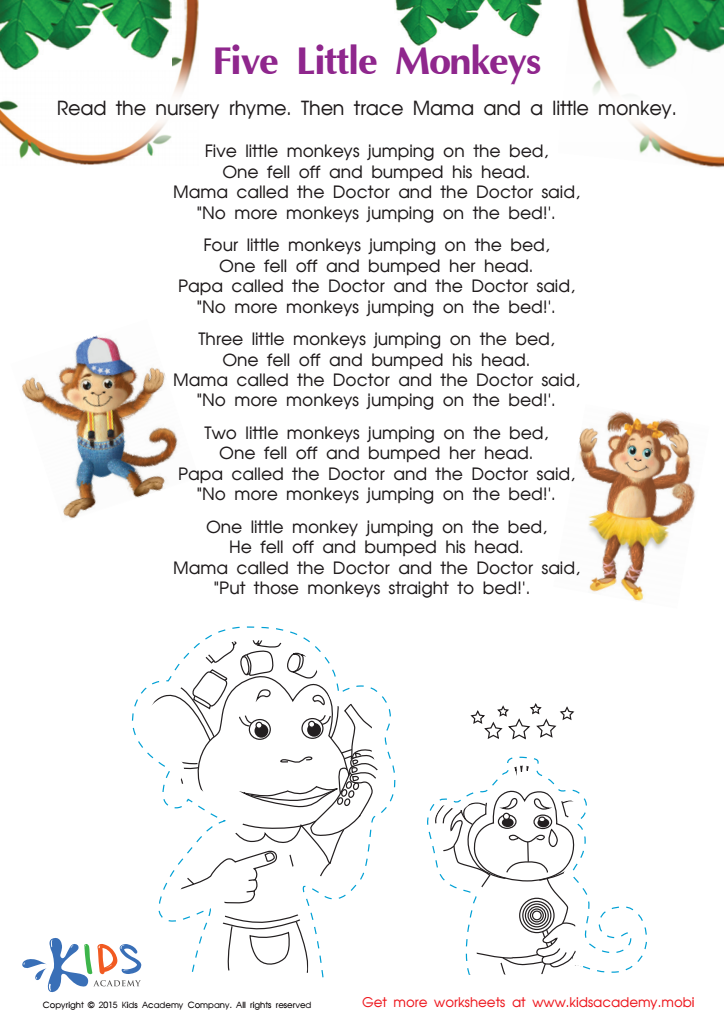
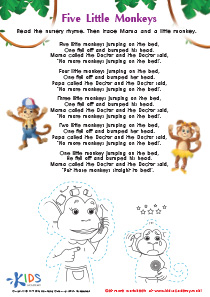
The Five Little Monkeys Nursery Rhyme Worksheet
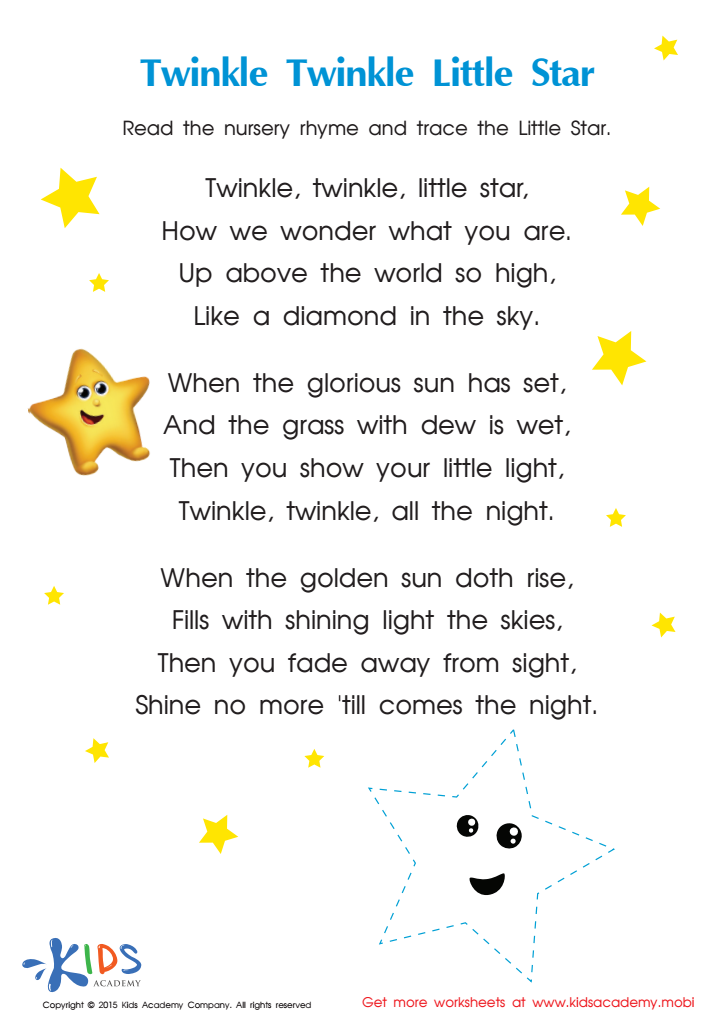
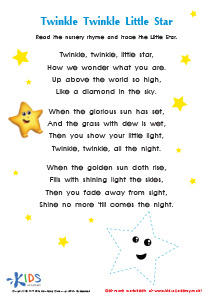
Nursery Rhymes: Twinkle Little Star Worksheet
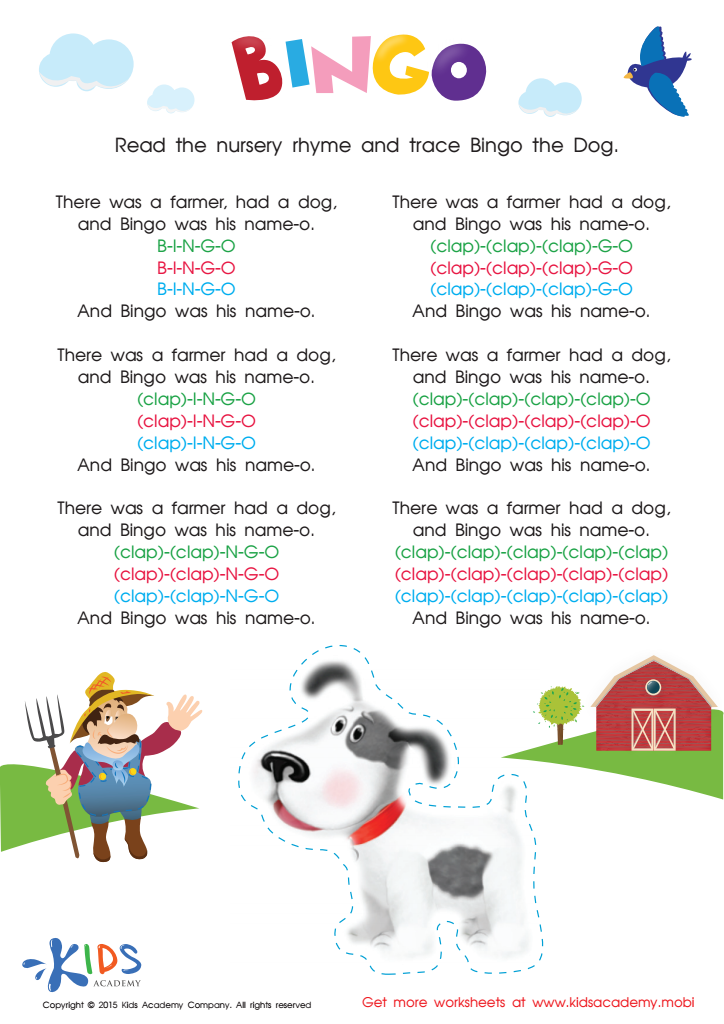
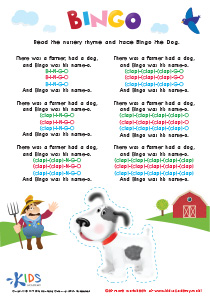
Nursery Rhymes: The Bingo Song Worksheet








Easy Nursery Rhymes are more than just catchy tunes for children aged 6-9; they are valuable educational tools that parents and teachers should care about. Firstly, nursery rhymes play a crucial role in language development. Their rhythmic and repetitive nature helps children recognize phonetic patterns, improving their listening skills and pronunciation. Such early exposure to language patterns can pave the way for reading and writing proficiency.
Moreover, these rhymes introduce children to basic literary concepts such as rhyme, meter, and storytelling, fostering an early appreciation for literature. Nursery rhymes often come with simple, engaging narratives that enhance comprehension skills by making it easier for children to follow and remember the stories.
Social skills are another important aspect that nursery rhymes help nurture. Singing or reciting rhymes in groups encourages cooperation and teamwork, helping children learn to take turns and listen to others. Additionally, many nursery rhymes involve actions and gestures, supporting fine and gross motor development, enhancing coordination, and making learning a multi-sensory experience.
Cultural literacy is also conveyed through traditional nursery rhymes, passing down timeless stories and cultural values from generation to generation. Thus, incorporating nursery rhymes into the daily routine can have far-reaching benefits, making them essential for both parents and teachers to consider.