Extra Challenge Life Science Worksheets for Ages 3-8
5 filtered results
Difficulty Level
Grade
Age
-
From - To
Subject
Activity
Standards
Discover a world of exploration with our Extra Challenge Life Science Worksheets for ages 3-8! Designed to stimulate young minds, these worksheets introduce foundational concepts in biology and ecology through engaging activities. Kids will explore topics like habitats, animals, plants, and ecosystems while enhancing their critical thinking and problem-solving skills. Each worksheet is crafted to cater to various learning styles, ensuring that your little learners have fun while deepening their understanding of the natural world. Perfect for home or classroom use, these resources encourage curiosity about life sciences and support essential early learning. Download your worksheets today and inspire the scientists of tomorrow!
Favorites
With answer key
Interactive
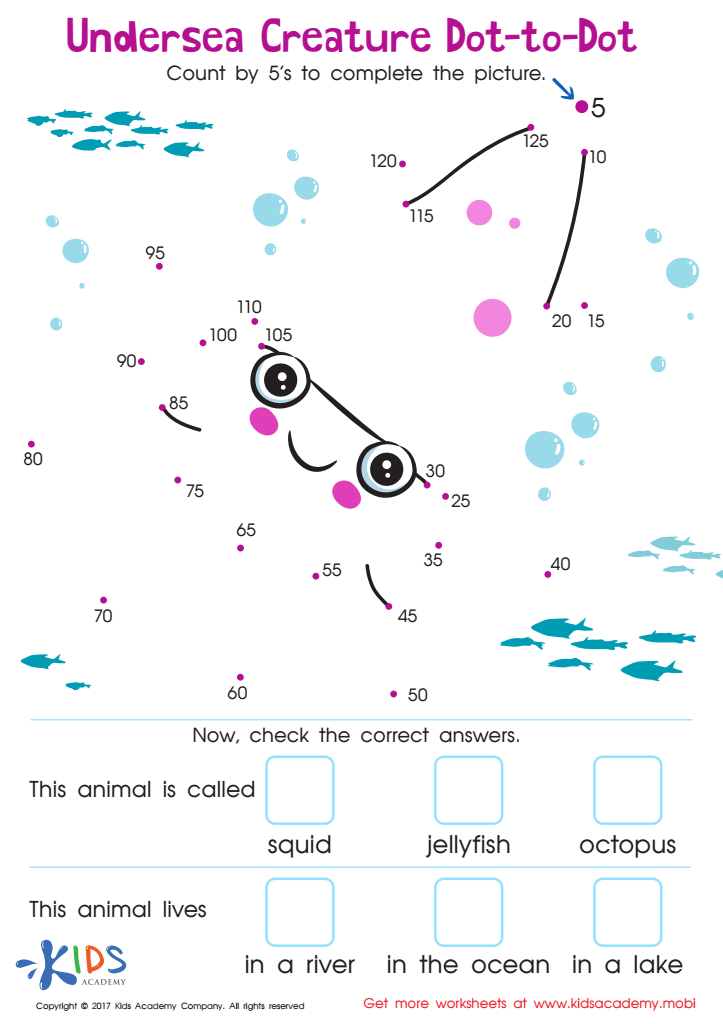
Undersea: Dot To Dot Worksheet
This dot-to-dot worksheet is a great way to teach kids about the undersea world while having fun. Kids will love connecting the dots and counting in 5s. Then they can check their answers.
 Assign to My Students
Undersea: Dot To Dot Worksheet
Worksheet
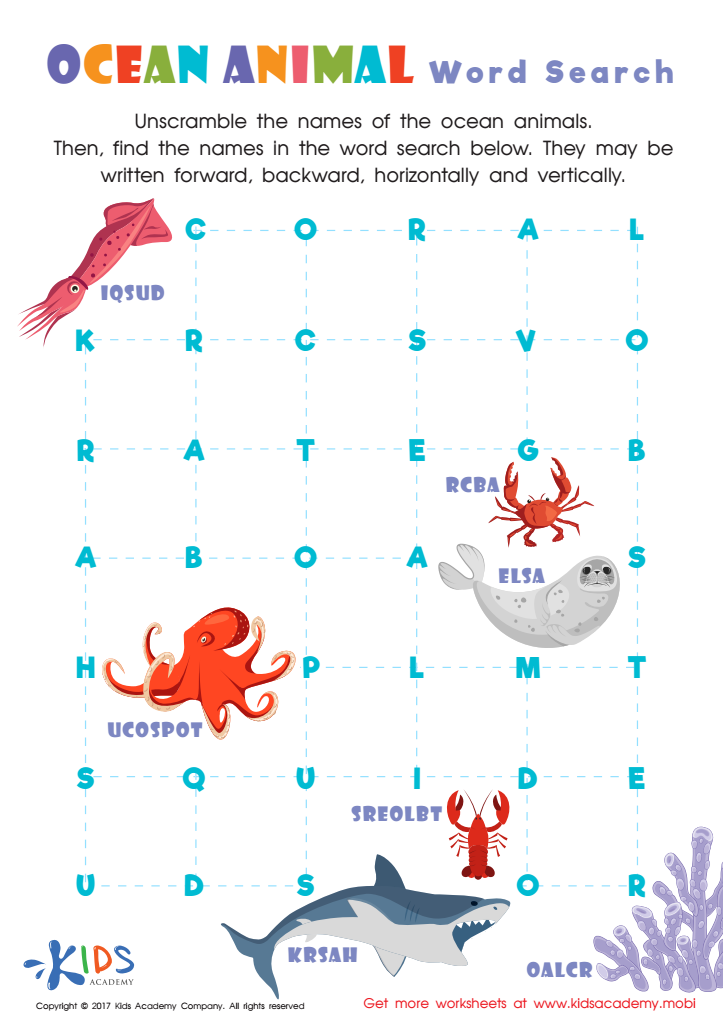
Ocean Animals Word Search Printable
Challenge your child to unscramble the names of ocean animals and find them in the word search. This ocean animals printable is a fun way to teach kids more about these fascinating creatures!
Ocean Animals Word Search Printable
Worksheet
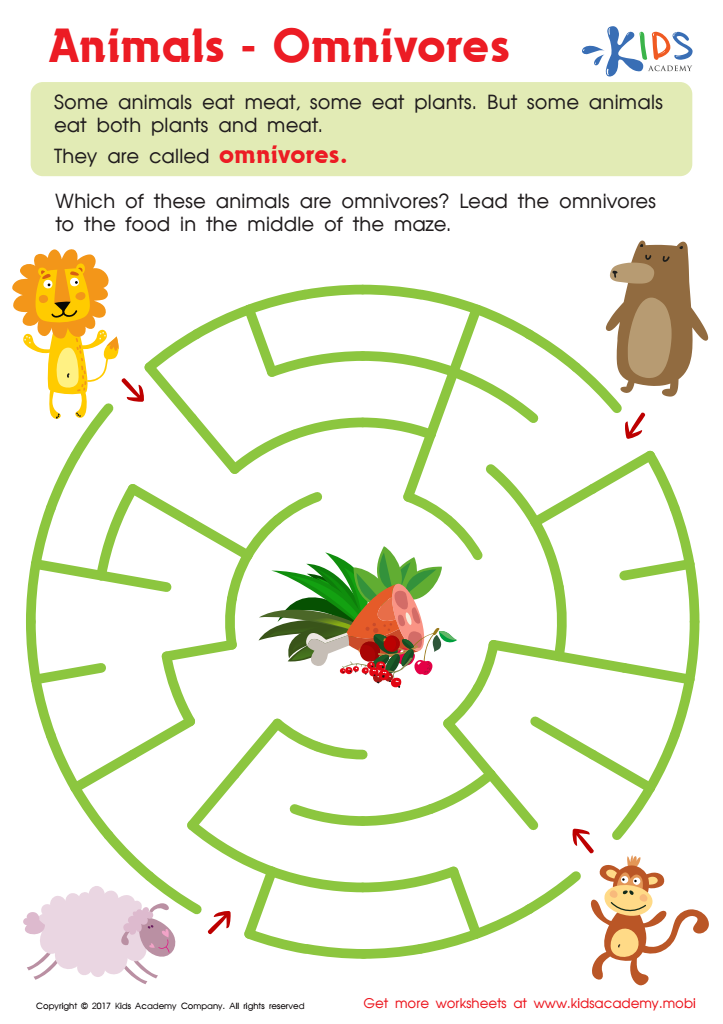
Omnivores Animals Worksheet
Kids can explore omnivores animals with this worksheet! It presents herbivores, carnivores and omnivores, with the main activity being a maze. Kids must guide a bear through it to get to its food. See how much they know about omnivores!
Omnivores Animals Worksheet
Worksheet
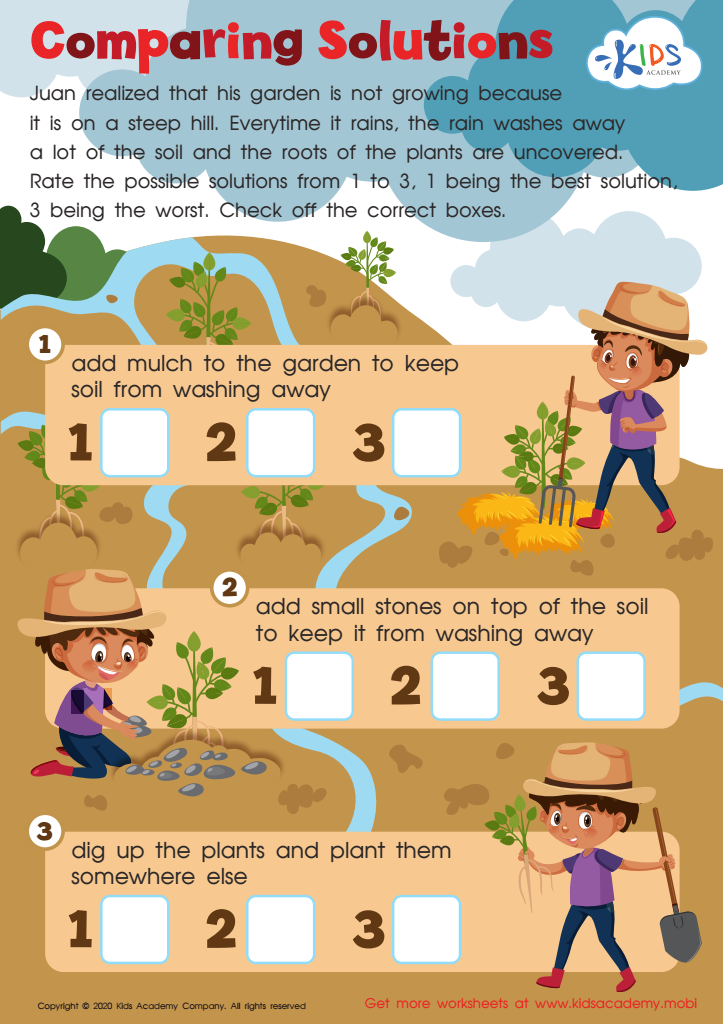
Comparing Solutions Worksheet
Juan can't get his veg garden growing as he'd like, planted on a steep hill. Help your child practice problem-solving by comparing solutions and rating them from most to least effective. With this thought-provoking worksheet, learners can hone the important skill of finding the best solution from a range of options.
Comparing Solutions Worksheet
Worksheet
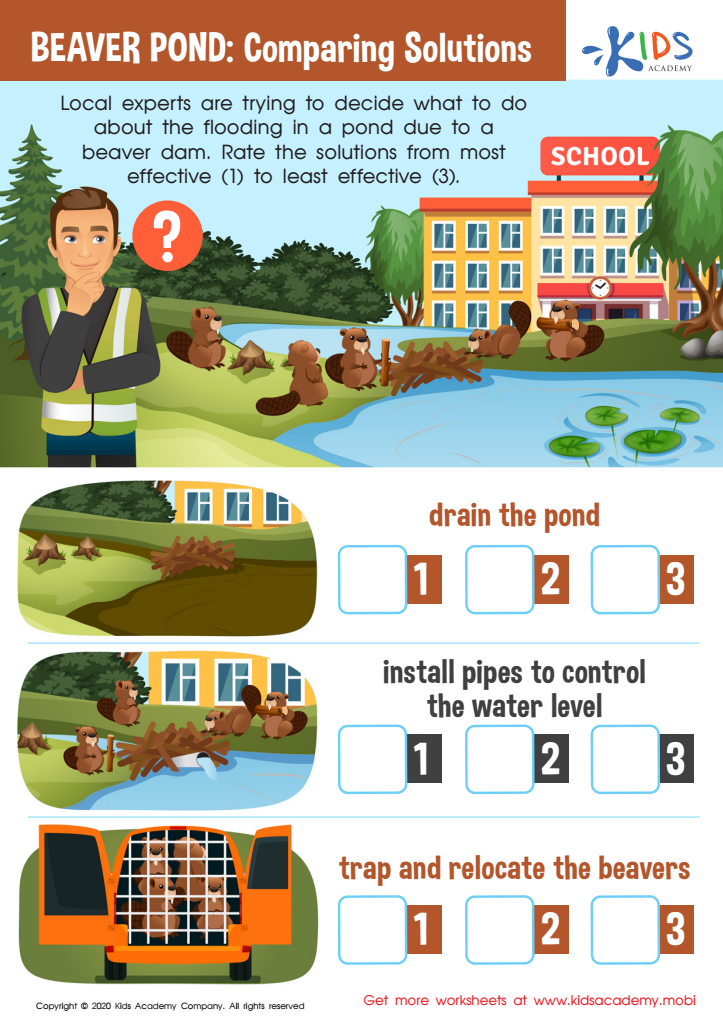
Beaver Pond: Comparing Solutions Worksheet
Got a problem? This science worksheet is great for helping your child compare solutions and pick the best one. Kids get to rate each option's effectiveness by ticking off boxes, from most to least. It's a great way to encourage problem-solving skills, while having fun!
Beaver Pond: Comparing Solutions Worksheet
Worksheet
Join Kids Academy for Free
Who is primarily going to use this learning content?






Parents and teachers should prioritize Extra Challenge Life Science for Ages 3-8 because it plays a critical role in developing young children's understanding of the natural world. Life science introduces essential concepts such as ecosystems, living organisms, and biological processes, which foster curiosity and a love for exploration at an early age. Engaging hands-on activities and interactive learning experiences enhance critical thinking and observation skills, encouraging children to ask questions and seek answers.
Additionally, the foundational knowledge gained from early life science education supports broader learning in other subjects, such as mathematics and language arts. As children learn about life forms and their environments, they develop vocabulary, comprehension, and analytical thinking skills.
Furthermore, introducing life science to young learners promotes environmental responsibility and instills a sense of stewardship for nature. By recognizing their role in the ecosystem, children can grow up with a commitment to sustainable living and respect for biodiversity.
Overall, Extra Challenge Life Science helps cultivate inquisitive, informed individuals who are better equipped to tackle future challenges related to health, conservation, and science. Investing in this area of education ensures that our children develop a strong, lifelong appreciation for the life sciences and the world around them.