Extra Challenge Consonants Worksheets for Ages 3-9
5 filtered results
-
From - To
Boost your child's phonics skills with our Extra Challenge Consonants Worksheets, tailored for ages 3-9! These engaging printables support young learners in mastering tricky consonant sounds through fun and captivating activities. Designed to reinforce early reading abilities, each worksheet offers an array of exercises that challenge and develop critical thinking and phonemic awareness. Whether it's identifying beginning sounds, matching consonant pairs, or blending, these worksheets provide a stimulating educational experience. Perfect for both classroom and at-home learning, help your child excel and build a solid foundation in literacy with our expertly crafted resources.
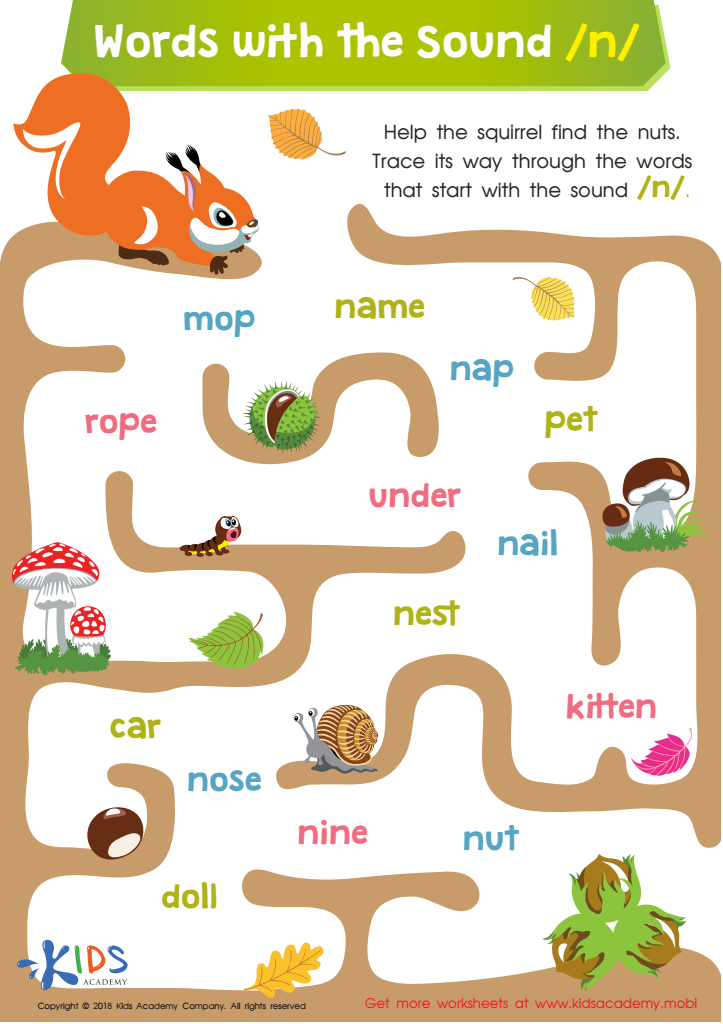
Words with Sound N Reading Worksheet
 Assign to My Students
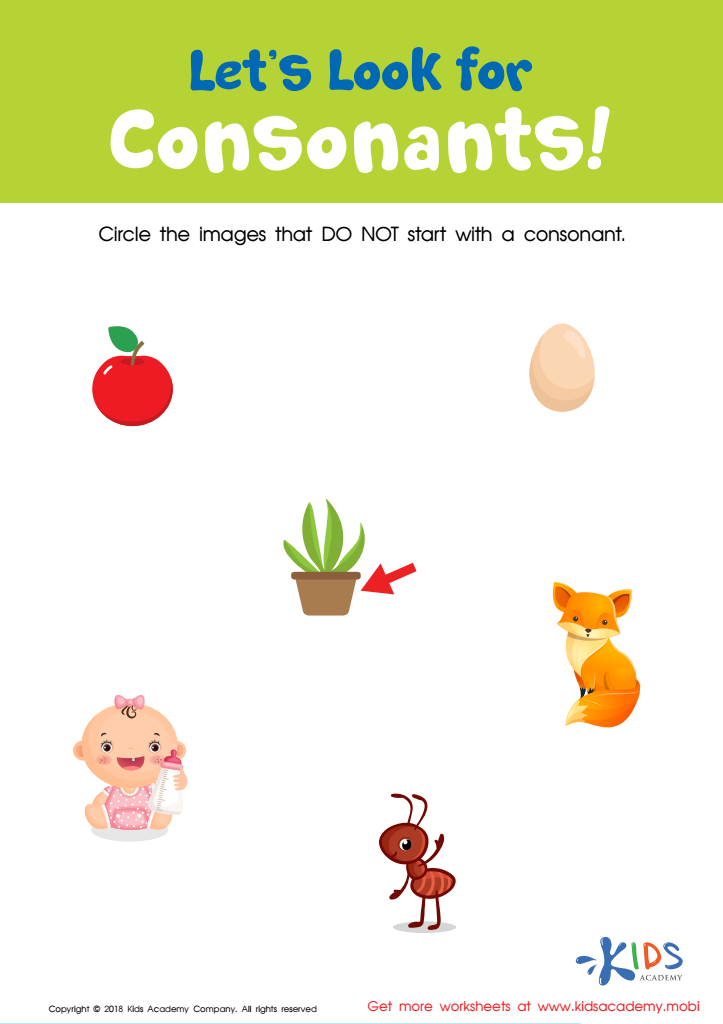
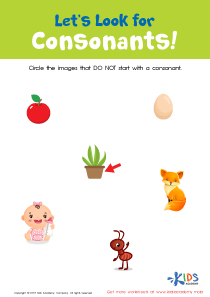
Let's Look for Consonants Worksheet
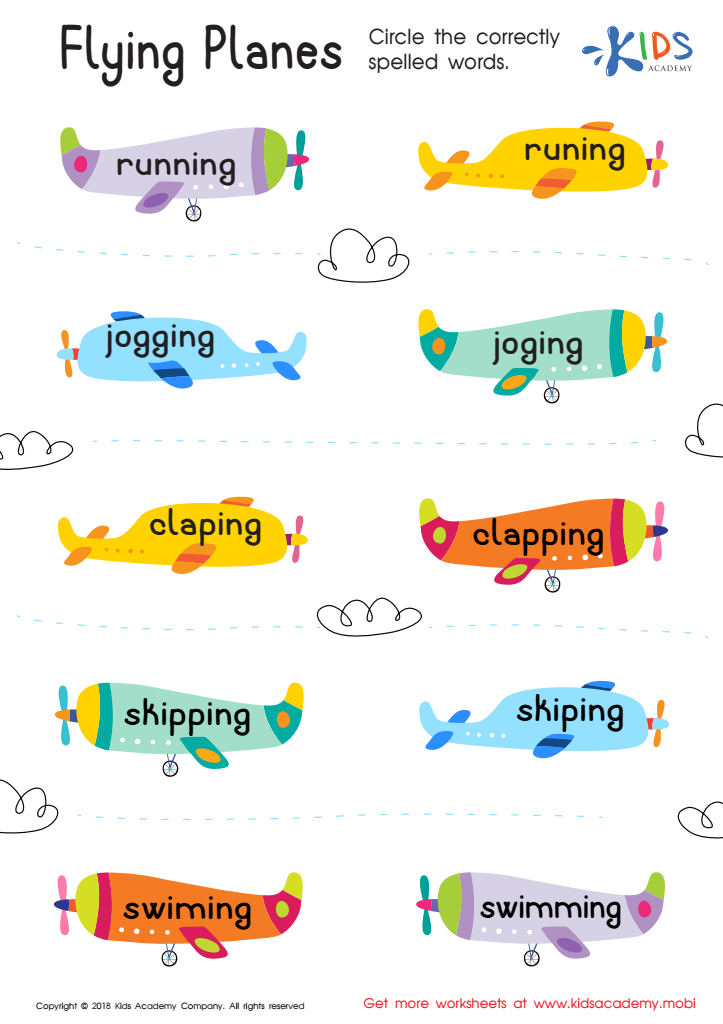
Flying Planes Worksheet
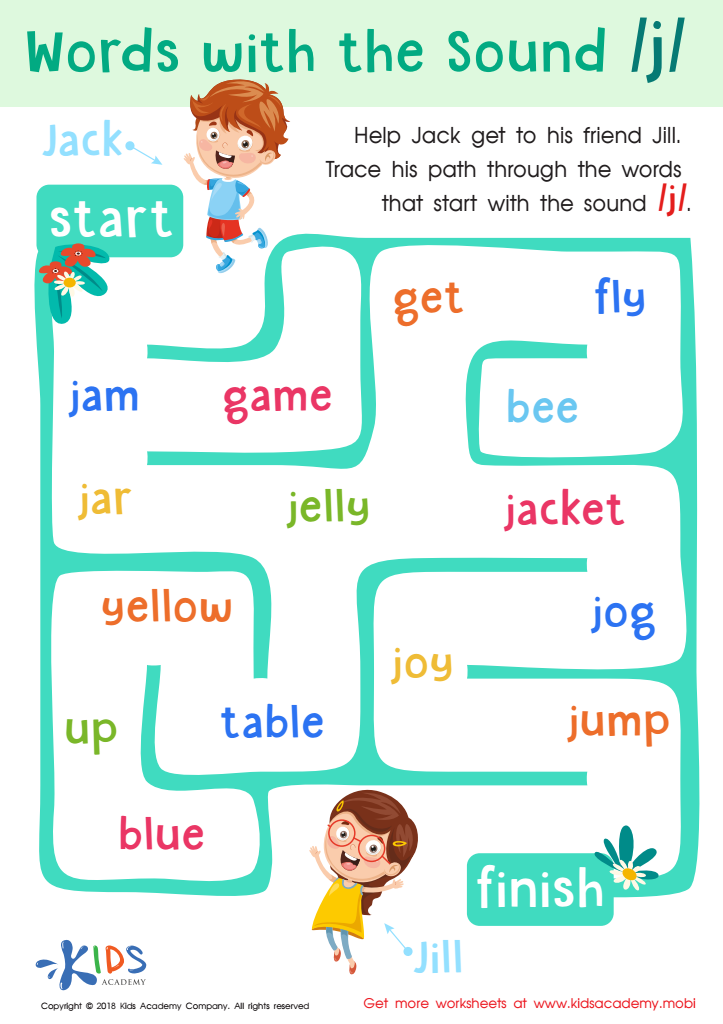
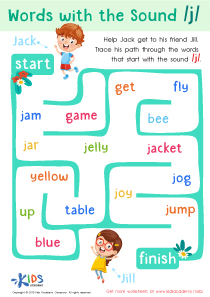
Words with sound j Reading Worksheet
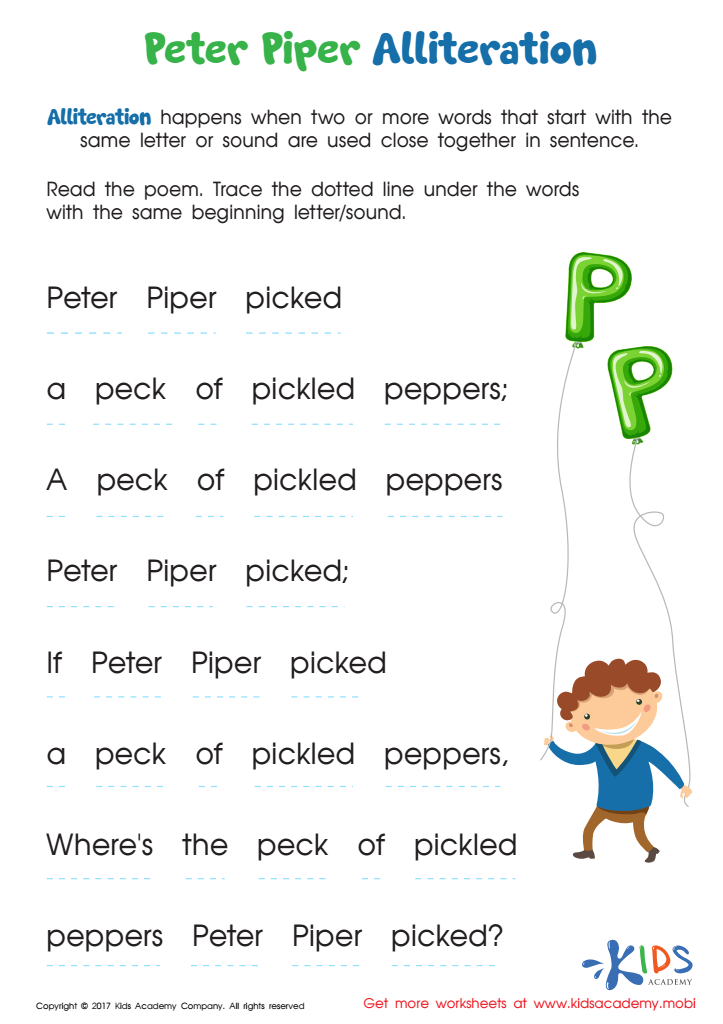
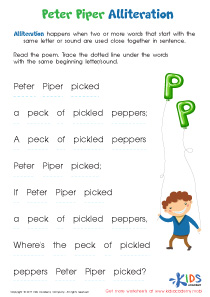
Peter Piper Alliteration Worksheet



Extra Challenge Consonants play a crucial role in early language development for children aged 3-9. During these formative years, children are rapidly acquiring foundational skills in reading and speaking, which are essential for their academic success and overall communication abilities. By focusing on challenging consonants, such as blends (e.g., "bl," "cr"), digraphs (e.g., "th," "sh"), and tricky single consonants (e.g., "r," "l"), parents and teachers can help children master more complex phonetic structures that are commonly found in English.
Understanding and pronouncing these consonants correctly enhances children's phonemic awareness, a key precursor to reading proficiency. Strong phonemic awareness allows children to segment and blend sounds effectively, facilitating smoother decoding processes when they encounter new words. This skill is predictive of later reading success, making early intervention and practice with challenging consonants critical.
Moreover, clear and accurate pronunciation boosts children's confidence in speaking and helps prevent miscommunications. As children become more adept with these sounds, they are better able to engage in reading activities, both independently and in group settings, fostering a love for literature.
By paying close attention to Extra Challenge Consonants, parents and teachers can ensure that children develop robust language skills, setting a strong foundation for future educational achievements and effective communication.