Normal Geometry Worksheets for Ages 3-4 - Page 3
51 filtered results
-
From - To
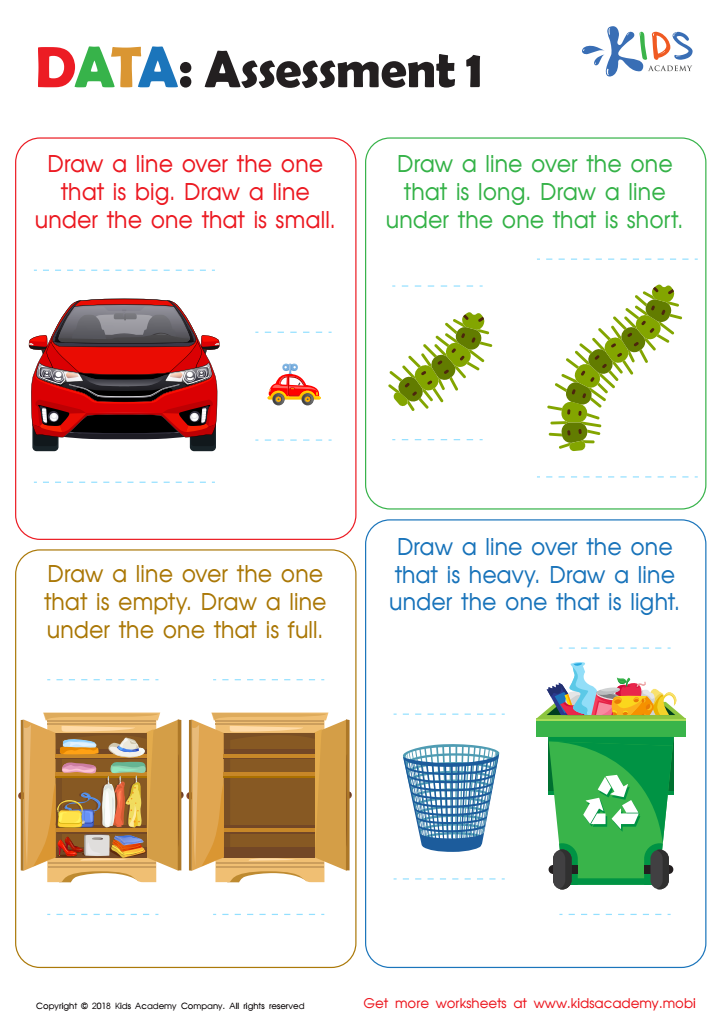
Data: Assessment 1 Worksheet
 Assign to My Students











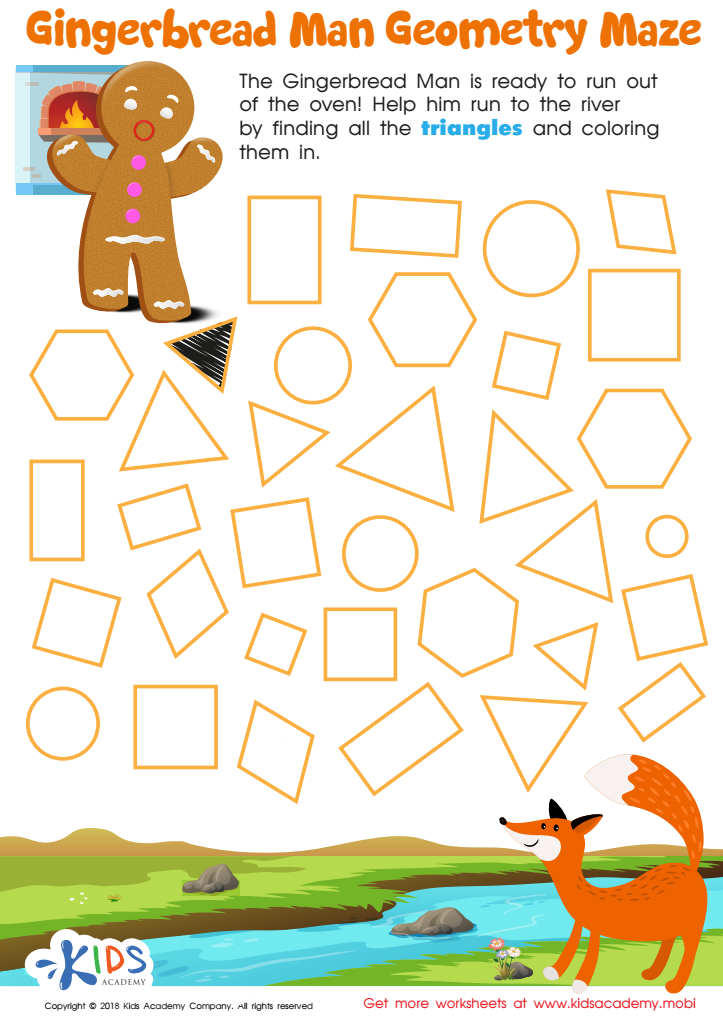
Gingerbread Man Geometry Maze Worksheet
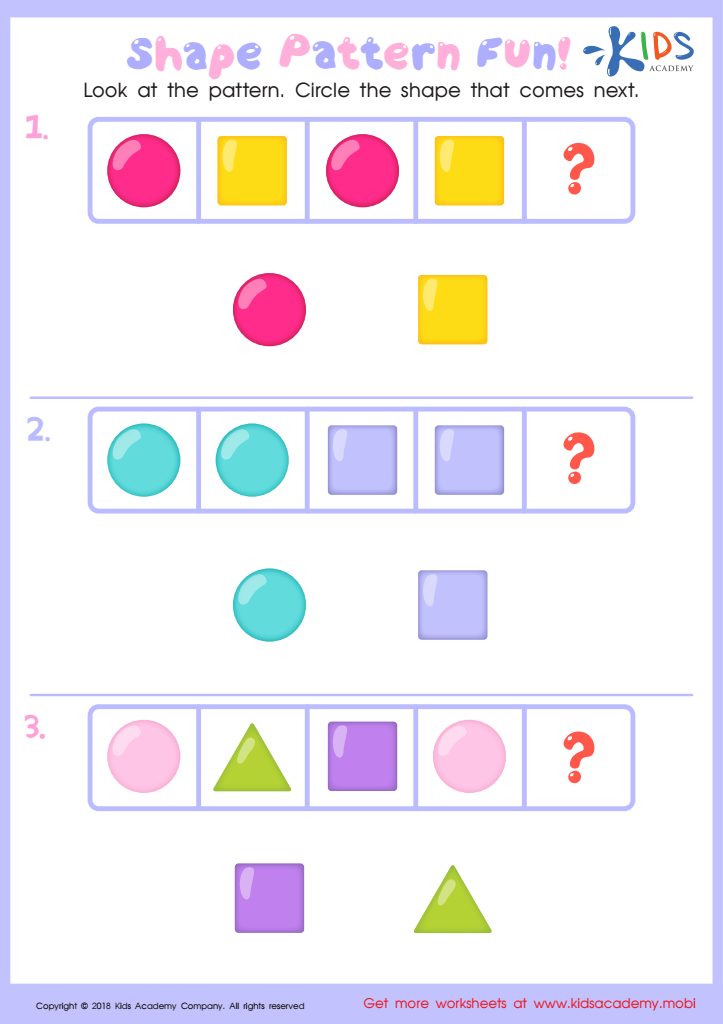
Shape Pattern Fun Worksheet








Normal Geometry worksheets for Ages 3-4 are an essential tool in the foundational development of young learners' mathematical understanding. At such a formative age, children are naturally curious and eager to explore the world around them. Geometry, being the branch of mathematics that deals with shapes, sizes, and properties of space, is a fantastic way to harness this curiosity and translate it into meaningful learning experiences.
Introducing children to Normal Geometry through worksheets specifically designed for Ages 3-4 helps in several key areas. Firstly, it aids in the development of spatial reasoning skills. Through engaging with shapes and patterns, children learn to visualize and understand spatial relationships, an important skill not just in mathematics but in daily problem-solving.
Secondly, these worksheets enhance fine motor skills. As children trace shapes, draw lines, and color within specified areas, they refine their hand-eye coordination and control. This not only supports their writing skills but also aids in other activities requiring precision.
Moreover, Normal Geometry worksheets introduce basic mathematical concepts in a fun and age-appropriate manner. By solving puzzles, matching shapes, and identifying patterns, young learners are exposed to critical thinking and problem-solving in an enjoyable way. This early positive engagement with math fosters a love for the subject that can last a lifetime.
In conclusion, Normal Geometry worksheets for Ages 3-4 are not just about learning shapes; they are a holistic tool that supports cognitive development, fine motor skills, and foundational math skills, all while keeping learning fun and engaging for young minds.








