Normal Subtraction Worksheets for Ages 3-5
4 filtered results
-
From - To
Introduce young learners to the world of mathematics with our Normal Subtraction Worksheets for Ages 3-5. Designed to build a strong foundation in early math skills, these worksheets focus on simple subtraction activities perfect for preschool and early kindergarten kids. Carefully crafted with engaging visuals and easy-to-understand instructions, each worksheet makes learning subtraction both fun and educational. Your little one will practice subtracting numbers within 10, facilitating numerical familiarity and confidence. Parents and teachers alike will find these resources invaluable in ensuring children grasp the basics of subtraction in an enjoyable way. Start your child’s math journey today!
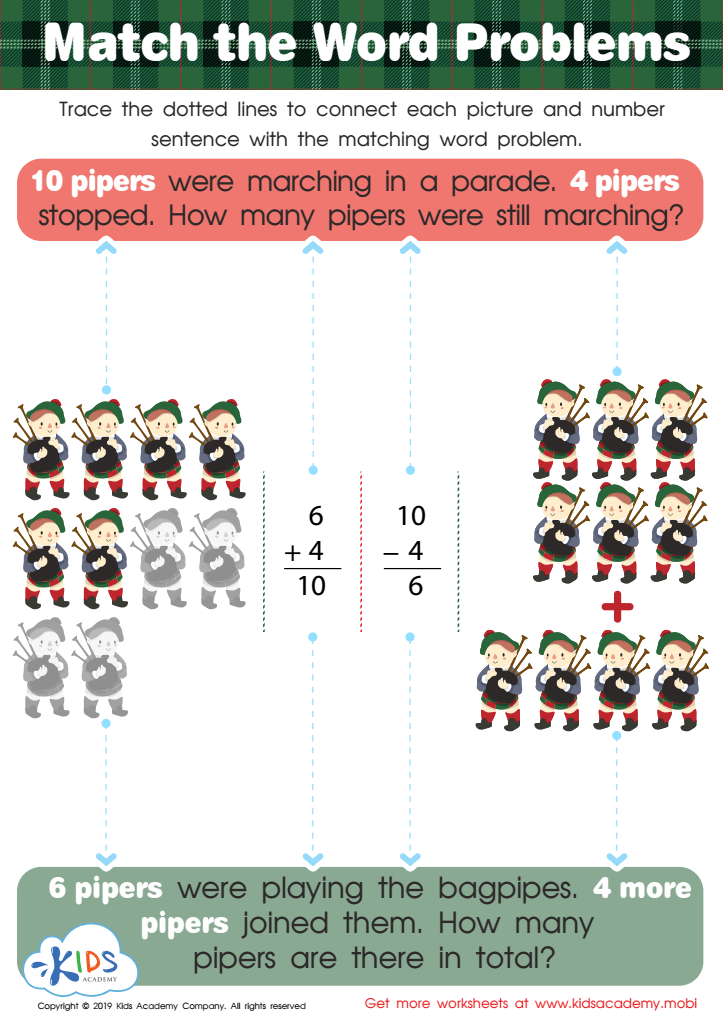
Match the Word Problems Worksheet
 Assign to My Students
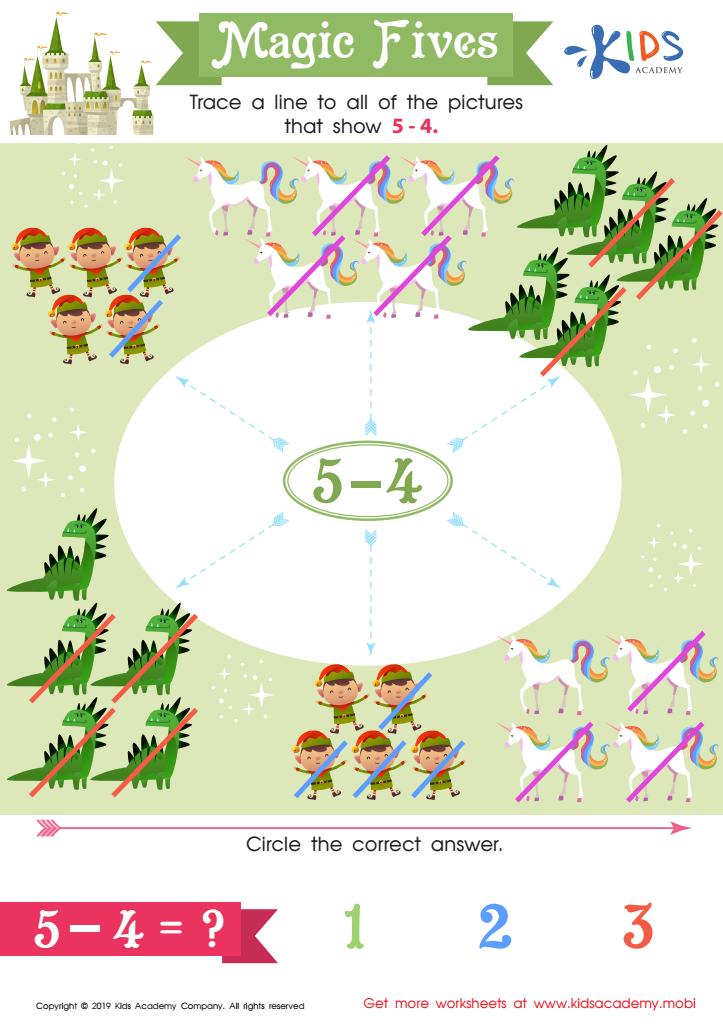
Magic Fives Worksheet
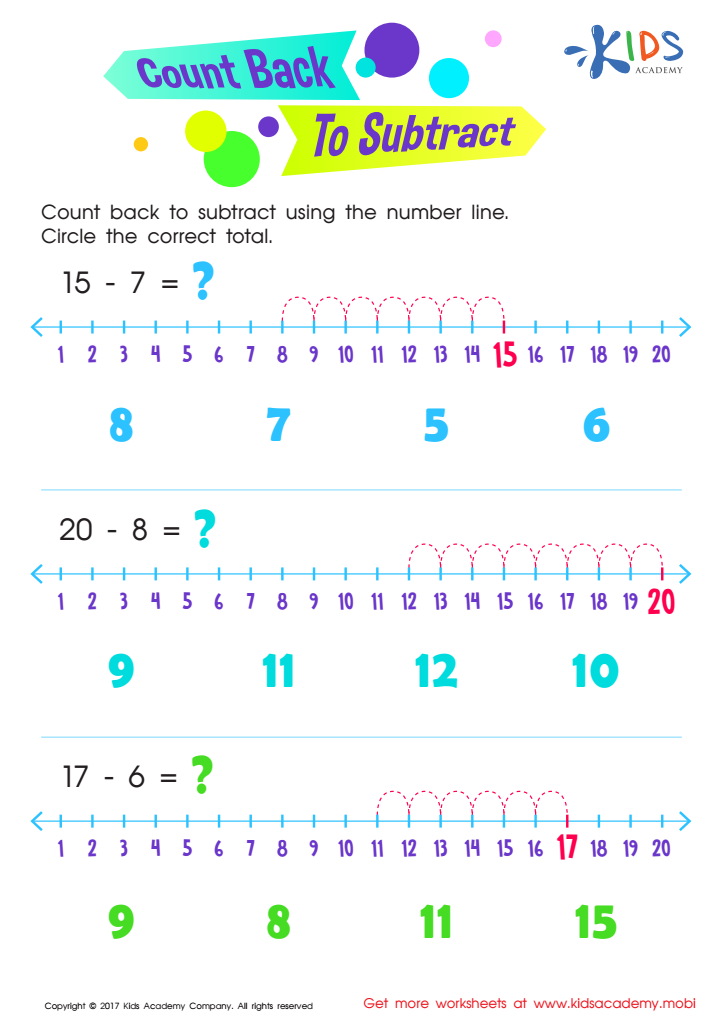
Count Back to Subtract Substraction Worksheet
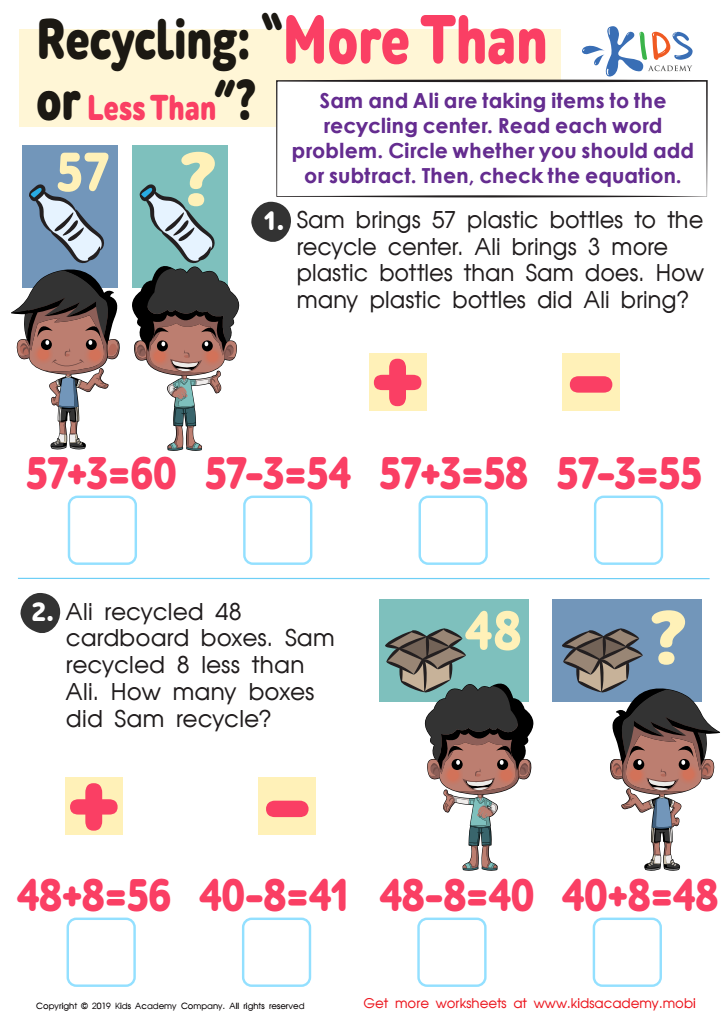
Recycling - More or Less Worksheet








Understanding normal subtraction is fundamental for young children ages 3-5 because it fosters critical early math skills that are essential for their future academic success. Subtraction, or the process of taking away, not only builds numerical fluency but also enhances problem-solving and logical thinking abilities. When children grasp subtraction, they begin to develop a sense of quantity, comparisons, and the relationships between numbers.
Introducing subtraction at an early age helps children understand that math is not just about memorizing numbers but about concepts that represent real-world situations. For instance, if a child has 5 apples and gives away 2, they can see that they will have 3 apples left. This concrete understanding through everyday examples is vital.
Additionally, early exposure to subtraction can improve children's confidence in dealing with numbers, setting a positive attitude towards mathematics. It also lays the groundwork for more complex mathematical concepts they'll encounter later, like addition's inverse relationships, problem-solving strategies, and even algebra.
Therefore, parents and teachers should care about teaching normal subtraction as it equips children with the necessary tools to excel in school and life. Starting math education early and solidifying basic concepts such as subtraction ensures a strong foundation and encourages a lifelong appreciation and understanding of mathematics.