
Normal Life Science Worksheets for Ages 3-6
9 filtered results
Difficulty Level
Grade
Age
-
From - To
Subject
Activity
Standards
Explore our engaging Life Science Worksheets designed specifically for children aged 3-6! Perfect for preschool and early elementary education, these worksheets introduce young learners to the wonders of nature, plants, animals, and their environments. Each activity encourages curiosity and interactive learning, helping kids develop foundational scientific concepts through colorful illustrations and simple prompts. Our user-friendly design makes it easy for parents and educators to facilitate enjoyable and educational experiences at home or in the classroom. Dive into fun, hands-on learning, and watch as children discover the incredible world around them with our thoughtfully crafted worksheets!
Favorites
With answer key
Interactive
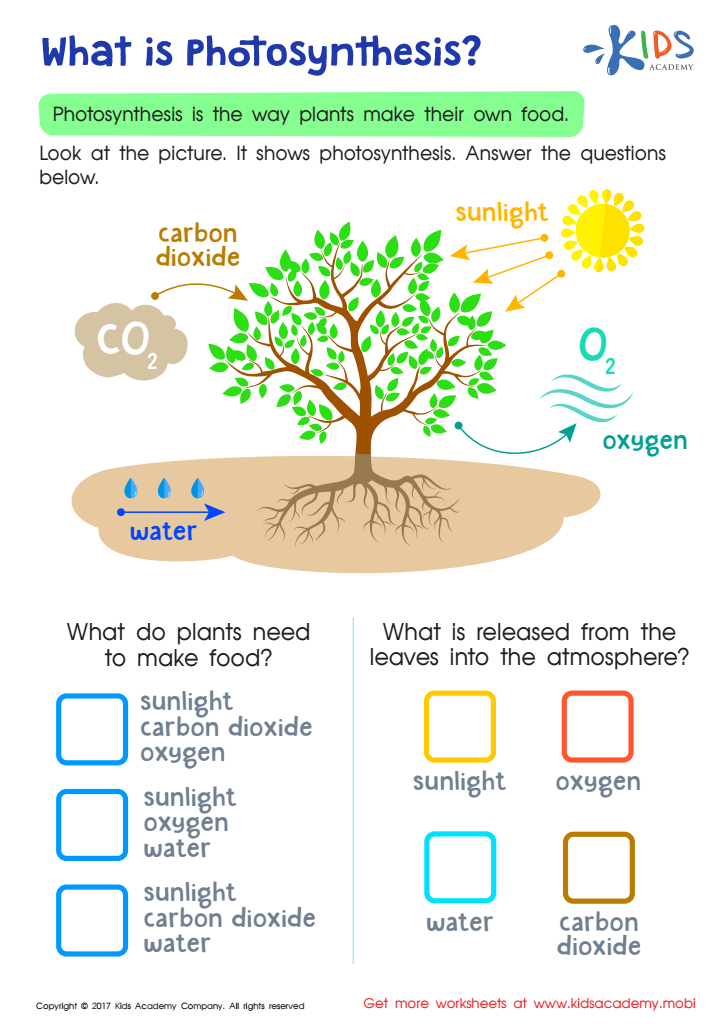
What is Photosynthesis Printable
Plants need to eat too; they make their own food from the air. Introduce them to photosynthesis with this fun worksheet!
 Assign to My Students
What is Photosynthesis Printable
Worksheet
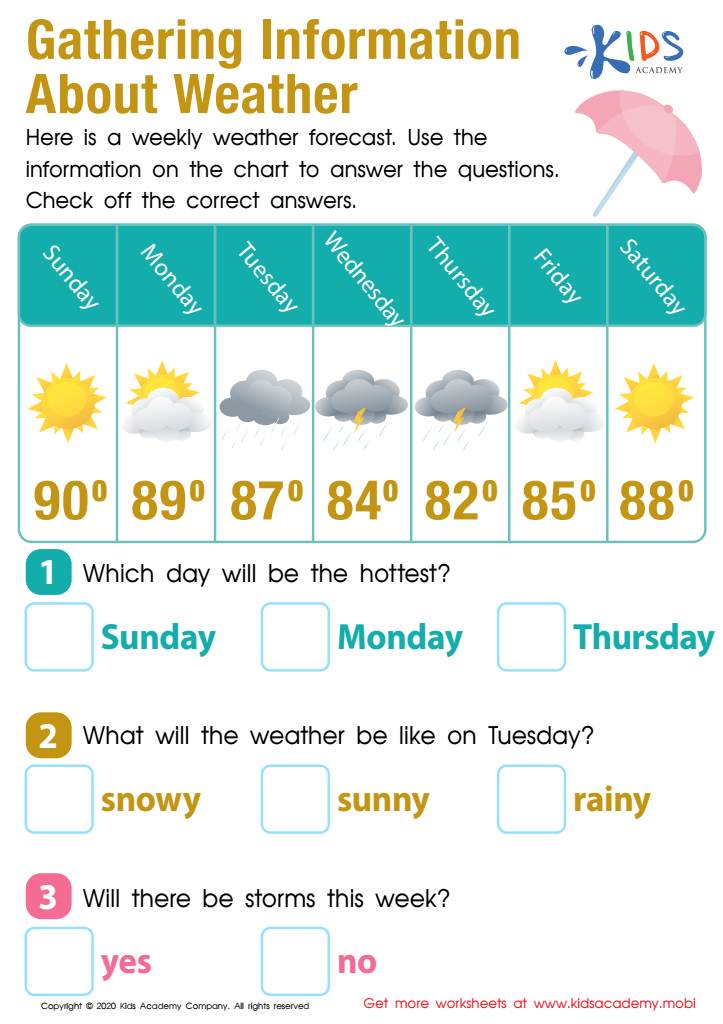
Gathering Information About the Weather Worksheet
Teach your child to interpret a weather forecast with this helpful science worksheet from Kids Academy! Guide them to analyze the data, figure out what the weather will be like on each day and answer the questions at the bottom by checking off the correct answers. This will help them understand and plan for their week!
Gathering Information About the Weather Worksheet
Worksheet
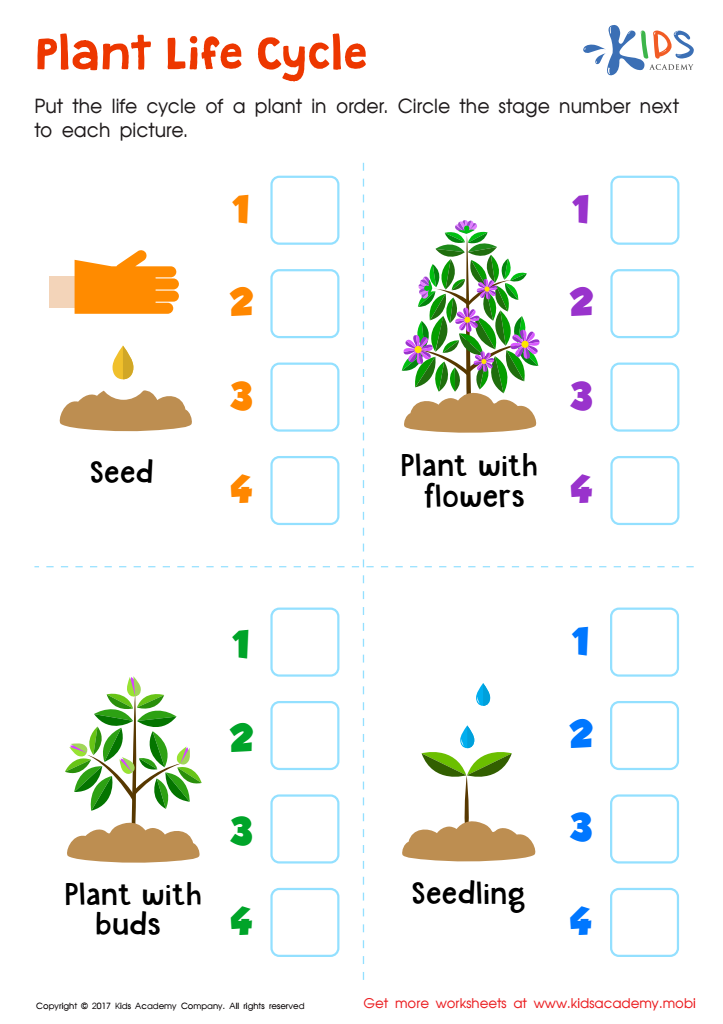
Plant Life Cycle Printable
Let kids explore plants' growth stages with this fun plant life cycle worksheet! They'll strengthen their sequencing skills by ordering the cycle from seed to flower. Make the learning experience even more memorable by growing a flower afterward.
Plant Life Cycle Printable
Worksheet
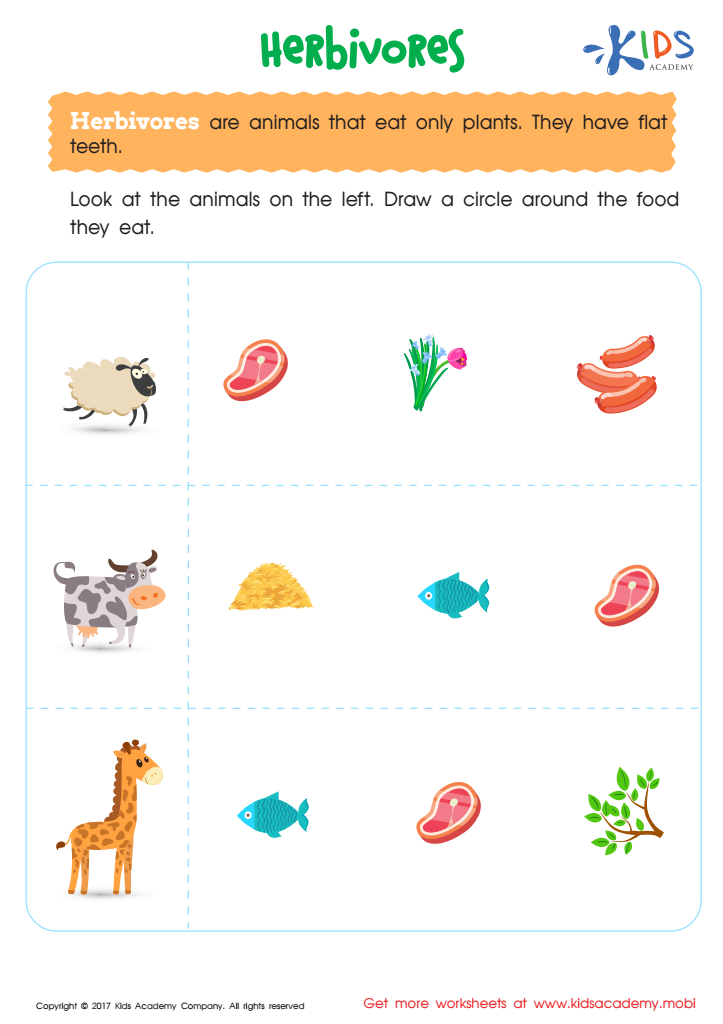
Herbivores Printable
Strengthen their vocab with these fascinating creatures, as they explore an intriguing aspect of beloved animals.
Herbivores Printable
Worksheet
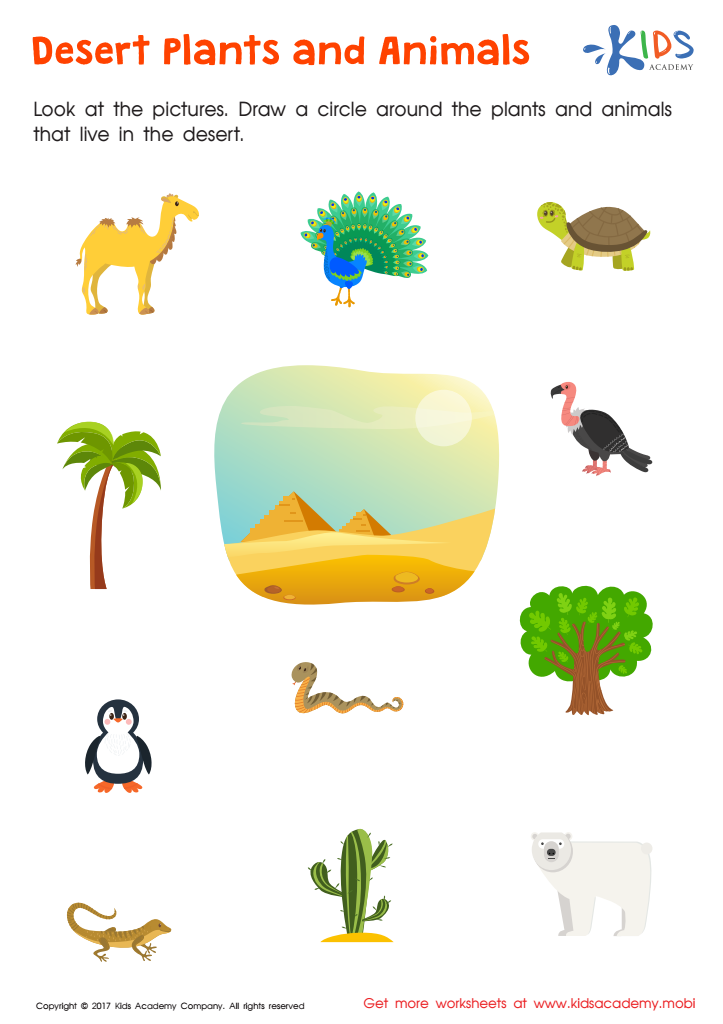
Desert Plants Animals Printable
Discover the wonders of the desert with this worksheet, featuring vivid colors and unique plants and animals adapted to its tough, dry conditions. Explore the special wildlife and flora of the desert!
Desert Plants Animals Printable
Worksheet
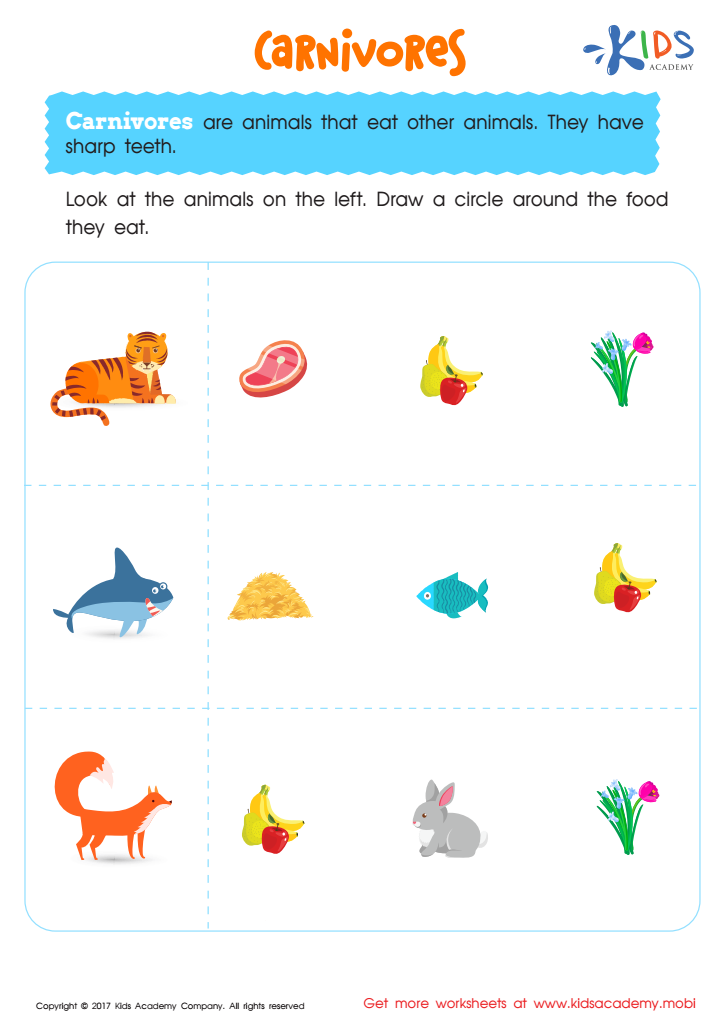
Carnivores Worksheet
Boost their vocabulary and help them explore the incredible world of carnivores.
Carnivores Worksheet
Worksheet
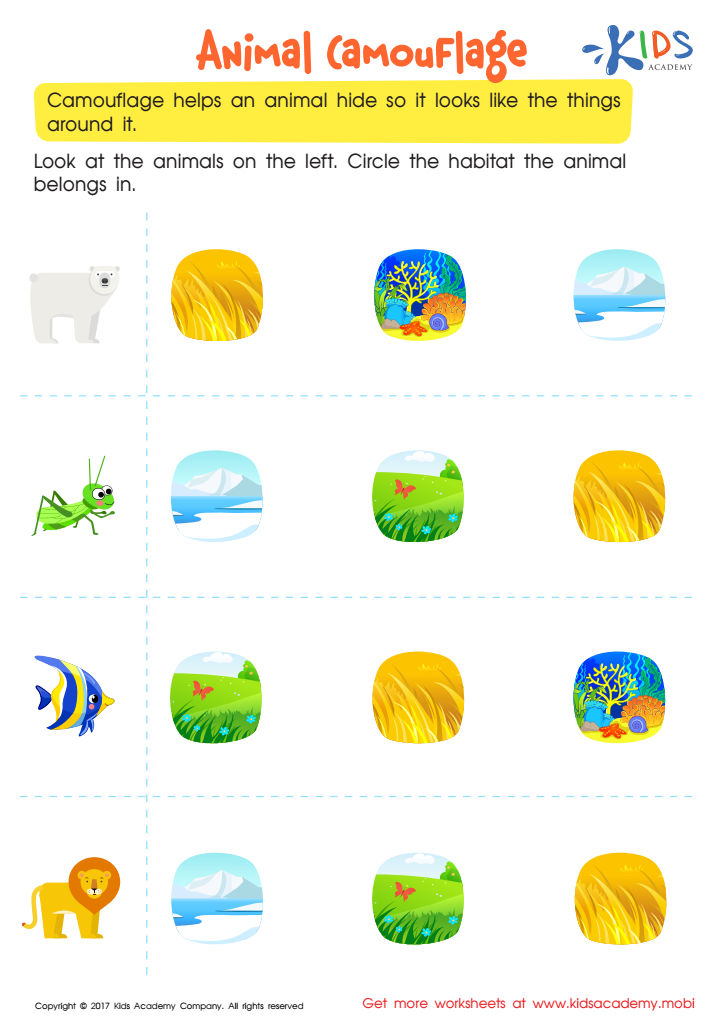
Animal Camouflage Worksheet
Camo isn't just for the military! Animals use camouflage, blending into their environment with coat patterns. Introduce your kid to this fascinating natural phenomenon with this cute animal camouflage worksheet.
Animal Camouflage Worksheet
Worksheet
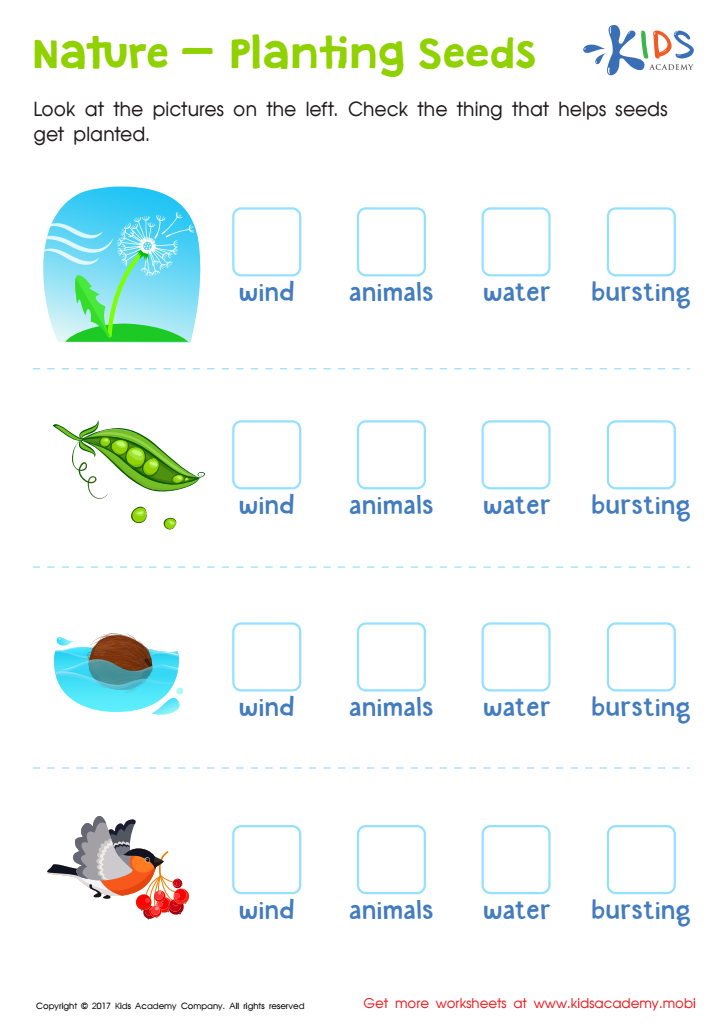
Nature Planting Seeds Worksheet
Help your child explore the fascinating cycle of plants and seeds with this worksheet. They'll learn how plants grow and how seeds travel to the ground. Challenge them to identify the right way each seed gets planted!
Nature Planting Seeds Worksheet
Worksheet
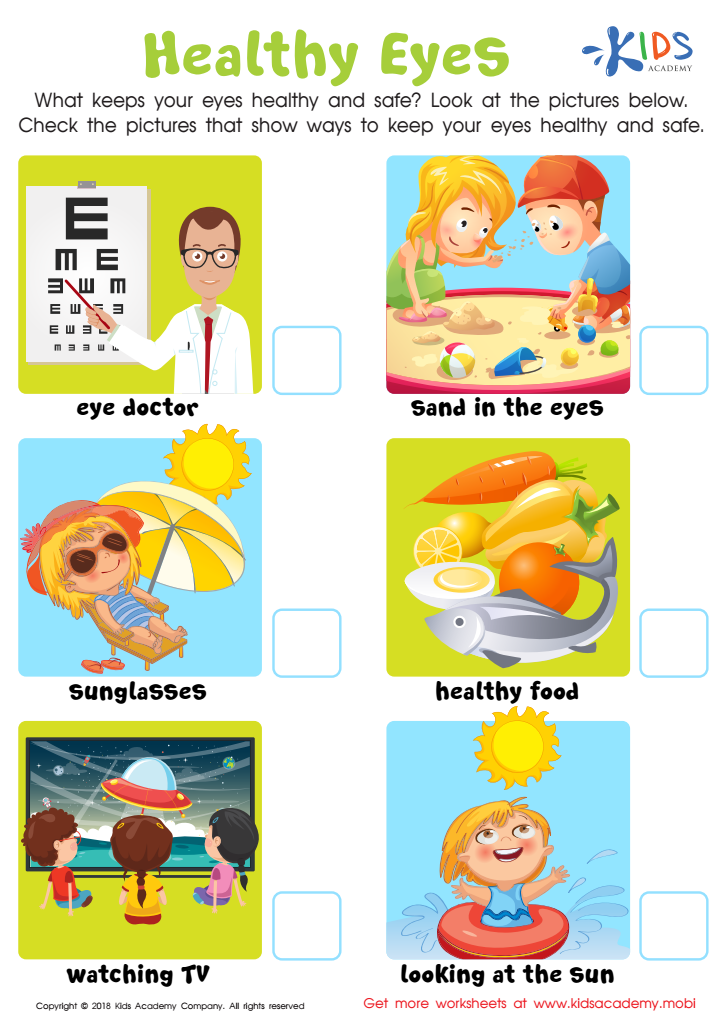
Healthy Eyes Worksheet
Does your child know how to care for their eyes? Help them understand with this worksheet. Look through the pictures together and discuss the different ways to keep the eyes healthy and safe. These include visits to the doctor, wearing sunglasses, and eating healthy food.
Healthy Eyes Worksheet
Worksheet
Join Kids Academy for Free
Who is primarily going to use this learning content?


.jpg)





Normal Life Science is essential for children aged 3-6, as it lays the foundation for their understanding of the world around them. At this early developmental stage, children are naturally curious and eager to explore. Introducing them to life science fosters their innate curiosity and encourages experiential learning. It helps them discover the basics of biology, ecosystems, and the interdependence of living things through hands-on activities that are age-appropriate and engaging.
Parents and teachers should care about this concept because early exposure to life science nurtures critical thinking skills, enhances observational abilities, and inspires a sense of wonder about nature. It also promotes environmental awareness and stewardship. By embedding life science concepts in daily activities, children learn to ask questions, conduct simple experiments, and verbalize their findings, forming the basis for scientific literacy.
Moreover, engaging with life science boosts reasoning and problem-solving abilities, essential for overall cognitive development. As children observe plants, animals, and their surroundings, they cultivate empathy and respect for living beings, building a sense of responsibility towards the environment. This foundation not only flourishes in academic settings but also enriches their personal experiences throughout their lives. Therefore, prioritizing Normal Life Science is a valuable investment in young learners’ futures.








