Normal History Worksheets for Ages 3-7 - Page 2
25 filtered results
-
From - To
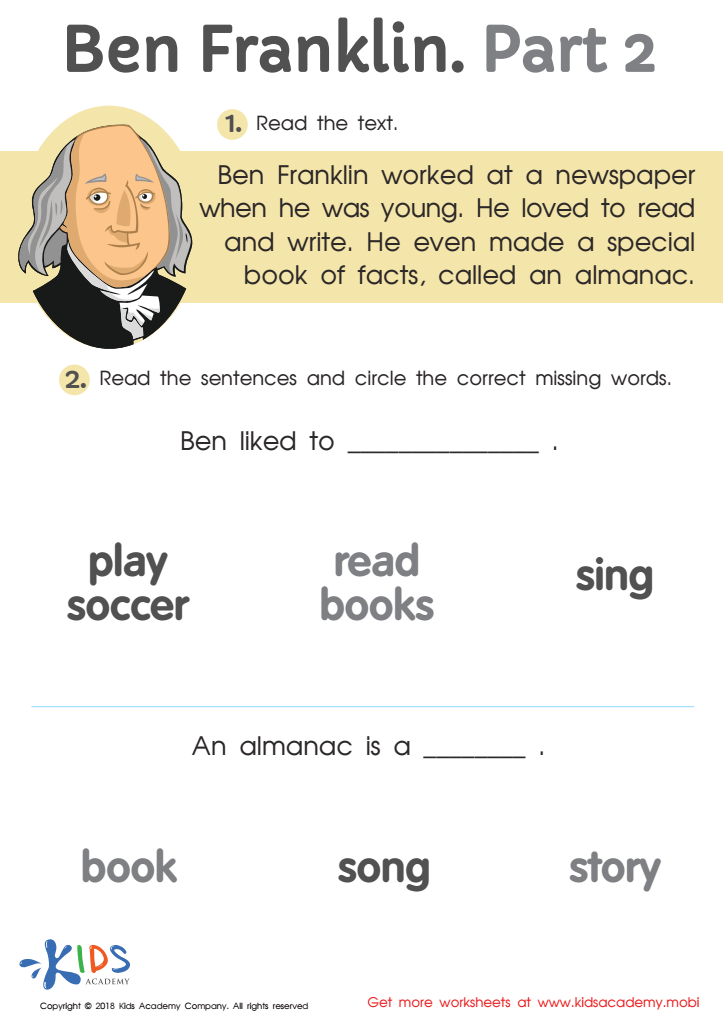
Ben Franklin Part 2 Worksheet
 Assign to My Students








Normal History, targeted for children ages 3-7, offers a foundational understanding of personal and communal narratives that shape their world. For parents and teachers, engaging children with Normal History is imperative for several reasons.
Firstly, it fosters curiosity. Children at this age are naturally inquisitive, and introducing them to history can provide answers to their "why" questions, igniting a lifelong interest in learning. Secondly, Normal History promotes cultural awareness and inclusivity. By learning about diverse backgrounds, children can cultivate empathy and acceptance, essential traits in a rapidly globalizing world.
Furthermore, a grasp of history builds critical thinking skills. When young children differentiate between past and present, they improve cognitive development and learn to make connections between events, shaping their reasoning abilities. Collectively, stories from Normal History help children understand concepts like community, family, and timelines, contributing to their social-emotional development.
Lastly, exposure to historical narratives helps children develop language skills as they recount stories, learn new vocabulary, and enhance their storytelling abilities. Consequently, incorporating Normal History into early education is essential for nurturing informed, empathetic, and well-rounded learners. Thus, parents and teachers should actively promote historical exploration in early childhood settings.