Normal Vowel Diphthongs Worksheets for Ages 3-8 - Page 2
25 filtered results
-
From - To
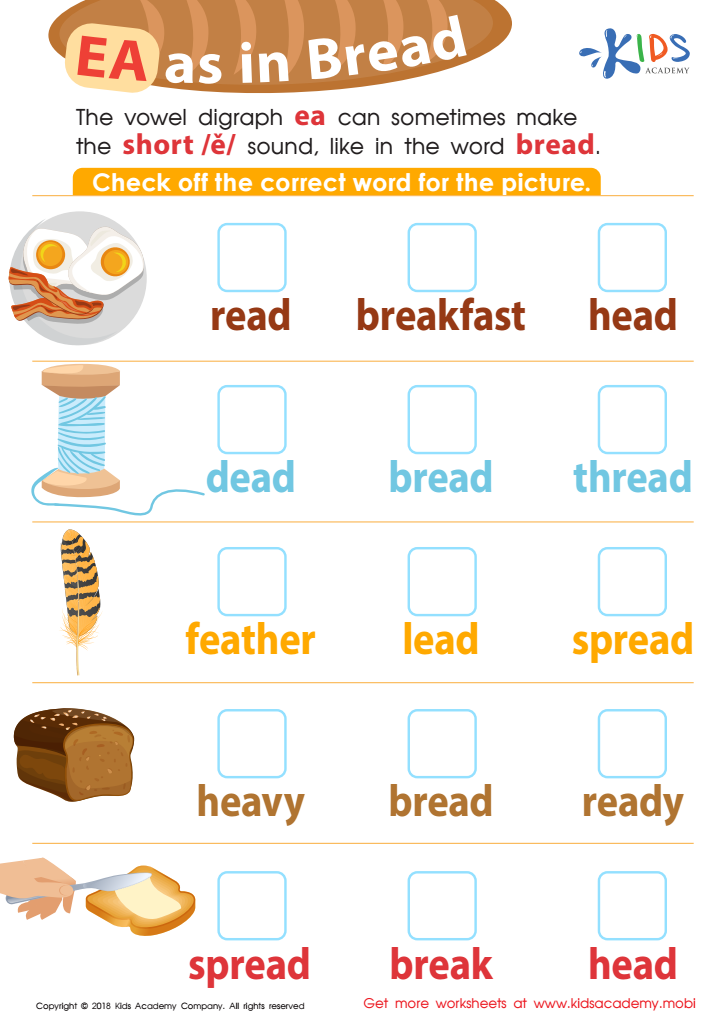
Reading: EA as in Bread Worksheet
 Assign to My Students


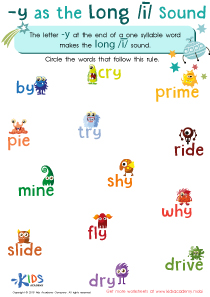
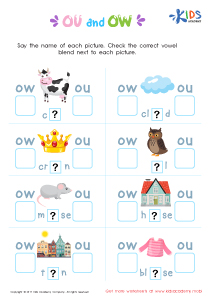
Normal vowel diphthongs are critical for young learners aged 3 to 8 as they form the foundation for literacy and language development. Understanding and correctly pronouncing diphthongs—groups of two vowel sounds blended in a single syllable—helps children enhance their phonological awareness. This awareness is a crucial skill for reading, as it allows children to decode words accurately.
Parents and teachers should care about teaching diphthongs because they are often found in common words that young learners encounter, such as "coin," "out," and "pie." Early exposure to these sounds helps prevent speech and language delays and provides children with the tools needed for fluent reading and spelling.
Incorporating diphthong lessons into everyday activities—through songs, rhymes, and engaging games—makes learning enjoyable and reinforces their understanding in a playful context. Moreover, recognizing and practicing these vowel combinations builds confidence and enhances communication skills, empowering children to express themselves more effectively.
Ultimately, by nurturing this understanding early on, parents and teachers lay a strong linguistic foundation that supports successful educational experiences in later years, fostering a love for reading and learning that can benefit children throughout their lives.